




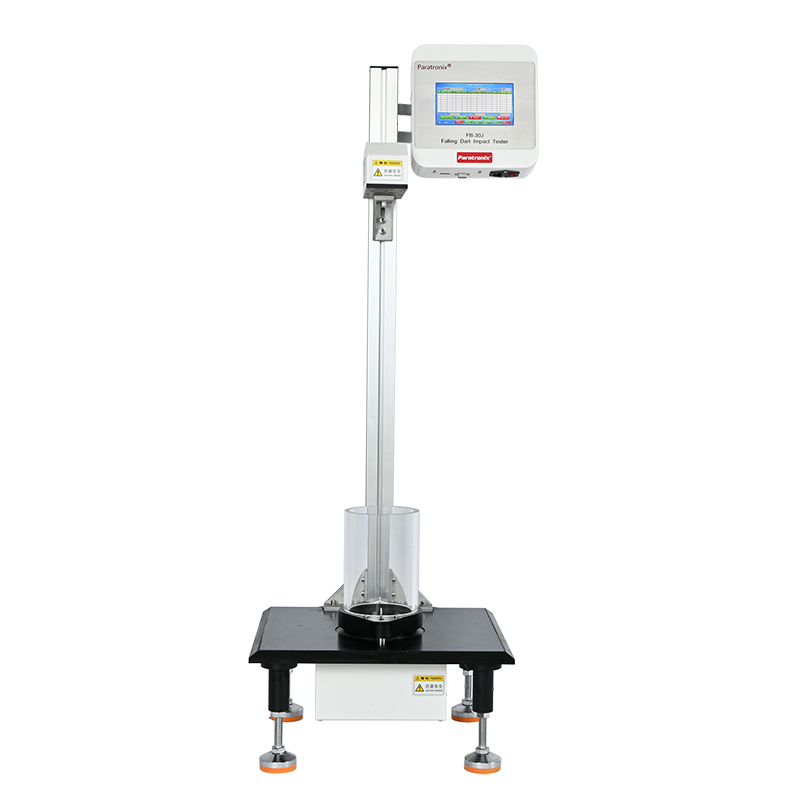
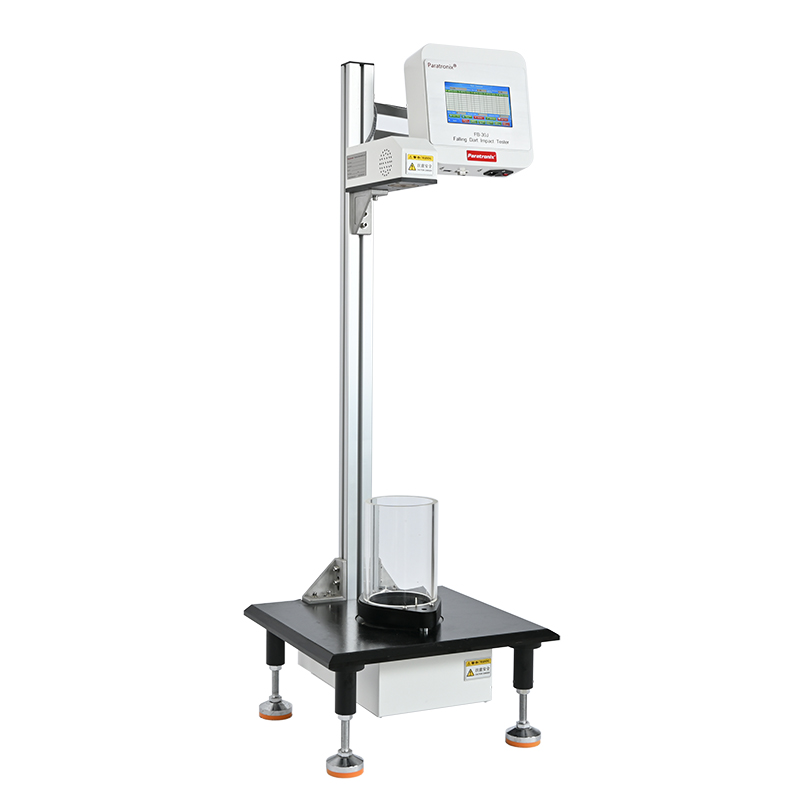
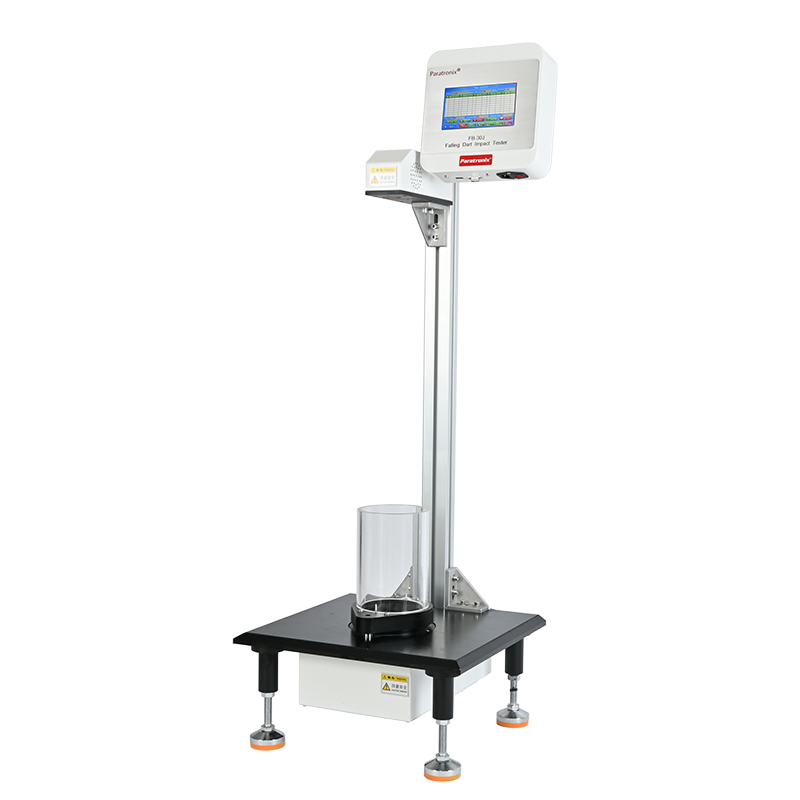
What Is A Falling Dart Impact Tester?
A Falling Dart Impact Tester evaluates the resistance of plastic film or sheeting to failure under the impact of a free-falling dart. A specimen is secured over an opening, and a dart with a specified hemispherical head is dropped from a specified height. The test commonly determines the dart mass associated with failure of 50% of the specimens under defined conditions, providing a comparative measure of impact performance.
The equipment generally includes a specimen clamp, a dart release mechanism, interchangeable masses, and a means of setting the drop height. Depending on the configuration, it may also provide pneumatic clamping, electronic release, or assisted result calculation. The test is destructive: each impact area is evaluated for failure, and a new specimen is used for the next drop.
Falling dart results support material development, incoming inspection, and production monitoring for films used in bags, liners, flexible packaging, and other applications. They do not describe every aspect of toughness or predict performance in all distribution conditions. Thickness, specimen preparation, temperature, and material structure can affect the result, so comparisons are meaningful only when the test conditions are aligned.
How ASTM D1709 And ISO 7765-1 Work
ASTM D1709 and ISO 7765-1 describe free-falling dart procedures for determining film impact failure. Both use a defined dart geometry, drop height, specimen support, and a series of impacts at selected masses. The outcome is typically expressed as the mass that produces failure in 50% of specimens. Laboratories should obtain the applicable standard edition and follow its detailed requirements for apparatus, sampling, conditioning, calculations, and reporting.
Each standard includes alternative test configurations commonly identified as Method A and Method B. These use different dart head dimensions and drop heights to suit different impact resistance ranges. For example, ASTM D1709 Method A specifies a nominal 38 mm diameter head and a 0.66 m drop, while Method B uses a nominal 50.8 mm head and a 1.5 m drop. Confirm the applicable dimensions and tolerances in the selected edition before configuring equipment.
The staircase approach adjusts the dart mass after each result: a failure generally leads to a lower mass for the next specimen, while a non-failure leads to a higher mass. The prescribed calculation uses the sequence of outcomes to estimate the 50% failure mass. ASTM D1709 also permits an alternative testing technique. Laboratories should not assume that results from different standards, methods, or procedures are interchangeable without comparison data.
Choosing The Right Test Configuration
Select the standard and method from the product specification, customer agreement, or regulatory and contractual context before selecting the instrument. Review the expected impact resistance range and confirm that the dart configuration, drop height, available masses, and mass increments cover it. A system intended only for one method may not accommodate another without additional components or a different frame.
Check specimen clamp dimensions, holding force, and compatibility with the film being tested. Slippage or damage at the clamp can complicate interpretation, especially with thin, slippery, embossed, or highly extensible materials. Ask the supplier how the instrument supports repeatable clamping and how users should inspect specimens after impact. Follow the applicable standard when deciding whether a particular failure is valid.
Also consider the working space needed for the drop assembly, specimen handling, guarding, utilities, and maintenance access. Electronic counting or calculation can reduce manual transcription, but it does not replace correct specimen classification or verification of the setup. Before purchase, request a written configuration showing the supported standard editions, included dart heads and weights, calibration provisions, and any optional accessories.
Applications And Laboratory Workflows
Film producers use dart impact testing to monitor changes in resin blends, extrusion conditions, and film structures. Packaging converters may compare incoming rolls or investigate changes after processing. Brand owners and independent laboratories can use agreed test methods to assess whether supplied material meets a defined purchasing specification. Acceptance limits should be established for the material and application rather than borrowed from unrelated products.
A practical workflow begins with representative sampling across the material or lot, followed by specimen preparation and conditioning as required by the chosen standard. Operators verify the dart, mass, drop height, and clamp before testing. They then record each failure or non-failure and calculate the endpoint using the applicable procedure. Samples with folds, damage, or other irregularities should be handled according to the standard and the laboratory plan.
Paratronix supplies testing equipment for packaging and material evaluation; buyers can inquire about the FB-30J Falling Dart Impact Tester when assessing their film-testing needs. The company's broader offering includes water vapor permeability, friction coefficient, leak, seal strength, and medical packaging physical performance testers. Confirm the FB-30J configuration and its suitability for the required standard and method directly with the supplier before ordering.
Interpreting And Reporting Results
A higher 50% failure mass generally indicates greater resistance to the specified dart impact, but the number is specific to the apparatus and procedure used. It should not be treated as a universal energy rating or as proof that a package will survive handling. Dart impact results are often considered alongside thickness measurements, tensile properties, seal performance, and application-specific distribution tests.
A useful report identifies the material and lot, sampling location, standard edition, test method, conditioning, dart configuration, and calculated result. Record film thickness and any observations required by the standard or agreed specification. Preserve the individual impact outcomes and mass sequence so that calculations can be checked and unexpected variation investigated. Include deviations from the prescribed procedure rather than presenting an apparently comparable number without context.
When comparing laboratories, first align the standard edition, test method, specimen conditioning, sampling plan, and failure criteria. Differences in film thickness or lot composition can be as important as differences in instruments. A structured comparison using representative material can reveal whether observed differences are operationally significant. Where traceability is required, maintain equipment verification records and assess measurement uncertainty in line with the laboratory's quality system.
Maintenance And Total Cost Of Ownership
Purchase price is only one component of a Falling Dart Impact Tester investment. Include the required dart heads, weights, fixtures, installation, operator training, calibration, and any software or utility requirements. Ongoing costs can include replacement parts, service visits, verification equipment, consumable specimens, and laboratory time. Compare quotations on the same configuration and ask which items are included rather than evaluating the base instrument alone.
Establish inspection and calibration intervals from the applicable standard, equipment instructions, usage, and the laboratory quality system; there is no single interval appropriate for every site. Check the condition of the dart head and clamp, the integrity of the release mechanism, and the accuracy of relevant masses and dimensions. Document faults, repairs, and checks, and remove equipment from service when its condition could invalidate results.
To assess return on investment, estimate test volume, current outsourcing and shipping costs, turnaround time, and the practical value of faster process decisions. Account for staffing, training, floor space, and the cost of maintaining traceability. In-house testing can improve scheduling control, while an external laboratory may be more economical for infrequent work. Use expected workload and risk reduction to compare the alternatives.
Industry Trends And Procurement Checklist
Film producers are evaluating thinner structures, recycled content, and alternative material combinations as packaging requirements change. These developments can alter impact behavior and variability, making consistent sampling and historical comparisons important. A falling dart result can help screen formulations, but changes in material structure should also be assessed against the full set of barrier, seal, handling, and end-use requirements.
Laboratories are also paying closer attention to traceable records and efficient data handling. Electronic result capture can make review and retrieval easier when it records the test configuration and individual outcomes as well as the final number. Buyers should check export formats, user permissions, backup arrangements, and whether calculations can be independently reviewed. These features are useful only when they fit the laboratory's existing procedures.
Before requesting a quotation, prepare the target standard and edition, method, material types, expected failure range, test frequency, and any reporting or service requirements. Share representative material specifications and ask paratronix to confirm the proposed instrument configuration, installation needs, lead time, and support arrangements in writing. Review the final offer against the purchasing specification and arrange any required acceptance checks before routine testing begins.
Search by Keywords