




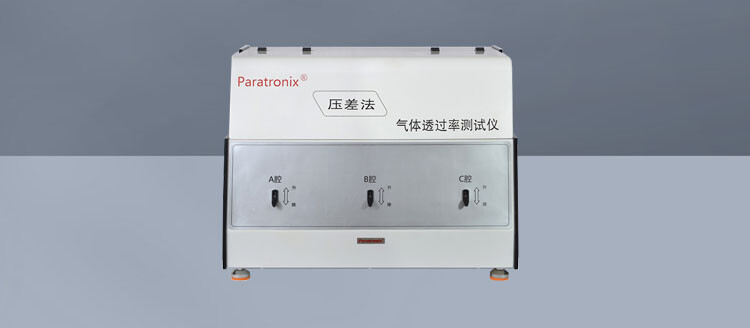
What A Differential Pressure Gas Transmission Rate Tester Measures
A differential pressure gas transmission rate tester measures the passage of a selected gas through a material under a pressure difference. The specimen separates a high-pressure chamber from a lower-pressure chamber; gas that passes through the material is measured on the receiving side. Results help manufacturers compare barrier materials, monitor production consistency, and investigate changes in packaging or industrial film performance.
Gas transmission rate, or GTR, describes the quantity of gas passing through a specified area over time under stated test conditions. Units depend on the method and reporting convention, so buyers should check the reference temperature, pressure, and area used in a report. A lower GTR generally indicates a stronger barrier to the particular gas under the conditions tested; it does not establish performance against every gas.
Permeance relates transmission to the applied pressure difference, while permeability also accounts for thickness under suitable assumptions. These terms should not be used interchangeably. Multilayer films, coated structures, and materials affected by humidity or pressure may not follow simple thickness relationships. When comparing suppliers, request the full test conditions and specimen construction rather than relying on a single barrier number.
Measurement Principle And Test Methods
In a typical manometric test, the specimen is sealed between two chambers and the receiving side is evacuated. The test gas is introduced on the other side at a controlled pressure. Gas permeating through the specimen raises the receiving-side pressure; the instrument records that change over time and uses the calibrated chamber volume, exposed area, and test conditions to calculate transmission.
The measured pressure rise can include contributions from residual leakage, desorption, and temperature changes as well as permeation. A blank or system check, stable temperature, clean seals, and sufficient evacuation help identify these effects. For high-barrier materials, the permeation signal can be very small, making leak tightness, pressure resolution, and an appropriate test duration especially important.
ASTM D1434 addresses gas permeability measurements for plastic film and sheeting using differential pressure procedures, including manometric and volumetric approaches. ISO 15105-1 covers a differential pressure method for determining gas transmission through plastic film and sheeting. Obtain the applicable current edition and confirm its specimen, conditioning, calculation, and reporting requirements before specifying a method or claiming compliance.
Main Tester Types And Capabilities
Manometric systems determine permeation from the pressure change in a receiving volume, while volumetric methods measure the amount of gas collected or displaced under defined conditions. Both use a pressure difference, but their measurement arrangements and practical ranges differ. Compare instruments using the method required by the application and evidence of performance across the expected transmission range.
Configuration also matters. A single-cell instrument may suit development work or lower sample volumes, while a multi-cell arrangement can increase throughput if cells can be controlled and evaluated appropriately. Ask whether cells operate independently, which gases are supported, and how the system handles conditioning, test completion, data export, and out-of-range results. Do not assume that every optional capability is included in a base configuration.
Gas-specific sensors are used in other transmission methods, so a sensor-based oxygen transmission instrument should not automatically be treated as interchangeable with a differential pressure system. Measurement principles, applicable standards, gas compatibility, and reporting bases can differ. Select the approach that matches the material, gas, expected barrier level, and customer specification, then document any limitations on comparisons between methods.
Applications And Industry Standards
Packaging converters and brand owners use gas transmission measurements to screen films for products sensitive to oxygen or other gases. The test can support material qualification, supplier comparisons, and investigations into changes in a laminate. A flat-film result is one input to package design: seals, closures, forming, and handling can also influence the performance of the finished pack.
Researchers and manufacturers may also evaluate industrial membranes, protective films, and medical packaging materials where gas barrier behavior matters. Confirm that the instrument can accommodate the specimen geometry and expected transmission range. For regulated applications, agree on the test method and acceptance criteria with the relevant customer or quality team; a film permeability result alone does not establish package integrity or regulatory approval.
Paratronix lists air permeability testers alongside water vapor permeability testers, leak testers, and medical packaging physical performance equipment. These categories can support a broader discussion of barrier and package testing needs. Because the available information does not identify a specific differential pressure gas transmission model, buyers should ask Paratronix to confirm the measurement principle, supported standards, gases, and configurations for their application.
How To Select And Qualify A Tester
Start with the gas, specimen type, expected transmission range, and required test conditions. Specify temperature control, pressure settings, exposed area, sample thickness, and any humidity requirement. Request a demonstrated measurement range and detection capability at conditions relevant to your material, rather than selecting solely by the lowest advertised value. High-barrier applications may require longer runs and stronger control of background leakage.
Next, assess the complete workflow: sample preparation, sealing, evacuation, stabilization, measurement, calculation, and reporting. Ask for a trial using representative materials, including a difficult sample and a routine production sample. Review repeatability across specimens, blank behavior, operator steps, and report content. A supplier should explain how calibration or verification is performed and which reference equipment or materials are needed.
Include practical acceptance criteria in the purchase specification: supported method and edition, agreed test conditions, installation requirements, training, documentation, spare parts, and service response arrangements. Define how acceptance will be demonstrated at installation and who is responsible for utilities and test gases. If results must be compared across sites, agree on conditioning, specimen direction, units, calculation conventions, and a shared verification procedure.
Operation Quality Control And Maintenance
Prepare specimens without creases, pinholes, or contamination, and record their construction, orientation, thickness, and conditioning history. Follow the selected method for specimen preparation and mounting. Inspect sealing surfaces and choose gaskets compatible with the material and gas. A damaged film or poor seal can produce a result that reflects leakage around the specimen instead of transmission through it.
Before routine testing, allow the instrument and sample to reach the required conditions and perform the checks specified by the manufacturer and laboratory procedure. Monitor the pressure-time curve for instability, unexpected drift, or failure to reach the method's evaluation conditions. Retain raw data and record deviations, operator identity, gas, temperature, pressure, exposed area, and calculation basis so results can be reviewed.
Set maintenance and calibration intervals using the manufacturer's instructions, laboratory quality system, usage, and verification history. Typical activities include inspecting seals, checking vacuum performance, cleaning compatible surfaces, and verifying pressure and temperature measurement. Investigate failed blanks or unusual trends before releasing data. Keep replacement parts and service records available, and requalify the system after repairs that could affect measurements.
Ownership Costs And Future Trends
Total ownership cost includes the instrument, installation, gas supply, vacuum equipment where required, utilities, consumables, calibration, service, training, and software support. Labor and occupied test time can be significant, especially when high-barrier samples need long stabilization periods. Compare quotations using the same sample volume and expected workload, and identify optional items that are necessary to meet the intended method.
Estimate potential return by comparing current outsourced testing costs and turnaround times with the cost of in-house operation over the equipment's planned life. Include utilization, repeat tests, maintenance downtime, and staff availability. Faster access to data may help development and quality decisions, but financial benefits depend on actual throughput and process changes. Request a realistic workflow demonstration before using time savings in a business case.
Demand for recyclable packaging structures, tighter process control, and traceable laboratory data is encouraging closer evaluation of barrier materials and testing workflows. Buyers should examine data export, audit requirements, serviceability, and the ability to evaluate new structures under relevant conditions. To discuss a differential pressure gas transmission rate tester with Paratronix, prepare representative samples, target gases, expected barrier ranges, required standards, and throughput estimates.
 What ASTM D1434 requires for differential pressure gas transmission testingDiscover how a differential pressure gas transmission rate tester supports ASTM D1434 testing, from specimen preparation and leak control to reliable reporting.
 Choosing a differential pressure gas transmission tester for high-barrier filmsChoose a differential pressure gas transmission rate tester with confidence. Compare sensitivity, test conditions, standards and throughput for high-barrier films.
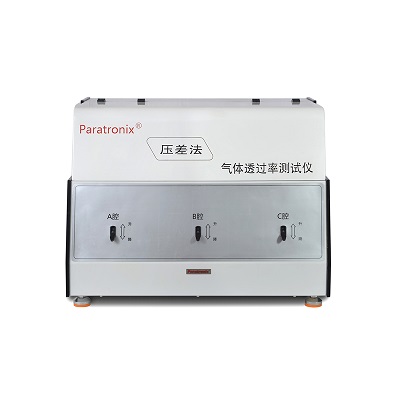
 GTR-V3 Gas Transmission Rate TesterGTR-V3 Gas Transmission Rate Tester (GTR Tester) is professionally applicable to determining the gas (O2, CO2, N2) transmission rate of plastic films, composite films, high barrier materials, sheeting, metal foils, rubber, tires, and permeable membranes with differential pressure method.
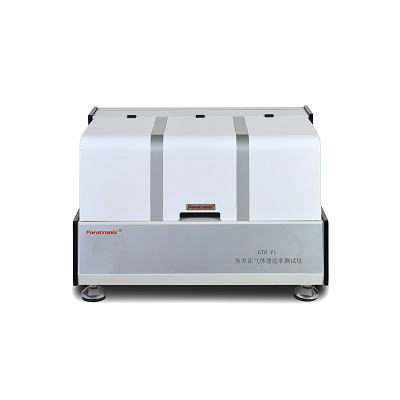
 GTR-V1 Gas Transmission Rate TesterGTR-V1 Gas Transmission Rate Tester (GTR Tester) is professionally applicable to determining the gas (O2, CO2, N2) transmission rate of plastic films, composite films, high barrier materials, sheeting, metal foils, rubber, tires, and permeable membranes with differential pressure method.
Search by Keywords