




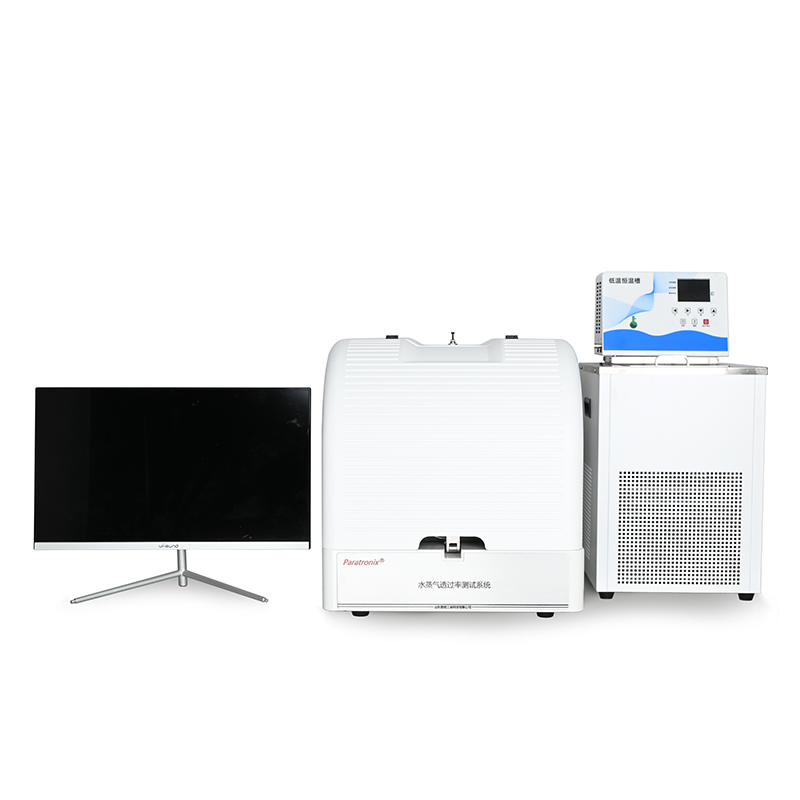
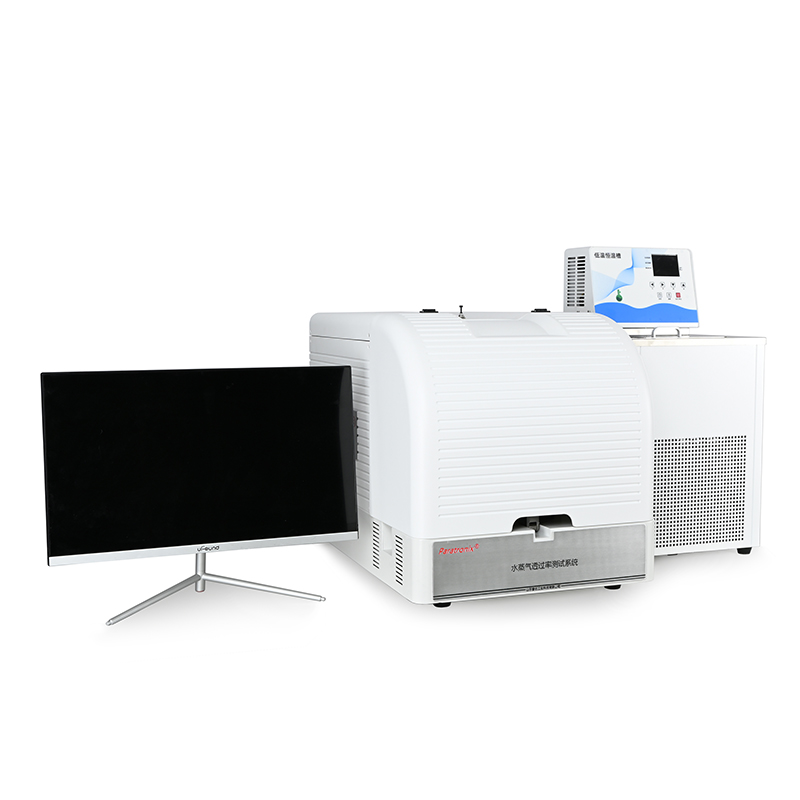
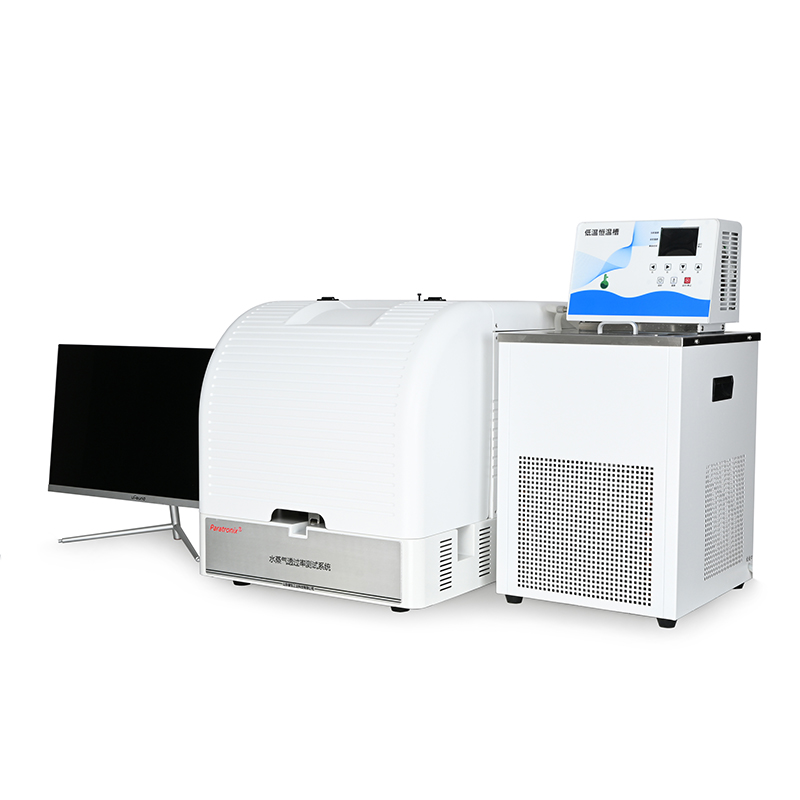
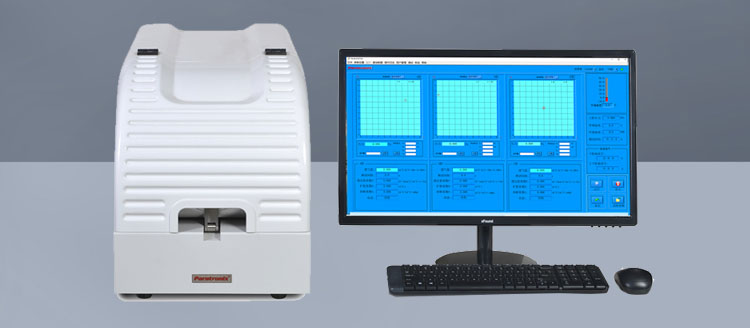
What Is An Infrared Method Water Vapor Permeability Tester?
An Infrared method Water Vapor Permeability Tester measures the rate at which water vapor passes through a material under specified conditions. The result, usually called the water vapor transmission rate or WVTR, is commonly reported in grams per square meter per day. A lower result indicates a stronger moisture barrier under the stated test conditions, provided the measurements are comparable.
The specimen separates a humid side from a drier side in a sealed test cell. A difference in water vapor partial pressure drives vapor through the material, and an infrared detector measures water vapor reaching the receiving side. The instrument uses the measured vapor transfer and exposed specimen area to calculate a transmission rate.
This measurement supports decisions about flexible packaging films, coated papers, polymer sheets, laminates, and other barrier materials. Moisture transfer can affect product stability, appearance, texture, and shelf life. A material that performs adequately for a dry component may be unsuitable for a moisture-sensitive diagnostic product or pharmaceutical package.
WVTR is a property of the tested specimen under defined conditions; it should not be treated as a universal material constant. Temperature, relative humidity, film thickness, coating integrity, and test duration can all influence a reported value. Always retain those conditions with the result when comparing suppliers or setting acceptance limits.
How Infrared WVTR Testing Works
A typical test starts with specimen preparation and inspection. The operator cuts a representative piece, avoids folds and pinholes, and mounts it securely between the test cell halves. The instrument establishes the selected temperature and humidity conditions, while a dry carrier gas generally transports permeating vapor from the receiving side to the detector.
Water molecules absorb infrared radiation at characteristic wavelengths. The detector responds to the water vapor in the carrier gas, and the instrument converts that response into a vapor transfer measurement using its calibration. The reported WVTR accounts for the exposed test area and the relevant time basis; calculation details depend on the instrument and method.
For many materials, the reading changes during conditioning before reaching a stable transmission rate. A high-barrier film can require a longer period to reach a reliable endpoint than a more permeable film. Follow the chosen method and instrument instructions for stability criteria, rather than ending a test solely because an initial reading appears favorable.
Leaks around the specimen, contaminated gas lines, unstable humidity, and residual moisture in the system can distort low-level results. Confirm that seals are clean, the specimen is mounted without wrinkles, and the system has been conditioned as instructed. Blank checks and appropriate reference materials help distinguish instrument or fixture effects from actual permeation.
Main Testing Methods And Instrument Configurations
Infrared instruments are part of a broader family of instrumental WVTR systems. Other detector technologies include electrolytic and infrared sensor systems, while gravimetric cup methods determine transmission from a measured mass change. These approaches can serve different measurement ranges, materials, and laboratory workflows, so the detector name alone is not enough to select a method.
Gravimetric testing can be useful when a prescribed cup method applies and the expected mass change is measurable with the available balance. Infrared systems offer continuous detector-based monitoring and may suit controlled, lower-transmission measurements. Actual sensitivity, throughput, and operating requirements must be confirmed for the specific instrument and application.
Instrument configurations also differ in the number of test cells, available temperature and humidity settings, gas supply requirements, and data handling. Multiple cells can increase capacity, but buyers should confirm whether each cell can run independently and whether simultaneous testing changes the specified measurement range or control conditions.
Flat-film testing and finished-package testing require different fixtures and may follow different procedures. A film result does not automatically represent moisture entry through a completed package, where seals, closures, and package geometry also matter. Ask the supplier which sample forms are supported and whether any package-testing accessories require separate validation.
Standards And Applications Across Industries
ASTM F1249 addresses water vapor transmission through plastic film and sheeting using a modulated infrared sensor. ISO 15106-3 addresses an electrolytic detection sensor method for plastic film and sheeting. ISO 15106-2 covers an infrared detection sensor method. Check the current edition, scope, specimen requirements, and any contractual method before defining a test procedure.
An infrared result does not by itself establish compliance with ISO 15106-3, because that part specifies a different detection principle. If a customer requests that method, agree on any proposed alternative in writing and assess equivalence through a documented comparison where appropriate. A related paratronix article discusses this distinction between infrared and gravimetric testing.
Food and consumer-goods teams use WVTR data to compare packaging structures and investigate moisture-related quality changes. Pharmaceutical and medical packaging teams may use barrier measurements alongside seal strength and package integrity tests. Requirements depend on the product, applicable regulations, packaging system, and customer specifications; one WVTR value cannot establish overall package suitability.
For laboratories reviewing available equipment, paratronix lists the WVTR-E3 Water Vapor Transmission Rate Tester among its related products. Its broader testing equipment portfolio includes leak, seal strength, torque, friction, and medical packaging physical performance testers. Request the WVTR-E3 specification and applicable method details to determine whether its configuration fits the intended work.
How To Select The Right Tester
Start with the materials, expected WVTR range, and test conditions specified by your customers or internal methods. Check the instrument's stated measurement range at the relevant temperature and humidity, and ask how detection limits and uncertainty are established. Include both routine products and the lowest-transmission materials you reasonably expect to test.
Review specimen size, exposed area, thickness limitations, and compatibility with coated or uneven materials. Ask how the fixture prevents edge leakage and how operators handle fragile films. If a laminate has different surfaces, establish which face encounters the humid side and record its orientation so repeat tests remain meaningful.
Match capacity to your workload using realistic conditioning and stabilization times, not only the number of test cells. Ask for a demonstration with representative specimens where practical, including setup, blank checks, endpoint selection, and report generation. Confirm whether the system can export the data fields needed for customer reports and internal traceability.
Before ordering, verify utility needs, installation space, operator training, calibration support, spare parts, and service arrangements in your location. Obtain a written quotation identifying the instrument configuration, fixtures, software, consumables, and any excluded items. A detailed scope makes it easier to compare competing offers on a consistent basis.
Installation Quality Control And Maintenance
Install the instrument in an environment that meets the manufacturer's temperature, humidity, power, and gas supply requirements. Protect the work area from conditions that could compromise specimen handling or stable operation. Before routine use, document the configuration, establish user responsibilities, and complete the checks specified in the installation instructions.
Create a laboratory procedure for specimen identification, conditioning, mounting, test settings, and result review. Include replicates and acceptance criteria appropriate to the material and the governing method. Record test temperature, relative humidity on each side, specimen orientation, exposed area, and any deviations so another laboratory can understand the reported result.
Use suitable reference materials and calibration practices recommended for the instrument and your quality system. Reference checks can reveal drift or setup problems, but their frequency should reflect the manufacturer's guidance, workload, and internal risk assessment. Investigate unexpected changes before releasing results or changing a supplier specification.
Inspect seals and fittings, maintain gas quality, and clean test surfaces according to the equipment instructions. Schedule preventive maintenance and calibration at intervals supported by the manufacturer and your quality procedures; no single interval fits every laboratory. Keep a service log and retain evidence of corrective action when checks fall outside established limits.
Ownership Costs And Future Trends
The purchase price is only one part of total ownership cost. Budget for installation, carrier gas, reference materials, replacement seals, calibration, preventive maintenance, software support, and operator time. Include the cost of fixtures for different specimen formats and any downtime associated with service or parts availability.
To assess return on investment, estimate annual test volume, outsourced testing fees, turnaround time, and the practical capacity of the proposed instrument. Compare these with purchase and operating costs over the period your organization uses for capital decisions. Consider the value of faster development decisions separately from savings that can be supported by existing records.
Laboratories are increasingly evaluating recyclable and reduced-material packaging structures whose barrier performance can differ from established laminates. This creates demand for repeatable measurements, clear test conditions, and data that can be compared across development stages. Digital records and instrument connectivity may also reduce manual transcription, subject to the controls used by each laboratory.
For a purchasing discussion, provide paratronix with sample descriptions, expected WVTR values, required standards, target conditions, monthly test volume, and reporting needs. Ask for a written configuration and support proposal, including confirmation of any capabilities essential to your method. This information gives both parties a practical basis for assessing the WVTR-E3 or another suitable solution.
Search by Keywords