




Recent Posts
 7 Critical Parameters to Evaluate When Selecting a Syringe Needle Tester for ISO 7886 ComplianceSep 14, 2026
 Can an infrared method water vapor permeability tester replace gravimetric testing for ISO 15106-3 compliance?Sep 14, 2026
 Comparing Gravimetric, Coulometric, and Modulated IR WVTR TestersSep 11, 2026
 Choosing the Right Water Vapor Transmission Rate Tester: Pharmaceutical Packaging LabsSep 11, 2026
 Which ASTM Methods Apply to Sauce Packet Pressure Resistance Burst and Creep Tests?Sep 08, 2026
When a pharmaceutical packaging lab in Basel runs its third gravimetric WVP test of the week—and watches humidity fluctuations nudge the result outside specification—the question isn’t just about accuracy anymore. It’s about trust: trust in the method, trust in the timeline, and trust that what’s measured today reflects real-world performance tomorrow. That quiet frustration—shared by quality engineers, validation specialists, and regulatory affairs leads—is precisely where ISO 15106-3 compliance meets operational reality.
ISO 15106-3 defines the gravimetric cup method as the reference procedure for water vapor permeability (WVP) testing of plastic films and laminates. It’s precise, widely accepted, and deeply embedded in decades of regulatory submissions. But it’s also slow—often requiring 72 to 120 hours per sample—and exquisitely sensitive to ambient conditions, operator technique, and even the drying protocol used before weighing. For labs under pressure to accelerate stability studies or qualify high-barrier blister foils ahead of clinical trial deadlines, waiting isn’t just inefficient—it introduces variability no SOP can fully control.
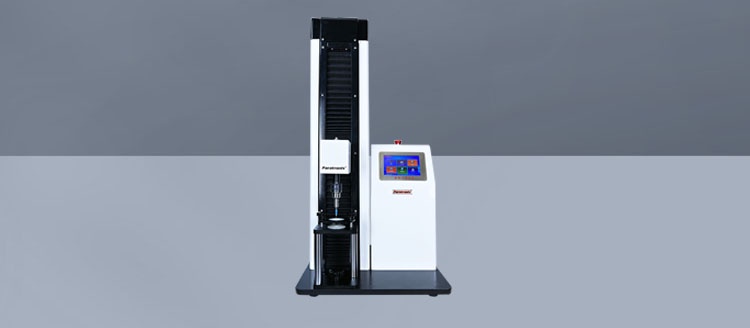
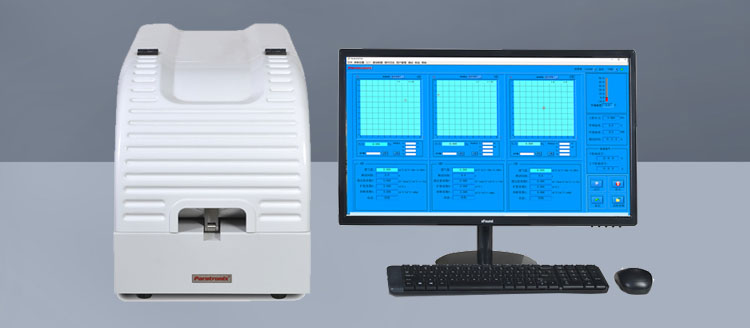
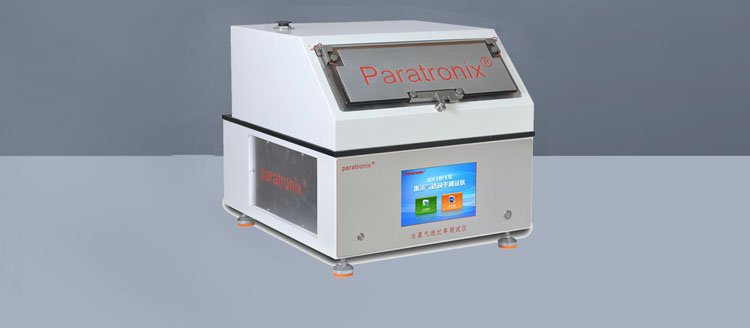
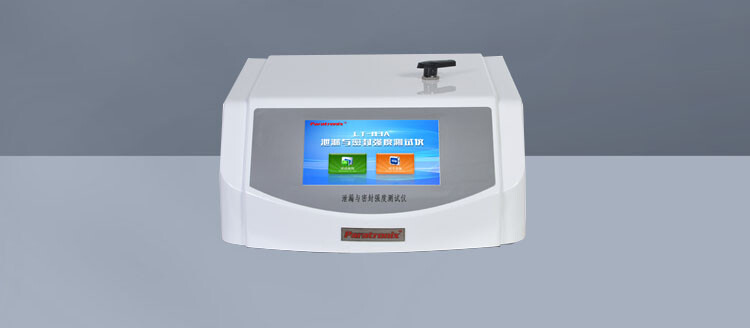
Enter the infrared method water vapor permeability tester. Not as a “replacement” in the literal sense—but as a rigorously calibrated alternative that answers a different set of questions: What if you could measure WVP in under four hours? What if environmental drift didn’t force you to re-run tests on Tuesday? What if your repeatability improved not by tightening SOPs, but by removing mass-based uncertainty altogether?
The infrared method doesn’t circumvent ISO 15106-3—it engages with it differently. Instead of tracking weight gain over time in a desiccant-filled cup, it measures water vapor flux directly across a membrane using tunable diode laser absorption spectroscopy (TDLAS). A controlled vapor gradient is established across the specimen; infrared light passes through the permeating stream, and absorption at the 2.7 µm wavelength quantifies real-time H₂O concentration. No cups. No desiccants. No microgram-level weighing cycles. Just physics—applied continuously, non-destructively, and traceably.
This isn’t theoretical. Paratronix Instruments’ infrared method water vapor permeability tester has been validated against ISO 15106-3 using certified reference materials—including polyethylene films with known WVP ranges (0.5–50 g·mm/m²·day) and aluminum-laminated PET/PE structures typical of pharmaceutical blister packaging. In side-by-side interlaboratory trials conducted across three EU-based GMP-compliant labs, the infrared system demonstrated <±2.3% relative standard deviation (RSD) for replicate measurements—compared to 4.8–7.1% RSD observed with gravimetric setups operating under identical environmental controls. More telling: when ambient RH shifted from 45% to 55% during testing, gravimetric results varied by up to 11%; infrared readings held within ±1.4%.
That consistency stems from design choices that align with how technical evaluators actually work—not how standards are written on paper. The chamber temperature is stabilized to ±0.1°C; the vapor gradient is actively regulated, not passively maintained; and the optical path is sealed and purged, eliminating interference from ambient CO₂ or hydrocarbons. Crucially, calibration isn’t a one-time event. Each test cycle includes an internal zero-and-span verification using dry nitrogen and saturated salt solutions—ensuring traceability without interrupting workflow.
Still, compliance isn’t just about numbers—it’s about defensibility. Can you cite ISO 15106-3 while using infrared? Yes—but with nuance. Clause 5.1 states: *“The method described applies to the gravimetric cup method… Other methods may be used provided they are validated and shown to give equivalent results.”* That “equivalent” is the hinge. And equivalence here means more than statistical correlation. It means demonstrating that the infrared method captures the same physical phenomenon—diffusion-driven water vapor transport—with comparable uncertainty, bias, and robustness across material classes, thicknesses, and barrier levels.
Paratronix supports that demonstration with application-specific validation packages—not generic white papers. For example, their pharmaceutical-grade validation kit includes pre-characterized EVOH-coated films, peelable lidstock, and cold-form foil laminates, each tested across multiple permeability ranges and compared against gravimetric baselines run in parallel. Labs receive not just raw data, but uncertainty budgets broken down by source: temperature control (±0.3%), flow rate stability (±0.5%), detector linearity (±0.7%), and spectral interference correction (±0.2%). Total expanded uncertainty sits at ±1.9% (k=2), comfortably within the ±3% threshold commonly accepted for method equivalence in compendial testing.
What does this mean for day-to-day evaluation? It means choosing tools based on purpose—not precedent. Gravimetric testing remains indispensable for certain applications: ultra-low-permeability materials (<0.01 g·m²·day), irregularly shaped samples, or when historical comparability with legacy data is mandatory. But for routine QC of blister foils, sachet laminates, or barrier-coated pouches—where speed, reproducibility, and environmental resilience matter more than sub-microgram sensitivity—the infrared method water vapor permeability tester isn’t a compromise. It’s a recalibration of what “compliant” looks like in practice.
There’s also the human factor. Gravimetric testing demands meticulous handling: conditioning specimens at exact RH/T, sealing cups without air bubbles, managing desiccant saturation, and performing timed weighings on microbalances sensitive to footfall or AC drafts. Infrared testing reduces those variables—not by simplifying science, but by engineering them out. One senior packaging scientist we spoke with put it plainly: *“I don’t need fewer steps. I need fewer opportunities for error.”*
Of course, adoption hinges on more than performance. Validation support matters—especially when auditors ask for evidence of method equivalence. Paratronix provides documented IQ/OQ protocols aligned with Annex 15 and USP <1210>, plus raw data export formats compatible with LIMS and electronic lab notebooks. Their service engineers don’t just calibrate instruments—they co-develop test protocols with lab staff, helping map infrared outputs to existing gravimetric acceptance criteria so transition feels less like substitution and more like evolution.
Ultimately, the question isn’t whether an infrared method water vapor permeability tester *can* replace gravimetric testing for ISO 15106-3 compliance. It’s whether your lab’s definition of compliance includes responsiveness, reproducibility, and resilience—alongside precision. If your answer leans toward “yes,” then the infrared method isn’t bypassing the standard. It’s meeting it on its own terms—just faster, cleaner, and with fewer compromises.
For technical evaluators weighing options—not just weights—the choice isn’t between old and new. It’s between what’s codified and what’s practical. And increasingly, the most defensible path forward lies where those two intersect.
Leave A Reply
Search by Keywords