




Recent Posts
 Which WVTR Tester Is Suitable for Pharmaceutical Packaging?Oct 26, 2026
 Heat Seal Tester vs Hot Tack Tester: Which ASTM Standards Apply?Oct 24, 2026
 Gas Permeability Testing: Differential or Equal Pressure?Oct 24, 2026
 ISO 9187 and Ampoule Break Force Testing: Which Requirements Apply?Oct 24, 2026
 What does a syringe needle puncture tester measure during insertion?Oct 24, 2026
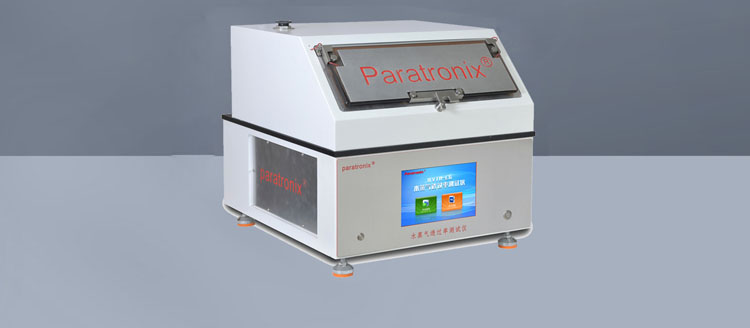
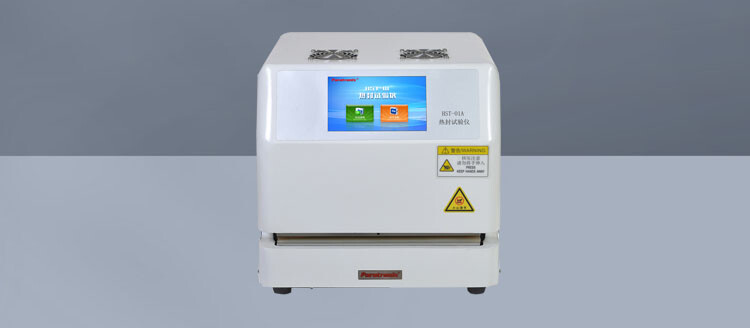
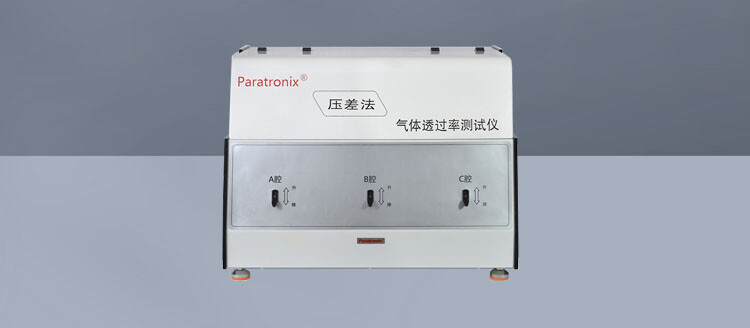

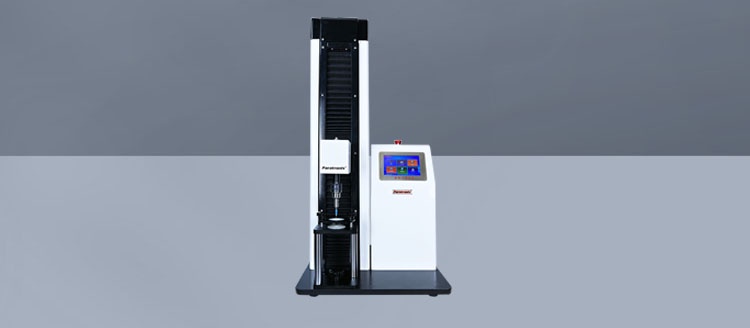
When you’re standing on the floor of a flexible food packaging —watching reels unwind, seals form, and pouches stack up—you’re not just managing equipment. You’re guarding shelf life. Every gram of moisture that sneaks through a film layer can mean microbial growth, texture loss, flavor migration, or premature spoilage. For project managers and engineering leads, this isn’t theoretical risk. It’s a daily calculation: how much barrier performance is *enough*, and—more pressingly—how confidently can you measure it?
The Water Vapor Transmission Rate (WVTR) Tester sits at the center of that confidence. But not all WVTR testers speak the same language. Gravimetric, coulometric, and modulated infrared (IR) methods don’t just differ in principle—they reflect fundamentally different trade-offs in precision, throughput, environmental control, and operational resilience. Choosing one isn’t about picking the “best” technology; it’s about matching method to mission.
What Each Method Measures—and How It Gets There
At its core, WVTR quantifies how many grams of water vapor pass through one square meter of material per day, under controlled temperature and humidity conditions (e.g., 38°C / 90% RH). Yet how that number emerges tells you everything about where—and how well—the instrument fits into your validation workflow.
Gravimetric testing is the oldest and most intuitive: a desiccant-filled cup is sealed beneath the test film, placed in a humidity-controlled chamber, and weighed repeatedly over days or weeks. The mass gain equals transmitted moisture. Its strength lies in traceability—it’s gravimetrically grounded, directly tied to SI units, and widely accepted in regulatory submissions. But intuition comes with inertia. A single test can take 5–10 days for low-barrier films, and even longer for high-barrier laminates used in premium snacks or ready-to-eat meals. In fast-paced qualification, waiting for weight stabilization means delayed decisions, extended downtime, and compressed validation windows.
Coulometric detection shifts from mass to charge. Here, water vapor permeating the film is swept by dry carrier gas into a coulometric sensor—typically a phosphorous pentoxide (P2O5) electrolytic cell—where moisture is electrolyzed into hydrogen and oxygen. The resulting current is directly proportional to water vapor flow. This method delivers results in hours instead of days, with excellent sensitivity down to 0.005 g/m²/day. But it demands rigorous gas handling: zero moisture in the carrier stream, stable flow rates, and careful calibration against NIST-traceable standards. Any leak, condensation, or pressure fluctuation introduces drift—and in a production lab shared across multiple packaging R&D teams, those variables multiply quickly.
Modulated IR takes a spectroscopic approach. A modulated infrared beam passes through a moisture-permeated gas stream; water molecules absorb specific wavelengths, and the attenuation is measured via dual-wavelength referencing. Advanced signal processing filters out noise from CO2, temperature swings, or optical fogging. The result? Real-time, non-destructive measurement with sub-hour cycle times—even for ultra-high-barrier structures. Unlike coulometric systems, it doesn’t consume reagents or require electrolytic cells. But its accuracy hinges on spectral purity, detector stability, and intelligent baseline correction. Not all modulated IR platforms deliver consistent low-end resolution without frequent recalibration or environmental shielding.
Where Speed Meets Certainty
For project managers validating new packaging formats—or qualifying alternate suppliers—the question isn’t just “what’s the WVTR?” It’s “can I trust this value *today*, while juggling three other changeovers?”
Gravimetric remains indispensable for benchmarking and audit readiness—especially when FDA or EU MDR documentation requires primary-method traceability. But running gravimetric tests as your sole QC checkpoint slows feedback loops. You might validate a batch only to discover—two days later—that a subtle shift in extrusion temperature compromised barrier integrity.
Coulometric testers excel in development labs where engineers tune formulations or compare metallization layers. Their speed supports rapid iteration. Yet in shared manufacturing environments, their sensitivity to ambient fluctuations often triggers repeat runs, eroding time savings. And if your team rotates technicians across instruments, training consistency becomes a hidden bottleneck—coulometric operation involves more procedural nuance than pressing “start.”
Modulated IR bridges the gap—not by compromising on rigor, but by redefining responsiveness. With automated humidity ramping, self-diagnostic optics, and built-in drift compensation, modern modulated IR WVTR testers maintain repeatability across shifts and seasons. They don’t eliminate the need for gravimetric verification; they compress the time between screening and confirmation. One food packaging OEM reduced its full-line barrier qualification cycle from 14 days to 3.5—without sacrificing data integrity—by deploying modulated IR for in-process checks and reserving gravimetric for final release reports.
Operational Realities No Spec Sheet Captures
Spec sheets list detection limits and temperature ranges. They rarely mention how long it takes to recover after a humidity spike—or whether the software flags a borderline outlier before the technician walks away.
Gravimetric systems are robust but labor-intensive: weighing must be done in vibration-isolated rooms, cups cleaned and dried meticulously, desiccants replaced regularly. Coulometric units require gas cylinder management, filter changes every 200 hours, and periodic sensor regeneration. Modulated IR systems demand less consumables and fewer manual interventions—but benefit significantly from stable ambient temperatures and clean air supply to avoid lens contamination.
What truly shapes usability is integration—not just physical footprint, but data flow. Does the WVTR tester feed real-time values into your MES? Can test parameters be pushed from a central recipe server? Does the report generator auto-tag lot numbers, operator IDs, and environmental logs? Paratronix Instruments designs its WVTR platforms with these touchpoints in mind—not as add-ons, but as native capabilities. Because for an engineering lead overseeing five concurrent packaging validations, the difference between “I have the data” and “the data is already where it needs to be” is often the difference between on-time launch and schedule renegotiation.
Making the Call—Without Guesswork
There’s no universal answer. But there *is* a decision framework:
- If your priority is regulatory defensibility above all—and you run fewer than five WVTR tests per week—gravimetric remains the gold standard anchor.
- If your team lives in formulation labs, optimizing coatings and nanocomposites, and needs hourly feedback, coulometric offers unmatched resolution for mid-to-low barrier ranges.
- If you’re scaling production, qualifying new co-packers, or supporting continuous improvement across multiple SKUs—modulated IR delivers the blend of speed, stability, and scalability that keeps validation aligned with output.
What unites all three? They’re tools—not endpoints. Their value multiplies when paired with contextual knowledge: understanding how film orientation affects WVTR, how seal integrity influences edge diffusion, or why accelerated aging studies still require real-time permeation data. That’s where experience matters—not just in instrumentation, but in packaging science itself.
At Paratronix Instruments, we build WVTR testers not for brochures, but for production floors and validation protocols. Our engineers have stood beside project managers during pre-launch fire drills, watched them cross-check ASTM F1249 against internal SOPs, and heard the quiet sigh when a test completes—accurately, on time, and without follow-up questions. That’s the kind of reliability that doesn’t show up in a datasheet. It shows up in shipped pallets, compliant dossiers, and shelf-stable products that reach consumers exactly as intended.
In the end, selecting a Water Vapor Transmission Rate Tester isn’t about choosing a piece of hardware. It’s about choosing how confidently—and how quickly—you’ll answer the question no one wants to ask too late: “Is this package really protecting what’s inside?”
Leave A Reply
Search by Keywords