





Gas Permeability Testing: Differential or Equal Pressure?
Choose the method required by your product specification first. Without a prescribed method, select according to the test gas, expected transmission rate, and environmental conditions.
For routine oxygen transmission testing, equal-pressure coulometric systems are often appropriate. Differential-pressure systems can suit broader gas investigations, provided their measurement range and configuration match.
Neither approach is universally more accurate or better for high-barrier materials. Reliable selection depends on validated sensitivity, specimen behavior, and control of the test environment.
This guide helps packaging engineers, laboratory teams, and quality managers evaluate both approaches for pharmaceutical packaging, plastic films, and high-barrier materials before purchasing testing equipment.
Which Method Should You Choose First?
When asking, “Should I choose differential-pressure or equal-pressure gas permeability testing?” start with the decision your measurement must support, including any customer acceptance criteria.
A laboratory releasing packaging against an established oxygen transmission specification usually benefits from following the specified method, including its temperature, humidity, and reporting requirements.
A development team comparing permeability across several gases may prioritize configurable gas handling and pressure measurement. A suitable differential-pressure instrument can support that work.
For moisture-sensitive or mechanically delicate structures, examine conditioning and specimen support carefully. Pressure loading and humidity control can influence suitability as much as detection technology.
If both methods appear suitable, request application data using representative samples. Compare verified performance at your target transmission rate instead of relying on instrument category alone.
What Actually Differs Between the Two Methods?
Gas permeates when a partial-pressure difference exists across a material. Both approaches establish this driving force, but they handle total pressure and measurement differently.
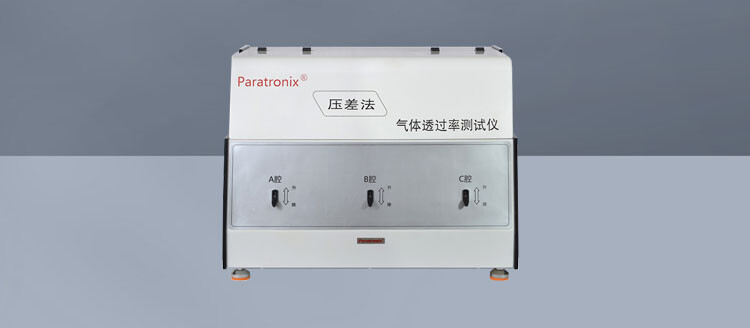
In a common differential-pressure arrangement, the specimen separates a chamber containing test gas from an evacuated chamber. Permeation produces a measurable downstream pressure increase.
The system derives transmission from pressure change, chamber volume, specimen area, and other method parameters. Temperature stability and correction for background effects therefore matter.
In equal-pressure testing, both sides operate at approximately equal total pressure. Different gas compositions still create the partial-pressure gradient needed to drive transmission.
A typical oxygen system exposes one side to oxygen-containing gas while a carrier stream transports permeated oxygen from the opposite side to a detector.
Equal pressure therefore does not mean zero driving force. It reduces the total-pressure difference while retaining a controlled difference in the target gas’s partial pressure.
Are You Measuring Transmission Rate or Permeability?
Before comparing results, identify the reported quantity. Gas transmission rate describes gas passing through a given specimen area over time under stated test conditions.
Oxygen transmission rate, commonly abbreviated OTR, is specific to oxygen. Its meaning depends on temperature, humidity, gas composition, and the reporting convention being used.
Permeance relates gas flux to the partial-pressure difference. A permeability coefficient additionally incorporates material thickness, generally assuming behavior appropriate to a homogeneous material model.
For multilayer packaging, an apparent permeability coefficient may conceal individual layer contributions. Comparing transmission rates under identical conditions often provides a clearer practical assessment.
Do not compare two numbers until their units and normalization match. Gas-volume reference conditions, exposed area, thickness, and pressure treatment can change their interpretation.
Which Standards Must Your Results Follow?
Standards often settle method selection before technical preferences do. Check the current edition, product specification, customer agreement, and laboratory procedure governing the intended measurement.
ISO 15105-1 addresses differential-pressure methods for gas transmission through plastic film and sheeting. ISO 15105-2 addresses equal-pressure methods within its defined material scope.
ASTM D3985 covers oxygen gas transmission through plastic film and sheeting using a coulometric sensor. ASTM D1434 addresses gas permeability characteristics through manometric or volumetric procedures.
These references are not automatically interchangeable. Confirm specimen scope, conditioning, operating conditions, calculations, and reporting requirements before treating any instrument as suitable for compliance.
For pharmaceutical packaging, a film transmission result supports material assessment but does not independently establish complete package integrity, product stability, or regulatory acceptability alone.
When specifications name different methods, agree on a comparison protocol before testing. A shared material description does not guarantee that results will be equivalent.
How Do You Choose for High-Barrier Materials?
For high-barrier films, the critical question is whether the laboratory can distinguish genuine permeation from background signals at the required decision threshold with confidence.
In differential-pressure testing, leaks, seal performance, specimen outgassing, and temperature drift can influence the measured pressure rise, particularly when actual gas transmission is small.
In equal-pressure testing, residual oxygen, carrier-gas contamination, detector background, and leaks can become significant relative to the specimen signal at very low transmission rates.
Ask for the validated quantification limit under your proposed conditions. A stated detector sensitivity alone does not establish the complete system’s usable measurement limit.
Request repeatability data near your specification limit, including test duration and background checks. Results from a moderately permeable reference film may not demonstrate high-barrier capability.
Distinguish “below the quantification limit” from zero transmission. If a pass decision depends on an unquantifiable value, the measurement procedure needs a suitable decision rule.
Could Pressure, Humidity, or Gas Choice Change the Answer?
A total-pressure difference creates mechanical loading across the specimen. Thin, flexible films may require suitable support to avoid deformation that compromises testing or interpretation.
Check how the support affects exposed area and gas access. For delicate coatings or laminates, confirm that mounting and pressure conditions preserve representative specimen behavior.
Humidity can change barrier performance substantially, particularly for moisture-sensitive polymers and multilayer structures. Conditioning history may also affect how quickly a specimen reaches equilibrium.
Confirm the humidity achievable on each side of the specimen, its measurement location, and whether those conditions remain stable throughout the required test duration.
Gas choice matters independently of pressure configuration. A detector designed for oxygen does not automatically measure carbon dioxide, nitrogen, or another gas without modification.
Pressure-based measurement can accommodate different gases when the system is compatible. However, an unselective pressure signal requires careful control of leaks, outgassing, and gas purity.
Can You Compare Results From Different Methods?
Results can sometimes agree closely when both methods measure the same property under equivalent conditions. Agreement should be demonstrated for the material and application.
First align temperature, humidity, test-gas composition, partial-pressure difference, specimen orientation, and reporting units. Record thickness where relevant, especially when calculating or comparing permeability coefficients.
Pressure dependence, humidity response, and differences in specimen conditioning can produce legitimate differences. A disagreement does not by itself prove that either instrument is faulty.
For coated or asymmetric materials, specify which surface faces the test gas. Consistent orientation is especially important when humidity exposure differs across the specimen.
Run representative materials across the expected performance range, using replicate specimens. Evaluate bias and variability around acceptance limits before transferring specifications between different methods.
Avoid applying a universal conversion factor between differential-pressure and equal-pressure results. A correlation established for one film family may fail for another material structure.
What Should You Ask Before Buying an Instrument?
Begin with an application brief covering material structures, target gases, expected transmission range, specimen dimensions, environmental conditions, applicable standards, and required daily sample throughput.
Ask the supplier to demonstrate representative samples, including the most demanding barrier level. Review full test records showing conditioning, stabilization, background checks, and final calculations.
Confirm how steady state is identified. An early reading can underestimate transmission when a material requires substantial time for gas transport and equilibration processes.
Evaluate practical laboratory requirements, including gas purity, regulators, vacuum equipment where applicable, consumables, calibration arrangements, maintenance access, and operator training for the intended procedures.
Compare total operating costs using realistic cycle times. Sample preparation, conditioning, stabilization, cleaning, and repeat measurements can matter more than the nominal number of chambers.
For regulated quality environments, assess access controls, record retention, audit trails where required, and exportable test conditions. These features support traceable review and investigation.
How Does This Apply to Common Packaging Projects?
For oxygen-sensitive pharmaceutical packaging films, begin with the specified OTR method and realistic environmental conditions. Equal-pressure coulometric testing may fit routine material qualification requirements.
For development involving several gases, assess a differential-pressure platform against each gas and material combination. Verify compatibility, measurement range, and interpretation of pressure signals.
For high-barrier laminates, prioritize demonstrated low-transmission performance and reliable sealing. Either approach requires application evidence before its results can support a tight acceptance limit.
For finished containers, closures, or sealed packages, confirm that the method and fixtures address the complete package. Film measurements alone cannot quantify every leakage pathway.
When consulting Paratronix Instruments, provide your specification and representative samples so the proposed packaging testing solution can be assessed against documented application and validation requirements.
Make the Decision Around the Measurement You Need
Choose differential-pressure or equal-pressure gas permeability testing by matching the method to your standard, target gas, material behavior, environmental conditions, and required measurement range.
Equal-pressure oxygen testing is often practical for OTR workflows. Differential-pressure testing can provide useful flexibility for gas barrier investigations when the application is supported.
The strongest purchasing decision rests on representative sample results, verified performance near your acceptance limit, and a procedure your laboratory can operate consistently over time.