




Recent Posts
 Heat Seal Tester vs Hot Tack Tester: Which ASTM Standards Apply?Oct 24, 2026
 Gas Permeability Testing: Differential or Equal Pressure?Oct 24, 2026
 ISO 9187 and Ampoule Break Force Testing: Which Requirements Apply?Oct 24, 2026
 What does a syringe needle puncture tester measure during insertion?Oct 24, 2026
 What does ASTM F543 require of a bone screw torque tester?Oct 23, 2026
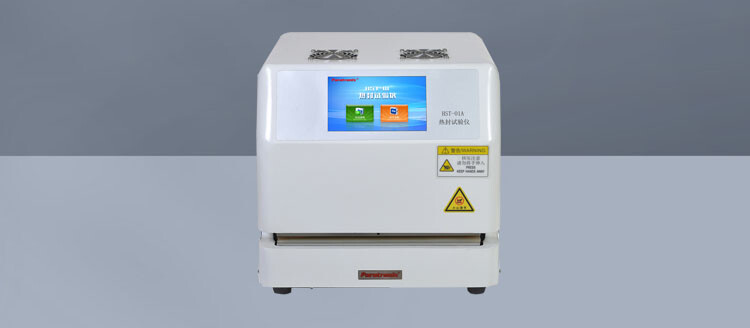

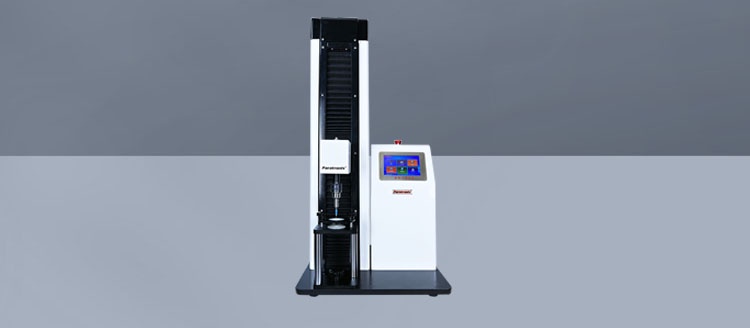
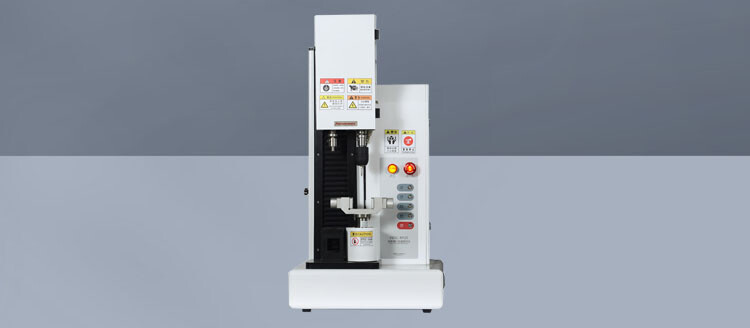
The difference between a heat seal tester and a hot tack tester is when the seal is evaluated. For a seal that has cooled, the usual workflow combines laboratory seal preparation under ASTM F2029 with seal strength testing under ASTM F88/F88M. For a seal that must resist opening shortly after the sealing jaws release, ASTM F1921/F1921M addresses hot tack testing.
This timing distinction drives the heat seal tester vs hot tack tester decision. A package can develop adequate strength after cooling yet remain vulnerable while the seal is hot. Choosing equipment therefore starts with identifying the failure you need to investigate, then matching the instrument and procedure to the relevant ASTM method.
Which ASTM standard applies to each task?
These three standards address different parts of seal evaluation. Treating them as interchangeable can lead to purchasing the wrong equipment or drawing conclusions that the test does not support.
ASTM F2029 is a practice for making laboratory heat seals; it does not replace a seal strength measurement. ASTM F88/F88M measures seal strength but does not establish the sealing conditions used to produce the specimen. ASTM F1921/F1921M addresses the early period after seal formation, when thermal history and test timing strongly affect the result.
A heat seal tester may make the seal without measuring its strength
Equipment terminology can be confusing. A machine described as a “heat seal tester” is often a laboratory heat sealer: it presses material between heated jaws at selected temperature, pressure, and dwell settings. Its immediate output is a sealed specimen.
To determine the cooled strength of that specimen, a laboratory generally needs a separate seal strength tester or a suitable tensile testing machine with appropriate grips and force measurement capability. Some instruments combine functions, so the product name alone is insufficient to establish what a machine actually measures.
For an ASTM F2029 and ASTM F88/F88M workflow, the laboratory first prepares seals under controlled conditions. After cooling and any specified conditioning, it cuts and tests specimens according to the selected procedure. This separates two questions: “Under what conditions was the seal formed?” and “How much force was required to separate it?”
A hot tack tester must manage a different sequence. It forms the seal, allows a defined interval after jaw release, and then applies a separating force while the seal remains hot. Accurate coordination between these events is central to the measurement. Manually transferring a warm specimen to an ordinary tensile tester generally cannot reproduce a controlled hot tack procedure.
Why cooled seal strength cannot predict hot tack reliably
Heat sealing involves bringing sealant surfaces into contact under heat and pressure. The seal’s resistance to opening develops through bonding and subsequent cooling. Its mechanical behavior can therefore change substantially between jaw release and the point at which the package reaches a stable temperature.
Consider a vertical packaging process in which product enters a newly formed pouch soon after the bottom seal is made. The product’s weight and impact can load that seal before it has cooled. A satisfactory cooled peel result does not establish that the seal can withstand this earlier loading.
The opposite limitation also matters. A material that develops useful hot tack still needs adequate strength after cooling. Depending on the package, the finished seal may need to survive handling, remain consistently peelable, or tolerate later processing. Hot tack data alone cannot establish those properties.
The practical distinction is therefore between two stages of performance. Cooled seal strength helps assess the established seal; hot tack helps assess its vulnerability during formation and early handling. Both may matter for the same package, but each requires its own evidence.
How to apply ASTM F2029 and ASTM F88/F88M together
A useful laboratory study examines a range of sealing conditions instead of producing a single seal at a single temperature. Temperature, dwell time, and pressure interact, so changing one setting without controlling the others makes the result harder to interpret.
ASTM F2029 provides a framework for preparing laboratory seals to evaluate heat sealability. Testing those seals under ASTM F88/F88M can then show how cooled seal strength changes across the selected conditions. This helps identify a workable sealing region and compare material constructions.
However, the highest measured force is not automatically the best outcome. A peelable package may require controlled opening behavior. Other applications may prioritize a seal that remains intact until the surrounding material fails. Record the failure mode alongside the force: separation at the seal interface, tearing of the film, or delamination can indicate different limitations.
Specimen handling also affects comparisons. ASTM F88/F88M includes different specimen support techniques, and bending of the specimen can contribute to the measured force. Results should therefore identify the technique used, along with specimen width, test speed, conditioning, and the reported force measure. Numbers generated under different procedures should not be treated as directly interchangeable.
Laboratory sealing conditions also need a sensible relationship to production. Jaw construction, heat transfer, material thickness, and contact conditions can differ between machines. A laboratory study helps narrow the process window, but production trials establish whether that window transfers successfully to the packaging line.
What makes an ASTM F1921/F1921M hot tack result useful?
Hot tack testing is especially sensitive to the time between seal formation and loading. During that interval, the seal cools and its resistance to separation changes. Two tests performed at the same jaw temperature can produce different results if the delay or pulling conditions differ.
When comparing materials, hold the sealing and test conditions consistent. When investigating a production problem, choose conditions that help represent the vulnerable stage of the actual process. A convenient instrument setting may produce repeatable data without answering the production question.
A hot tack curve across sealing temperatures is often more informative than a single peak value. It shows where useful hot strength develops and how broadly that behavior persists. A material with a high maximum force over a narrow temperature region may offer less operating flexibility than one with sufficient strength across a broader region.
The same reasoning applies to delay time. If a package experiences loading almost immediately after jaw release, a result measured after a longer cooling interval can overstate its practical resistance. Conversely, an unusually short laboratory delay may impose a condition that the actual package never experiences.
ASTM F1921/F1921M includes method-specific requirements. Equipment selection should therefore establish which procedure the instrument supports and how it controls sealing, release, delay, separation, and force acquisition. A general claim of “ASTM compatibility” does not explain whether the proposed configuration supports the intended test.
Which setup fits the problem you are investigating?
Finished seals open too easily or inconsistently
Start with cooled seal strength testing under ASTM F88/F88M. Evaluate representative package seals and document where and how they fail. If the investigation concerns sealing settings or material selection, add controlled laboratory seal preparation under ASTM F2029.
This combination is useful for comparing sealant structures, assessing changes in sealing conditions, and investigating variation in finished packages. It does not, by itself, explain a failure occurring immediately after the sealing jaws open.
Seals separate during fast filling or early handling
Hot tack testing becomes relevant when the package is loaded before the seal has developed adequate strength. Examples include product dropping onto a fresh bottom seal or web tension pulling on a recently sealed area.
Use ASTM F1921/F1921M to investigate early seal resistance, while retaining cooled seal strength checks where finished-package performance also matters. Also examine the line itself: poor alignment, wrinkles, contamination, or uneven jaw contact can cause failures that material hot tack data alone will not resolve.
A new film or laminate must run on an existing line
Both measurements may be needed. Laboratory heat sealing and cooled strength testing help establish whether the structure forms an acceptable finished seal. Hot tack testing helps assess whether that seal develops resistance quickly enough for the line’s operating sequence.
For high-barrier laminates, barrier performance does not establish sealing performance. The sealant layer and the full structure’s heat transfer behavior influence the sealing response. In pharmaceutical packaging, the applicable seal evaluation also depends on package design and opening requirements; hot tack is relevant when early loading creates a practical risk.
What to establish before purchasing equipment
Write the required workflow before comparing instrument specifications. This exposes gaps that are easy to miss when evaluating machines only by temperature range or maximum force capacity.
- Define the specimen. Identify whether testing involves laboratory-made seals, seals cut from finished packages, or both, and describe the materials and thicknesses involved.
- Specify the test procedure. State the ASTM standard, applicable method or technique, and the conditions needed for meaningful comparisons.
- Match measurement capability to the material. Force range, resolution, grips, and specimen handling must suit the expected behavior, particularly for weak or peelable seals.
- Examine thermal and timing control. For heat sealing, assess how the equipment controls jaw conditions. For hot tack, include delay control and synchronization of release and loading.
- Check the recorded data. Useful reports connect results to sealing conditions, test settings, specimen details, and failure observations.
Calibration and maintenance support also deserve attention. A displayed temperature does not describe every aspect of heat delivery to the specimen, and a nominal pressure setting does not by itself establish uniform contact. Consistent jaw condition, alignment, and verified measurement systems support reproducible work.
When discussing a configuration with a packaging testing instrument manufacturer such as Paratronix Instruments Co., Ltd., provide the material structure, production concern, and intended ASTM workflow. That gives the supplier a concrete basis for proposing laboratory sealing, cooled seal strength measurement, hot tack testing, or a combination of functions.
Seal strength testing does not establish package integrity
A final distinction prevents a common interpretation error: a strong tested strip does not prove that an entire package is leak-free. Seal strength testing measures mechanical resistance in the sampled area. A channel, pinhole, or local defect elsewhere may require a separate integrity test suited to the package.
This matters when setting acceptance criteria. Neither a high cooled seal strength nor a favorable hot tack result serves as a universal pass criterion for package quality. Acceptance limits need to reflect the package’s use, expected loads, opening requirements, and other relevant performance checks.
For equipment selection, begin with the moment at which the seal must perform. Use ASTM F2029 to support controlled laboratory seal preparation, ASTM F88/F88M to measure cooled seal strength, and ASTM F1921/F1921M when resistance shortly after sealing is the question. That sequence connects the purchase to a measurable packaging problem.
Leave A Reply
Search by Keywords