




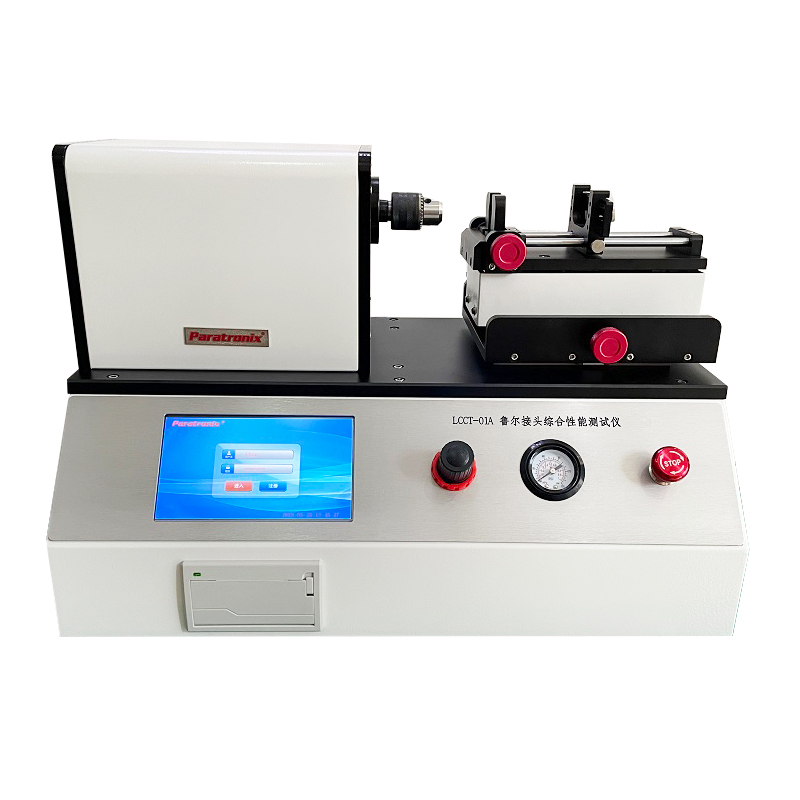
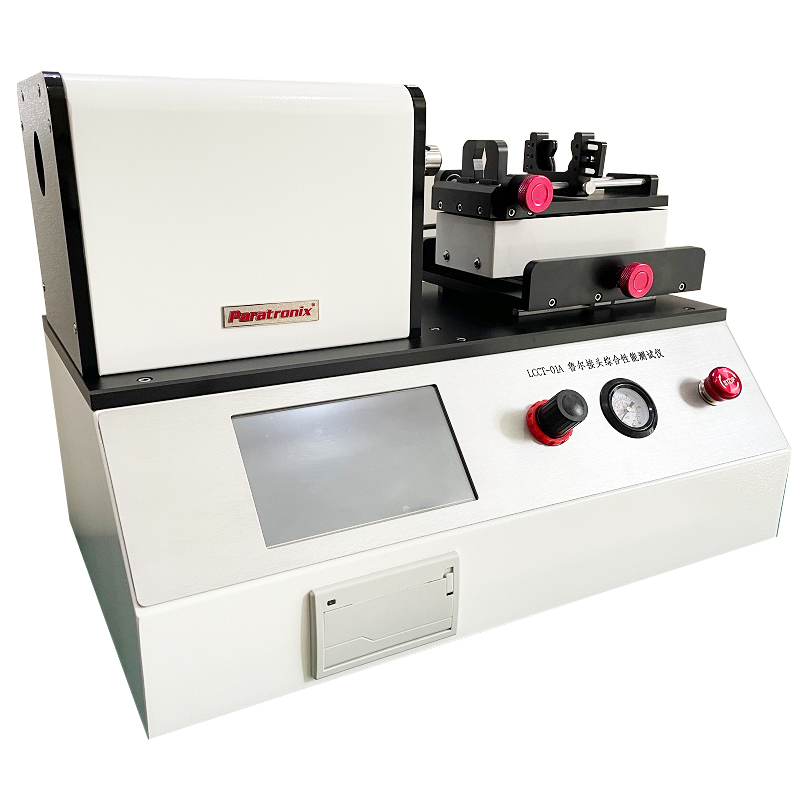
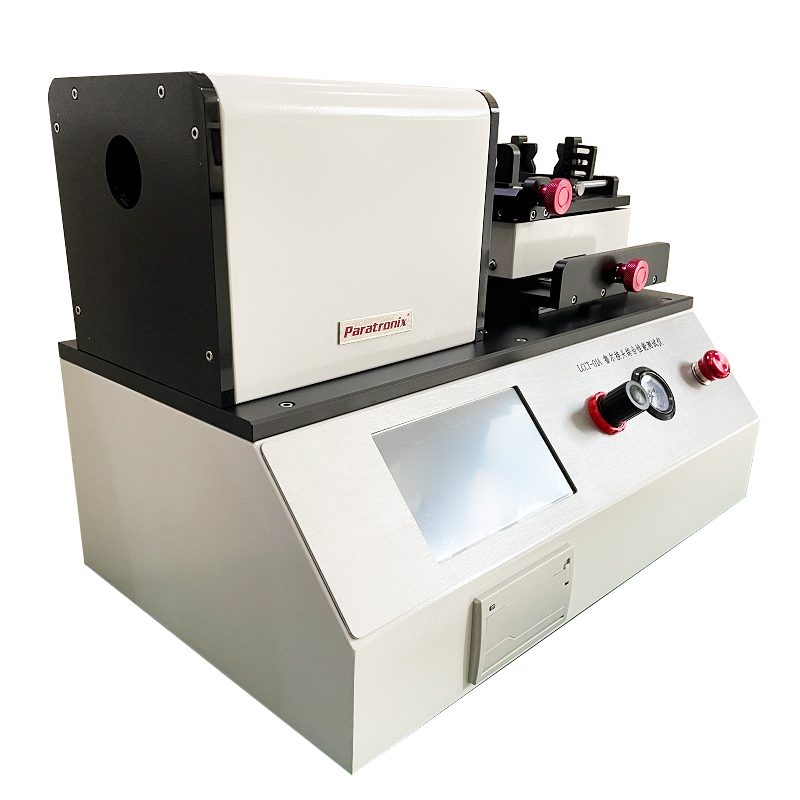
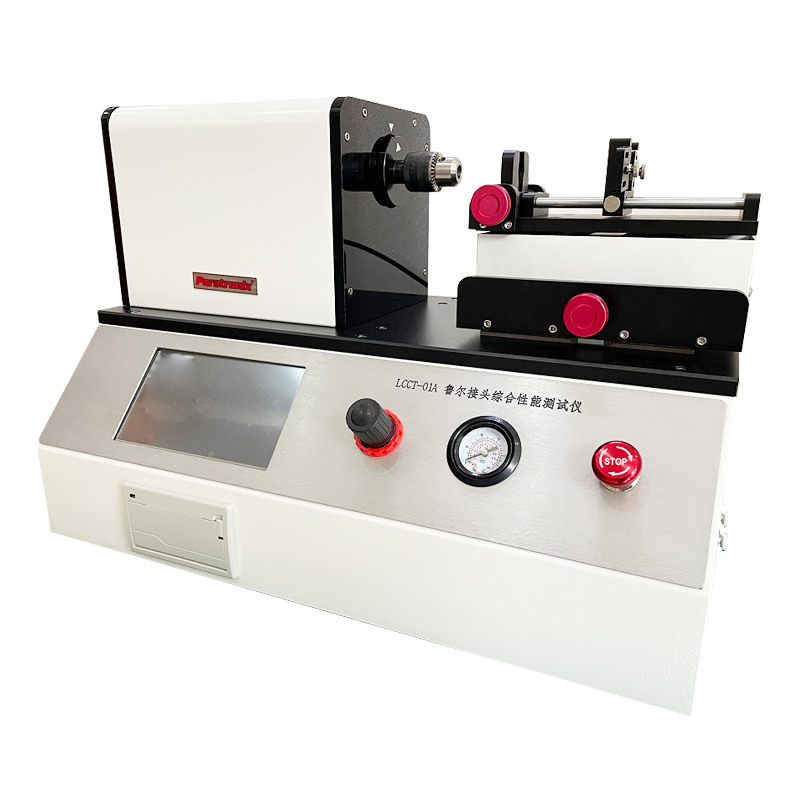
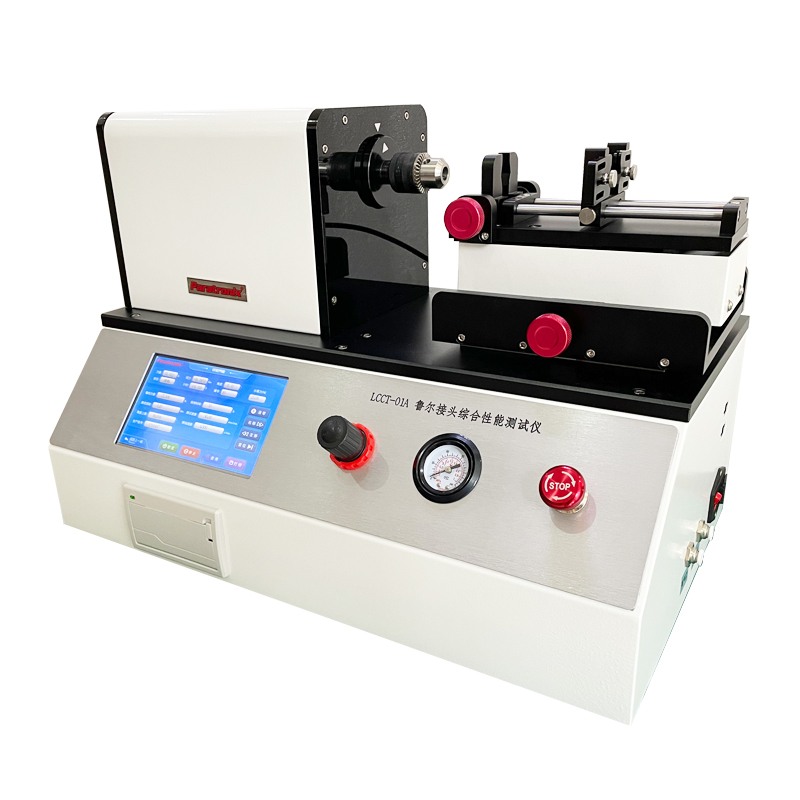
What Is An Infusion Connector Liquid Leakage Tester?
An infusion connector liquid leakage tester is a testing instrument used to evaluate whether a connected fluid pathway leaks under defined conditions. The specimen may include a connector, its mating component and attached tubing. Depending on the method, the assembly is filled with liquid, pressurized and held while an operator or instrument checks for leakage. The result applies to the tested configuration and conditions.
Infusion connectors appear in administration sets, extension lines, stopcocks and other fluid delivery assemblies. A leak can compromise the intended fluid pathway and may indicate an assembly or component problem. Testing therefore supports product development, process validation and routine quality control. The relevant risk depends on the device, its intended use and the point at which the connection is tested.
The tester is distinct from a packaging leak tester: one evaluates a device connection or fluid pathway, while the other evaluates the integrity of a package or seal. A laboratory may need both capabilities, but results are not interchangeable. Clearly define the test article, including any caps, tubing and mating parts, before comparing equipment or interpreting a specification.
A meaningful result combines the observed outcome with the test pressure, duration, fluid, specimen preparation and acceptance criteria. A passed test does not establish that every connection will remain leak free in every clinical situation. It provides evidence about samples assessed using a documented method, with conclusions bounded by sampling and the conditions used.
How Liquid Leakage Testing Works
A typical procedure starts by assembling the connector with a specified mating part and closing or otherwise controlling the fluid path. The operator fills the assembly with the prescribed liquid, removes air as required by the method and applies pressure. The specimen is held for a defined period while the connection is inspected for visible liquid leakage or evaluated using the method's specified detection approach.
Pressure stability matters because an incorrect or fluctuating pressure can change the stress applied to the joint. Entrapped air, temperature changes, flexible tubing and fixture movement can also affect observations. These factors do not automatically invalidate a test, but they should be controlled or accounted for in the procedure. A calibrated pressure measurement system helps establish confidence in the applied conditions.
Detection may rely on visual inspection, liquid collection or an instrumented measurement, depending on the validated method. Visual inspection requires consistent lighting, inspection time and operator training. Instrumented detection requires a defined measurement range, calibration and a demonstrated ability to identify relevant leakage. Request evidence that the chosen approach can detect the failure mode and threshold required for the product.
Leakage can originate from the connector interface, tubing attachment, molded component or test fixture. When a sample fails, inspect the setup before attributing the result to the product. A documented investigation should distinguish fixture leakage from specimen leakage and record any retest decision. Retesting rules should be established in advance so that an initial failure is not simply discarded.
Tester Types And Selection Criteria
Manual systems generally depend on an operator to prepare the specimen, control steps and assess the outcome. Semi automated systems can control selected parameters while retaining manual loading or inspection. Automated systems may add programmed sequences, electronic records and multiple test positions. The appropriate level depends on sample volume, method complexity, traceability needs and the resources available to maintain the equipment.
Begin selection with the test method rather than a list of features. Define the pressure range and accuracy required, the holding period, test liquid, detection criterion and acceptable specimen configurations. Specify whether the instrument must accommodate complete assemblies or individual connectors. Confirm that fixtures support the required mating components without damaging the sample or introducing unintended stresses.
For an infusion connector liquid leakage tester, ask suppliers how pressure is controlled and verified, how the system handles trapped air, and how operators identify fixture leaks. Review the available data fields, user access controls and export options if records will support a regulated quality system. Request a demonstration using representative samples and an agreed procedure before committing to a purchase.
Consider capacity in relation to the full cycle, including assembly, filling, stabilization, inspection, draining and cleaning. A short pressurization step alone does not establish practical throughput. Check utility requirements, liquid compatibility, access for maintenance and the availability of replacement seals and fixtures. For multiple product families, assess changeover time and the cost of additional tooling.
Applications And Relevant Standards
Typical users include infusion device manufacturers, contract manufacturers, component suppliers and independent testing laboratories. Research and development teams may compare designs or materials, while production teams use established procedures to monitor output. Quality teams may also investigate a change in tubing, molding conditions or assembly process. The sampling plan and acceptance decision should reflect the purpose of each activity.
ISO 80369-7 addresses small bore connectors for intravascular or hypodermic applications, and ISO 80369-20 describes common test methods for the ISO 80369 series. ISO 8536 includes requirements for particular infusion equipment. Applicability depends on the device and intended use; consult the relevant parts, editions and clauses for the actual specimen preparation, test conditions and acceptance requirements.
Market access also depends on the destination, product classification and applicable regulatory requirements. A test instrument alone does not establish device compliance, and a method suitable for one connector may not cover another. Buyers should verify which standards are recognized or otherwise applicable in their target markets and retain documented evidence supporting their chosen test program.
paratronix offers testing equipment across leak testing, torque testing, medical packaging physical performance and non destructive micro leakage testing. A buyer assessing connector integrity alongside packaging or mechanical properties can discuss these related testing needs with the company. Confirm the availability, configuration and method compatibility of any proposed equipment against the actual samples and requirements before selection.
Implementation And Quality Control
Before installation, agree on the method, utilities, workspace and responsibilities for setup. Record the instrument configuration and identify the fixtures, reference devices and materials needed for operation. Installation and operational checks should confirm that controls, indications and safety features work as intended. The extent of qualification should match the laboratory's quality system and the intended use of the results.
Develop a written procedure covering specimen identification, conditioning, assembly, filling, pressurization, observation and acceptance. Include instructions for handling deviations and recording failures. Train operators on connector engagement and inspection technique, since inconsistent assembly can affect outcomes. Where judgment is involved, use representative examples and periodic comparisons to assess consistency between operators.
Establish calibration intervals for relevant measurement devices based on manufacturer guidance, usage, history and quality requirements. Inspect tubing, seals and fixtures for wear, contamination and damage. Routine system checks can help reveal fixture leaks or control problems before samples are tested. Define maintenance and cleaning procedures that are compatible with the test fluid and equipment materials.
A useful test record identifies the sample and lot, fixture, operator, procedure version, test conditions, observations and final disposition. Record equipment identification and calibration status when required by the quality system. Review trends over time to identify shifts that warrant investigation. Changes to fixtures, software, materials or test conditions should be assessed for their potential effect on established results.
Ownership Costs And Future Trends
The purchase price is only part of total ownership cost. Include fixtures for each connector family, installation, qualification, operator training, calibration and preventive maintenance. Estimate the cost of test fluid, consumables, replacement parts, software support and service visits where applicable. If production schedules depend on the instrument, also consider downtime, backup arrangements and the time needed to obtain parts.
To assess return on investment, compare the proposed setup with the current process using the same workload and acceptance rules. Estimate labor per completed sample, changeover time, record handling and expected service costs. Include one time implementation expenses and use a realistic planning horizon. Treat potential reductions in scrap or investigation time as assumptions until supported by site specific evidence.
Future purchasing decisions are likely to place more emphasis on traceable electronic records, repeatable pressure control and efficient handling of multiple product configurations. Automation can reduce some manual steps, but it also introduces software maintenance and validation considerations. Non destructive approaches may be useful in certain applications; their suitability depends on whether the method detects the relevant defects and meets the applicable acceptance criteria.
When requesting a quotation from paratronix, provide drawings or representative samples, the intended standard and edition, the required test conditions, expected volume and reporting needs. Ask for a proposed configuration, fixture scope, calibration and service details, and any limitations. Reviewing those points together makes it easier to select an infusion connector liquid leakage tester that fits the documented method and operating budget.
 What Does a Luer Taper Comprehensive Performance Tester Measure?Discover what a Luer Taper Comprehensive Performance Tester measures, from leakage and separation to torque, and how to choose the right testing configuration.
 ISO 80369-7 Air Leakage Testing: What to Check in a Luer TesterChoose a Luer Taper air leakage Tester with confidence. Explore pressure control, fixture compatibility and ISO 80369-7 test method considerations.
Search by Keywords