




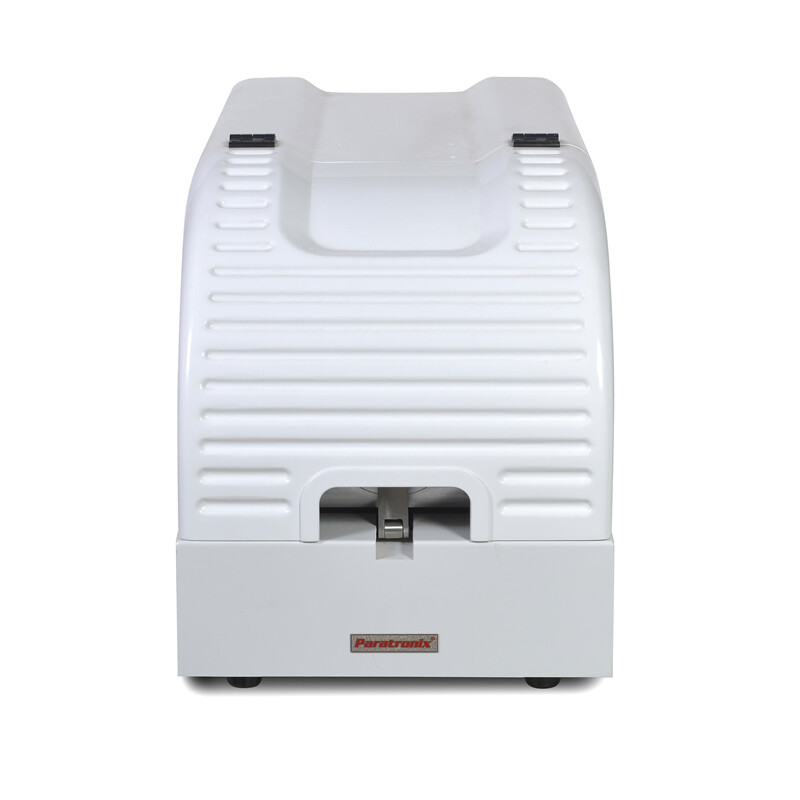
What An Oxygen Permeability Tester Measures
An Oxygen Permeability Tester measures the passage of oxygen through a barrier material or, with suitable equipment and methods, into a finished package. The measurement helps manufacturers assess whether films, laminates, coatings, and containers can protect oxygen-sensitive contents. Results support material development, supplier qualification, production monitoring, and packaging decisions, but they do not independently establish a product's shelf life.
Oxygen transmission rate, or OTR, describes the quantity of oxygen passing through a specified area over time under defined conditions. Common reporting units include cm³/(m²·day), with temperature, relative humidity, pressure conditions, and specimen construction stated alongside the result. For a finished package, transmission may instead be reported per package per day. Always check the method's required units and reference conditions.
OTR is not the same as a material permeability coefficient. Permeability relates transmission to specimen thickness and the oxygen partial-pressure difference under appropriate assumptions; a reported OTR is specific to the tested specimen and conditions. Multilayer structures, coatings, and humidity-sensitive polymers can complicate simple thickness normalization, so buyers should avoid comparing values without understanding how they were obtained.
The primary users include packaging converters, food and pharmaceutical manufacturers, medical-device packaging teams, contract laboratories, and material researchers. A film supplier may use the test to compare formulations, while a brand owner may use it to verify incoming material or investigate changes. Each application needs an agreed specification, sampling plan, and test method before results can support a decision.
How Oxygen Transmission Testing Works
In a typical film test, a specimen seals between two chambers. One side receives an oxygen-containing test gas, and the other is exposed to a lower oxygen partial pressure. Oxygen permeates through the specimen and is measured on the receiving side. The instrument calculates transmission from the detected oxygen and the defined test area after the method's measurement conditions are met.
Coulometric instruments commonly use a carrier gas to transport permeated oxygen to an electrochemical sensor. Differential-pressure instruments follow a different principle, using pressure changes under controlled conditions to determine gas transmission. Both approaches can inform barrier assessment, but their procedures, applicable materials, and reported quantities are not automatically interchangeable. Select the technique required by the governing method and customer specification.
Temperature and relative humidity can materially change the measured barrier, especially for moisture-sensitive layers. Specimen conditioning, exposure time, gas purity, sealing quality, and equilibrium criteria also affect results. A reliable procedure records these variables and uses representative samples free from unintended creases or damage. When a material is directional or asymmetric, record which surface faces the test gas.
Finished-package testing introduces additional considerations because oxygen can enter through the body, closures, seals, or other interfaces. Appropriate fixtures and a method intended for packages are necessary; a flat-film result alone cannot quantify total package ingress. Conversely, a package result may not identify the precise source of ingress, so complementary seal or leak testing can help investigate failures.
ASTM D3985 ISO 15105 And Related Standards
ASTM D3985 describes measurement of oxygen gas transmission rate through plastic film and sheeting using a coulometric sensor. It is commonly relevant when a customer specifies that method for flat barrier materials. Confirm the applicable edition, specimen preparation, test conditions, calibration approach, and reporting requirements before comparing supplier data or purchasing an instrument advertised for ASTM D3985 testing.
ISO 15105 is a series covering gas transmission through plastic film and sheeting. ISO 15105-1 addresses the differential-pressure method, while ISO 15105-2 addresses an equal-pressure method. Specify the relevant part, gas, test conditions, and edition rather than requesting only ISO 15105. Different measurement principles and conditioning choices can produce results that should not be treated as equivalent without a justified comparison.
ASTM F1927 addresses oxygen gas transmission rate through barrier materials using a coulometric detector under controlled relative humidity. ASTM F1307 addresses oxygen transmission rate through dry packages using a coulometric sensor. These methods serve different test objects or conditions; their suitability depends on the package, material, and test objective. Consult the current standard and any customer-specific protocol for full applicability and requirements.
A standard reference does not by itself demonstrate that a particular instrument, laboratory, or result complies. Ask for the exact method and configuration supported, evidence of calibration, uncertainty information where applicable, and a representative report. In a broader packaging quality program, paratronix lists water vapor permeability, leak, and seal strength testers that may complement oxygen barrier testing. Confirm instrument availability and method compatibility directly before procurement.
Applications And Market Access Considerations
Food packaging teams use oxygen barrier data when comparing structures for products susceptible to oxidation, flavor changes, or discoloration. Test conditions should reflect the intended use where feasible, particularly when moisture can affect the barrier. Combine transmission data with product formulation, headspace oxygen, storage temperature, and shelf-life studies; a low OTR alone is not proof that a packaged food will remain acceptable.
Pharmaceutical and medical-device packaging teams may need barrier information as part of a documented packaging assessment. The relevant tests depend on the product, packaging system, risk analysis, and applicable regulatory expectations. Oxygen transmission, water vapor transmission, seal strength, and package integrity address different properties. Specify the necessary combination with the quality and regulatory teams rather than assuming that one test replaces the others.
For international sourcing, a laboratory report should identify the standard edition, specimen description, sampling, test area or package configuration, environmental conditions, results, and any deviations. Customers may also require laboratory accreditation for a defined scope or traceability to particular reference materials. An ASTM or ISO method is not, on its own, a universal market-entry approval or a substitute for product-specific regulatory review.
When suppliers and buyers obtain different values, first compare conditioning, humidity, temperature, specimen orientation, test area, and the handling of edge leakage. Review whether samples came from the same production lot and whether each laboratory used the same method. Repeat testing and an agreed interlaboratory comparison can help resolve discrepancies before a material is rejected or a specification is changed.
How To Select And Qualify Equipment
Start with the required test object and method: flat film, sheet, or finished package; coulometric or another specified technique; and the relevant standard edition. Define the expected OTR range, sample sizes, temperature and humidity settings, and desired reporting units. The instrument's validated measurement range should cover both routine results and the specification limit, with appropriate resolution and uncertainty for the decision.
Next, assess capacity and sample handling. Ask how many specimens can be tested under the same or different conditions, how long conditioning and measurement typically take for your materials, and whether fixtures are available for the intended package geometry. Test duration depends on barrier properties and method criteria, so a throughput estimate should be based on representative samples rather than a generic cycle-time claim.
Request details of calibration, verification, sensor maintenance, gas supply, software records, and service support. Before acceptance, agree on installation requirements and a qualification plan with the supplier. Run suitable reference materials and representative samples, document repeatability under the selected conditions, and investigate unexpected blanks or drift. Where required, incorporate the equipment into the laboratory's quality system and calibration schedule.
Operators should inspect specimens, prepare sealing surfaces, check the test cell for leakage, and document conditioning before each run. Establish cleaning, verification, and preventive maintenance intervals from the manufacturer's instructions, usage, and laboratory quality procedures; no single interval fits every instrument. Retain raw data and deviations so that a later result can be traced to its specimen, settings, operator, and equipment status.
Ownership Costs And Future Trends
The purchase price is only one part of total ownership cost. Include installation, qualification, carrier and test gases, regulators, reference materials, seals, consumables, calibration, service visits, software support, and operator training. Budget for sample preparation, conditioning time, and downtime as well. Laboratories comparing quotations should confirm which accessories, fixtures, and environmental controls are included and which are optional.
Estimate return on investment using the number of tests expected each year, current external laboratory spending, internal labor, and the value of faster decisions. An in-house instrument may improve scheduling and process feedback, but low sample volume or infrequent specialist testing can favor outsourcing. Include the cost of maintaining competence and quality records, and compare scenarios using your own test mix and service quotations.
Demand for recyclable and downgauged packaging is increasing the importance of measuring barrier performance across alternative structures. Developers must evaluate tradeoffs among oxygen resistance, moisture sensitivity, sealing, and manufacturability rather than relying on a single property. Better data integration and automated workflows may help laboratories manage results, but instrument selection should still be anchored to validated methods and relevant test conditions.
For a procurement discussion, prepare sample descriptions, expected transmission levels, applicable standards, environmental conditions, annual volume, and required reporting format. Ask paratronix about available testing equipment and complementary water vapor, leak, or seal strength solutions, and request configuration-specific specifications and service terms. Verify that any proposed Oxygen Permeability Tester supports the required method before placing an order.
 OTR-D3 Oxygen Transmission Rate Tester
 Choosing an oxygen permeability tester for high-barrier filmsChoose an Oxygen Permeability Tester with confidence. Compare low-OTR performance, test conditions, standards, and sample handling for high-barrier films.
 What ASTM D3985 requires from an oxygen permeability testerDiscover what an Oxygen Permeability Tester needs for ASTM D3985 testing, from controlled conditions and specimen sealing to reliable OTR reporting.
 Can an oxygen permeability tester measure finished packages?Can an Oxygen Permeability Tester measure finished packages? Discover the equipment, fixtures and test conditions needed for reliable results.

Search by Keywords