




1. What A Package Compressive Resistance Tester Measures
A Package Compressive Resistance Tester applies a controlled compressive load to a package, container, or packaging component between opposing platens. A force sensor measures resistance while a displacement system tracks platen movement. Depending on the selected procedure, the test can identify maximum compressive resistance, deformation under a specified load, or behavior during sustained loading. These measurements help engineers evaluate how packaging responds to warehouse stacking, handling pressure, and other compression hazards encountered during distribution.
Compression strength is a property of the tested packaging system under defined conditions. Board grade, container geometry, closure method, product support, moisture exposure, and loading orientation can all influence the result. An empty corrugated box may therefore behave differently from the same box containing a product and internal cushioning. Procurement specifications should identify the actual test article, including its contents and closures, so that supplier results describe comparable packaging configurations.
Typical users include packaging development teams, corrugated converters, consumer goods manufacturers, contract laboratories, and distribution quality departments. They use compression measurements to compare structural designs, investigate crushed shipments, qualify material changes, and monitor production consistency. A peak force value alone does not establish safe warehouse stacking performance. Decisions also require attention to storage duration, humidity, pallet support, load distribution, and the acceptance criteria agreed with the customer.
2. ASTM D642 And ISO 12048: Scope And Practical Differences
ASTM D642 addresses the compressive resistance of shipping containers, components, and unit loads. Its scope supports evaluation of different packaging structures and loading configurations, subject to the applicable procedure. ISO 12048 addresses compression and stacking tests on complete, filled transport packages using a compression tester. Their scopes overlap, but the standards should not be treated as interchangeable documents. A purchase specification should name the required standard, edition, test configuration, and intended performance question.
Distinguish a compression test that increases loading toward a defined endpoint from a stacking test that examines behavior under a specified load over time. These approaches answer different questions about packaging performance. Neither standard supplies one universal passing load for every carton or distribution route. The buyer, packaging engineer, or applicable distribution specification must establish suitable acceptance criteria. ASTM D642 and ISO 12048 are test methods, rather than general product certifications or automatic market access approvals.
Before testing, consult the current controlled copy of the selected standard for apparatus requirements, specimen preparation, loading rate, conditioning references, and reporting provisions. Do not substitute an instrument supplier's generic preset for that review. If a customer specification modifies the method, identify the modification explicitly and assess its effect on comparability. Laboratories supporting international purchasing should also confirm whether the contract requires accreditation for the particular test method and scope being commissioned.
3. Operating Principles And Main Equipment Categories
During a typical compression test, a drive system moves one platen toward the other while the controller records force and displacement. The resulting curve can reveal initial seating, increasing structural resistance, buckling, and collapse. Interpretation requires care because platen movement can include deformation elsewhere in the load train. If package deformation is a critical acceptance variable, confirm how displacement is measured and whether machine compliance affects the reported value.
Common equipment categories include electromechanical and hydraulic systems, with suitability depending on force range, specimen dimensions, loading control, and operating duty. Benchtop machines may accommodate smaller containers, while larger frames support bulky packages or unit loads. Fixed and swiveling platen arrangements also influence load distribution and observed failure behavior. Select the arrangement required by the applicable procedure; results obtained with different platen configurations should not be compared without considering that difference.
Control capabilities deserve separate review from mechanical capacity. A machine suitable for increasing compression loads may not provide the load maintenance and duration needed for a specified stacking procedure. Ask how the controller handles package creep, force overshoot, data sampling, and automatic termination. Overload protection, travel limits, emergency stops, and suitable guarding should match the foreseeable crushing hazards. Operators also need a safe method for positioning large or unstable specimens.
4. How To Select And Specify The Right Tester
Begin selection with a specimen matrix covering package dimensions, expected loads, orientations, and required test methods. Specify sufficient platen area and opening height for the largest intended configuration, including fixtures where relevant. Choose a force range that accommodates expected peaks while maintaining suitable measurement performance at lower working loads. Excess capacity alone does not establish measurement quality. Ask suppliers to state accuracy, resolution, and verification conditions across the range you actually intend to use.
For a Package Compressive Resistance Tester, request evidence addressing platen alignment, structural rigidity, speed control, force measurement, and displacement measurement. Calibration documentation should identify the measured quantity, covered range, traceability, and relevant uncertainty. A calibration label alone does not demonstrate compliance with an entire test method. Include software requirements such as selectable endpoints, raw data export, unit control, user permissions, and report templates that retain specimen identification and environmental information.
Make the quotation technically reviewable by asking each supplier to complete the same requirements matrix. Separate included capabilities from optional fixtures, software modules, installation, training, and calibration services. For acceptance, use representative specimens and agreed verification checks to demonstrate the required operating modes. Where two instruments produce different results, investigate conditioning, platen arrangement, alignment, loading rate, and endpoint logic before concluding that either instrument is defective. Packaging variability must also be considered.
5. Test Workflow, Conditioning, And Report Quality
Start with a written test plan that states the objective, sampling approach, package construction, contents, closure method, and acceptance criteria. Select specimens that represent the production or development question being investigated. Record relevant manufacturing and assembly details, including adhesive or closure curing time where applicable. Condition specimens using the atmosphere and duration required by the governing procedure or agreed specification. For moisture sensitive packaging, uncontrolled storage before testing can undermine otherwise careful comparisons.
Before loading, inspect the specimen, confirm instrument readiness, and document the test orientation. Position the package according to the selected method and establish the required loading settings and endpoint. Keep operators clear of moving platens and potential collapse zones. During testing, retain the force and displacement history when available, and observe how failure develops. Photographs of buckling, closure opening, panel damage, or product contact can help explain results that a single maximum force cannot.
A useful report identifies the standard and edition, any deviations, specimen count, conditioning, loading direction, apparatus configuration, loading settings, and measured outcomes. Include individual results and suitable summary statistics rather than presenting an average without context. Describe failure modes and any interruptions that affect interpretation. When reports support supplier approval, retain enough information to reproduce the test. Do not convert a short compression test directly into a guaranteed stacking height without an appropriate engineering basis.
6. Application Scenarios And Complementary Testing From Paratronix
Common applications include comparing carton designs after material reduction, investigating warehouse crushing, and checking whether a revised internal support changes package strength. These are general industry scenarios rather than documented paratronix customer cases. For medical and other sensitive products, outer package compression should be evaluated alongside the separate performance requirements of the primary package or sterile barrier system. Passing ASTM D642 or ISO 12048 alone does not establish seal integrity, microbial barrier performance, or shelf life.
paratronix lists water vapor permeability testers, leak testers, torque testers, multipurpose testers, friction coefficient testers, air permeability testers, medical packaging physical performance testers, leak and seal strength testers, and non-destructive micro-leakage testers. These categories offer a basis for discussing complementary packaging evaluations. For example, moisture barrier testing can inform an investigation of humidity related deterioration, while leak or seal strength testing can assess primary packaging separately. Specific methods, specimen compatibility, and instrument capabilities require confirmation.
The supplied company information identifies paratronix with Unified Social Credit Code 91370105689842696E; this business registration identifier does not establish testing accreditation or instrument certification. Buyers seeking a Package Compressive Resistance Tester should submit their required standard editions, package sizes, force range, and reporting needs for a documented capability review. The available company materials do not establish a particular compression tester model or verified ASTM D642 or ISO 12048 conformity, so those points should be confirmed during technical evaluation.
7. Ownership Costs, Maintenance, And Future Industry Trends
Total ownership cost includes the instrument, freight, installation, fixtures, training, calibration, preventive maintenance, software, and operator time. Environmental conditioning equipment and laboratory space may also be material expenses. Compare internal testing with outsourcing using expected annual workload, turnaround requirements, specimen transport costs, and available technical expertise. An investment case is stronger when it links testing capacity to a defined operational need, such as faster design approval, rather than assuming a particular reduction in damage claims.
Set maintenance and verification intervals using manufacturer guidance, operating frequency, risk, and historical performance. Routine checks can include platen cleanliness, visible damage, unusual movement, safety devices, and fixture condition. Schedule calibration and additional checks when relocation, repair, overload, or unexpected results create concern about measurement validity. Keep maintenance records linked to instrument identity. When upgrading equipment or software, verify that loading behavior, calculations, and exported reports remain suitable for established procedures and historical comparisons.
Industry development is moving toward better traceability, connected laboratory records, more informative force curves, and packaging optimization that accounts for recycled materials and variable distribution conditions. Automation can improve consistency, but useful decisions still depend on representative specimens and appropriate test methods. For a focused procurement discussion with paratronix, provide the packaging problem, required compression procedure, and complementary barrier or integrity questions. Request a written scope identifying supported capabilities, verification evidence, service arrangements, and any remaining technical limitations.
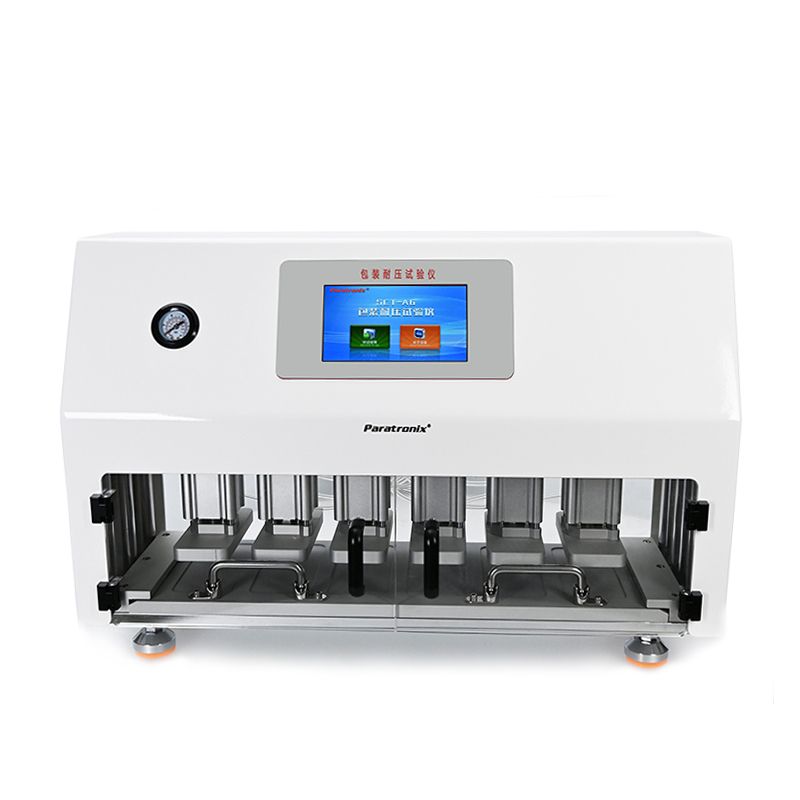
 SCT-A6 Package Compressive Resistance TesterSCT-A6 Package Compressive Resistance Tester can be used to test the compressive resistance of small packages such as sauce packet, seasoning packet, ketchup packet, salad packets, vegetable packets, jam packets, cream packets as well as small pharmaceutical packages by observing the occurrence of leakage under certain pressure after a specified time.
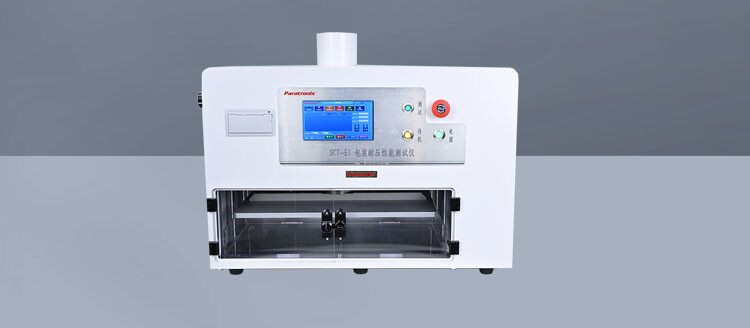
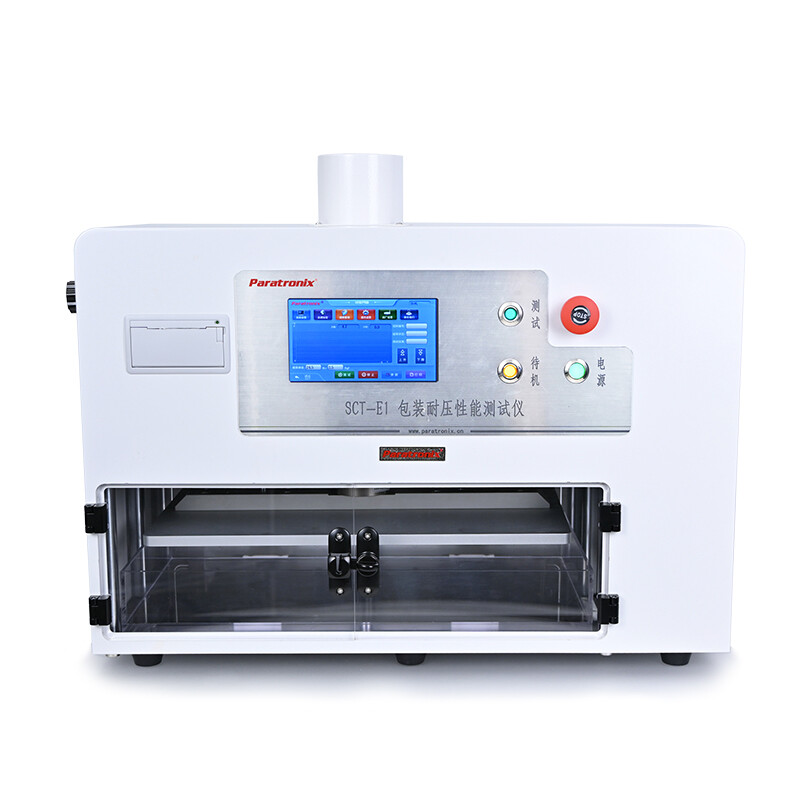
 SCT-E1 Package Compressive Resistance TesterSCT-E1 Package Compressive Resistance Tester can be used to test the compressive resistance of plastic bags, paper bags, carton boxes and other flexible packaging bags for food, drugs by observing the occurrence of leakage under certain pressure after a specified time.
Search by Keywords