




Recent Posts
 Testing Flexible Packaging Laminates: A Practical Peel Test WorkflowNov 26, 2026
 What Does a Horizontal Tensile Stripping Tester Measure in Laminates?Nov 26, 2026
 How to choose an ASTM F2029 heat seal tester for thin filmsNov 26, 2026
 Paper Friction Testing Standards: ISO 8295 vs ASTM D1894Nov 26, 2026
 Choosing a Paper COF Tester: Load, Speed and Force RangeNov 26, 2026
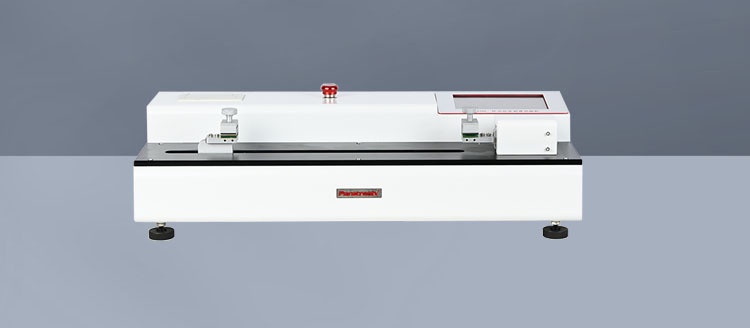
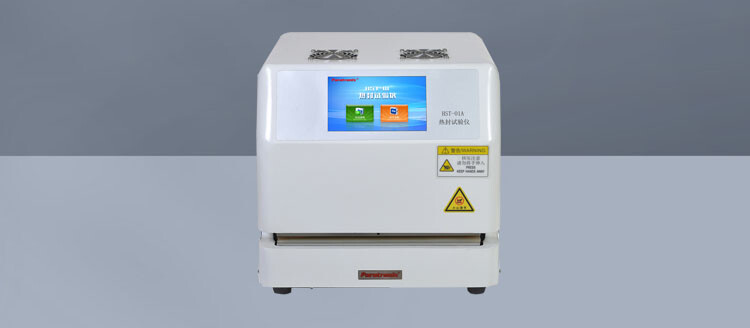
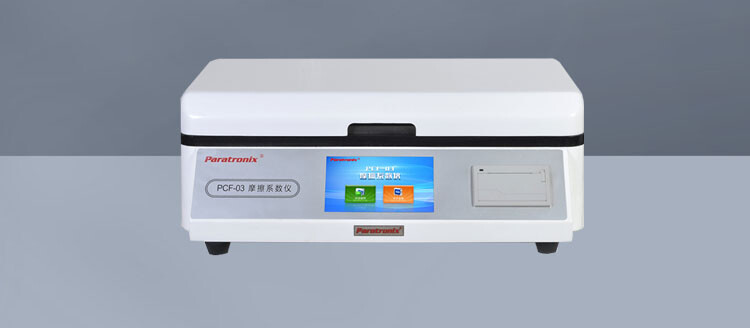
A horizontal tensile stripping tester for laminates measures the force required to separate bonded layers under controlled conditions. This measurement helps manufacturers and packaging professionals evaluate bond strength, compare materials, and investigate potential delamination risks in flexible packaging and other laminated structures. Understanding what the tester measures, how results are reported, and which factors influence them is essential when assessing laminate performance and selecting an appropriate testing method.
The useful distinction is that the instrument measures force during a specific separation test, not an abstract property called “laminate quality.” A result can help explain why a pouch is difficult to convert or why layers separate during use, but only when the specimen and test conditions represent the question being investigated.
What is actually being measured?
In a typical peel or stripping test, a strip is cut from the laminate and two layers are separated at one end to create tabs. The tabs are held by grips, and the instrument pulls them apart while a load cell records the resistance. The resulting force is plotted against displacement or another selected measure of movement.
For flexible packaging, the reported value is often a peel force normalized by specimen width, such as newtons per 15 millimeters or newtons per 25 millimeters. Dividing force by width makes comparisons more meaningful when specimens differ in width, but it does not erase differences in test geometry, specimen preparation, materials, or reporting procedure.
Suppose a laminate contains a printed outer film bonded to a sealant layer. The test may reveal how much force is needed to propagate a separation between those layers. If the separation instead travels through the sealant or damages the printed surface, the numerical result still describes the observed test resistance, but it should not automatically be called the strength of the adhesive bond alone.
Peel strength, tensile strength, and seal strength are not interchangeable
The same tensile testing platform may support several methods, which is one reason the terminology can be confusing. The difference lies in what the specimen is and where it is expected to fail.
- Laminate peel or bond strength concerns separation within a multilayer construction, typically along an interface or through a layer near that interface.
- Tensile strength concerns the resistance of a material specimen as it is stretched, usually until it yields or breaks. It does not by itself establish how well two layers are bonded.
- Heat seal strength concerns separation of a seal formed between materials. The specimen, preparation, and failure location differ from those of a laminate bond test.
A horizontal configuration describes the direction and arrangement of the test mechanics; it does not, on its own, specify the peel angle or guarantee that results match those from another instrument. Fixtures and grip movement determine the actual test geometry. Two laboratories can both use horizontal machines and still produce results that are not directly comparable.
The force value is only part of the result
A force-displacement curve often tells a more useful story than a single number. The beginning of the curve may include the effect of starting the separation and taking up slack. Once peeling is established, the trace may become relatively steady, fluctuate, or show abrupt drops. The selected method should define which portion of the curve is used for the reported result.
An average peel force describes resistance over a specified part of the test. A maximum force identifies a peak within the reporting range, while a minimum can reveal a local weak point if the method calls for it. These values answer different questions. Reporting only the maximum can hide an uneven bond; reporting only an average can hide a short but consequential weak section.
The visual failure mode matters too. Was the adhesive left mostly on one layer? Did the adhesive split within itself? Did ink transfer, a film tear, or a surface coating come away? A layer that stretches extensively before separation can also affect the measured response. Recording these observations alongside the curve helps distinguish a change in bond behavior from a change in the substrate.
A higher reading is therefore not always better. Some packaging structures are designed to resist delamination, while others must open in a controlled way. The relevant question is whether the force and failure pattern are appropriate for the intended use and consistently achievable in production.
Why apparently similar laminates can give different readings
Peel testing is sensitive to how the load reaches the separation line. A change in peel angle can change the balance between peeling and stretching. Pull speed can affect the response of polymers and adhesives. Grip alignment, tab length, specimen width, and whether the layers remain centered can all influence the trace.
Preparation is particularly easy to underestimate. If tabs are created by forcing a blade too far into the specimen, the cut may damage the interface before the measurement begins. If the layers cannot be separated without tearing or stretching them, the test record should say so. Tape, tabs, or other preparation aids may be useful in some procedures, but their use should be consistent and permitted by the chosen method.
The material’s history also matters. Adhesive cure, time since lamination, temperature, humidity, and exposure to the packaged product or processing conditions can all affect performance. A fresh sample tested soon after production is not necessarily comparable with one conditioned or aged for a different period. For printed laminates, the ink or coating system may become part of the failure path, so a change in print construction can matter even when the adhesive is unchanged.
Cut direction deserves attention as well. Film properties and converting conditions can differ between machine and transverse directions. Where that difference is relevant, identify each direction and compare like with like rather than combining all specimens into one unexplained average.
How results help investigate a packaging problem
Consider a high-barrier pouch laminate that shows visible separation after a processing step. A peel test can help establish whether affected samples behave differently from comparable, unaffected material. The comparison becomes more useful if both groups are sampled from known locations and tested with the same width, geometry, speed, conditioning, and reporting rules.
If the affected sample gives a lower average force and the separation follows a different interface, that is evidence worth pursuing. It is not, by itself, proof that the adhesive was defective. Surface treatment, contamination, ink, cure conditions, or the processing exposure may also be relevant. A sensible investigation uses the peel result to narrow the questions, then checks the material and process history.
The same caution applies in pharmaceutical packaging. A laminate bond test can contribute to material assessment, but it does not establish seal integrity, barrier performance, product compatibility, or overall package suitability. Those properties require their own evaluation under methods appropriate to the application.
Choosing a method and making the report useful
ASTM F904 addresses comparison of bond strength or ply adhesion of similar laminates made from flexible materials. ASTM D1876 covers a T-peel method for adhesives using flexible adherends. These methods do not answer every packaging question and should not be treated as interchangeable. The applicable standard, edition, specimen requirements, and any agreed deviations should be checked against the actual material and testing objective.
Before comparing a supplier’s result with an internal result, ask for more than the number. A useful report identifies the laminate and interface tested, specimen width and direction, preparation and conditioning, peel geometry, test speed, number of specimens, calculation or reporting range, individual results, and observed failure mode. It should also identify the method used and any departures from it.
The instrument itself needs a suitable force range and grips that hold the specimen without slipping or causing premature damage. Load-cell calibration and alignment matter, as does the ability to capture the curve rather than display only a peak. Whether a particular horizontal tensile stripping tester for laminates is appropriate depends on the materials and method; the horizontal layout alone is not a specification for the test.
Paratronix Instruments Co., Ltd. develops and supplies packaging testing instruments for applications including pharmaceutical packaging, plastic packaging materials, and high-barrier materials. In this kind of equipment discussion, the most productive starting point is a representative laminate sample and a clearly defined question: which layers should separate, what result must be reported, and which method will make comparisons meaningful?
Before setting a pass-or-fail limit, establish a repeatable procedure and collect results from material whose performance is understood. A peel number is most valuable when the team can explain exactly how it was obtained, where the laminate failed, and how that failure relates to the package’s intended use.
Leave A Reply
Search by Keywords