




What Is A Friction Peel Tester?
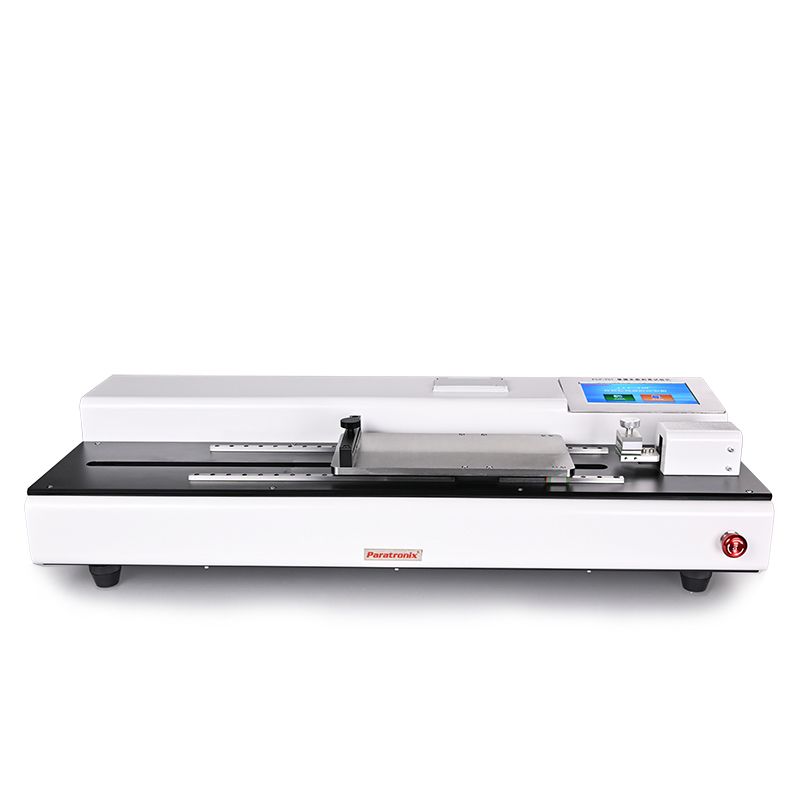
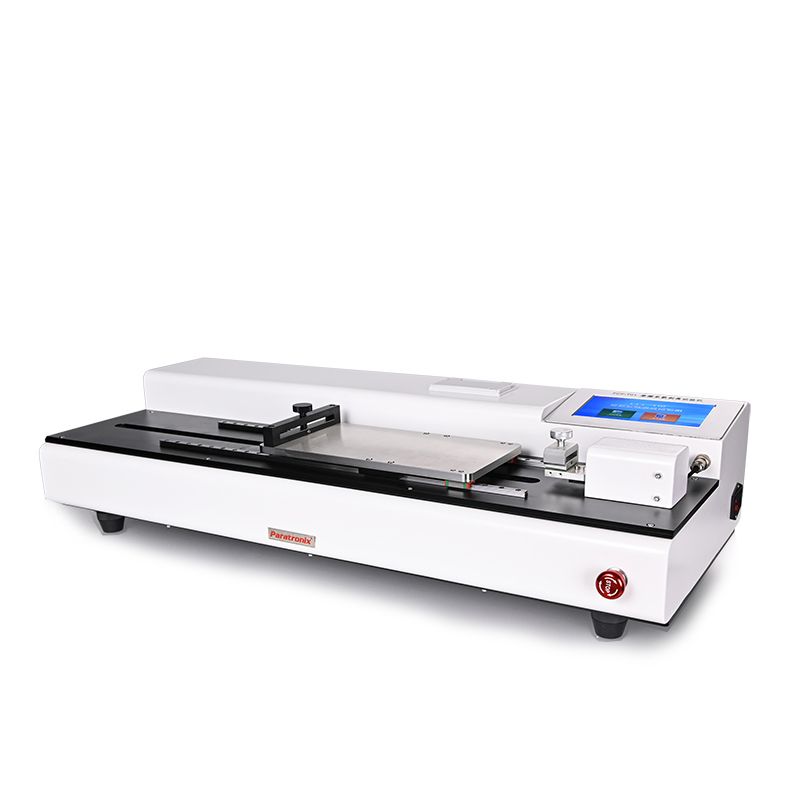
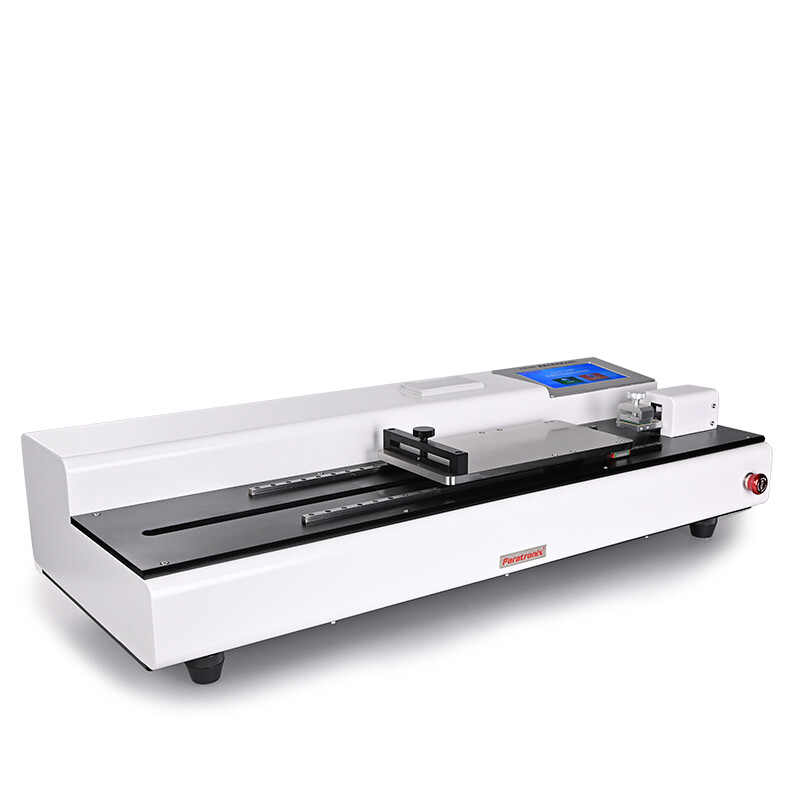
A Friction Peel Tester is a materials testing instrument designed to measure resistance to sliding and, when equipped for the relevant method, the force required to separate bonded or sealed materials. In packaging laboratories, these measurements help characterize film handling, adhesive performance, and seal strength. Friction and peel are distinct properties: a low-friction film does not necessarily produce an easy-opening seal, and neither result alone establishes whether a package is fit for use.
A typical system uses a controlled drive, a force-measuring device, fixtures, and software or a display to record force during movement. For friction, a weighted sled generally moves relative to a test surface. For peel or seal testing, grips pull specimen ends apart in a specified configuration. The applicable standard determines the specimen, apparatus, speed, conditioning, calculation, and reporting requirements; the instrument name by itself does not establish compliance.
These tests serve film producers, converters, adhesive suppliers, medical packaging manufacturers, and quality laboratories. A purchasing team may use the results to compare candidate materials, while production teams may monitor consistency between lots. Results are most useful when the parties agree on the exact test method and specimen preparation before setting acceptance limits or comparing data from different facilities.
How Friction And Peel Measurements Work
Coefficient of friction is the ratio of frictional force to the normal force pressing two surfaces together. Static friction describes the resistance at the start of relative movement; kinetic friction describes resistance during sliding. For a horizontal sled test, normal force is related to the sled mass and gravity. Surface pairing matters: film against itself can behave differently from film against a metal surface, even when all other settings are unchanged.
A peel test records the force needed to separate a flexible layer from another material as the grips move. Depending on the method and material, the reported result may be an average force or force per unit specimen width. Peel angle, separation speed, backing stiffness, adhesive dwell time, and the way the specimen is supported can affect the result. A force curve also helps reveal uneven separation, tearing, or changes in the failure mode.
A seal strength test similarly measures separation force, but it is applied to a seal between flexible barrier materials and follows its own specimen and reporting requirements. The measured force can include contributions from bending the material as well as separating the seal. Operators should record whether failure occurs at the seal, within a layer, or by material breakage, because the same numerical force can reflect different package behaviors.
ASTM And ISO Methods For Common Applications
ASTM D1894 and ISO 8295 address friction testing of plastic film and sheeting using specified procedures. They are useful starting points for comparing sliding behavior, but their results should not be assumed interchangeable without checking the applicable editions and test conditions. Before purchasing, ask the supplier to confirm whether the proposed sled, contact surface, speed control, specimen dimensions, and data calculations support the method and configuration your laboratory intends to use.
For pressure-sensitive tapes, ASTM D3330 describes peel adhesion test methods with different specimen and separation configurations. ISO 8510-1 and ISO 8510-2 address peel tests for adhesive bonds between a flexible adherend and a rigid adherend at specified angles. Select the procedure that matches the construction and intended comparison. A fixture capable of pulling a specimen is not automatically suitable for every peel angle, substrate, or standard.
ASTM F88/F88M addresses seal strength of flexible barrier materials and includes specified specimen support techniques. For medical device packaging, ISO 11607-1 and ISO 11607-2 provide broader packaging and process validation requirements; a seal strength test alone does not demonstrate conformity to those standards. paratronix offers the FCF-T01 Friction Peel Tester as a relevant product to discuss, alongside its friction coefficient and medical packaging testing equipment. Confirm its applicable methods and fixtures directly before specifying it.
Instrument Types And Selection Criteria
The main choices are dedicated friction instruments, peel or seal strength testers, and multipurpose systems configured with interchangeable fixtures. A dedicated unit may suit a laboratory with a narrow, high-volume workload. A multipurpose tester can consolidate several measurements, provided its force range, travel, speed control, and accessories meet each intended method. Compare the complete configuration rather than assuming that every instrument marketed for friction and peel performs the same tests.
Start with the materials and forces you expect to measure. Check the usable force range and accuracy across that range, not only the maximum capacity. Review grip compatibility, sled mass, fixture alignment, specimen support, available travel, and the speeds required by your procedures. For sensitive or thin materials, ask how the proposed grips prevent slipping or damage. Request a demonstration using representative specimens and an agreed test protocol.
Data handling is another procurement criterion. Determine whether the system records the full force curve, calculates the required values, identifies specimen and operator information, and exports data in formats your laboratory can retain. Ask about calibration support, traceability of reference equipment, spare parts, training, and software compatibility. Obtain written confirmation of the instrument configuration and limitations before linking it to a customer specification or validation plan.
Applications And Test Planning
Flexible packaging converters use friction data to investigate film movement over machine surfaces and interactions between film layers. Excessive friction may contribute to feeding difficulty, while very low friction can create handling problems in some processes. The appropriate target depends on the equipment, film construction, and application. Compare specimens from relevant production lots, identify the tested sides, and keep conditioning and surface preparation consistent when investigating a change.
Adhesive and label manufacturers use peel measurements to compare formulations, substrates, and aging conditions. Packaging teams use seal strength measurements to assess seal consistency and investigate opening performance. For sterile barrier systems, the test plan should also consider package integrity and manufacturing process validation as appropriate. A strong seal is not automatically a usable seal: opening characteristics and failure mode matter alongside the measured force.
Before comparing supplier data, agree on the standard edition, specimen orientation, sampling location, conditioning, test speed, fixture, and calculation. Document deviations and retain the force curves when they are relevant to interpretation. International sales may involve customer specifications, contractual requirements, and market-specific regulations in addition to published standards. A test report supports a defined decision; it does not replace the complete conformity assessment for the product or market.
Quality Control Calibration And Reporting
Begin with a documented procedure based on the selected standard and the laboratory's application. Prepare specimens consistently, label the tested surfaces and direction, and condition them as required. Inspect the specimen for visible defects and the contact surfaces for contamination or damage. Install the correct sled or grips, verify alignment, and set the specified speed and travel. Record departures from the procedure rather than silently adjusting settings to obtain a preferred result.
Maintain the Friction Peel Tester according to the manufacturer's instructions and the laboratory's quality system. Establish calibration and verification intervals using the instrument's use, stability, applicable requirements, and risk; there is no universal interval suitable for every laboratory. Check force measurement and relevant motion or dimensional parameters using suitable traceable references. Keep maintenance and calibration records, and assess affected results if a verification shows the instrument was outside tolerance.
A useful report identifies the material, batch, specimen dimensions and orientation, conditioning, method and edition, instrument configuration, test settings, number of specimens, and calculated results. Include observations such as grip slip, tearing, or unusual failure where relevant. Review variability as well as averages, and use an appropriate sampling plan before drawing conclusions about a lot. For disputes, retained specimens, raw data, and a clear record of deviations can help explain differences between laboratories.
Total Cost Future Trends And Next Steps
Total ownership cost extends beyond the instrument price. Include fixtures for each method, additional force sensors where needed, installation, operator training, calibration, maintenance, software, consumables, and possible downtime. A multipurpose system may reduce duplicated equipment, but changing fixtures and validating multiple procedures also take time. Compare quotations on the same scope and ask which accessories and services are included, optional, or dependent on a local service provider.
Assess return on investment against a defined baseline, such as outsourced testing expense, turnaround time, repeat tests, or material held while awaiting results. Estimate expected throughput and staff time, then account for recurring costs and the effort needed to establish reliable internal methods. The value of faster investigation or better supplier comparisons may be important, but it should be treated as an estimate unless your own operating data supports a measurable saving.
Laboratories are increasingly interested in digital records, integrated workflows, and testing methods suited to changing packaging structures, including recyclable or reduced-material designs. These trends make fixture flexibility and data access worth evaluating, without assuming that automation eliminates method development. For a project discussion, provide paratronix with your materials, target standards and editions, expected force range, throughput, and reporting needs. Request a configuration and quotation, and review the article How to select a friction peel tester for flexible packaging films for further selection context.
Search by Keywords