




Recent Posts
 How to select a friction peel tester for flexible packaging filmsOct 09, 2026
 Key Specifications to Compare When Selecting a Lipstick Break Force TesterOct 08, 2026
 What Does a Lipstick Break Force Tester Measure in Quality Control?Oct 08, 2026
 Validation Records and Test Standards for Artificial Skin Puncture TestingSep 24, 2026
 Force Tester or Universal Testing Machine for Artificial Skin Puncture Tests?Sep 24, 2026
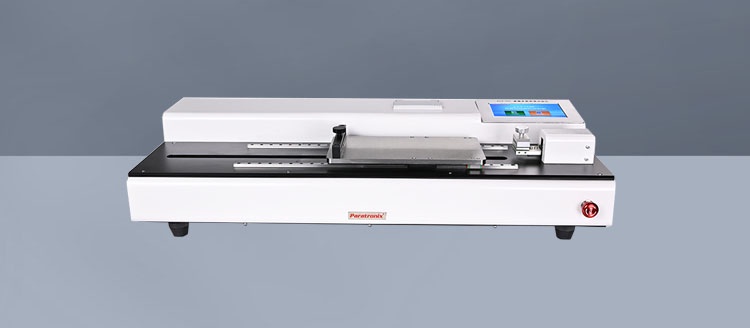

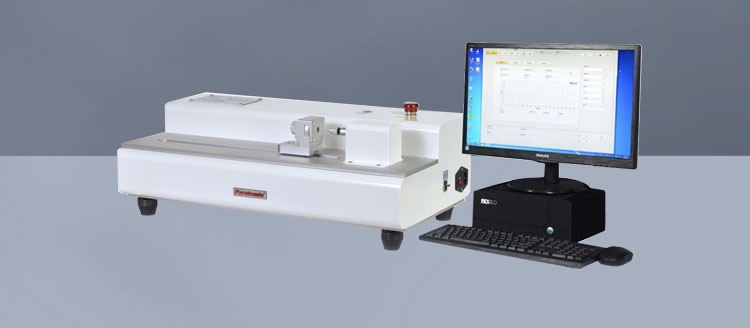
Selecting the right Friction Peel Tester begins with defining the decisions the data must support, rather than comparing instrument specifications in isolation.
For technical evaluators, the correct system should produce repeatable peel and friction values across relevant film structures, seal designs, laboratory conditions, and applicable standards.
Flexible packaging failures can emerge during converting, filling, distribution, or consumer opening. Reliable testing helps identify material risks before they become production losses or quality complaints.
This guide explains how to evaluate a Friction Peel Tester for pharmaceutical, plastic, and high-barrier packaging applications, focusing on practical selection criteria and validation considerations.
Understand the Testing Decisions the Instrument Must Support
The core purchasing question is not simply whether an instrument can measure friction or peel strength. It is whether results support release, troubleshooting, supplier approval, and process optimization.
Technical teams commonly use peel testing to evaluate heat-seal integrity, laminate bond performance, easy-open behavior, and consistency between production batches.
Friction testing is equally important when films travel through forming, filling, sealing, stacking, or conveying equipment at controlled production speeds.
Excessive friction can cause web handling problems, film scratches, poor feeding, or unstable pouch positioning. Insufficient friction can create stacking, transport, and handling issues.
Before selecting equipment, document every packaging format under evaluation. Include pouches, lidding films, blister materials, sachets, laminated rolls, shrinkable films, and coated barrier structures.
Also identify whether the laboratory needs development data, incoming inspection results, routine quality control measurements, failure analysis evidence, or formal compliance documentation.
A Friction Peel Tester selected for only one immediate test may become restrictive when packaging materials, customer requirements, or regulatory expectations expand.
Confirm Relevant Test Methods and Standards
Standards compatibility is a primary selection criterion because the chosen test method defines specimen preparation, loading conditions, test speed, reporting terms, and data interpretation.
For coefficient of friction testing, laboratories frequently reference ASTM D1894 or ISO 8295, depending on customer requirements and internal quality procedures.
For peel strength evaluation, common references may include ASTM F88/F88M, ISO 8510, ASTM D3330, or application-specific procedures developed by packaging manufacturers.
Pharmaceutical packaging projects may also require methods aligned with material specifications, validated protocols, customer standards, or documented risk-management processes.
Check whether the Friction Peel Tester supports required peel configurations, including 90-degree peel, 180-degree peel, T-peel, supported peel, and unsupported seal testing.
The instrument should permit test parameters to be controlled and recorded consistently. Important settings include crosshead speed, travel distance, preload, sample dimensions, and data acquisition rate.
Do not assume a general tensile instrument automatically meets friction and peel requirements. Dedicated fixtures, controlled geometry, and software calculations materially affect final results.
Evaluate Force Capacity and Measurement Resolution
Load-cell selection directly affects data quality. The best capacity is not the highest available range, but the range that delivers sufficient sensitivity for expected test forces.
Flexible packaging films often produce relatively low peel forces, especially for easy-open seals, coated surfaces, narrow specimens, or thin multilayer materials.
A load cell that is excessively large may provide acceptable readings while reducing resolution around the critical operating range of the packaging structure.
Conversely, an undersized load cell may overload during high-strength laminate testing, aggressive adhesive evaluation, or strong heat-seal failure investigations.
Ask suppliers for accuracy specifications expressed as a percentage of indicated value, not only full-scale accuracy. This distinction matters significantly for low-force testing.
Review repeatability, resolution, sampling frequency, calibration traceability, and zero stability. These attributes determine whether small material differences represent real changes or measurement noise.
For laboratories testing varied products, interchangeable load cells can provide flexibility. However, the changeover process should be controlled, documented, and straightforward for operators.
Assess the Friction Test Configuration Carefully
Coefficient of friction results depend on more than the instrument frame. Sled design, sled mass, contact surface, test speed, environmental conditions, and specimen handling all influence results.
A suitable Friction Peel Tester should support the relevant static and kinetic friction test arrangement required by the laboratory’s chosen standard or product specification.
Confirm that the test platform is sufficiently flat, rigid, and dimensionally stable. Uneven surfaces can introduce inconsistent contact pressure and misleading coefficient-of-friction values.
The sled should meet applicable mass and contact-area requirements. It should also be easy to inspect, clean, and replace when wear could affect repeatability.
Film orientation matters because machine direction and transverse direction can produce different friction behavior. The software should clearly identify the tested orientation.
Consider whether the lab tests film-to-film, film-to-metal, film-to-paperboard, film-to-coating, or other practical contact pairs used in production and distribution.
For coated and high-barrier films, ensure the fixture can secure specimens without wrinkles, stretching, contamination, or unintended changes to the contact surface.
Choose Peel Fixtures That Match Real Seal Behavior
Peel strength results are meaningful only when the fixture geometry reflects the intended test method and the actual mechanical behavior of the package seal.
A 180-degree peel test is widely used for flexible laminates and seals because it provides a consistent peeling angle and comparatively straightforward specimen preparation.
A 90-degree peel fixture may be more appropriate for certain bonded materials, pressure-sensitive applications, or structures requiring controlled support during separation.
For heat-sealed flexible packages, technical evaluators should determine whether the seal is expected to fail by adhesive separation, cohesive tearing, film rupture, or delamination.
The Friction Peel Tester must hold samples securely without slippage. Grip selection is especially important for smooth films, thin foil laminates, and difficult-to-clamp materials.
Pneumatic grips can improve clamping consistency for frequent testing, while mechanical grips may be adequate for lower-volume laboratory work or well-controlled sample surfaces.
Ask whether the instrument accommodates different specimen widths and jaw separations. A rigid fixture that cannot support future formats can limit useful service life.
Review Software, Data Analysis, and Traceability Requirements
Software should reduce interpretation uncertainty, not merely display a force curve. Technical evaluators need clear calculations, traceable test records, and exportable reports.
For peel tests, confirm whether the software calculates maximum force, minimum force, average force, median force, and force over a selected stable region.
Averaging only the entire curve may conceal meaningful behavior. Seal initiation, stable peeling, intermittent tearing, and end effects can produce very different force profiles.
For friction measurements, the software should distinguish static coefficient of friction from kinetic coefficient of friction and identify the calculation method used.
Useful reporting functions include specimen identification, operator name, test date, method version, material lot, environmental conditions, and calibration status.
In regulated packaging environments, role-based access, audit trails, electronic records controls, and protected methods may be important requirements rather than optional features.
Check whether data can be exported to common formats or integrated into laboratory information systems. Manual transcription increases the risk of reporting errors and lost traceability.
Consider Repeatability, Operator Influence, and Workflow Efficiency
Even a high-quality Friction Peel Tester cannot overcome inconsistent sample preparation. Selection should therefore include consideration of the complete testing workflow.
Evaluate how easily operators can mount film samples, align peel strips, position sleds, select methods, and initiate tests without creating avoidable variation.
Clear sample alignment aids are valuable when testing narrow seals or thin flexible materials. Misalignment can change peel angle and distort recorded force values.
Method templates help laboratories standardize speed, travel, data calculations, and reporting fields across shifts, product families, and multiple production locations.
For routine quality control, the user interface should make approved methods easy to select while preventing unauthorized parameter changes during production testing.
Consider throughput requirements realistically. A system with complex setup may be acceptable for research but inefficient for incoming inspection or high-frequency quality checks.
Ask for a demonstration using representative packaging films. Supplier demonstrations using generic samples may not reveal practical issues with your seals, coatings, or laminate constructions.
Account for Environmental and Material-Specific Variables
Flexible films can be sensitive to temperature, humidity, aging, additives, migration, and surface contamination. A testing strategy should recognize these variables before comparing data.
Slip additives may migrate to the film surface over time, changing friction behavior after extrusion, lamination, storage, printing, or sterilization.
High-barrier materials may combine polymer layers, aluminum foil, coatings, adhesives, and sealant layers. Their peel performance can vary with bond curing and thermal history.
Pharmaceutical packaging may experience sterilization, cold-chain exposure, humidity cycling, or long storage periods that change seal behavior and material interactions.
Where relevant, select a tester compatible with controlled laboratory environments or establish conditioning procedures before testing according to applicable standards and specifications.
Document the age of samples, storage conditions, roll direction, seal temperature, dwell time, pressure, and production line settings when investigating variation.
Without this contextual information, a Friction Peel Tester may provide precise results that are difficult to interpret or connect to manufacturing root causes.
Evaluate Validation, Calibration, and Service Support
Instrument performance must remain dependable after installation. Calibration capability, preventive maintenance, service availability, and technical documentation should influence the purchasing decision.
Confirm how force calibration is performed, which reference standards are used, and whether calibration certificates provide adequate traceability for your quality system.
Also ask how friction sled mass, platform condition, displacement accuracy, and crosshead speed are verified during routine instrument maintenance.
For regulated or customer-audited operations, installation qualification, operational qualification, and performance qualification support may be necessary during implementation.
A supplier should provide operating manuals, training materials, fixture guidance, calibration recommendations, and responsive technical assistance for troubleshooting unusual test curves.
Consider the availability of replacement grips, load cells, sleds, clamps, and spare parts. Delays in obtaining critical components can interrupt quality-control operations.
Paratronix Instruments Co., Ltd. provides packaging testing solutions for pharmaceutical packaging, plastic packaging materials, and high-barrier applications where consistent data supports material evaluation and quality control.
Compare Total Value Instead of Initial Purchase Price
The lowest-priced instrument may create higher long-term costs if it lacks suitable fixtures, repeatable performance, data traceability, training support, or upgrade capability.
Compare quotations based on the complete test solution. Include load cells, peel fixtures, friction accessories, software modules, installation, calibration, training, and service coverage.
Calculate the operational impact of poor data. Incorrect release decisions, seal failures, line stoppages, rejected shipments, and customer complaints can exceed equipment costs quickly.
A well-configured Friction Peel Tester can shorten root-cause investigations by distinguishing whether a problem originates in material friction, sealing conditions, bonding performance, or test preparation.
For development teams, reliable test data supports faster optimization of seal windows, laminate selection, coating design, and packaging-machine settings.
For quality teams, standardized methods and automated reporting strengthen supplier comparisons, incoming material control, process monitoring, and corrective-action documentation.
Request a written configuration proposal that maps every component to a stated test method, sample type, force range, report requirement, and intended laboratory workflow.
Use a Practical Selection Checklist Before Ordering
Before approving a purchase, list every film structure and packaging format that will be tested during the expected service life of the instrument.
Verify that the proposed Friction Peel Tester supports required friction and peel standards, including fixture geometry, specimen dimensions, test speed, and calculation methods.
Confirm that the selected load-cell range provides suitable resolution for low-force easy-open seals while maintaining capacity for stronger laminates and bonds.
Review software outputs using sample reports. Ensure they include the measured values, curves, test settings, sample identification, operator details, and required traceability fields.
Evaluate the practical workflow with real samples. Operators should be able to prepare, mount, test, review, and export results consistently under normal laboratory conditions.
Check calibration arrangements, service response, training options, spare-part availability, and documentation support before considering the configuration complete.
Finally, define acceptance criteria and method-validation plans before installation. This ensures the instrument becomes an effective quality tool rather than an underused laboratory asset.
Conclusion
Selecting a Friction Peel Tester for flexible packaging films requires matching the instrument to actual technical decisions, relevant standards, expected force ranges, and practical laboratory workflows.
Technical evaluators should prioritize repeatability, appropriate fixtures, controlled test conditions, useful software, and traceable records over broad but poorly matched specifications.
The right configuration helps teams evaluate friction, seal strength, peel behavior, and laminate performance with confidence across pharmaceutical, plastic, and high-barrier packaging applications.
When the test method, specimen handling, measurement range, and reporting requirements are defined clearly, the selected system can support both daily quality control and long-term packaging development.
Leave A Reply
Search by Keywords