




Recent Posts
 How test speed affects lipstick breaking strength resultsOct 10, 2026
 Choosing a Water Vapor Transmission Rate Tester for flexible filmsOct 10, 2026
 How to select a friction peel tester for flexible packaging filmsOct 09, 2026
 Key Specifications to Compare When Selecting a Lipstick Break Force TesterOct 08, 2026
 What Does a Lipstick Break Force Tester Measure in Quality Control?Oct 08, 2026

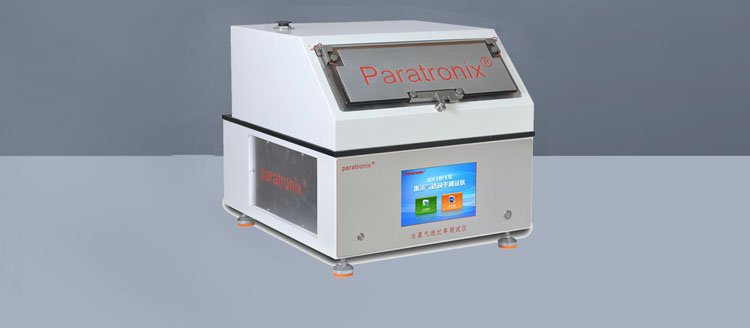
Choosing a Water Vapor Transmission Rate Tester for Flexible Films
Selecting a Water Vapor Transmission Rate Tester is not simply a matter of comparing stated accuracy or choosing the fastest available instrument. For flexible films, the measurement must reflect the barrier performance that matters in the finished package: at a defined temperature, humidity gradient, film orientation, and test duration. A result that is repeatable but obtained under the wrong conditions can still lead to an incorrect material decision.
This becomes especially important when evaluating pharmaceutical blister materials, food packaging laminates, coated films, metallized structures, and other high-barrier flexible substrates. A film may perform well in routine incoming inspection yet show substantially different moisture transmission after flexing, coating changes, adhesive curing, or conversion into a multilayer structure. The tester therefore needs to fit both the material range and the practical decisions the laboratory is expected to support.
The right choice begins with a clear question: are you qualifying a new film, monitoring supplier consistency, troubleshooting package failures, comparing barrier structures, or generating data for a formal specification? Each purpose places different demands on sensitivity, throughput, environmental control, traceability, and operator workflow.
Start with the Barrier Range, Not the Instrument Brochure
The first screening criterion is the expected WVTR range of the films being tested. Water vapor transmission rate is generally reported as the amount of water vapor passing through a given area over time under specified conditions. It is not an inherent number that can be compared freely across every test setup. Temperature, relative humidity, test area, sample condition, and the selected method all affect the result.
For ordinary polyethylene, polypropylene, paper-based laminates, and some commodity flexible materials, moderate transmission rates may be measured without extreme sensitivity. High-barrier films are different. Aluminum foil laminates, metallized substrates, coated PET, EVOH structures, and advanced barrier coatings can require lower detection limits and stronger control of leakage, edge sealing, and background moisture. If the instrument’s lower measurement capability is too close to the expected WVTR, the laboratory may obtain unstable values or very long test cycles.
It is worth asking suppliers to explain the usable measurement range rather than only quoting a theoretical minimum. A meaningful answer should address the test cell design, sensor principle, sealing approach, stabilization time, specimen area, and the conditions under which the claimed range is achievable. For low-permeation materials, the quality of the test system often matters as much as the nominal sensor sensitivity.
Do not ignore the upper end of the range
A laboratory that works with both high-barrier laminates and more permeable base films may need a broader operating range than initially expected. A highly sensitive system is not automatically the most efficient for every sample. Very permeable films can reach equilibrium quickly, while a low-permeation construction may need a longer stabilization period. The best selection is often an instrument that provides reliable performance across the laboratory’s actual material portfolio, rather than one optimized for a single showcase sample.
Match the Test Method to the Decision Being Made
Different WVTR methods are used because flexible films present different testing challenges. The method should be selected before the equipment, particularly where customer specifications, regulatory documentation, internal procedures, or supplier agreements reference a named standard.
Infrared sensor-based systems are commonly associated with ASTM F1249 and ISO 15106-2. In a typical configuration, water vapor moves through the specimen from a controlled humid side toward a dry carrier-gas side, where an infrared detector measures the transmitted vapor. This approach is widely used for plastic films, sheets, and packaging materials and can offer automated control with good repeatability when the system is properly maintained.
Electrolytic sensor methods, covered by ISO 15106-3, are another established route for measuring water vapor transmission through barrier materials. Gravimetric approaches, including methods referenced in ASTM E96, may also be used in some applications. They can be useful for certain materials and comparative studies, but they are generally more dependent on careful handling, conditioning, weighing discipline, and longer measurement periods. Their suitability should be judged against the expected permeability level and required turnaround time.
A common mistake is to treat results from different methods or different conditions as interchangeable. They are not necessarily equivalent. When comparing historic data with new measurements, confirm the method, test temperature, relative humidity, specimen area, conditioning process, and whether the film was tested in the same direction and condition. Otherwise, an apparent material change may only be a change in test configuration.
Environmental Control Is Part of the Measurement System
Water vapor permeation is strongly affected by temperature and humidity. This sounds obvious, but it is where many selection decisions become too superficial. The instrument should be able to establish and maintain the conditions relevant to the product specification, not merely display a temperature setpoint. Ask how humidity is generated and controlled, whether the humid side is monitored independently, how temperature uniformity is managed, and what happens if laboratory conditions fluctuate.
For pharmaceutical packaging, test conditions may need to align with internal qualification protocols or market-specific package requirements. Food and consumer packaging teams may be comparing structures designed for storage in humid distribution environments. In either case, a narrow set of fixed conditions may be less useful than an instrument capable of controlled testing across the required temperature and humidity window.
Equally important is specimen conditioning. A hygroscopic layer, paper component, adhesive, or polymer with moisture uptake behavior may need time to equilibrate before a stable permeation result is meaningful. The laboratory should define how samples are cut, handled, conditioned, mounted, and documented. A sophisticated tester cannot correct inconsistent specimen preparation.
Examine Sample Handling and Seal Integrity Closely
Flexible films rarely arrive in an ideal laboratory form. They may curl after slitting, carry coating variation, contain surface texture, or include structures that are sensitive to compression. Some samples are narrow, while others are thicker laminates or foil-containing composites. The test fixture needs to accommodate the physical reality of the sample without creating a leak path around its perimeter.
Edge leakage is one of the most damaging sources of error in barrier testing. If vapor bypasses the film through an incomplete seal, the measured transmission may appear much higher than the actual material permeability. For high-barrier films, this effect can dominate the result. Ask how the tester verifies system tightness, what sealing materials or fixtures are used, whether blank tests are part of the workflow, and how operators recognize an abnormal curve rather than accepting a final number automatically.
Film orientation should also be controlled. Multilayer structures may have a coated, treated, or functional side intended to face either the package interior or exterior. Depending on the objective, the vapor source should be placed on the relevant side. This should be recorded in the test report, especially during material qualification or supplier comparison.
Look Beyond Accuracy: Review Repeatability, Diagnostics, and Data Integrity
Published accuracy is important, but it is not the only indicator of a dependable WVTR testing process. Repeatability between runs, reproducibility between operators, stable baseline behavior, leak diagnostics, and calibration management are often more relevant to day-to-day quality control. A system that produces a result quickly but gives limited visibility into test status can create more investigation work later.
Useful software should make it easier to review the test curve, identify whether equilibrium was reached, retain raw data, document sample information, and generate reports that match the laboratory’s quality process. Where electronic records or audit expectations apply, the specific data integrity requirements should be defined early. It is better to confirm user permissions, result revision controls, calibration records, and export needs before installation than to treat them as post-purchase details.
Calibration deserves the same practical scrutiny. Ask what reference materials or verification tools are used, how often routine checks are recommended, what consumables are required, and whether service support is available in the regions where the instrument will operate. The cost and downtime associated with maintenance should be included in the evaluation, not separated from the technical comparison.
Throughput Depends on More Than the Number of Test Cells
Multi-cell capability can be valuable, particularly when incoming inspection requires several samples or when development teams compare multiple structures at once. Yet cell count alone does not define laboratory capacity. A four-cell instrument still creates a bottleneck if sample mounting is difficult, stabilization is lengthy, reports require manual transcription, or one unusual sample occupies a cell for an extended period.
A realistic workflow review should include sample preparation time, conditioning, mounting, test duration, data review, retesting, and instrument cleaning. Consider whether routine quality-control samples and research samples will share the same equipment. If they do, a scheduling approach may be needed so urgent release testing is not delayed by a long-running development study.
Build the Evaluation Around Real Samples
Before committing to a Water Vapor Transmission Rate Tester, evaluate representative films rather than relying entirely on generic demonstrations. Include a material near the expected lower end of the range, a routine production film, and, if relevant, a difficult construction such as a curled laminate, coated substrate, or foil-based composite. The purpose is not merely to obtain a number. It is to assess mounting, stabilization, repeatability, test visibility, reporting, and operator effort under realistic conditions.
The evaluation discussion should also cover installation requirements, gas supplies where applicable, laboratory utilities, operator training, preventive maintenance, spare parts, and response arrangements for technical support. A well-specified tester can still become an underused asset if these practical elements are overlooked.
Paratronix Instruments Co., Ltd. develops packaging testing instruments for pharmaceutical packaging, plastic packaging materials, high-barrier materials, and related applications. In a WVTR project, the most useful contribution from an equipment supplier is often not a generic model recommendation, but a structured review of the film construction, applicable method, target conditions, expected transmission range, and reporting requirements. That process helps distinguish an instrument that can perform a test from one that can support reliable material decisions over time.
The final selection should be defensible in practical terms: the method matches the specification, the operating range covers the materials, the test cell handles the samples securely, environmental conditions are controlled, and the laboratory can maintain the system consistently. When those points are confirmed before purchase, WVTR data becomes more than a release-test figure; it becomes evidence that can guide film selection, supplier control, package development, and investigation work with far less uncertainty.
Leave A Reply
Search by Keywords