




Recent Posts
 Paper Tensile Strength Testers: Which Grips and Load Cells Do You Need?Nov 21, 2026
 Are Thin Film Tensile Testers Compatible With ASTM D882? What to CheckNov 21, 2026
 Air Permeability Testing for Plastic Films: Methods and Use CasesNov 21, 2026
 What Does an Inclined Plane Friction Tester Measure in Kraft Paper?Nov 20, 2026
 What does a TAPPI T548 inclined plane friction tester measure?Nov 20, 2026

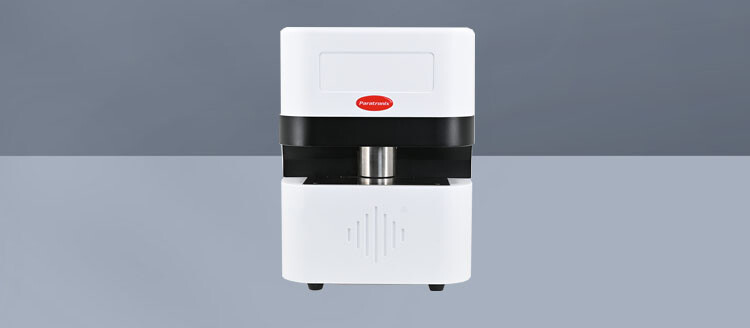
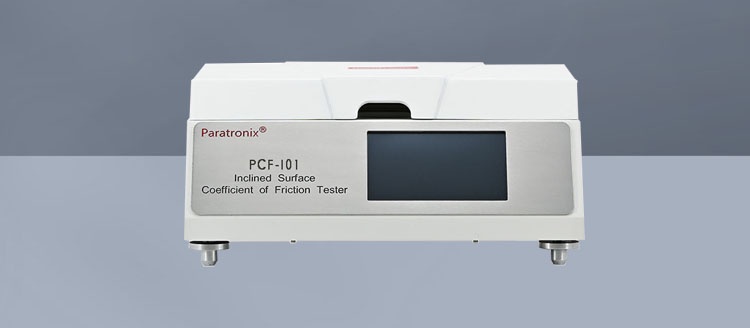
Air permeability describes how readily air passes through a plastic film when a pressure difference is applied across it. The result helps explain whether a film allows substantial airflow, offers resistance to gas movement, or acts as a barrier under the specified conditions. An air permeability tester for plastic film measures that behavior using a controlled test area, a pressure difference, and a way to determine the amount of air passing through the specimen.
The number only has meaning alongside its test conditions. A porous film used to let a package breathe presents a different measurement problem from a dense, high-barrier laminate designed to restrict oxygen transmission. Both involve gas movement, but they do not necessarily call for the same instrument or produce directly comparable results.
What an air permeability result describes
In an air permeability test, a film separates two chambers or sides of a test fixture. The instrument creates a pressure difference across the exposed area and measures the resulting flow or a related change in pressure. Air moves from the higher-pressure side toward the lower-pressure side through pores, defects, or the film material itself.
Airflow through open pores and gas permeation through a dense polymer are different mechanisms. A microporous film can contain connected pathways through which air flows. In a dense film, gas molecules first dissolve into the polymer, diffuse through it, and leave the opposite surface. The same film can also contain a pinhole or an imperfect seal that creates an unintended leakage path.
Results can be expressed as airflow per unit area, a transmission rate, or the time required for a specified volume of air to pass through a specimen. A time-based result increases as airflow resistance increases; a flow-based result generally moves in the opposite direction. Always read the unit and test method before comparing values.
Air permeability, oxygen transmission, and water vapor transmission
Air is a mixture of gases, whereas oxygen transmission and water vapor transmission tests focus on individual substances. A material does not necessarily transmit every gas at the same relative rate: polymer chemistry and the way each substance dissolves and diffuses affect the result. An air permeability value therefore cannot be treated as an oxygen transmission rate or a water vapor transmission rate.
This distinction matters when the package requirement concerns oxidation or moisture uptake. An air test can help characterize a porous film or reveal a change in airflow behavior, while a gas-specific test provides evidence about the particular barrier property being evaluated.
Common methods for testing plastic film
Pressure-driven airflow measurement
In a pressure-driven airflow test, the specimen is clamped over an opening of known area. The instrument applies a specified pressure difference and measures air passing through the film once the required measurement condition is reached. Depending on the apparatus, the result is reported as a flow rate, flow per unit area, or a related permeability value.
This approach is useful when the film allows enough air through its structure to be measured within the instrument’s range. Microporous films and deliberately breathable packaging films are examples. The pressure difference matters because airflow changes with the applied driving force, and porous structures can also deform under pressure. Results taken at different pressures should not be assumed equivalent.
Air resistance based on passage time
Some instruments express air resistance as the time needed for a defined volume of air to pass through a specified film area under defined conditions. A longer passage time indicates greater resistance within that method. The volume, exposed area, pressure conditions, and instrument configuration are part of the result; the time alone is insufficient for a meaningful comparison.
Passage-time methods can be useful for comparing films with measurable airflow resistance. If a specimen is extremely restrictive, the test can take too long or fall outside the apparatus’s useful range. Conversely, very open material can produce a passage time too short for reliable resolution.
Pressure change in a sealed chamber
A differential-pressure arrangement can infer gas transmission from a pressure change on the receiving side of a specimen. The film separates a higher-pressure side from a lower-pressure chamber, and the instrument monitors the change over time. Temperature stability, chamber tightness, and the ability to detect small pressure changes are important to the result.
For dense barrier films, gas-specific permeation methods are often more informative than a general air-flow measurement. The test gas and reporting basis must be identified: a measurement made with oxygen, nitrogen, or another gas describes that gas under the stated conditions, not air as a whole.
Test conditions that change the result
Pressure difference and exposed area
The pressure difference drives air movement. A higher pressure difference generally produces more flow, but doubling pressure does not guarantee a result that can simply be halved for comparison. Flow behavior can change with pore structure, and a flexible film can stretch or move against the fixture. A comparison is strongest when the same pressure conditions and measurement method are used.
The exposed test area determines how much film is available for passage. A reported total flow through one opening cannot be compared directly with total flow through a differently sized opening. Normalizing by area helps, provided the other conditions and reporting conventions also match.
Temperature, humidity, and conditioning
Temperature affects gas behavior and the mobility of polymer chains. It can also change pressure in the instrument’s chambers, which matters when a small pressure change is being measured. Specimens and equipment need sufficient time to reach the specified test temperature before readings are interpreted.
Humidity can alter the properties of moisture-sensitive layers and influence gas transmission through a laminate. Conditioning a specimen at a stated temperature and relative humidity makes the starting state clearer. Two results obtained from films with different moisture histories can differ even when the films have the same nominal construction.
Thickness and film construction
For a uniform, dense material under appropriate steady-state conditions, greater thickness generally increases the distance gas must travel and reduces transmission per unit area. That relationship is not a reliable shortcut for every commercial film. Porosity, coatings, fillers, orientation, and multilayer construction can change the transport mechanism.
Thickness is also rarely perfectly uniform across a roll. A specimen taken from a thinner region can give a different result from one taken elsewhere. With a laminate, the barrier layer and its continuity can matter more than the overall thickness. Reporting only total thickness leaves out information needed to interpret a change in performance.
Specimen preparation and sealing
Wrinkles, creases, scratches, and contamination can affect the exposed area or prevent an even seal. A clamping gasket that overlaps the opening changes the effective area; a poor seal can create a bypass around the film. Both can distort the reported transmission.
Sampling position matters as well. Measurements from one small specimen describe that portion of the material, not necessarily the entire roll. Multiple specimens taken from defined positions can help distinguish local variation from a broader process change. Record the sample orientation when the manufacturing direction is relevant to the test or material structure.
Reading results without confusing flow, barrier, and leakage
A low measured flow suggests strong resistance to air passage under the test conditions, but it does not identify the cause. A dense polymer layer, a thicker specimen, and blocked pores can all reduce flow. If the film is intended to breathe, blocked pores can represent a performance problem rather than an improvement.
High measured flow also has several possible causes. The film may be intentionally porous, its pore structure may have changed during processing, or a damaged specimen may contain a pinhole. A leak at the fixture seal can produce a similar reading even when the film itself is sound.
- Unexpectedly high flow: inspect the specimen for visible damage and examine the gasket contact area. A repeat test with a fresh specimen can help separate local damage from a persistent material or fixture issue.
- Unstable readings: look for film movement, incomplete sealing, pressure fluctuations, or insufficient time for temperature to stabilize. The appropriate investigation depends on the instrument and method.
- Results near the measurement limit: confirm that the expected flow or transmission falls within the instrument’s usable range. A display value alone does not establish that the result is reliable.
- Differences between laboratories: compare the method, pressure, temperature, humidity, exposed area, conditioning, and reporting units before attributing the difference to the material.
Instrument verification and a leak assessment using the apparatus procedure help establish whether the measurement system is behaving as intended. For a pressure-change test, even a small system leak can be significant when the film itself transmits very little gas.
Use cases across plastic packaging
Breathable packaging films
Some plastic packaging films are designed to allow gas exchange. Their performance depends on the size, number, and connectivity of air pathways. Air permeability measurements can reveal whether a change in film formulation or processing has altered airflow resistance.
For produce packaging, gas exchange interacts with the product’s respiration and the complete package design. A flat-film air test helps characterize the material, but it does not by itself establish the atmosphere inside a finished pack. Perforations, seals, package area, storage temperature, and the packed product also influence that atmosphere.
Pharmaceutical packaging materials
Pharmaceutical packaging often uses films and laminates selected for protection against specific gases or moisture. A general air permeability test can be relevant when evaluating a porous component or investigating an unexpected airflow path. For a dense protective film, oxygen or water vapor transmission testing is more directly tied to those individual barrier requirements.
Material testing and package integrity testing answer different questions. A flat specimen can show the transmission behavior of the film, while leaks at a formed cavity, seal, or closure require evaluation of the finished package using an appropriate integrity method.
High-barrier films and laminates
High-barrier constructions can transmit gas so slowly that an airflow instrument designed for breathable materials cannot resolve the value with useful confidence. Gas-specific equipment with a suitable measurement range is then needed. The test report should identify the gas, conditions, units, and specimen construction so that results can be interpreted in context.
Barrier performance can change after converting operations such as forming, folding, or sealing. Comparing material before and after a defined process can reveal whether the process affected the tested property, provided specimens and conditions are comparable. A damaged barrier layer and a leaking package seal require different investigations, even when both allow unwanted gas ingress.
Information that makes a test result useful
A useful report identifies the film or laminate, specimen thickness, test method, exposed area, pressure conditions, temperature, humidity, conditioning, and result units. It also records the number of specimens and any relevant observations, such as visible damage or unusual variation. For gas-specific measurements, the gas and the basis used to express the transmission rate belong with the result.
Those details turn a single number into evidence that can be compared with a later production sample, a different film construction, or a stated performance requirement. Without them, an apparent change in permeability can be a change in the test conditions.
Leave A Reply
Search by Keywords