




Recent Posts
 What Does an Inclined Plane Friction Tester Measure in Kraft Paper?Nov 20, 2026
 What does a TAPPI T548 inclined plane friction tester measure?Nov 20, 2026
 What Does a PET Bottle Wall Thickness Tester Measure?Nov 20, 2026
 Static vs. Kinetic COF: How ASTM D1894 Testers Capture BothNov 19, 2026
 What Does an ASTM D1894 Coefficient of Friction Tester Measure?Nov 19, 2026
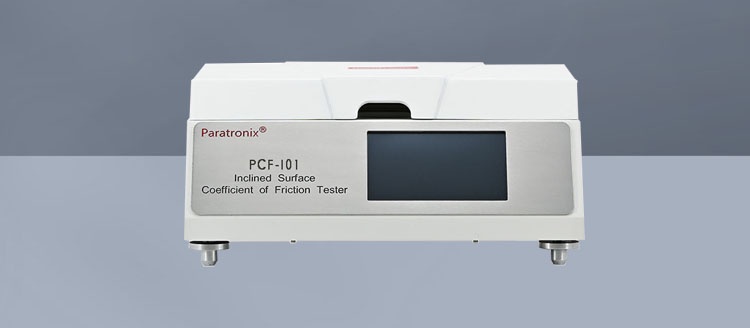

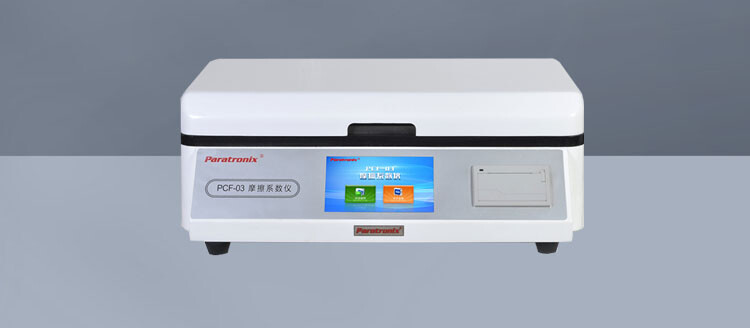
A TAPPI T548 inclined plane friction tester measures the resistance to the start of sliding between two contacting surfaces. It does this by gradually tilting a plane and recording the angle at which a specimen or sled begins to move. That angle can be used to express static friction, often as a coefficient calculated from the tangent of the angle.
The measurement is useful when sheets, cartons, or packaging materials shift unexpectedly during stacking or handling. It gives a controlled way to compare how readily two surfaces begin to slip, although the result applies to the particular materials and test conditions used—not to every way a package might be handled.
What the sliding angle represents
On a horizontal surface, gravity presses an upper specimen against the surface below it. As the plane is raised, part of the gravitational force acts parallel to the plane and pulls the upper specimen downhill. Static friction resists that movement until the resisting force is no longer sufficient and sliding begins.
The angle at that point is often called the angle of slide or sliding angle. A larger angle generally indicates greater resistance to the initiation of sliding for the surfaces tested. A smaller angle indicates that movement began with less tilt.
Under the idealized inclined-plane relationship, the coefficient of static friction is:
Coefficient of static friction = tangent of the sliding angle
This relationship provides a dimensionless value, while the angle is reported in degrees. The coefficient is not a percentage, and the angle itself is not the coefficient. Some instruments may display one or both values, but the test report should make clear which quantity is being presented and how it was obtained.
The calculation assumes a simple balance of forces at the onset of motion. Real materials may bend, curl, stick, or contact one another unevenly, so the calculated coefficient is best treated as a result of the defined test arrangement rather than an absolute property independent of conditions.
Which surfaces are actually being measured?
Friction belongs to a pair of contacting surfaces, not to one material in isolation. In an inclined-plane test, one surface is positioned on the plane and another contacts it from above, commonly as part of a sled or specimen assembly. The tester observes when relative movement begins as the plane is inclined.
Depending on the applicable method and the question being investigated, the contact may be material against the same material or one material against a different surface. For example, the friction of a printed side against an unprinted side may differ from that of two unprinted sides. A coating, laminate, treatment, or surface finish can also change the result.
That distinction matters when interpreting a number. A result described only as “friction of the film” leaves out the surface against which the film was tested. A useful identification would also describe the contacting faces and relevant specimen orientation. Where a specific pairing is required by the applicable TAPPI method, follow that requirement rather than substituting a convenient surface.
What happens during an inclined-plane test?
The basic sequence is straightforward, but consistency in preparation and setup is essential. The following describes the measurement principle rather than a substitute for the applicable edition of TAPPI T548 or the instrument instructions.
- Prepare and identify the specimens. Select representative material and distinguish the sides that will contact one another. Avoid altering the test area through unnecessary handling, creasing, or contamination.
- Condition the material as required. Record the relevant environmental conditions and use the conditioning procedure specified for the test. Paper-based materials can be particularly sensitive to humidity.
- Mount the contacting surfaces. Place the specimens in the specified arrangement, keeping the contact area smooth and secure without adding wrinkles or excessive tension. Use the prescribed sled or loading arrangement.
- Increase the angle. Raise the plane according to the method and instrument instructions. The specimen assembly remains in place until the downhill force overcomes resistance to initial movement.
- Record the onset of sliding. Note the angle indicated when sliding begins, using the method’s definition of that event. Calculate or record the coefficient if required, then repeat the test as specified.
Details such as specimen dimensions, loading, conditioning, tilt rate, number of determinations, and reporting requirements should be taken from the applicable standard edition. They should not be inferred from the general principle. Two laboratories can use an inclined plane yet obtain results that are not directly comparable if their specimen preparation or operating conditions differ.
Static friction is not the same as sliding friction
A TAPPI T548 inclined plane friction tester is primarily concerned with the resistance encountered before sustained movement begins. That is static friction. Once surfaces are moving relative to each other, the resistance is described as kinetic or dynamic friction. The two values can differ for the same material pair.
This distinction affects the question a test can answer. Suppose stacked sheets stay aligned while at rest but move readily after the stack is disturbed. A sliding-angle result can help characterize the threshold for initial movement; it does not, by itself, tell how much force is needed to keep the sheets moving afterward.
Similarly, a low sliding angle does not establish how far a package will travel after it starts moving. Subsequent motion depends on dynamic friction and on conditions outside the test, including vibration, acceleration, surface geometry, and restraints.
Some friction instruments use a horizontal arrangement and measure force as a sled is pulled across a surface. Such methods may be designed to report static friction, kinetic friction, or both. Their results should not automatically be treated as interchangeable with inclined-plane results: the motion, loading, contact arrangement, and data processing may differ.
Where the measurement helps
Sheets that slide during handling
Paper, paperboard, or film sheets can move against one another as they are lifted, conveyed, or placed in a stack. A sliding-angle test can help compare surfaces when a change in coating, finish, or material batch appears to coincide with a change in handling behavior.
The first step is to reproduce a relevant contact pair. If the practical concern involves the coated face of one sheet touching the reverse face of another, testing two coated faces answers a different question. The test should also use specimens that represent the material’s normal condition rather than unusually clean or damaged areas.
Packaging stability
A stack of packages may rely partly on friction between adjacent surfaces to resist shifting. Comparing the sliding angles of candidate packaging surfaces can provide information about their relative tendency to begin sliding under the selected conditions.
It does not establish that a loaded stack is stable in transport. Package shape, load distribution, deformation, vibration, wrapping, and contact with pallets or equipment all affect stack behavior. An inclined-plane result is one material-level input; a finished-load assessment may require a different test arrangement.
Investigating a change in surface behavior
When a material starts behaving differently, comparison testing can help narrow the investigation. Test retained and current material using the same surface pairing, specimen preparation, conditioning, and instrument settings. Record which side faces the plane and which side contacts the sled.
A difference in results may support further investigation of the surfaces, but it does not identify the cause on its own. Changes in surface treatment, contamination, humidity, or specimen condition are possible explanations that need separate evidence. A similar result does not rule out other handling problems, such as changes in package geometry or equipment alignment.
Factors that can change the result
Surface condition. Dust, fingerprints, transferred coating, moisture, or residue on either contact surface can alter friction. Reusing a specimen may also change the surface through abrasion or transfer. Handle the intended contact area as little as practical and follow the method’s instructions on specimen use.
Temperature and humidity. Environmental exposure can change the condition of packaging materials and their surfaces. Paper and board may absorb or release moisture, while some coatings and films may respond differently to temperature. Conditioning matters because it makes comparisons more meaningful; recording the environment helps explain differences between test runs.
Surface orientation and direction. The two sides of a sheet need not behave alike. Direction can matter as well, particularly when a surface has texture, print, or manufacturing features. Marking the tested face and direction before cutting specimens helps prevent an unintended change in the contact pair.
Flatness and mounting. Curl, folds, trapped air, and loose mounting can change the contact area or cause the specimen to move irregularly. Excessive stretching can also modify the surface being tested. A smooth setup is important, but preparation should not flatten the material by a process that changes its relevant properties.
Loading and tilt rate. The mass and geometry of the specified assembly affect contact, while the rate at which the angle increases affects how the onset of movement is observed. Use the prescribed arrangement and settings. Do not assume that results obtained with an improvised weight or a different rate are equivalent to a standard test.
Judging the start of movement. An uneven specimen may flex or shift locally before the assembly slides. Operators and instruments must identify the event according to the applicable procedure. If the onset is ambiguous, record the observation rather than silently treating every small movement as a valid endpoint.
Reading a result without overinterpreting it
A higher sliding angle indicates greater resistance to initial sliding for the tested surfaces under the reported conditions. That may be desirable for a stack that must remain aligned, but it is not automatically better in every operation. Excessive resistance between sheets may be undesirable where materials need to separate or feed smoothly.
Individual readings also need context. Look at the series of determinations required by the method, not just a single favorable value. Wide variation can point to inconsistent surface condition, specimen mounting, or material variability, although the results alone cannot establish which explanation is correct. Report the variation and investigate the setup before drawing a firm conclusion.
For a result to be useful later, retain the sliding angle or calculated coefficient alongside the material identification, contacting faces, test direction, conditioning, and method edition. Note any departure from the prescribed procedure. These details make it possible to distinguish a genuine material comparison from a change in test conditions—and to decide whether another test is needed to represent the actual handling problem.
Leave A Reply
Search by Keywords