




Recent Posts
 What Does an Inclined Plane Friction Tester Measure in Kraft Paper?Nov 20, 2026
 What does a TAPPI T548 inclined plane friction tester measure?Nov 20, 2026
 What Does a PET Bottle Wall Thickness Tester Measure?Nov 20, 2026
 Static vs. Kinetic COF: How ASTM D1894 Testers Capture BothNov 19, 2026
 What Does an ASTM D1894 Coefficient of Friction Tester Measure?Nov 19, 2026
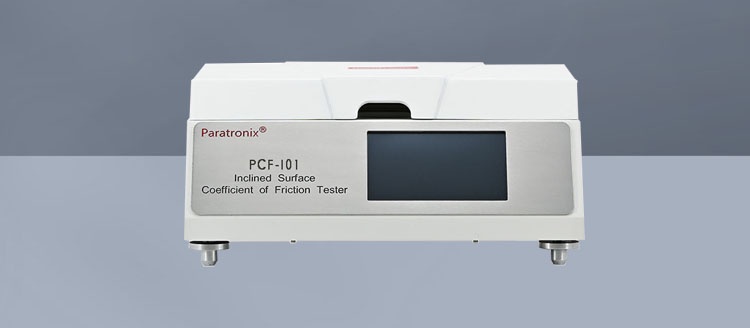

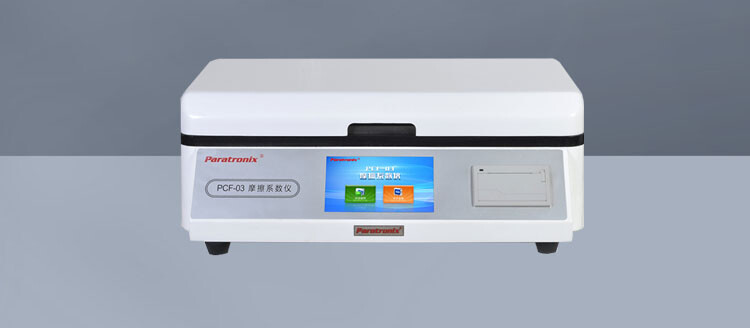
An inclined plane friction tester for kraft paper measures how readily one paper surface slides against another as the angle of a test platform increases. The angle at which sliding begins can be used to calculate the static coefficient of friction, a useful indicator of surface grip. Understanding this measurement helps packaging professionals assess how kraft paper may behave during handling, stacking, and converting. This article explains the test principle, the results it provides, and the factors that can affect them.
What the tester actually measures
The primary result is the angle of inclination at which a defined sliding event occurs. In a typical arrangement, one kraft paper specimen is secured to a tilting plane and another is attached to a weighted sled. As the plane rises, the force pulling the sled downhill increases relative to the force pressing the surfaces together. At some point, the sled begins to move.
Under an idealized model, the static coefficient of friction is the tangent of that angle:
Static coefficient of friction = tan (angle of inclination)
For example, an angle of 30 degrees corresponds to a calculated coefficient of approximately 0.58. This is an illustration of the calculation, not an acceptance limit for kraft paper. A higher angle generally indicates greater resistance to the start of sliding for the tested pair of surfaces.
The distinction between an observed angle and a calculated coefficient matters. Some methods define the endpoint in terms of a specified movement rather than the first barely visible motion. Sled geometry, test procedure and instrument behavior can also affect the relationship between the observed endpoint and the ideal calculation. Report the result in the form required by the applicable method, rather than assuming every angle is directly interchangeable with every coefficient.
Why surface grip matters for kraft paper
Kraft paper is used in applications where sheets, sacks or paper-based packaging come into contact with each other and with handling equipment. Friction influences that contact, but the desirable result depends on the job.
Consider filled paper sacks stacked on a pallet. If the contacting surfaces slide too easily, a stack may be more prone to shifting during handling or transport. Testing paper against paper can help compare materials intended for this kind of application. It cannot, by itself, establish whether a loaded pallet is stable: sack shape, fill, stacking pattern, wrapping and transport conditions all matter.
On a converting line, the question may be different. Sheets or webs need to move through equipment in a controlled way. Too little friction at a particular contact point can contribute to slipping; too much can make feeding or separation less predictable. A paper-to-paper inclined-plane result is useful background, but it does not replace testing against the rollers, belts or other materials involved in the actual process.
There is no universally “better” friction value. A result becomes meaningful when it is tied to a surface pairing, a test method and a practical requirement.
What the result does—and does not—tell you
An inclined-plane test principally addresses static friction: the resistance associated with starting relative movement. It should not automatically be described as a measurement of kinetic, or sliding, friction. Kinetic friction concerns surfaces already moving relative to each other and is commonly assessed with a method designed to record force during motion.
Nor is the coefficient a complete description of paper quality. Kraft paper can have a suitable friction result and still be unsuitable for an application because of strength, moisture behavior, print performance or another property. Conversely, a material that performs well in one friction test may behave differently when it contacts a different substrate.
For that reason, the phrase “the friction of the paper” can be misleading. Friction belongs to a contact system: one surface against another, under defined conditions. Paper against paper, paper against film and paper against a metal surface are different tests, even when the same kraft grade is involved.
Inclined plane versus horizontal sled testing
A horizontal sled method typically pulls a sled across a stationary surface and measures the force required to initiate or sustain motion. An inclined-plane method increases the angle until the defined sliding endpoint is reached. Both can provide useful friction information, but they do not necessarily produce equivalent results.
Contact pressure, rate of movement, endpoint definition and specimen preparation may differ. If a supplier reports an inclined-plane angle and a customer specifies a coefficient obtained by a horizontal method, converting the angle with a tangent does not automatically make the two reports comparable. The test method must be considered as well as the number.
Why two tests on the same paper can disagree
Variation is not always a sign that an instrument is faulty. Kraft paper is a fibrous material, and the surface presented to the sled can change with handling and preparation. Before questioning a result, look closely at what was actually tested.
Paper side and direction. The two sides of a sheet may differ in texture or finish. Friction can also depend on whether the sliding direction is aligned with or across the machine direction. A comparison is more useful when the side facing the contact and the orientation are recorded consistently.
Humidity and conditioning. Paper responds to its environment. Differences in moisture condition can influence surface behavior, so specimens should be conditioned and tested according to the selected method. A result taken immediately after material arrives from a different environment may not be directly comparable with one obtained after conditioning.
Surface condition. Coatings, printing, treatments, dust, wear and creases can alter the contact. Even handling can matter if fingers deposit oils or contaminate the test area. If the intended application involves a printed or treated face, testing only an unprinted face may answer the wrong question.
Setup and endpoint. Sled mass, contact area, specimen mounting, rate of inclination and the definition of sliding should follow the chosen procedure. A specimen that wrinkles or shifts in its fixture can produce a result that reflects the setup as much as the material.
One practical precaution is to avoid relying on a single reading. Test multiple representative specimens as specified by the method, note the spread, and investigate unusual values before discarding them. An outlier might be a handling error, but it might also reveal a genuine inconsistency in the material.
How to make a friction result useful
Start by defining the surfaces that matter in use. For stacked sacks, paper-to-paper contact may be a sensible starting point. For a feeding problem, the relevant pairing could be paper against a component surface. If the equipment or method cannot reproduce that contact, treat the result as a comparative laboratory indicator rather than a direct prediction of machine behavior.
A useful report should identify the material and specimen faces, the sliding direction, conditioning and test conditions, the method used, and the number of observations. It should also state whether the reported figure is an angle, a calculated coefficient or another endpoint. Keep individual results where practical; an average alone can hide inconsistent surface behavior.
When comparing batches, change as little of the procedure as possible. If the paper specification changes at the same time as the lab changes sled mass, specimen orientation or conditioning, it becomes difficult to know which change caused a different result. Equally, a laboratory comparison should not be used to set an acceptance limit until it has been related to the application and agreed between the relevant parties.
Standards, equipment and the next question to ask
Inclined-plane friction testing is covered by established paper and packaging test methods, including TAPPI T 815 for the coefficient of static friction of corrugated and solid fiberboard using the inclined-plane method. Its scope should not be assumed to cover every kraft paper application. Check the current edition, specimen requirements and applicability of any method before specifying it for a material or contract.
Instrument selection should follow the method and sample, not the other way around. Confirm the permitted specimen arrangement, sled and loading requirements, angle indication, endpoint detection and calibration arrangements. If a project requires testing kraft paper against film or another packaging material, verify that the proposed setup can hold both surfaces as required without distorting them.
Paratronix Instruments Co., Ltd. develops and supplies packaging testing instruments for materials used across packaging applications, including plastic and high-barrier materials. For a kraft paper friction question, the useful starting point is a clear description of the contact surfaces and the test method—not a generic claim that one instrument or one coefficient will predict every handling outcome.
If an existing result looks unexpectedly high or low, revisit the specimen faces, conditioning and endpoint before changing the paper specification. Those details often determine whether two figures describe the same test at all.
Leave A Reply
Search by Keywords