




Recent Posts
 Static vs. Kinetic COF: How ASTM D1894 Testers Capture BothNov 19, 2026
 What Does an ASTM D1894 Coefficient of Friction Tester Measure?Nov 19, 2026
 ASTM F88 Seal Strength Testing: Specimens, Test Setup and ReportingNov 19, 2026
 Choosing a Seal Strength Tester: Force Range, Grips and Test SpeedNov 19, 2026
 From Slip Angle to Friction: How Inclined Plane Testing WorksNov 19, 2026
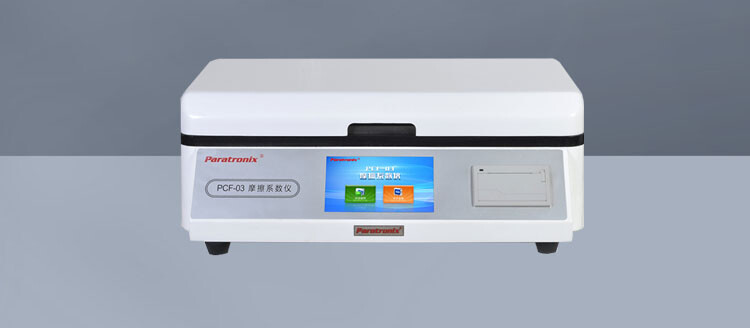
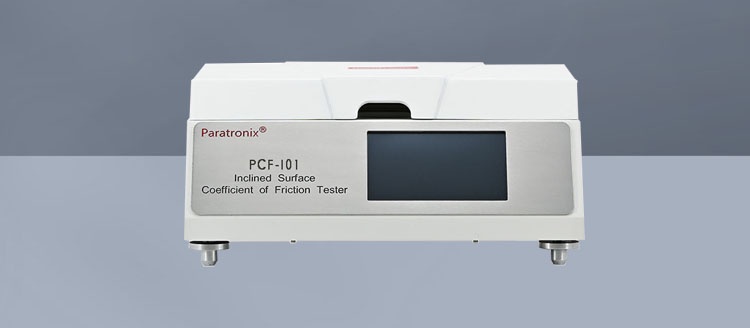
What Does an ASTM D1894 Coefficient of Friction Tester Measure?
An ASTM D1894 coefficient of friction tester measures the resistance encountered when two surfaces slide against each other under specified test conditions. It helps determine both static friction, the force needed to initiate movement, and kinetic friction, the force required to maintain it. For manufacturers and researchers working with plastic films and packaging materials, these measurements provide useful insight into how materials may behave during processing and handling. This article explains what the tester measures, how the test works, and how to interpret the results.
The distinction between a material property and a test result matters here. A coefficient of friction describes the interaction between two surfaces under defined conditions; it is not a permanent number attached to one film. Change the opposing surface, the film side, the environment or the test procedure, and the result may change too.
The Two Friction Values and What They Mean
During a friction test, the instrument records the force required to move one surface relative to another while a known normal force presses them together. The coefficient of friction is the ratio of frictional force to normal force. Because it is a ratio, it has no unit.
For static friction, the relevant force is associated with the onset of sliding. A relatively high static coefficient can indicate that surfaces resist separating from rest. In practical terms, that may be relevant when stacked film sheets need to be picked individually or when layers in a roll begin moving relative to each other.
Kinetic friction describes resistance once sliding is underway. It can help a team investigate how a film travels over another surface or how adjacent packaging layers move during handling. A force-versus-travel trace can also reveal irregular motion that a single average value may not show. The applicable standard and test setup determine how the reported values are obtained; a prominent peak on a graph should not automatically be treated as a valid static result without checking the method.
These values are related, but they answer different questions. A film can start moving with a noticeable initial resistance and then slide more freely. For an operation sensitive to sheet separation, the starting behavior may deserve attention. For one concerned with continuous travel, the sliding behavior may be more informative.
How the Test Produces a Result
ASTM D1894 addresses static and kinetic coefficients of friction of plastic film and sheeting. A typical arrangement places one test surface on a horizontal plane and the other on a weighted sled. The instrument moves the surfaces relative to each other and measures the horizontal force through a force-measuring system. The recorded force and the normal force are then used to calculate the coefficients.
That description is deliberately simple. Details such as specimen preparation, conditioning, contact arrangement, motion and calculation need to follow the applicable edition of ASTM D1894 and the selected procedure. An instrument may offer several configurable settings, but having those settings does not make every configuration an ASTM D1894 test.
The surface pair should reflect the question being asked. A film-to-film test can examine interaction between two film surfaces, while a film-to-metal test can provide information about contact with a specified metal surface. Neither arrangement automatically represents every roller, guide or contact point in a packaging line. The material, finish and cleanliness of the opposing surface all matter.
Specimen orientation matters as well. Many packaging films have different functional layers or surface treatments on their two sides. “Film A against Film A” is incomplete if it does not say which sides were in contact. Recording the running direction can also be useful when comparing samples or investigating a direction-dependent issue.
Why Packaging Teams Measure Friction
Friction testing is useful because packaging materials need a workable balance: they must move through equipment without excessive resistance, yet finished items may also need enough surface grip for stable handling. The preferred result depends on the application, not on a universal rule that lower is better.
Consider a flexible packaging film being evaluated for machine use. If it slides too readily, operators may have difficulty maintaining the intended control or keeping stacked items in place. If resistance is too high, film movement or sheet separation may become less consistent. A laboratory result cannot diagnose a production problem on its own, but it can help establish whether a change in surface behavior deserves investigation.
Friction measurements are also useful when comparing incoming material lots, evaluating a formulation change or checking whether a converted surface behaves differently from the original film. In high-barrier and pharmaceutical packaging structures, the relevant contact surface may be only one layer of a multilayer material. A good test question therefore identifies not just the construction, but which surface contacts the equipment, another web or another package.
When a result changes, friction is a starting point for investigation rather than proof of a single cause. Surface additives, coatings, treatment, storage conditions and contamination can all influence the interaction. Identifying the cause may require reviewing material history and performing additional tests.
What the Number Does Not Tell You
A coefficient of friction does not directly measure tensile strength, seal strength, puncture resistance or barrier performance. A low-friction film is not necessarily weak, and a high-friction film is not necessarily strong. Those questions require their own methods and acceptance criteria.
Nor does a laboratory coefficient guarantee a particular machine outcome. Production equipment may involve different speeds, contact pressures, surface geometries and environmental conditions from those used in the test. Web tension, alignment and equipment condition can affect handling independently of the measured friction value.
The most useful interpretation connects a controlled comparison with an operational observation. If a new film lot behaves differently on the line and also shows a meaningful change under a consistent friction test, the result gives the team a direction to investigate. It does not establish causation without further work.
Why Comparable Samples Can Give Different Results
Disagreements between laboratories are not always instrument problems. Often, the first question should be whether the tests describe the same surface interaction. A report that lists only “COF” and a number leaves too much room for interpretation.
Useful details to check include:
- Contact surfaces: Identify both materials, the film sides tested and the condition of any metal or other opposing surface.
- Specimen history: Record relevant production, conversion, storage and conditioning information. Some surface characteristics can change with time or handling.
- Test conditions: Check the standard edition, procedure, normal force, relative speed and environmental conditions against the applicable method.
- Preparation and handling: Wrinkles, fingerprints, dust and inconsistent specimen mounting can affect contact or introduce unwanted resistance.
- Calculation and reporting: Confirm how static and kinetic values were determined, how many specimens were tested and whether variability or individual results are available.
Averages are helpful, but they can hide inconsistent behavior. If individual results vary substantially, inspecting the force traces and specimens may be more productive than comparing averages alone. Irregular peaks may reflect surface behavior, specimen preparation or the test setup; they need context before they become a conclusion.
Calibration and verification are part of that context. The force-measuring system and motion should be checked according to the instrument manufacturer’s instructions and the laboratory’s quality procedures. A clean, repeatable setup cannot compensate for an instrument that is not performing as intended.
ASTM D1894 and Other Friction Methods
Readers may also encounter ISO 8295 when reviewing film friction data. Both standards concern friction testing of plastic film and sheeting, but results should not be assumed interchangeable simply because both are reported as coefficients. The procedures, permitted arrangements and reporting requirements need to be checked in the applicable editions.
The same caution applies to an internal customer method or a supplier’s technical data sheet. Before comparing values, establish whether the surface pair and test conditions are aligned. If they are not, the results may still be useful for their original purposes, but a direct pass-or-fail comparison could be misleading.
For acceptance testing, agree on the method and the specification separately. ASTM D1894 provides a way to measure friction; it does not by itself define the right coefficient for every packaging application. Limits should be based on the material, the intended use and an agreement between the relevant parties.
Questions to Ask When Evaluating a Tester
Start with the specimens and the decision the results need to support. A laboratory comparing film lots may have different requirements from a development team studying several surface combinations. In either case, confirm that the proposed instrument configuration supports the required standard edition, contact arrangement and measurement range.
It is also worth asking how the instrument captures and reports the force trace, how specimens and sleds are mounted, and what is involved in checking or calibrating the force system. If results will be shared with customers or another site, consider whether the report can preserve the test conditions and specimen identification needed for a meaningful comparison.
Paratronix Instruments Co., Ltd. develops and supplies packaging testing instruments for applications that include plastic, high-barrier and pharmaceutical packaging materials. When discussing a friction-testing setup with an equipment provider, a useful starting point is to share the film construction, the two intended contact surfaces, the relevant test method and the reason for testing. Those details make it easier to determine whether a proposed setup answers the actual question—and whether additional packaging tests are needed alongside friction measurement.
Leave A Reply
Search by Keywords