




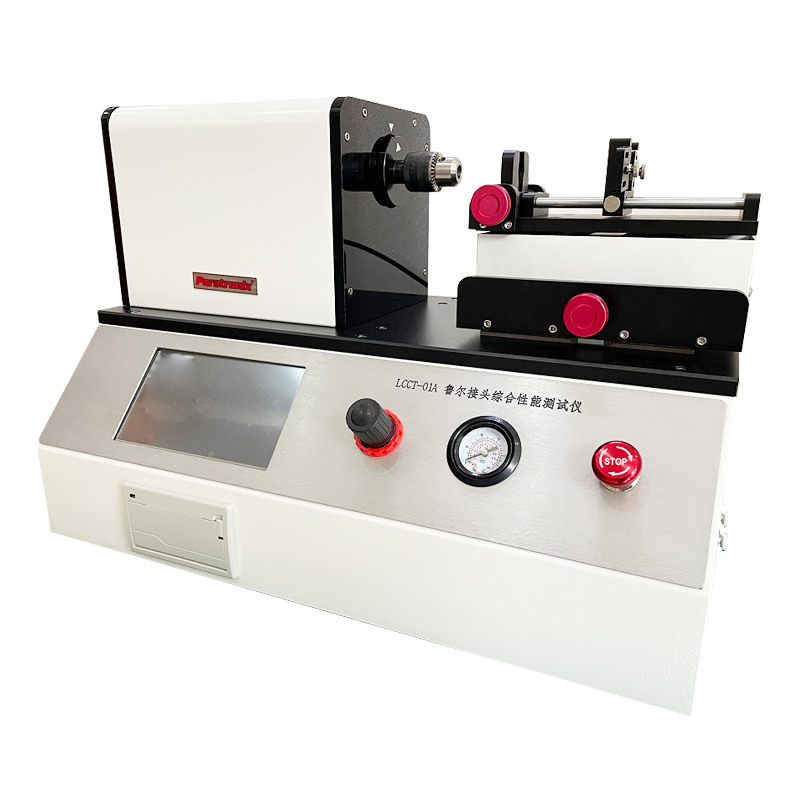
What A Luer Taper Comprehensive Performance Tester Measures
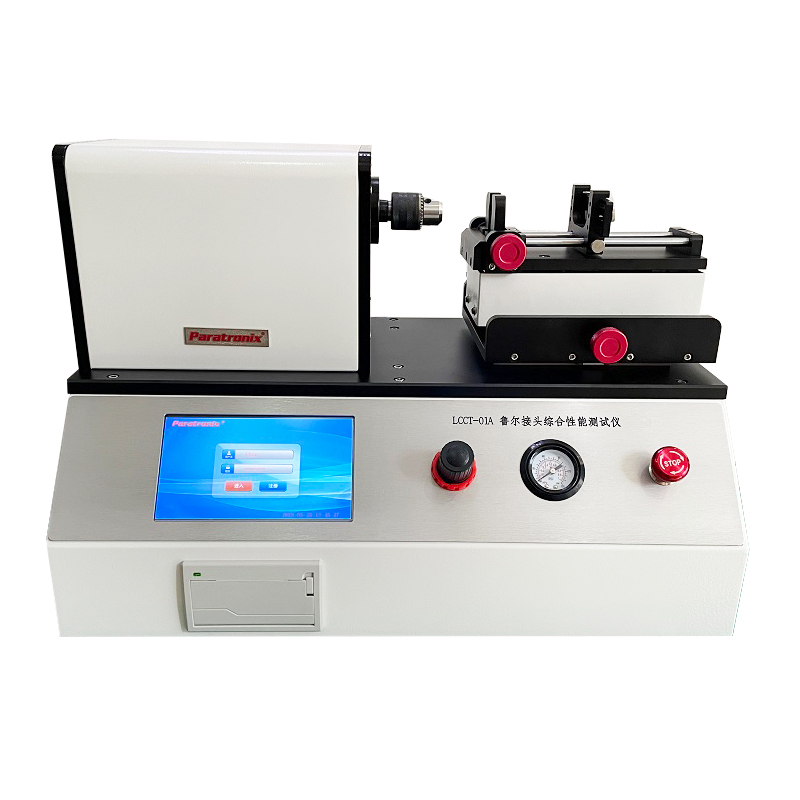
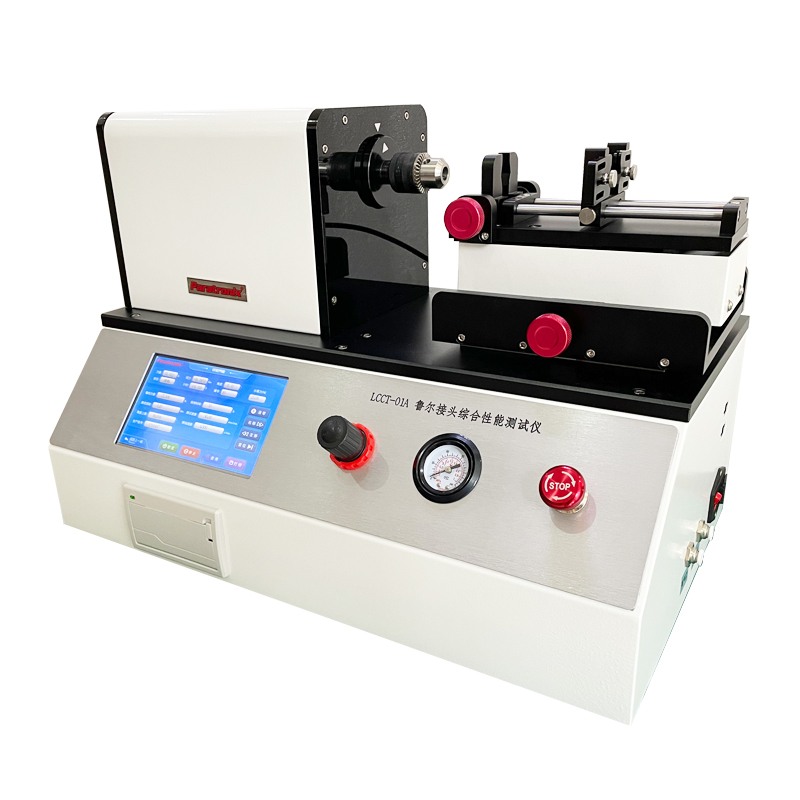
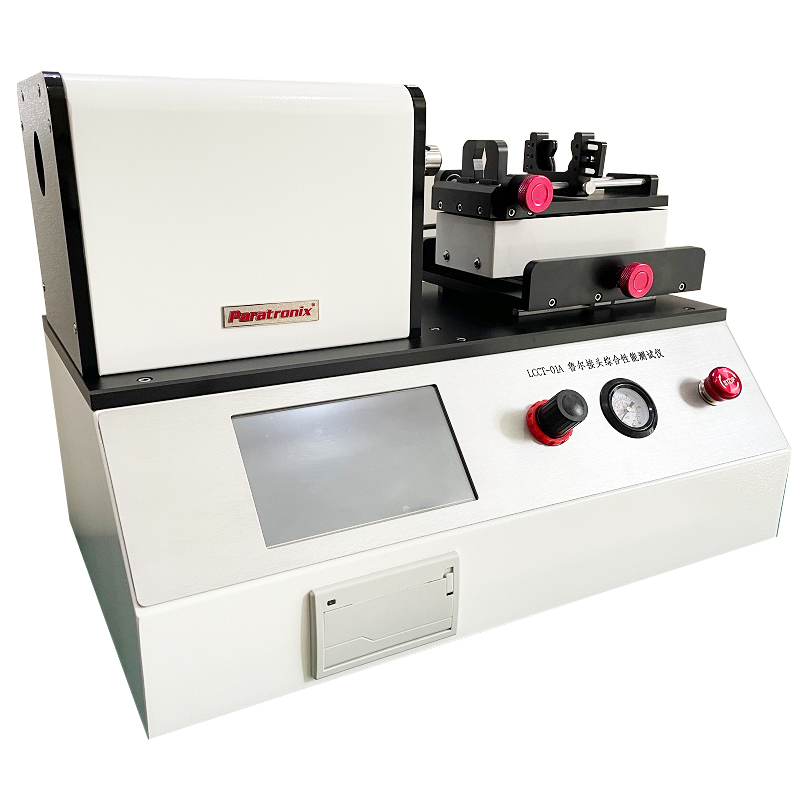
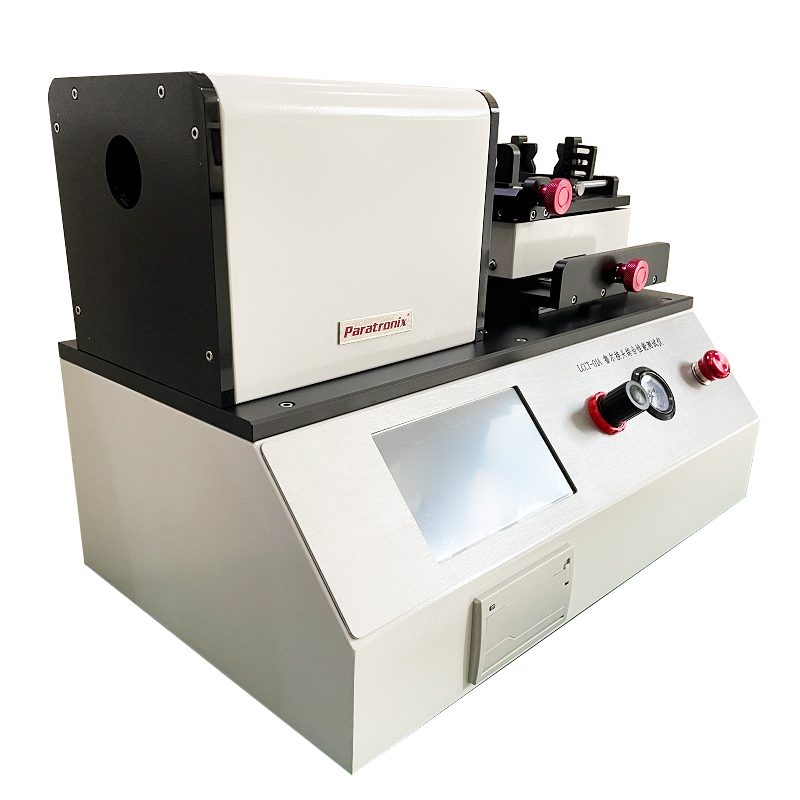
A Luer Taper Comprehensive Performance Tester is laboratory equipment used to evaluate the mechanical integrity and leakage performance of small bore connectors with a nominal 6% Luer taper. These connections appear in syringes, needles, infusion accessories, and other devices intended for intravascular or hypodermic applications. The tester applies controlled mechanical or pneumatic conditions to an assembled connection and records its response. Depending on its configuration, the equipment may support several performance evaluations within one platform.
The connection works through contact between mating tapered surfaces. Luer slip connectors depend primarily on their tapered engagement, while Luer lock connectors add a locking mechanism that helps retain the assembly. Performance therefore depends on more than nominal dimensions. Material stiffness, surface condition, molding variation, assembly force, and locking engagement can influence whether a connection leaks, separates, cracks, or becomes difficult to disconnect. A meaningful evaluation considers these interacting factors under a defined test method.
Dimensional inspection and functional testing answer different questions. Gauges or dimensional measurement systems assess specified geometrical requirements; performance equipment evaluates behavior under prescribed conditions. Neither activity automatically replaces the other. For procurement, define whether the laboratory needs connector characterization, design verification, production monitoring, or failure investigation. That intended use determines the necessary fixtures, measurement channels, software functions, and supporting instruments, as well as the level of documentation needed to make results useful during technical review.
Understanding ISO 80369-7 And Related Test Methods
ISO 80369-7 addresses small bore connectors for intravascular or hypodermic applications. It includes dimensional and performance requirements for relevant Luer connections. ISO 80369-20 provides common test methods referenced within the small bore connector standards framework. Laboratories should use the applicable editions, amendments, and normative references together. A supplier's statement that equipment supports ISO 80369-7 is a starting point for evaluation; it does not establish that every required assessment is included in the supplied configuration.
Relevant performance evaluations include leakage under positive pressure, air leakage under subatmospheric pressure, stress cracking, resistance to separation under axial load, and applicable locking related assessments. Requirements differ according to connector configuration and the particular test. Build a method matrix that identifies each applicable requirement, reference connector, assembly procedure, conditioning requirement, loading sequence, observation, and acceptance criterion. Obtain numerical settings from the controlled standard and approved protocol, since one universal pressure, torque, or holding time cannot describe every evaluation.
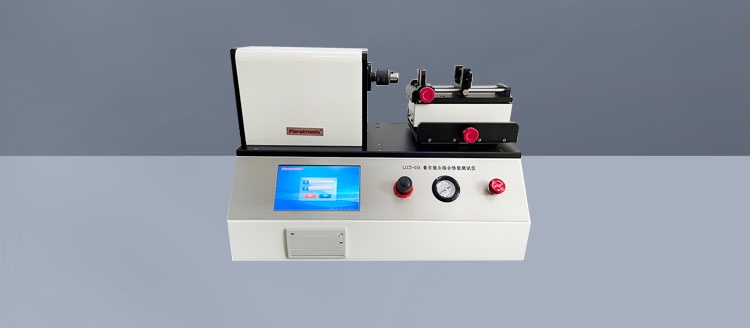
For laboratories considering paratronix, the LCCT-01A Luer Taper Comprehensive Performance Tester is a relevant product to assess against this matrix. The supplied company information identifies a broader portfolio covering leak, torque, multipurpose, and medical packaging physical performance testing equipment. Buyers should request a documented LCCT-01A capability mapping, including supported methods and required accessories. This connects purchasing discussions to actual laboratory tasks while avoiding assumptions about measurement ranges, automation, or conformity that the available product information does not substantiate.
How Loading, Leakage, And Stress Cracking Tests Work
Mechanical evaluations require controlled force or torque and an appropriate load path through the assembled connector. Axial loading challenges retention, while rotational loading evaluates specified aspects of locking performance. Alignment matters because unintended bending can change the failure mechanism. Fixtures should hold the specimen securely without distorting its functional surfaces. The assembly sequence also matters: changing the order or magnitude of applied force and torque can alter engagement before the actual evaluation begins and reduce comparability between results.
Leakage evaluations establish a defined pressure condition across the connection and assess leakage using the specified method. Positive pressure liquid leakage and subatmospheric air leakage challenge the assembly differently, so they should not be treated as interchangeable. Tubing compliance, trapped air, temperature drift, fixture seals, and stabilization can affect measurements. A pressure decay function alone does not demonstrate suitability for every connector leakage requirement; the complete fluid circuit, detection approach, and acceptance logic must match the applicable procedure.
Stress cracking assessment examines whether an assembled connector retains the required performance after the prescribed exposure and loading conditions. Assembly stress, material behavior, exposure conditions, and elapsed time all influence the outcome. The related topics “ISO 80369-7: Planning Stress Cracking Tests for Luer Connectors” and “Axial Load, Torque, and Hold Time in Luer Connector Stress Cracking Tests” provide useful planning themes. A laboratory protocol should explicitly connect those variables to conditioning, subsequent evaluations, and recorded observations.
Main Equipment Configurations And Typical Users
Equipment configurations range from separate instruments for individual methods to integrated platforms combining several controlled test functions. Dedicated instruments can suit laboratories with stable, narrow workloads. Integrated systems can simplify specimen handling and consolidate records when multiple evaluations are required, provided their functions are verified. Semi automated and automated operation offer different balances of flexibility, operator involvement, and throughput. Configuration labels vary between suppliers, so compare the delivered functions and workflow rather than relying on the word comprehensive.
Medical device manufacturers use these systems during connector development, design verification, supplier evaluation, and investigation of manufacturing changes. Component molders may use them to study cavity variation, material changes, or process adjustments. Independent laboratories need broader fixture coverage and clear method control because their specimen types change frequently. Incoming inspection teams may prioritize efficient setup and consistent records, while development engineers may value access to detailed force, torque, pressure, and time data for diagnosing unexpected behavior.
Typical applications include evaluating a revised connector geometry, investigating leakage complaints, or checking performance after a justified sterilization or aging exposure. These are general laboratory scenarios rather than documented paratronix customer cases. For international submissions, identify the standards and editions recognized or accepted in each target jurisdiction and explain any differences in the test program. Passing connector tests supports a technical evidence package, but it does not independently establish market authorization or the safety of the complete medical device.
Selection Criteria For A Defensible Purchase
Start equipment selection with representative specimens and a written requirements specification. Identify connector types, applicable methods, expected workloads, reporting needs, and environmental constraints. Request measurement ranges, resolution, accuracy specifications, and calibration information for each relevant channel. Assess whether measurement uncertainty is suitable near the acceptance limits. A broad operating range alone is insufficient: the system must control and measure reliably at the actual forces, torques, and pressures required by the laboratory's approved methods, including during timed holds.
Review reference connectors and fixtures as carefully as the main instrument. Confirm their applicable specifications, identification, inspection arrangements, and replacement availability. Ask how specimen alignment is maintained, how flexible device bodies are supported, and how unintended leakage paths are detected. For an LCCT-01A evaluation, request a demonstration using representative male and female connector samples where relevant. Agree in advance which functions, settings, observations, and report fields the demonstration must show, then retain the resulting evidence for procurement review.
Software assessment should cover method permissions, parameter records, raw data access, result calculations, export formats, and backup arrangements. Where electronic records requirements apply, evaluate the specific controls required by the organization and jurisdiction. Supplier due diligence should remain separate from instrument capability review. The provided business license identifier, Unified Social Credit Code 91370105689842696E, supports business identity checks; it is not evidence of laboratory accreditation, product certification, calibration traceability, or verified compliance with any particular connector test method.
Laboratory Setup, Quality Control, And Maintenance
Install the equipment according to the supplier's utility and environmental requirements, including a stable working surface and suitable pressure or vacuum supplies where needed. Complete installation checks and verify performance against the laboratory's intended methods before releasing the system for routine work. Establish controlled procedures for specimen identification, conditioning, assembly, testing, and disposition. Record material, manufacturing lot, sterilization or aging status, and other relevant history so that later comparisons reflect known specimen conditions rather than undocumented differences.
Routine quality control should distinguish instrument condition from connector performance. Check fixture seals, pressure connections, alignment, and reference connector condition at justified intervals. Use suitable verification artifacts or defined checks where practical, and document actions when verification fails. Calibration intervals should reflect manufacturer guidance, utilization, measurement risk, and historical stability. Reassess affected results after an out of tolerance finding rather than assuming that recalibration alone resolves the consequences for previously reported tests or released product decisions.
Train operators to recognize cross threading, incomplete engagement, specimen damage, abnormal pressure behavior, and incorrect fixture selection. Define how deviations and invalid runs are recorded without obscuring the original observations. Periodic method review should consider changes to standards, connectors, software, fixtures, and production processes. When a change could affect measurement performance or test execution, determine whether additional verification or revalidation is needed. This discipline helps keep a Luer Taper Comprehensive Performance Tester useful throughout its service life.
Ownership Costs, Investment Decisions, And Future Trends
Total ownership cost includes the instrument, fixtures, reference connectors, installation, training, calibration, maintenance, consumables, software support, and operator time. Include external laboratory fees for assessments that remain outside the purchased configuration. Downtime and accessory replacement can materially affect annual cost, particularly when one platform serves several teams. Request an itemized quotation with optional functions clearly identified, then compare suppliers against the same method coverage and service assumptions. This makes price differences easier to interpret and reduces overlooked implementation expenses.
Estimate investment value using realistic workloads and current laboratory records. Compare annual internal costs with outsourcing charges, transport, scheduling delays, and the engineering value of faster investigations. Automation can reduce repetitive handling and transcription, but savings depend on actual sample volumes and the effort required for setup and review. Avoid assigning revenue gains or payback periods without supporting data. For a first purchase, prioritize the methods that remove a documented testing bottleneck while preserving access to specialist assessments.
Future equipment development is likely to emphasize traceable digital records, easier method configuration, improved data exchange, and clearer links between dimensional variation and functional outcomes. Evaluate these capabilities through demonstrated workflows rather than feature labels. To discuss a paratronix LCCT-01A configuration, prepare connector drawings, applicable standards, a proposed test matrix, throughput estimates, and reporting requirements. Request a written response covering supported evaluations, accessories, calibration, service, and demonstration results so the purchasing decision rests on reviewable technical evidence.
 ISO 80369-7: Planning Stress Cracking Tests for Luer ConnectorsLuer Taper stress cracking Tester guide: plan ISO 80369-7 tests with controlled assembly, conditioning, and clear acceptance criteria. Discover how to select equipment for reliable results.
 Axial Load, Torque, and Hold Time in Luer Connector Stress Cracking TestsLuer Taper stress cracking Tester selection starts with axial load, torque, and hold time control. Discover essential checks for repeatable testing and smarter equipment decisions.
Search by Keywords