




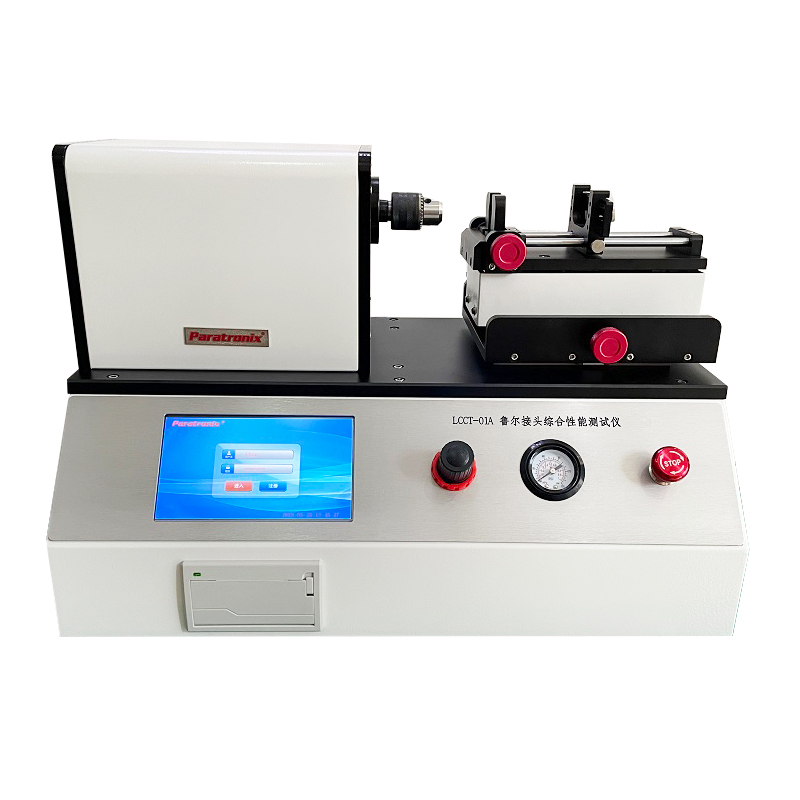
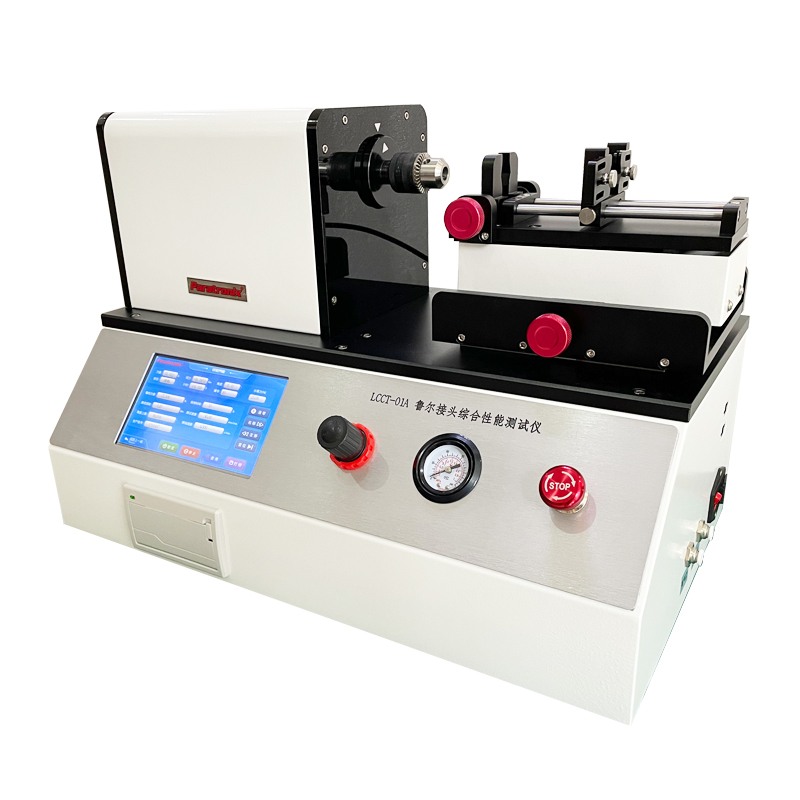
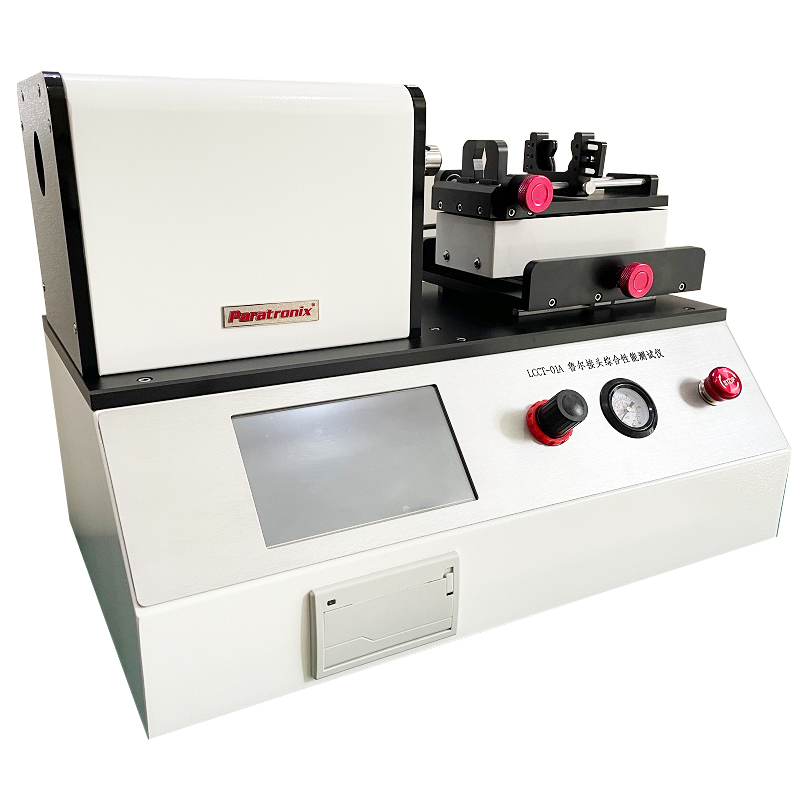
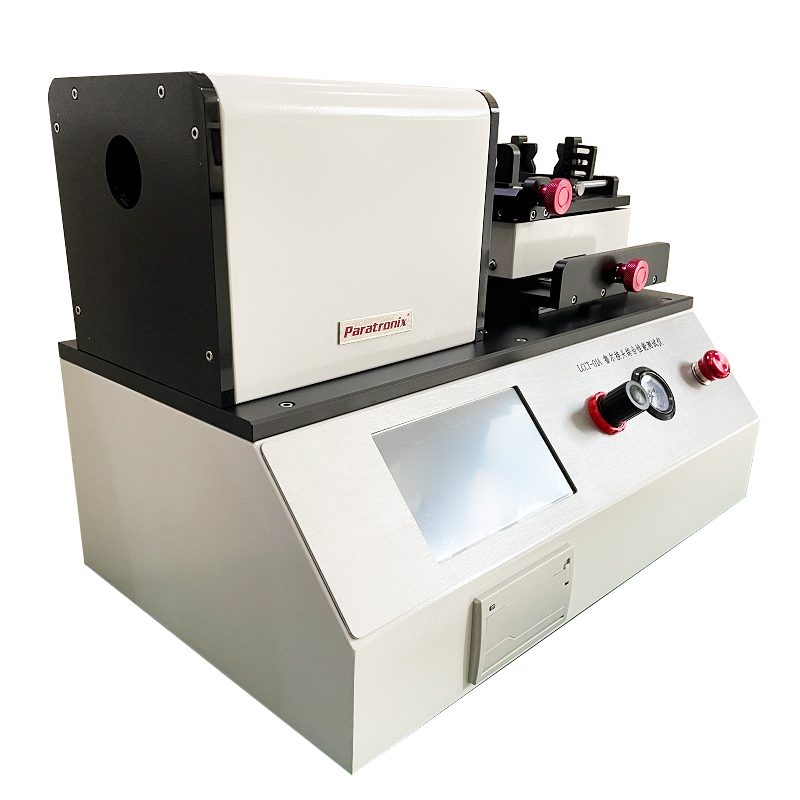
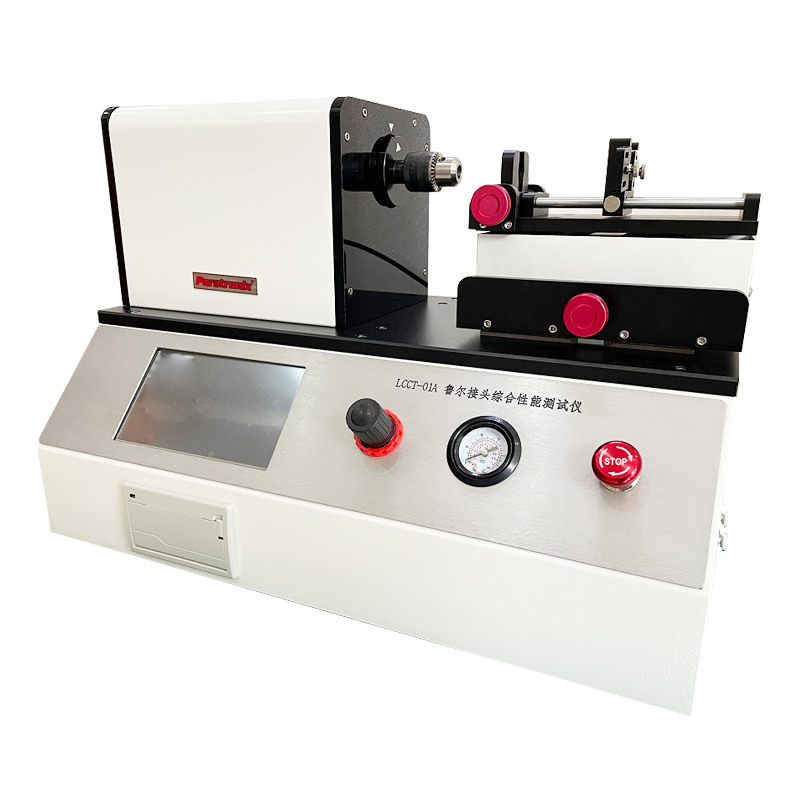
What Is A Luer Taper Unwinding Torque Tester?
A Luer Taper unwinding torque Tester is a laboratory instrument used to evaluate the rotational behavior of threaded Luer connections during loosening. Its purpose is to apply or measure torque under defined conditions while controlling how the connector is supported and loaded. For medical device manufacturers, the resulting evidence supports connector design verification, process investigations, and quality control. The instrument must be matched to the required test method because a measured release torque and a resistance to unscrewing assessment answer different questions.
Luer interfaces use a nominal 6% taper to establish a mating connection. Luer slip connectors rely on the tapered interface, while Luer lock connectors add a threaded engagement that helps retain the assembly. Unwinding torque testing principally concerns the locking arrangement. Applications include connectors associated with syringes, needles, extension sets, and other intravascular or hypodermic devices. The suitability of a particular connection also depends on its dimensions, materials, intended use, and performance under the applicable requirements.
Define the test objective before selecting equipment. A development study may characterize torque throughout deliberate disconnection, while a standards assessment may require applying a specified unscrewing torque and evaluating whether the connection remains engaged. Torque at initial movement, maximum torque during release, and complete separation are distinct events. A useful specification identifies the event being evaluated, the loading sequence, the reference connector, and the acceptance criterion, preventing ambiguous results from entering design reports or supplier agreements.
ISO 80369-7 Requirements And Related Test Methods
ISO 80369-7 addresses small-bore connectors for intravascular or hypodermic applications. Its requirements cover more than rotational retention, including dimensional and functional characteristics relevant to connector safety. ISO 80369-20 provides common test methods referenced within the series. Laboratories should identify the applicable editions, amendments, connector configuration, and referenced procedures before writing a protocol. Numerical loads, assembly conditions, durations, and acceptance criteria must come from those controlled documents rather than from a generic equipment description or an informal laboratory convention.
Resistance to unscrewing must be distinguished from other mechanical evaluations, such as separation under axial loading and resistance to overriding. These tests impose different conditions and assess different failure mechanisms. Leakage and stress cracking evaluations add further evidence about connection integrity. Passing a torque assessment alone does not establish conformity with every requirement of ISO 80369-7. Likewise, purchasing an instrument described as suitable for the standard does not demonstrate compliance of a finished medical device.
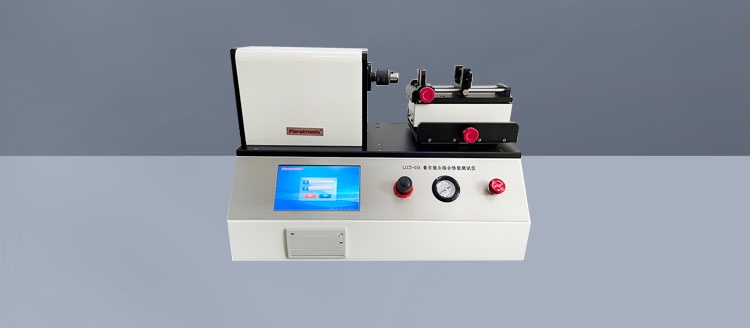
For procurement, paratronix's listed LCCT-01A Luer Taper Comprehensive Performance Tester is a relevant product to evaluate against the required test matrix. Request documented confirmation of its supported methods, fixtures, torque measurement capability, axial loading arrangements, and reporting functions. The supplied business identifier, Unified Social Credit Code 91370105689842696E, supports business identity checks; it does not establish product certification or laboratory accreditation. Approval should therefore depend on technical documentation and a demonstration using representative connector samples and an agreed protocol.
Measurement Principles And Main Equipment Categories
A typical torque measurement arrangement combines a torque transducer, a fixture that restrains one connector component, and a mechanism that rotates or loads the mating component. Depending on the procedure, the system may also control axial force, angular displacement, and elapsed time. The transducer converts torsional loading into an electrical signal for acquisition and analysis. Reliable measurements depend on a suitable measurement range, adequate calibration, correct alignment, and fixtures that avoid damaging or distorting the connector.
Common equipment categories include manual torque instruments, motorized torque stands, and multifunction connector testing systems. Manual instruments can support exploratory measurements when operator influence is understood and controlled. Motorized stands offer more repeatable rotational motion for suitable procedures. Multifunction systems can consolidate several connector evaluations when their individual capabilities are verified. The appropriate choice depends on the required loading sequence, sample volume, data requirements, and whether the laboratory needs standalone torque characterization or a broader connector verification workflow.
A Luer Taper unwinding torque Tester should distinguish connector behavior from measurement artifacts. Fixture slip can resemble connector release, while misalignment can introduce bending loads that alter the result. Excessive gripping force may deform plastic components and change friction. For rotating measurements, acquisition settings must capture the relevant event without obscuring it through unsuitable filtering. Laboratories should review the recorded signal and the physical specimen together, especially when a result is unexpected or close to an acceptance boundary.
Applications Across Development And Production
Design teams use connector testing to investigate how material selection, thread geometry, molding variation, and assembly conditions affect performance. Comparative studies are useful when a design change improves one property but alters another, such as ease of disconnection versus resistance to loosening. Test plans should include appropriate mating connectors and relevant sample conditions. Reference connectors serve a defined role in standardized assessments, while intended mating components may support additional system evaluations where justified by the device's intended use.
Production and supplier quality teams can use controlled torque measurements to investigate changes associated with tooling wear, resin substitutions, cavity differences, or assembly adjustments. Sampling should reflect the manufacturing process and the risk addressed by the inspection. A single favorable result cannot establish process consistency. When investigating a shift, preserve information about component lots, mold cavities, storage, conditioning, and prior handling. These details help determine whether the observed difference originates in the product, the test setup, or sample preparation.
Connector testing may also support assessments after sterilization, aging, transport simulation, or relevant chemical exposure when required by the device verification plan. These conditions can influence polymer behavior and interfacial friction. Related reading topics, including ISO 80369-7: Planning Stress Cracking Tests for Luer Connectors and Axial Load, Torque, and Hold Time in Luer Connector Stress Cracking Tests, can help organize planning discussions. Their recommendations should be checked against the applicable standard and the specific device protocol before use.
Selection Criteria For A Suitable Testing System
Start equipment selection with a user requirements specification that links every required test to a measurable capability. For torque, examine usable range, resolution, accuracy specification, calibration uncertainty, and performance near the intended operating point. A high maximum capacity provides little benefit if measurements at the required level are poorly resolved. Where axial loading is part of the method, specify its range, control approach, alignment requirements, and interaction with rotational loading. Evaluate the complete measurement system rather than isolated sensor specifications.
Fixture suitability deserves an early sample trial. Confirm compatibility with male and female connectors, locking configurations, and complete device assemblies that may restrict access. The fixture should maintain the required alignment without contacting features in a way that changes test behavior. Review reference connector requirements, inspection arrangements, replacement availability, and documentation. For a Luer Taper unwinding torque Tester, practical access, repeatable mounting, and clear identification of interchangeable parts can matter as much as automated motion.
Assess software and records against the laboratory's quality system. Useful capabilities may include controlled method settings, sample identification, raw data export, clear units, and traceable report generation. Where electronic records require additional controls, verify access permissions and change tracking rather than assuming they are included. Ask paratronix to demonstrate the LCCT-01A with an agreed specimen set and report format. Record which requirements are demonstrated, which require accessories, and which remain outside the offered configuration before approving the purchase.
Installation, Test Execution, And Quality Control
Install the instrument on a stable surface under environmental conditions suitable for the equipment and test procedure. Complete the manufacturer's installation checks and confirm calibration status before use. Inspect fixtures and reference connectors for contamination, damage, and wear. Verify units, rotational direction, zero setting, and any force or displacement channels needed for the method. Document initial acceptance checks against the purchase specification so that later maintenance and performance reviews have a clear baseline for comparison.
Prepare and condition samples according to the approved protocol, then assemble the connection using the prescribed sequence and loading conditions. Apply the required test load or motion and record the specified observations. Do not reuse connectors unless the procedure explicitly permits it, because previous assembly or testing can change their behavior. Capture sample identity, equipment identity, method revision, relevant environmental conditions, and any deviation. Define the handling of invalid tests in advance to prevent selective retesting from biasing the reported outcome.
Build ongoing control around calibration, intermediate checks, fixture inspection, and operator training. Set intervals using usage, manufacturer guidance, measurement risk, and observed stability rather than assuming a universal maintenance schedule. After overload, repair, relocation, or significant software changes, assess whether additional verification is necessary. Evaluate repeatability and operator effects when introducing a method, and establish how uncertainty affects conformity decisions. Results close to a limit need a predefined decision rule and investigation process, supported by the laboratory's quality procedures.
Ownership Costs, Future Trends, And Purchasing Decisions
Total ownership cost includes the instrument, application fixtures, reference connectors, calibration, installation, training, software, maintenance, and staff time. Include method implementation and documentation effort in the budget, especially when several connector families require different setups. A multifunction platform may reduce equipment duplication, but shared scheduling can become a constraint when laboratories run several tests simultaneously. Compare quotations using the same scope, including accessories, service arrangements, warranty terms, and replacement parts, so that apparent price differences do not conceal missing capabilities.
Estimate return on investment from measurable workflow changes, such as setup time, operator attendance, repeat investigations, and outsourced testing costs. Use sample trials to test those assumptions before assigning financial value. Relevant development trends include improved synchronization of force and torque data, more consistent automated sequences, and stronger links between laboratory records and manufacturing information. These capabilities can improve investigation efficiency, but their value depends on method suitability, data quality, and integration with existing quality processes.
For a quotation, provide paratronix with connector drawings, representative samples, applicable standard editions, expected throughput, and required report outputs. Its stated product portfolio includes torque, leak, multipurpose, permeability, and medical packaging physical performance testing equipment, which may be relevant when planning adjacent laboratory capabilities. Request a configuration proposal for the LCCT-01A that maps each required connector test to documented functionality. A technically specific proposal, supported by sample demonstration and defined acceptance criteria, gives purchasing and quality teams a practical basis for deciding.
 ISO 80369-7: Planning Stress Cracking Tests for Luer ConnectorsLuer Taper stress cracking Tester guide: plan ISO 80369-7 tests with controlled assembly, conditioning, and clear acceptance criteria. Discover how to select equipment for reliable results.
 Axial Load, Torque, and Hold Time in Luer Connector Stress Cracking TestsLuer Taper stress cracking Tester selection starts with axial load, torque, and hold time control. Discover essential checks for repeatable testing and smarter equipment decisions.
Search by Keywords