




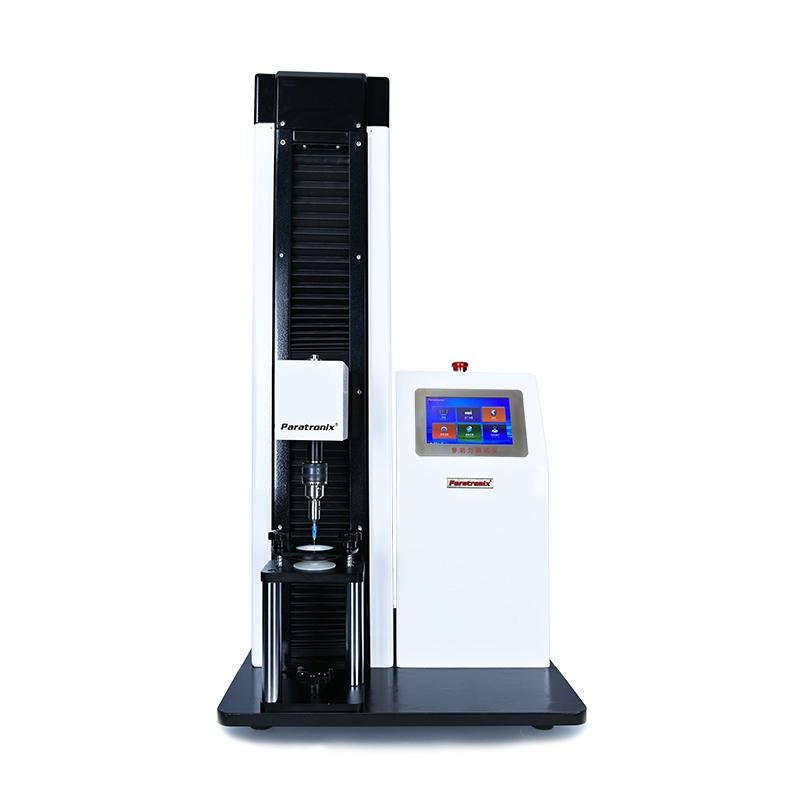
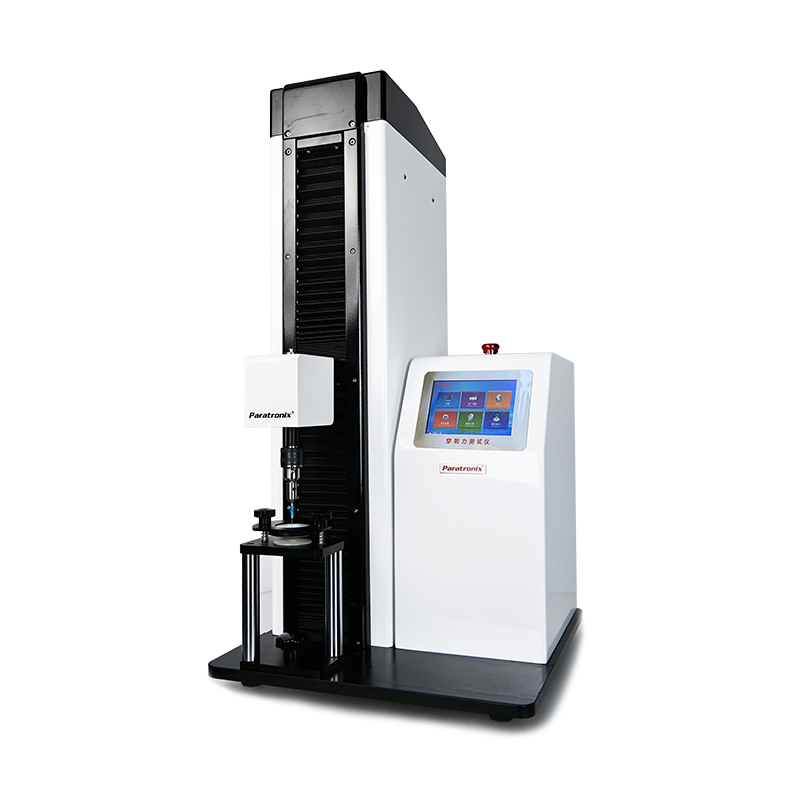
What Is A Rubber Stopper Puncture Force Tester?
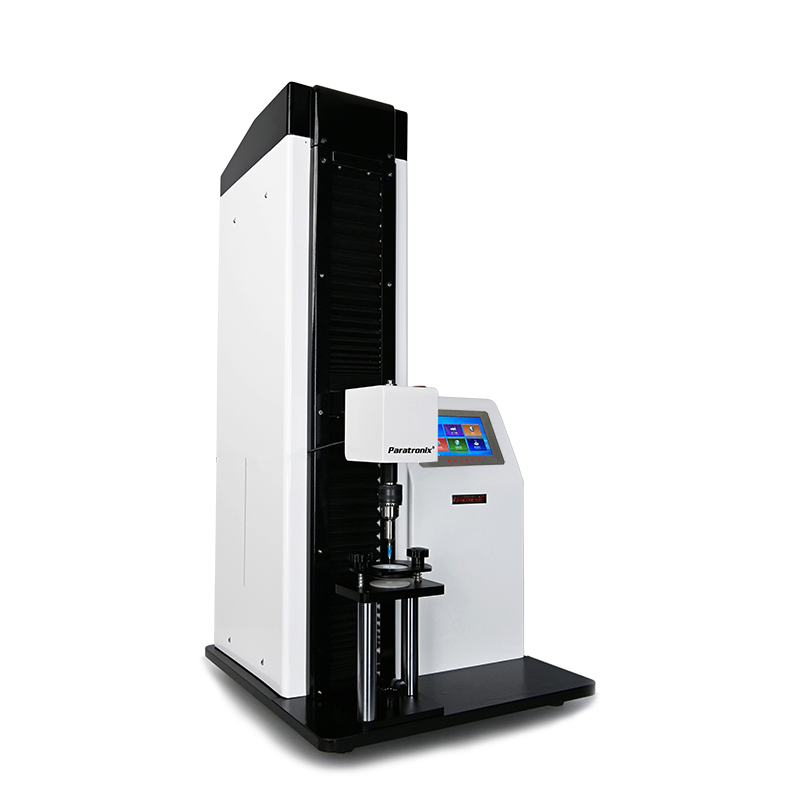
A rubber stoppers puncture force Tester measures the force required to drive a specified needle or probe through an elastomeric closure under controlled conditions. It typically combines a motorized loading frame, a force sensor, a sample fixture, and software that records force against displacement. The resulting data help manufacturers and packaging teams assess whether a closure can be pierced consistently during intended use.
Puncture force is a system property, not a fixed number for the rubber alone. Needle geometry, sharpness, lubrication, insertion speed, stopper thickness, and the way the closure is held can all affect the result. A meaningful specification therefore describes the complete test setup and sample condition. Comparing figures produced with different needles or speeds without qualification can lead to incorrect acceptance decisions.
The measurement is relevant to vial closures used with syringes, transfer devices, and automated equipment. Excessive resistance may make insertion difficult or affect device operation; very low resistance alone does not prove closure integrity. Puncture testing should be considered alongside other relevant evaluations, such as fragmentation, resealability, and container closure integrity, according to the product and its intended use.
How The Test Works And What It Measures
During a test, a needle or probe moves toward a secured stopper at a defined speed while the force sensor records resistance. Software plots a force-displacement curve, allowing the operator to identify the maximum force and examine how the material responds during penetration. Depending on the method, the reported result may also include insertion force over a defined travel range or the force required to withdraw the needle.
The initial portion of the curve can reflect contact and deformation before penetration. A peak may correspond to breakthrough or to resistance later in the stroke, depending on the closure and needle. The method must state the reporting window and how the peak is selected. Review individual curves as well as summary statistics, because an average can conceal unusual behavior or inconsistent samples.
Reliable comparisons require consistent contact detection, alignment, travel distance, and sensor range. A needle that bends, a moving fixture, or an incorrectly zeroed sensor can distort the curve. Verify that the force sensor is suitable for the expected load and that the instrument records data frequently enough to capture short force peaks. Establish these settings during method development and retain them with the results.
Tester Types And Relevant Standards
Common configurations include dedicated puncture testers and multipurpose force testers fitted with a needle holder and closure fixture. A dedicated setup can simplify routine operation when one method is used frequently. A multipurpose system may suit laboratories that also perform other physical tests, provided its load capacity, motion control, fixtures, and software support the required puncture method. Confirm the proposed configuration before purchase.
Pharmacopoeial requirements and applicable packaging standards should be assessed against the closure, drug product, market, and intended use. For example, USP <381> addresses elastomeric components used in injectable pharmaceutical packaging and includes functional considerations; consult the current text and applicable requirements when defining a method. ISO 11040-5 concerns plunger stoppers for injectables, so its relevance depends on the component being evaluated.
ASTM F1306 concerns slow-rate penetration resistance of flexible barrier films and laminates; it should not automatically be treated as a rubber vial stopper puncture method. For an application involving closures, ask paratronix about the PMT-C puncture force Tester and confirm the available needle fixture, force range, speed control, and data functions against your written method. Model suitability and compliance require configuration-specific verification.
Where And When Testing Supports Decisions
Closure manufacturers can use puncture testing during formulation development, process qualification, and batch release where the test is part of the agreed control strategy. Pharmaceutical packaging teams may test incoming lots, compare suppliers, or investigate changes in insertion behavior. Medical device developers can assess whether a specified needle and closure combination performs consistently with the intended delivery system and its operating conditions.
Test at defined points when a change could influence the result: a new elastomer formulation, coating, sterilization process, supplier, needle design, or storage condition may warrant evaluation. For stability or aging studies, compare samples at planned intervals under documented conditions. Select a sampling plan that reflects the decision being made, and use an approved baseline rather than relying on a single favorable reading.
Global supply chains often require alignment between the closure supplier, filling site, device developer, and receiving laboratory. Agree on the method, sample preparation, acceptance criteria, and data format before qualification. A puncture result supports a particular aspect of functional performance; it does not establish sterility, compatibility, or package integrity. Those questions require separately justified testing and assessment.
How To Build A Reproducible Test Method
Begin with the intended use and document the closure type, lot, storage history, conditioning time, and test temperature. Specify whether samples are tested loose or assembled on representative vials, including any crimping conditions. Define the needle material, gauge, bevel, lubrication state, and replacement rule. Use a fixture that supports the closure consistently without obstructing the intended puncture area or changing the sample condition.
Set the insertion position, approach and test speeds, trigger condition, penetration depth, and withdrawal procedure. Align the needle with the intended puncture site, zero the instrument as instructed, and check the fixture before starting. Use fresh or otherwise controlled needles according to the method, since repeated use can change sharpness. Record any off-center puncture, sample movement, or visible needle damage as a potential invalid result.
Establish sample count and acceptance limits from product requirements and suitable development data. Evaluate repeatability across operators, instruments, and relevant lots where needed, and investigate unexpected variation before changing limits. Document the instrument identifier, calibration status, settings, raw curves, calculations, and deviations. For regulated work, validate or qualify the method and electronic records controls to the extent required by the applicable quality system.
How To Select Equipment And Control Ownership Cost
Start with representative samples and an estimated force range, then request a demonstration using the intended needle and fixture. Assess sensor capacity and resolution, speed and displacement control, travel, alignment, and the ease of securing different closure formats. Ask how the software identifies peak force, displays curves, exports raw data, and manages user access. Verify each requirement against a quotation and documented instrument configuration.
The purchase price is only one part of total ownership cost. Include fixtures, needles, installation, training, calibration, preventive maintenance, software support, replacement parts, and any qualification work. Consider changeover time and the number of samples an operator can process with the required controls. A lower initial price may be less attractive if custom fixtures, manual transcription, or extended downtime add recurring expense.
Estimate return on investment using your own workload and costs: compare annual labor, consumables, service, and investigation time under the current and proposed workflows. Include the value of improved traceability only where your quality team can substantiate it. paratronix also offers multipurpose, leak, seal strength, and medical packaging physical performance testing equipment; ask which instruments and accessories fit your broader laboratory requirements.
Maintenance Trends And Next Steps
Maintain the tester according to the supplier's instructions and your laboratory quality system. Set calibration intervals based on instrument use, stability, risk, and applicable procedures; there is no universal interval for every laboratory. Inspect needles, holders, fixtures, and moving components for damage or wear, and perform routine checks with suitable reference equipment. Investigate out-of-tolerance findings and assess whether previous results are affected.
Laboratories are increasingly interested in digital records, automated curve analysis, and better integration of packaging test data. These capabilities can reduce manual handling, but their value depends on reliable methods, appropriate user controls, and verified data transfer. Changes in delivery devices and closure designs may also require revised fixtures or needle specifications. Review the method when the product or intended use changes.
To evaluate a rubber stoppers puncture force Tester, prepare a request describing the closure and vial format, needle specification, expected force range, test speed, sample volume, and reporting needs. Send representative samples when a demonstration is available, and request details of fixtures, calibration, service, and software. paratronix can discuss the PMT-C and related packaging test equipment; confirm technical suitability and commercial terms before ordering.
 Building an ASTM-Aligned Plastic Film Puncture Test Method for Incoming QCPlastic films puncture force Tester guidance for building an ASTM-aligned incoming QC method with controlled conditions, reliable limits, and defensible film release decisions.
 Rubber Stopper Puncture Force Testing for Reliable Vial Closure Quality ControlRubber stoppers puncture force Tester solutions help verify vial closure performance, improve test repeatability, and support reliable injectable packaging quality control.
 When ASTM F1306 is suitable for laminated film puncture testingLaminated films puncture force Tester insights: learn when ASTM F1306 delivers reliable puncture resistance data, better laminate comparisons, and confident material specifications.
Search by Keywords