




Recent Posts
 How humidity affects results from a gas transmission rate testerOct 20, 2026
 What Does a Metallic Medical Bone Screw Tester Actually Measure?Oct 20, 2026
 How to perform an ampoule break force test according to ISO 9187-1Oct 19, 2026
 How Bone Screw Self-Tapping Testers Measure Axial Force and Tapping TorqueOct 17, 2026
 ASTM F543 Bone Screw Pull-Out Testing: Setup and Reporting RequirementsOct 17, 2026
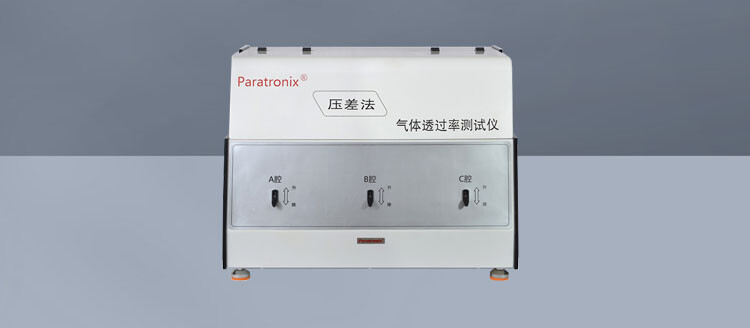

How humidity affects results from a gas transmission rate tester
Humidity can change a packaging film’s gas barrier performance, making moisture control essential when interpreting results from a Gas Transmission Rate Tester. Inconsistent humidity conditions can obscure meaningful comparisons, complicate material qualification, and undermine confidence in packaging protection. The effect depends on the material, test gas, temperature, and humidity on each side of the specimen—not simply the laboratory’s ambient conditions.
This matters when a material passes an incoming inspection but produces a different result during supplier qualification. Before treating the difference as a manufacturing defect, check whether the two laboratories tested the same moisture state. A dry-film measurement and a humidified-film measurement may both be technically valid while answering different packaging questions.
Moisture changes the specimen, not just the test environment
For many dense polymer films, gas permeation is commonly described through a solution-diffusion model: gas dissolves in the material and then diffuses through it. Water absorbed by a polymer can alter molecular mobility and gas solubility. The resulting transmission rate may therefore change even though specimen thickness, exposed area, and nominal gas pressure remain unchanged.
EVOH illustrates the practical concern. Its oxygen barrier is moisture-sensitive because absorbed water can disrupt interactions between polymer chains and increase chain mobility. A dry EVOH-containing structure may provide excellent oxygen resistance, while humid exposure can reduce that performance. Polyamides can also show moisture-dependent behavior, although the response depends on grade, structure, temperature, and gas.
Do not turn this into a rule that “higher humidity always means higher gas transmission.” Some polymers respond less strongly, and water can affect diffusion and solubility differently. In coated or multilayer films, the measured response also depends on coating integrity, layer arrangement, and how quickly moisture reaches the barrier layer.
An oxygen transmission rate result cannot automatically predict carbon dioxide transmission under the same humidity. The gas-polymer interaction is different. Likewise, a gas barrier result is not a substitute for a water vapor transmission measurement.
“Tested at 50% RH” is an incomplete condition
Relative humidity needs a temperature and a location to be meaningful. Was 50% RH the laboratory condition, the conditioning chamber setting, or the humidity of the gas touching the specimen? Was it applied to the test-gas side, the carrier-gas side, or both?
For example, an oxygen-rich stream at 50% RH facing a nominally dry carrier stream does not create the same moisture profile as 50% RH on both sides. In the first arrangement, moisture moves through the specimen under a gradient. In the second, the film may approach a more uniform moisture state. These conditions can produce different oxygen transmission results without either instrument malfunctioning.
Temperature deserves equal attention. RH expresses water vapor pressure relative to saturation at the local temperature. A humidified stream passing through a cooler line may approach its dew point and condense. Once liquid water appears, the intended vapor-exposure condition has been lost; droplets can also interfere with flow paths or detector operation, depending on the instrument.
For comparable reports, record the specimen temperature, humidity on each side, gas composition, pressure conditions, and film orientation. Ambient room RH is useful background information, but it cannot replace the conditions inside the test cell.
Conditioning time and measurement time are different problems
A specimen taken from sealed storage does not instantly acquire the moisture content of a conditioning chamber. Water uptake depends on thickness, polymer chemistry, laminate construction, and exposure history. For a buried barrier layer, outer layers may delay moisture access even when the exposed surface has already equilibrated.
This creates a common trap: the operator conditions every film for the same fixed period and assumes every film is ready. A practical conditioning period should follow the applicable method or a validated internal procedure. Where permitted and suitable, mass stability can help assess moisture equilibration, but it does not by itself establish steady-state gas transmission.
After mounting, the specimen may continue to change. A humid-conditioned film placed between dry gas streams can progressively dry during measurement. Conversely, a dry specimen exposed to humid gas may show a changing transmission rate as moisture penetrates the structure. The instrument may be tracking material evolution rather than simple detector stabilization.
Keep the full transmission-versus-time trace. A numerical result reported before the method’s stability criterion is met should not be treated as equivalent to a steady-state value. A flat segment also deserves scrutiny if the humidity itself has not stabilized.
Match the method to the humidity question
For oxygen testing with a coulometric sensor, ASTM D3985 and ASTM F1927 are relevant references, but they should not be treated as interchangeable labels. ASTM F1927 specifically addresses oxygen gas transmission, permeability, and permeance at controlled relative humidity. ASTM D3985 is widely used for oxygen transmission testing with a coulometric sensor; its applicable conditions and procedures should be checked in the edition being used.
Other gases or measurement principles require different method selection. ASTM D1434, for example, addresses gas permeability characteristics of plastic film and sheeting, but citing it alone does not establish that a particular instrument can maintain the humid conditions a project requires. Confirm the method, configuration, and validated operating range together.
A dry test remains useful when the specification deliberately defines dry-state performance. The mistake is using that result as evidence of performance in humid service without supporting data. Conversely, adding humidity to an established release test changes the procedure and may require revised acceptance limits rather than a direct comparison with historical dry results.
Also distinguish transmission rate from permeability. Transmission rate describes passage through the tested specimen under stated conditions. Converting it into a material permeability value requires the relevant thickness and pressure treatment. For multilayer structures, a single thickness-normalized value can conceal the contribution of individual layers.
What to check when humid results look wrong
When a result rises after humidification, material sensitivity is plausible—but it should not be the first and only diagnosis. Use the signal pattern and equipment checks to separate specimen behavior from measurement problems.
- A gradual change over a long run: investigate moisture equilibration, conditioning history, and gas-stream stability before concluding that the film is defective.
- An abrupt jump after switching humidity: check for switching transients, pressure disturbance, condensation, or a disturbed specimen seal.
- Unexpectedly high readings on a high-barrier film: examine leaks, edge sealing, background signal, and whether the result is near the system’s validated measurement capability.
- Different results after reversing the specimen: confirm layer orientation and humidity assignment. An asymmetric laminate can experience different moisture profiles when reversed.
- Poor repeatability after humid runs: review purge procedures, residual moisture, detector requirements, and the condition of seals and tubing.
Humidification also changes gas composition. If oxygen is mixed with water vapor at fixed total pressure, its partial pressure differs from the dry-gas case. Use the method’s prescribed calculation and the instrument’s documented wet- or dry-basis treatment; do not apply an improvised humidity correction.
With very low transmission rates, small leaks and background contributions become proportionally more important. A reference film, appropriate leak check, and humidity verification provide more diagnostic value than repeatedly testing additional specimens under an unverified setup.
Build a specification that another laboratory can reproduce
A purchasing specification that says only “oxygen transmission below the agreed limit” leaves too much room for disagreement. Define the method and edition, temperature, humidity on both sides, gas and pressure conditions, conditioning procedure, specimen orientation, reporting units, and stability criterion. Identify the tested structure and thickness as well.
For moisture-sensitive packaging, it can be useful to separate routine release testing from application qualification. A tightly controlled reference condition supports lot-to-lot comparison. Additional humid-condition testing examines whether the structure retains sufficient barrier under the intended exposure. The two tests serve different purposes; neither should quietly replace the other.
In pharmaceutical packaging, film-level transmission data support material selection but do not establish finished-package protection by themselves. Seals, closures, forming damage, package geometry, storage conditions, and product sensitivity also matter. A high-barrier flat-film result cannot rule out leakage or barrier loss after conversion.
Choose equipment around the exposure you need to reproduce
When specifying a Gas Transmission Rate Tester, ask more than whether it offers a humidity setting. Confirm which side can be humidified, where humidity is measured, how temperature is controlled, how condensation is prevented, and which gases and detectors are compatible with the proposed conditions. Request confirmation of performance in the required transmission range under those conditions—not just under dry operation.
Paratronix Instruments Co., Ltd. develops and manufactures packaging testing instruments for pharmaceutical packaging, plastic packaging materials, and high-barrier applications. In discussions with an equipment manufacturer, the useful starting point is the complete specimen structure and intended test protocol. Specific humidity-control capabilities should be confirmed for the selected configuration rather than inferred from a general product category.
Before approving a material based on a humid-condition result, make one final check: could another laboratory reproduce the moisture exposure from the report alone? If not, resolve the missing conditions before using the number for supplier acceptance or packaging protection decisions.
Leave A Reply
Search by Keywords