




What Is A Heat Seal Tester For Blister Lidding?
A heat seal tester for blister lidding is equipment used to assess the strength of a seal between a blister package and its lid. In a peel test, a prepared specimen is held in grips and pulled apart while the instrument records force against displacement. The result helps a manufacturer evaluate whether a sealing process produces a consistent bond that can withstand handling while remaining suitable for its intended opening method.
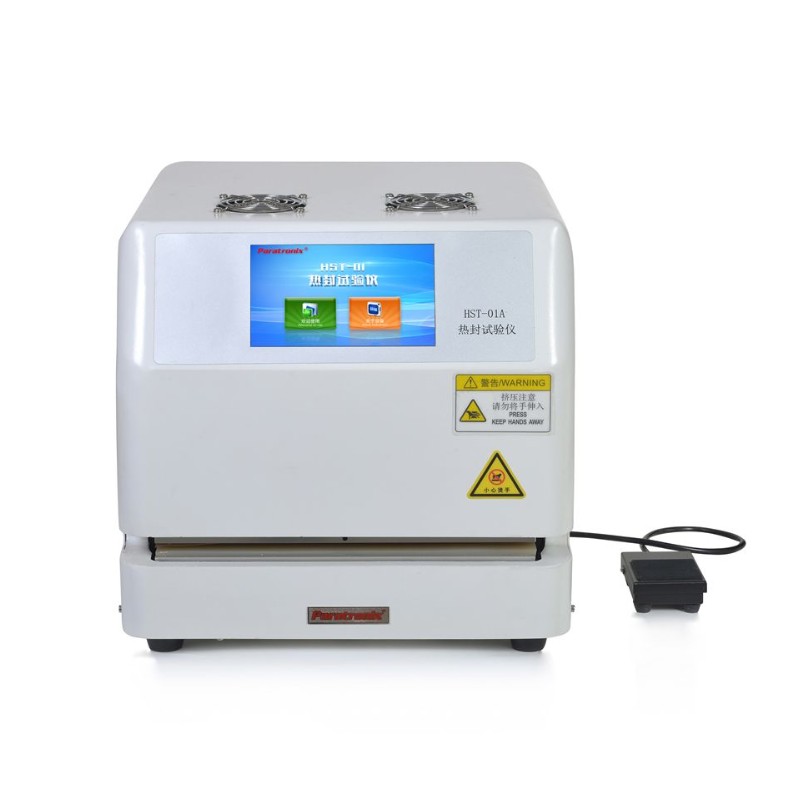
The term can also refer to a laboratory heat sealer that joins sample materials under controlled temperature, pressure, and dwell time. That device creates the seal; a tensile or peel tester measures its mechanical strength. Buyers should specify whether they need seal preparation, strength measurement, or both. For finished blister packs, specimen geometry and access to a peelable tab can determine which fixture and method are practical.
Blister lidding may combine aluminum foil, paper, polymer films, coatings, or laminates, while the formed cavity may be plastic or aluminum based. Each material combination behaves differently during sealing and peeling. Seal strength is one part of a packaging assessment: it does not, by itself, establish barrier performance, package integrity, product stability, or suitability for patient use.
How Seal Strength Testing Works
A typical peel procedure begins with representative sealed material, conditioned as required by the chosen method. The operator cuts specimens to a defined size, identifies the seal area, and mounts each side in an appropriate grip. The instrument separates the materials at a specified rate and records the resulting force curve. Specimen preparation must avoid damaging the seal or introducing cuts that change the failure path.
The force curve may reveal an initial peak, a steadier peeling region, or irregular changes caused by tearing and uneven adhesion. Depending on the applicable method and acceptance criteria, reports may include maximum force, average force, specimen dimensions, and the failure mode. Force per unit width is useful when the sealed width is defined and the test method supports normalization; it should not be calculated from an assumed width.
Interpret the numerical result alongside the physical failure. Separation at the interface, cohesive failure within a coating, substrate tearing, and grip slippage point to different conditions. A high force alone is not proof of a good package: it may reflect a seal that is difficult to open or a test affected by material deformation. Review the curve and inspect both surfaces before drawing a process conclusion.
Test Methods, Equipment Types And Standards
Common equipment includes dedicated seal strength testers and multipurpose tensile testers fitted with suitable load cells and grips. Fixed or supported peel configurations can help control specimen orientation, while specialized fixtures may be needed for small cavities or irregular blister formats. Laboratory heat sealers are useful for studying temperature, pressure, and dwell time, but their settings do not automatically reproduce the thermal conditions of a production machine.
ASTM F88/F88M addresses seal strength testing of flexible barrier materials and provides a useful reference when its scope fits the specimen and packaging system. ASTM F1140/F1140M addresses internal pressurization failure resistance for unrestrained packages; it measures different behavior from a peel test. Select the current edition, review specimen and apparatus requirements, and document any justified adaptation for a particular blister design.
For sterile barrier systems, ISO 11607-1 and ISO 11607-2 provide relevant packaging and process validation frameworks; applicability depends on the product and regulatory context. Pharmaceutical manufacturers should also assess applicable market and product requirements. Paratronix offers leak and seal strength testing equipment, multipurpose testers, and medical packaging physical performance testers that buyers can discuss against their chosen method, specimen format, and documentation needs.
Applications And When To Test
Pharmaceutical packaging teams use seal strength data during material qualification, sealing process development, validation, and routine monitoring. Testing is also relevant to contract packers, lidding suppliers, medical packaging laboratories, and quality teams investigating seal variation. Typical questions include whether a new lidding coating seals consistently to a forming film and whether a change in equipment settings alters the expected opening behavior.
Plan sampling around the purpose of the study. During development, compare controlled combinations of sealing conditions and examine variability across specimens. During routine production, use a documented sampling plan and limits established through suitable studies. Reassess the process after relevant changes, such as a new material source, sealing tool maintenance, equipment transfer, or an unexplained trend in results.
Include aged or distribution-exposed samples when the risk assessment calls for them, because sealing behavior can change over the product life cycle. Where package integrity matters, consider a separate, validated leak or integrity method appropriate to the pack and defect types of concern. Paratronix also supplies leak testers and non-destructive micro-leakage testers; confirm each proposed instrument's suitability for the specific blister and validation plan.
How To Select And Qualify A Tester
Start with the package and the test method rather than the instrument catalog. Provide suppliers with drawings, material structures, seal dimensions, expected force range, sample quantities, and the intended reporting units. Ask whether the grips can hold the lidding and backing without slipping or crushing the sample, and whether the available travel, speed settings, and peel arrangement support the procedure.
Choose a load cell with a usable range and verified accuracy appropriate to the expected forces; a larger capacity does not necessarily provide better resolution at low loads. Review force and speed verification, calibration traceability, data export, user access controls, and audit trail requirements where applicable. Request a demonstration using representative samples and agree in advance on the measurements, failure observations, and records to be assessed.
Before routine use, establish installation and operational checks appropriate to the laboratory's quality system. Confirm instrument placement, utilities, grip alignment, calibration status, software configuration, and operator training. Run a documented qualification or method study that examines repeatability, specimen preparation, and operator effects. Set maintenance and recalibration intervals using manufacturer recommendations, usage, risk, and the site's quality procedures.
Total Cost, Future Trends And Purchasing Decisions
The purchase price is only one part of total ownership cost. Include the appropriate load cell, blister fixtures, specimen preparation tools, software, installation, training, calibration, preventive maintenance, and replacement parts. Also consider laboratory space, operator time, data review, and the cost of validating a new or modified method. Obtain an itemized quotation so that optional accessories and recurring service charges are visible.
Estimate return on investment against the current workflow: compare testing capacity, time per report, external laboratory fees where relevant, and the effort needed to investigate inconsistent results. Use site-specific assumptions and avoid counting a reduction in rejects unless evidence supports it. A multipurpose instrument may improve utilization across tests, provided that changing fixtures and methods does not create unacceptable delays or qualification burdens.
Packaging laboratories are increasingly evaluating digital data capture, stronger data controls, and methods suited to changing material structures. Automation may reduce manual handling, but fixtures and test procedures still require verification for each application. To assess a heat seal tester for blister lidding, contact Paratronix with representative samples, your target standard, expected force range, and required records, and request a configuration and quotation matched to those needs.
 Heat Seal Tester vs Hot Tack Tester: Which ASTM Standards Apply?Heat seal tester vs hot tack tester: compare ASTM F2029, F88/F88M, and F1921/F1921M to understand key differences and choose the right equipment for your packaging tests.
 What testing instruments are used for testing the heat sealing performance of thin films?The HST-01A film heat sealing tester developed and produced by Paratronix is used to accurately measure parameters such as heat sealing temperature, heat sealing time, and heat sealing pressure of packaging materials such as films and composite films. It is also known as a film heat sealing tester. Implement standards QB/T 2358, ASTM F2029, YBB 00122003.
 ASTM F2029: Standard Practices for Making Heat Seals for Determination of Heat Sealability of Flexible Webs as Measured by Seal StrengthIntroduction
ASTM F2029 is a standardized test method developed by ASTM International that provides guidelines for evaluating the heat sealability of flexible webs by measuring seal strength. Heat sealing is a critical process in packaging, medical supplies, and other industries where bonded seams must maintain integrity under stress. This standard defines procedures for creating and testing heat seals to ensure consistent performance in real-world applications.
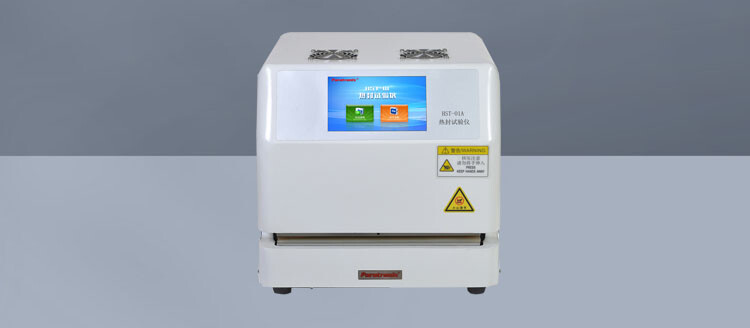
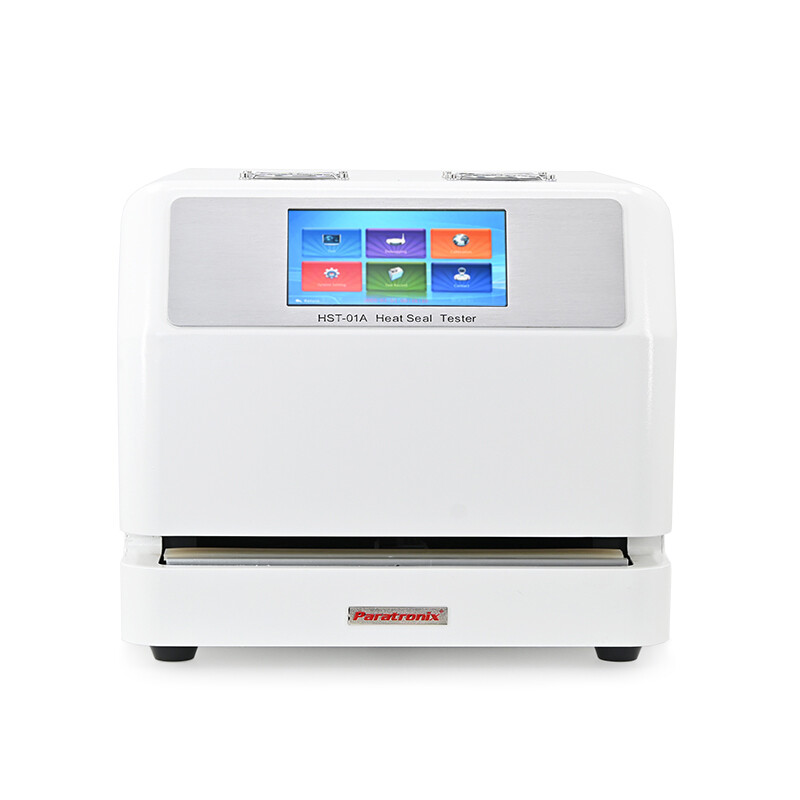
 HST-01A Heat Seal TesterHST-01A Heat Seal Tester (Laboratory Heat Sealer) is designed to determine the optimal heat seal parameters, including dwell time, sealing pressure, and sealing temperature, for plastic films, flexible composite films, plastic-coated paper, and other heat-sealable materials.
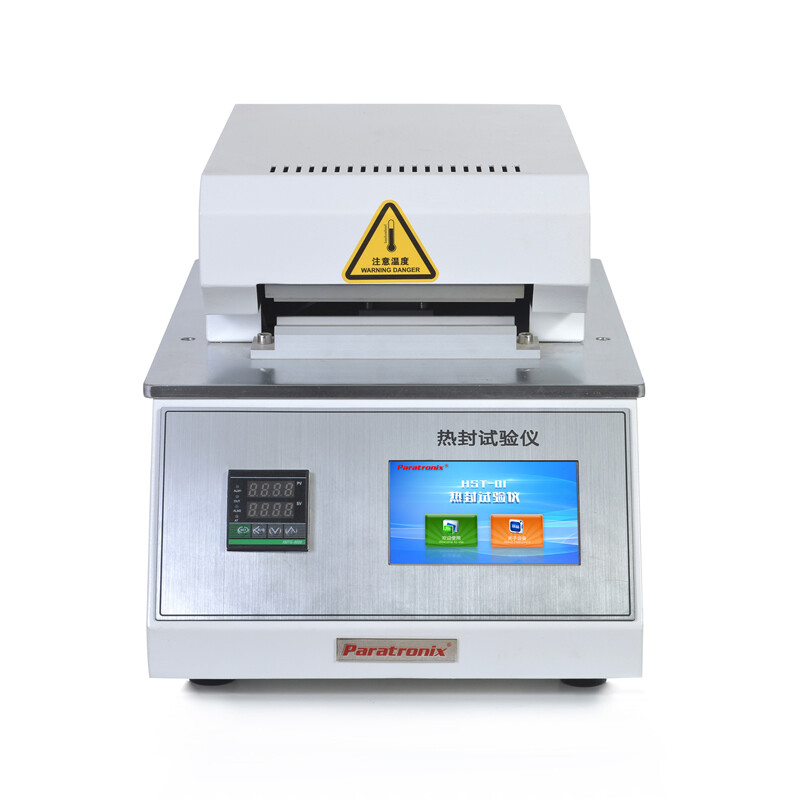
 HST-01B Heat Seal TesterHST-01B Heat Seal Tester (Laboratory Heat Sealer) is designed to determine the optimal heat seal parameters, including dwell time, sealing pressure, and sealing temperature, for plastic films, flexible composite films, plastic-coated paper, and other heat-sealable materials.
Search by Keywords