




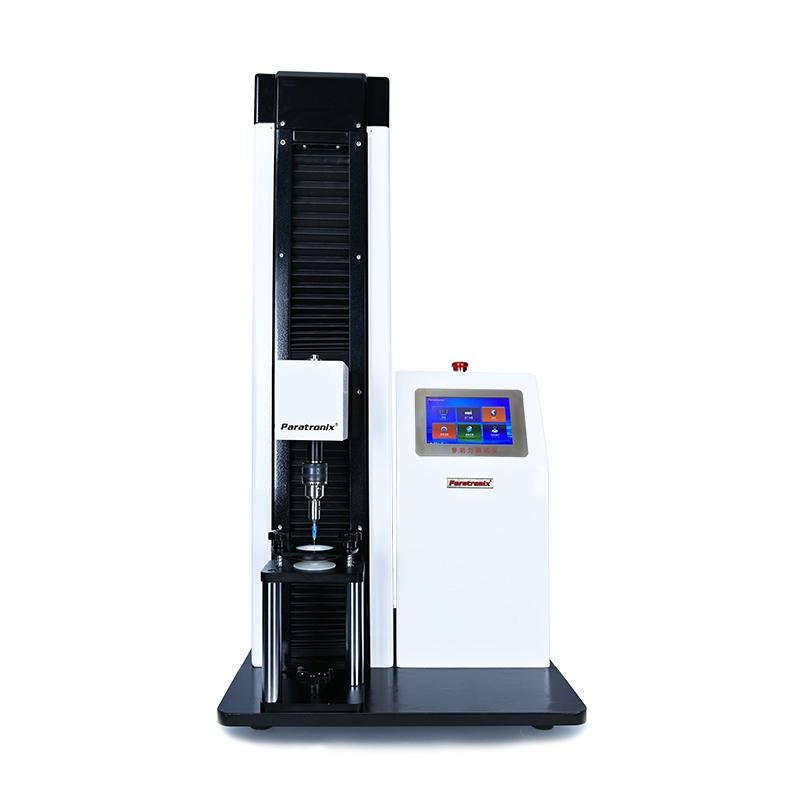
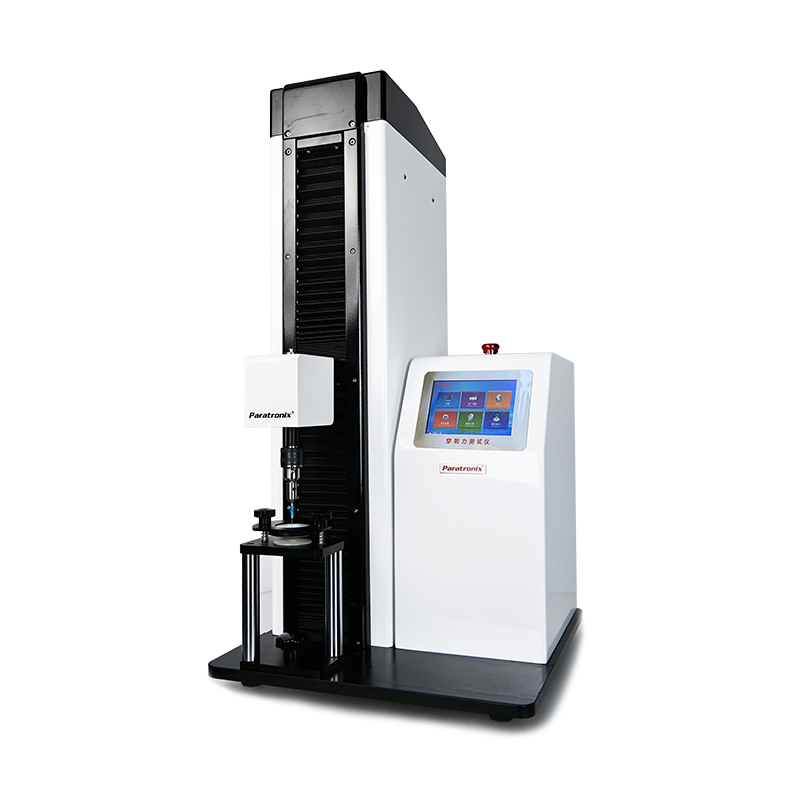
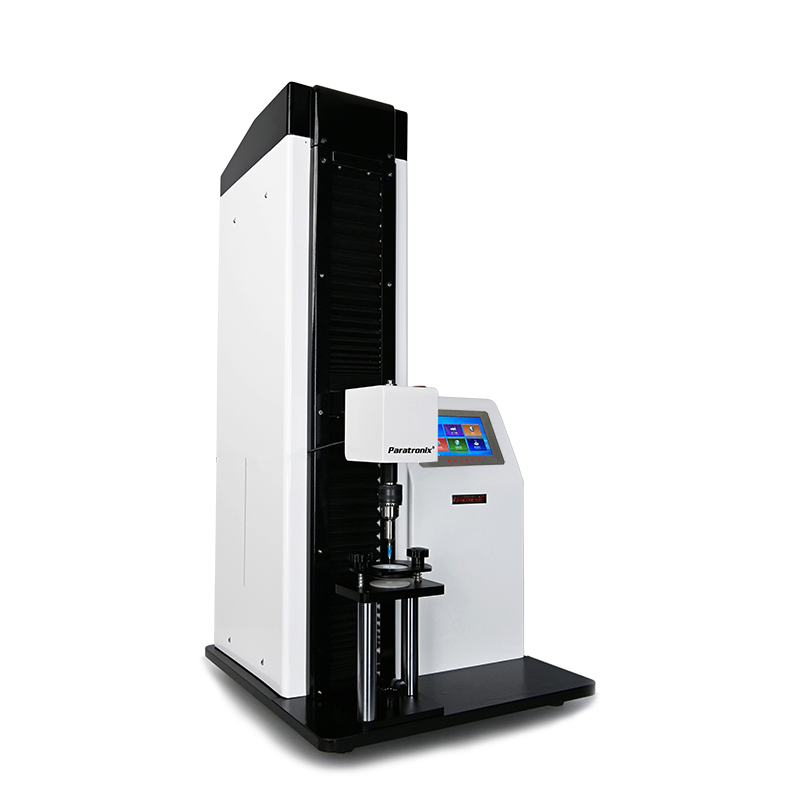
What Is A Syringe Needle Tester?
A syringe needle tester is an instrument or test system used to measure characteristics of a needle or needle assembly under defined conditions. Depending on its configuration, it may record the force needed to penetrate a test medium, assess the security of a needle attachment, or support other mechanical and functional checks. The term describes a family of equipment rather than one universal machine: the fixture, sensor, motion control, and test method determine what a system can measure.
For sterile hypodermic needles intended for single use, ISO 7864 specifies requirements and test methods relevant to the finished needle. The applicable edition, device design, and intended market determine which provisions a manufacturer must evaluate. A syringe needle tester can generate evidence for selected characteristics, but owning a tester alone does not establish conformity. Manufacturers must also address requirements such as inspection, sampling, documentation, and other applicable device standards.
Typical users include needle and syringe manufacturers, contract manufacturers, medical device laboratories, and incoming quality teams. Research groups may use force data to compare needle geometries or surface treatments, while production teams use controlled methods to investigate process variation. Purchasing decisions should begin with the device under test and the required result: a needle penetration curve, for example, answers a different question from a leak test on a complete syringe assembly.
How Needle Performance Tests Work
In a penetration force test, a controlled drive moves a needle and a selected medium relative to each other while a force sensor records the resistance against displacement or time. The resulting curve can reveal an initial peak and changes during subsequent movement. The medium, test speed, insertion depth, alignment, and temperature influence the result, so comparisons are meaningful only when these conditions and the sample preparation are controlled and recorded.
Penetration performance can vary with needle geometry, surface condition, lubrication, and manufacturing variation. A laboratory should define the test medium and its replacement schedule before comparing lots. Testing a rubber stopper, polymer film, or other material can support a specific application, but results from different media are not interchangeable. A laboratory measurement is also a controlled indicator of mechanical behavior; it does not by itself predict patient experience or clinical performance.
Other evaluations may examine attachment security, fluid passage, leakage, or the condition of the needle point and surface. Each requires its own method, fixtures, and acceptance criteria; a force tester does not automatically perform all of them. Check whether the relevant standard prescribes a procedure or permits a justified alternative, and document any deviations. Evaluate measurement uncertainty and repeatability where they could affect a pass-or-fail decision.
Main Tester Types And Applicable Standards
Force-based instruments range from dedicated penetration testers to multipurpose systems fitted with suitable load cells and grips. The choice depends on the force range, motion requirements, sample geometry, and the number of methods a laboratory runs. Separate equipment may be needed for pressure or leakage checks and for visual or dimensional inspection. Confirm the complete configuration before purchase, including any adapters for the needle hub, syringe barrel, and test medium.
ISO 7864 concerns sterile hypodermic needles for single use. ISO 7886 addresses sterile hypodermic syringes for single use, with different parts covering different syringe types; it should not be treated as a substitute for the needle standard. ISO 9626 addresses stainless steel needle tubing for medical devices. Depending on the product, other standards and regulatory requirements may apply. Verify current editions, amendments, and local adoption before finalizing a test plan.
For laboratories investigating penetration behavior, paratronix offers the PMT-C puncture force tester as a product to discuss against the intended application. Its suitability for a particular needle, fixture, force range, and ISO method should be confirmed with the supplier and established through validation. The company's broader equipment offering includes multipurpose, leak, seal strength, and medical packaging physical performance testers, which may support related quality-control activities through separate, appropriately configured methods.
How To Select A Syringe Needle Tester
Start with a requirements matrix listing device dimensions, needle gauges, expected force range, test speed, travel, sample throughput, and the specific results to report. Select a load cell whose calibrated range and resolution are appropriate for the forces being measured, rather than choosing solely by maximum capacity. Ask for specifications at the intended operating points, including accuracy, data acquisition rate, and the ability to capture a short peak without losing meaningful detail.
Fixtures deserve equal attention. A needle must be held consistently without damaging the assembly, and the medium must be supported so it does not shift during penetration. Check alignment, insertion depth control, access for small samples, and changeover between product sizes. Request a demonstration using representative samples and the intended medium. Compare repeat measurements and force curves, and investigate unexpected variation before treating a configuration as suitable for routine use.
Review software and service requirements before ordering. The system should record the settings and raw data needed for traceability, support appropriate user access, and export results in a usable format. Clarify calibration arrangements, spare parts, training, installation support, and response times. If electronic records are subject to specific regulatory controls, assess those requirements separately. A supplier quotation should identify included fixtures, consumables, software options, and any work needed to validate the method.
Applications And Quality Control Workflow
A typical workflow starts with an approved sampling plan and identification of the finished device or component. The laboratory checks the instrument's calibration status, prepares the specified medium, and conditions samples as required by the method. Operators then mount the sample, verify alignment, enter the method settings, and run the test. Record sample identification, equipment configuration, environmental conditions when relevant, and any observations that could explain an unusual curve or invalid result.
During development, the same controlled setup can help teams compare design or process changes, such as alternative point geometries or lubrication conditions. In incoming inspection, it can support comparison against a qualified reference or agreed specification. During production, trend data can help identify a shift that warrants investigation. Acceptance limits should come from the applicable requirements and a justified device-specific process; they should not be copied from an unrelated product or test medium.
Before routine release testing, qualify the installed equipment and validate the method for its intended use. Evaluate operator technique, fixture repeatability, medium variability, and the effect of relevant settings. Establish calibration and preventive maintenance intervals based on manufacturer guidance, usage, and quality-system requirements. After a fixture change, software update, repair, or significant method revision, assess whether verification or revalidation is necessary. Retain records so an auditor can reconstruct the test and its disposition.
Ownership Cost And Future Trends
The purchase price is only one part of the cost of a syringe needle tester. Budget for load cells, dedicated fixtures, reference materials, test media, installation, training, calibration, maintenance, and software support. Also consider operator time, sample preparation, consumable replacement, and downtime. A multipurpose platform may reduce the number of instruments required, but only if its performance and changeover time meet each intended method. Obtain an itemized quotation to compare configurations fairly.
To assess potential return, estimate annual test volume and the time required for preparation, testing, review, and reporting under both the current and proposed workflows. Add expected ownership costs and any implementation effort, then compare the alternatives over a practical service period. Potential benefits may include faster investigations or fewer manual transcription steps, but they should be supported by a trial or internal data. Do not assume that automation alone improves measurement validity.
Future purchasing decisions will increasingly consider traceable digital records, integration with laboratory systems, and the ability to analyze complete force curves alongside individual peak values. These capabilities are useful only when supported by a controlled method and reliable data handling. When requesting a proposal from paratronix, provide the device drawings, applicable standard editions, expected forces, medium, throughput, and reporting needs. Ask for a representative test demonstration and a written statement of the proposed configuration's capabilities and limits.
 7 Critical Parameters to Evaluate When Selecting a Syringe Needle Tester for ISO 7886 Compliancesyringe needle tester: Discover the 7 critical parameters for ISO 7886 compliance—accuracy, fixtures, speed control, data integrity & more.
 Building an ASTM-Aligned Plastic Film Puncture Test Method for Incoming QCPlastic films puncture force Tester guidance for building an ASTM-aligned incoming QC method with controlled conditions, reliable limits, and defensible film release decisions.
 Rubber Stopper Puncture Force Testing for Reliable Vial Closure Quality ControlRubber stoppers puncture force Tester solutions help verify vial closure performance, improve test repeatability, and support reliable injectable packaging quality control.
 When ASTM F1306 is suitable for laminated film puncture testingLaminated films puncture force Tester insights: learn when ASTM F1306 delivers reliable puncture resistance data, better laminate comparisons, and confident material specifications.
Search by Keywords