




Defining Luer Taper Air Leakage Testing And Its Scope
A Luer Taper air leakage Tester evaluates whether an assembled Luer connection maintains a seal under defined pneumatic conditions. Luer connectors use a nominal 6% taper and appear on syringes, needles, infusion components, and other medical devices. Their sealing performance depends on dimensional compatibility, material behavior, surface condition, and assembly. An air leakage instrument measures one aspect of connection integrity; a complete connector evaluation also considers mechanical security, resistance to damage, and the other performance characteristics required by the applicable specification.
ISO 80369-7 specifies requirements for small-bore connectors intended for intravascular or hypodermic applications. It covers both Luer slip and Luer lock configurations within its scope. ISO 80369-20 provides common test methods referenced across the connector standards series. Laboratories should establish which editions, amendments, and regional adoptions apply to their project before preparing a protocol. Requirements must be interpreted together with the device's intended use and regulatory pathway, because purchasing an instrument does not itself establish product conformity or market authorization.
The distinction between leakage modes matters. Air leakage under subatmospheric pressure assesses air entering a connection when internal pressure is below ambient pressure. Liquid leakage under positive pressure assesses outward liquid escape through a different prescribed procedure. These evaluations should not be treated as interchangeable simply because both concern sealing. A useful requirements document identifies the exact method, connector configuration, reference connector, conditioning, assembly procedure, measurement units, and acceptance criteria before suppliers recommend a tester or demonstrate its capabilities.
Understanding Pressure Measurement And Leakage Principles
For a subatmospheric air leakage evaluation, the apparatus establishes the specified pressure condition inside a controlled test circuit connected to the specimen. Air entering through an imperfect connection changes the measured pressure or produces a measurable flow, depending on the apparatus and method. The system must distinguish leakage at the connector interface from leakage through tubing, valves, fixtures, or other connected components. Otherwise, the reported result describes the combined test circuit and cannot reliably identify the specimen's contribution to the observed signal.
Pressure decay systems infer leakage from pressure change over time, while flow measurement systems quantify gas movement under controlled conditions. Their outputs are not automatically equivalent. Converting a pressure change into a flow rate requires a justified model that accounts for factors such as enclosed volume and gas temperature. A Luer Taper air leakage Tester should therefore be assessed against the required method and reporting units. A sensitive sensor alone cannot compensate for an unsuitable circuit design, excessive background leakage, or unstable measurement conditions.
Temperature changes, flexible component expansion, trapped volumes, and material relaxation can resemble leakage or obscure it. Appropriate stabilization and controlled specimen preparation help separate these effects from the measurement of interest. The specified test duration and pressure conditions must come from the applicable controlled method, rather than a convenient instrument preset. Before accepting a result, laboratories should verify the circuit with suitable integrity checks and document how the apparatus responds to known leakage or other appropriate verification references.
Comparing Tester Categories And Fixture Configurations
Common purchasing categories include dedicated air leakage instruments, multifunction connector testers, and configurable laboratory systems. Dedicated equipment can simplify a repetitive test with a stable specimen range. Multifunction platforms may support several connector evaluations through different fixtures or modules, potentially reducing separate equipment purchases. Configurable systems offer flexibility but require careful integration and method verification. These categories describe equipment architecture rather than recognized levels of compliance; suitability depends on the actual capabilities, accessories, documentation, and validated operating procedure supplied for the intended application.
Fixture selection begins with connector geometry and the required reference mating component. Male and female specimens, as well as slip and lock configurations, may require different arrangements. Reference connectors must satisfy the applicable specification and remain suitable throughout use. Worn, damaged, or incorrectly selected mating surfaces can change the sealing behavior being assessed. Buyers should request clear identification of included fixtures, their dimensional documentation, replacement availability, inspection requirements, and compatibility with the connector variants included in the laboratory's testing scope.
Manual, partially automated, and automated operation create different workflow demands. Manual assembly can work well when trained operators follow controlled force, torque, and timing instructions. Automation can improve consistency and throughput when its settings reproduce the prescribed procedure. Neither approach removes the need to evaluate operator effects and fixture alignment. Compare instruments using representative specimens and the same approved protocol, including sample preparation and changeover. This reveals practical differences that may remain hidden in comparisons based only on pressure range or display resolution.
Translating ISO Requirements Into Purchasing Criteria
Start selection with a requirements matrix linking each applicable test to a measurable equipment capability. Include operating pressure range, accuracy, resolution, timing control, leakage measurement capability, fixture compatibility, and environmental conditions. Define acceptance criteria using the current applicable standard and approved protocol. Avoid copying isolated numerical limits from marketing pages, since their context may omit specimen conditioning, assembly requirements, or the measurement method. Suppliers should explain how their proposed configuration implements each requirement and identify any additional equipment or operator actions needed.
Calibration and measurement uncertainty deserve the same attention as nominal specifications. Ask which measurement channels are calibrated, over what ranges, with what traceability, and whether calibration covers the delivered configuration. Determine how uncertainty influences decisions near the acceptance limit and establish a documented decision rule where appropriate. Software should retain the test settings and results needed for review. Access controls, audit trails, and electronic signatures should be specified when required by the laboratory's quality system and applicable records requirements.
A supplier demonstration should use agreed specimens, fixtures, and operating conditions, followed by a review of the resulting records. Include representative connector sizes and materials, alongside suitable circuit checks and challenging samples where available. Evaluate repeatability, changeover effort, abnormal-condition handling, and result interpretation. For a Luer Taper air leakage Tester, a useful acceptance exercise establishes that the complete system performs the intended measurement consistently. It should also distinguish demonstrated capabilities from optional features, future development, and functions that remain outside the proposed supply scope.
Applying Connector Testing Across Development And Production
Typical users include medical device manufacturers, connector component suppliers, contract laboratories, and quality teams supporting assembly operations. During development, leakage testing can help compare materials, molding conditions, and design revisions under controlled conditions. During verification, it provides evidence against predefined requirements. Production applications may include incoming inspection, process monitoring, or investigation of nonconforming lots. Sampling frequency and test selection should follow the manufacturer's risk assessment and quality plan; development testing and production screening may serve different purposes and require different procedures.
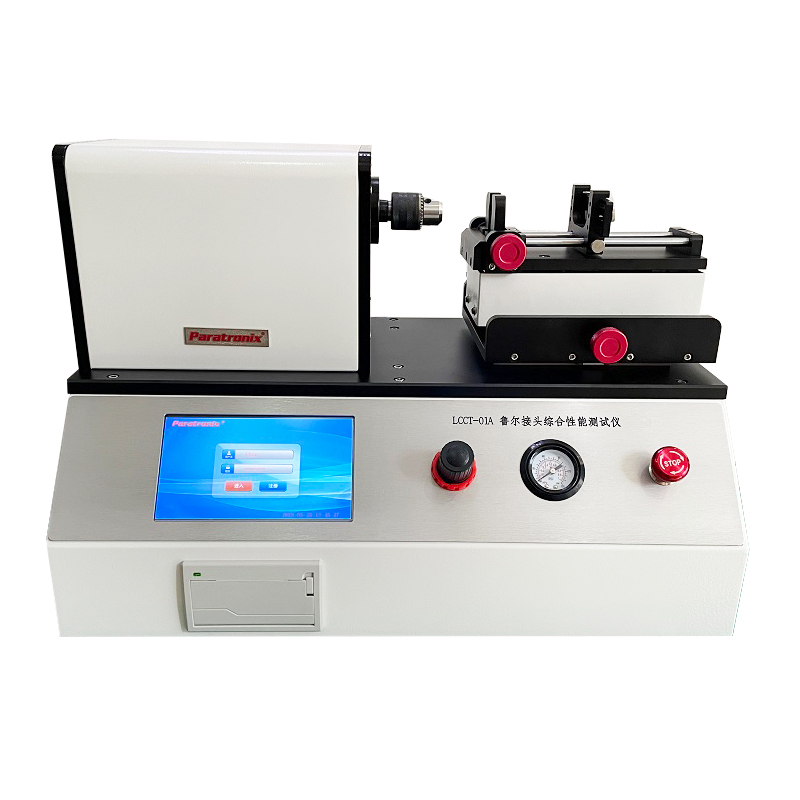
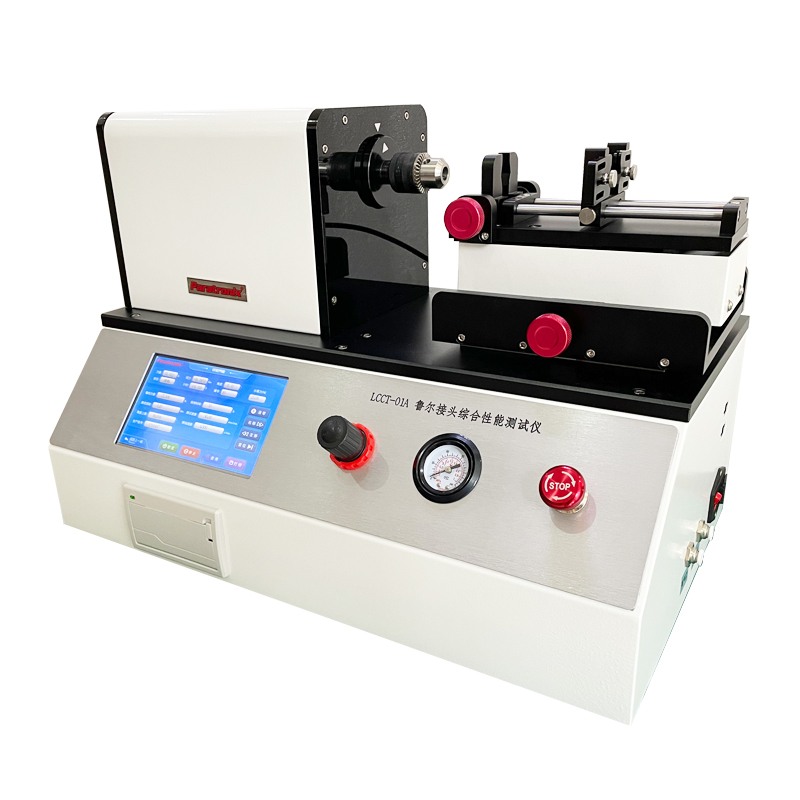
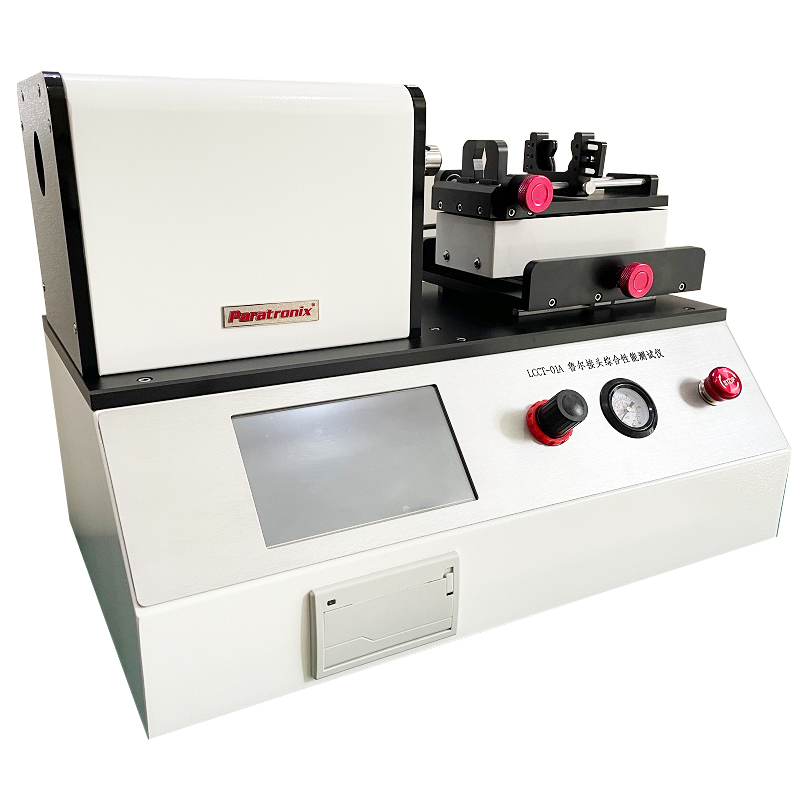
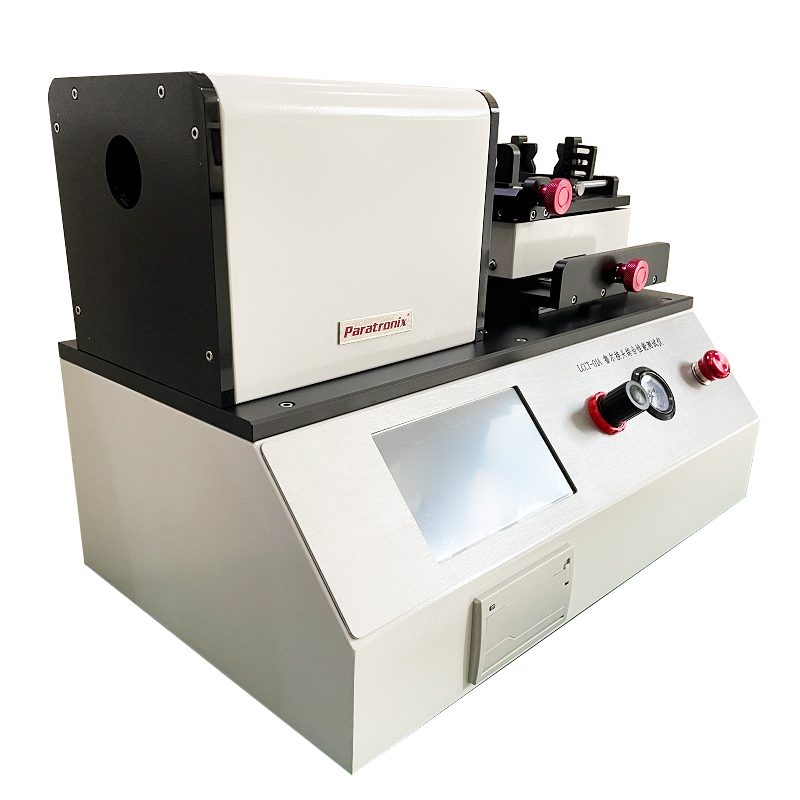
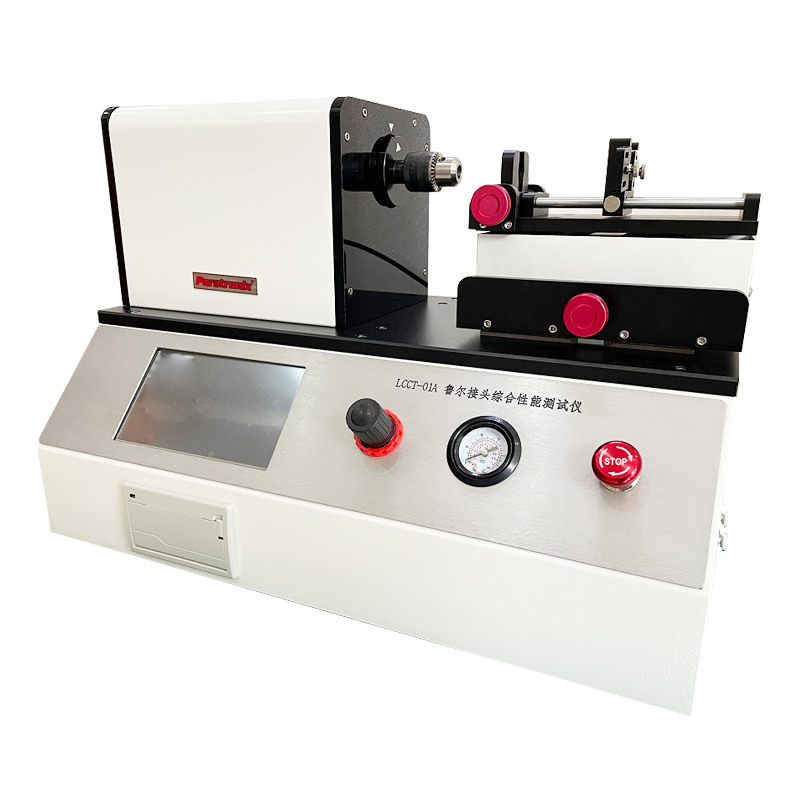
For buyers considering paratronix, the LCCT-01A Luer Taper Comprehensive Performance Tester is a relevant product to assess against this requirements matrix. The supplied portfolio also includes leak testers, torque testers, multipurpose testers, and medical packaging physical performance equipment. This range provides a basis for discussing related laboratory needs with one supplier. However, the LCCT-01A's supported leakage methods, fixtures, measurement performance, and reporting functions should be confirmed through current technical documentation and an application demonstration before a purchasing decision.
Supplier qualification should distinguish business identity from technical evidence. The supplied business license identifier, Unified Social Credit Code 91370105689842696E, supports an identity check; it does not establish ISO 80369-7 conformity or instrument performance. Request documentation relevant to the proposed configuration, including calibration arrangements, manuals, service provisions, and acceptance criteria. Where projects target multiple markets, identify the applicable regional standards and submission expectations separately. Connector test results contribute to the device evidence package, while market access depends on the broader regulatory requirements.
Establishing Installation, Quality Control, And Maintenance
Installation should establish a stable environment, suitable utilities, and a test circuit consistent with the supplier's instructions and approved method. Verify pneumatic connections, pressure generation, fixture mounting, software settings, and measurement channel identification before routine testing. Record the delivered hardware, software version, accessories, and operating limits. Where required by the laboratory's quality system, document installation, operational, and performance qualification activities. The aim is to establish that the installed configuration performs its intended tasks under the laboratory's actual conditions and with its representative specimens.
A controlled workflow should cover specimen identification, conditioning, assembly, stabilization, measurement, review, and disposition. Record assembly forces or torques when the method requires them, and control any preparation that could affect the connector surface. After a failure, check the fixture and circuit before concluding that the specimen leaked. Preserve the original result and follow a documented investigation procedure for retesting. This approach supports useful root cause analysis while preventing repeated tests from obscuring an assembly problem, equipment fault, or actual product defect.
Maintenance intervals should reflect usage, equipment stability, manufacturer guidance, and the consequences of an incorrect result. Routine activities may include inspecting reference connectors, replacing worn seals, checking circuit integrity, and reviewing calibration status. Increase attention after repairs, relocation, abnormal results, or changes to fixtures and tubing. Trend verification data to detect deterioration before it causes substantial rework. Operators also need periodic training on assembly and failure recognition, because a well-maintained instrument can still produce unreliable evidence when preparation and handling vary between users.
Assessing Ownership Costs And Future Testing Needs
Total ownership cost includes the purchase price, reference connectors, fixtures, calibration, qualification, training, consumables, service, and downtime. Sample changeover and reporting effort can materially affect cost per completed test. Compare quotations using the same scope and expected workload, including accessory replacements and support arrangements. A lower initial price may offer limited value if required methods need substantial additional equipment. Conversely, a multifunction platform warrants its additional cost only when the supported functions match actual testing demand and can be operated efficiently.
Estimate return on investment using measured workflow data rather than assumed productivity gains. Record preparation time, test duration, review time, retest frequency, and annual sample volume. Then assess how the proposed configuration could change those values, including the effort needed for qualification and staff training. Request a practical demonstration where uncertainty remains. Purchasing decisions become more defensible when expected savings are linked to observed activities and supported by clearly defined service response, spare part availability, and equipment acceptance conditions.
Future priorities include more consistent assembly control, improved electronic records, easier laboratory system integration, and better visibility into measurement uncertainty. Evaluate these capabilities against foreseeable workloads and validation needs. For a paratronix quotation, provide connector drawings, specimen materials, target methods, expected throughput, and reporting requirements. Ask for a configuration-specific response for the LCCT-01A, including fixtures, calibration scope, demonstrated functions, training, and acceptance testing. This gives both parties a concrete basis for selecting equipment and planning its introduction into a controlled testing workflow.
 What Does a Luer Taper Stress Cracking Tester Reveal About Connector Integrity?Discover how a Luer Taper Stress Cracking Tester reveals connector weaknesses under defined conditions. Explore key testing insights for smarter material and equipment choices.
 ISO 80369-7: Planning Stress Cracking Tests for Luer ConnectorsLuer Taper stress cracking Tester guide: plan ISO 80369-7 tests with controlled assembly, conditioning, and clear acceptance criteria. Discover how to select equipment for reliable results.
 Axial Load, Torque, and Hold Time in Luer Connector Stress Cracking TestsLuer Taper stress cracking Tester selection starts with axial load, torque, and hold time control. Discover essential checks for repeatable testing and smarter equipment decisions.
Search by Keywords