




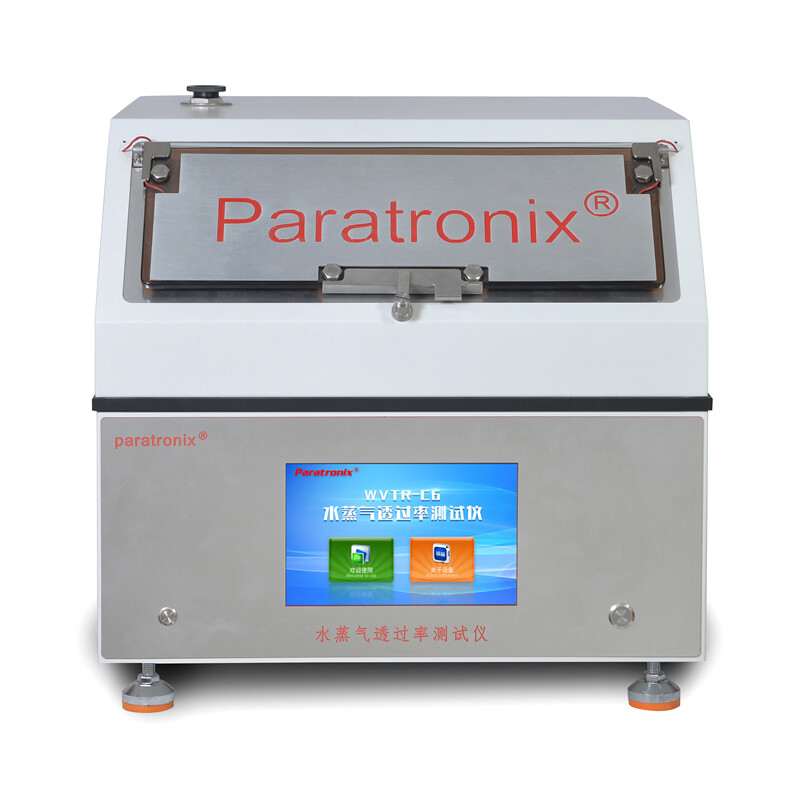
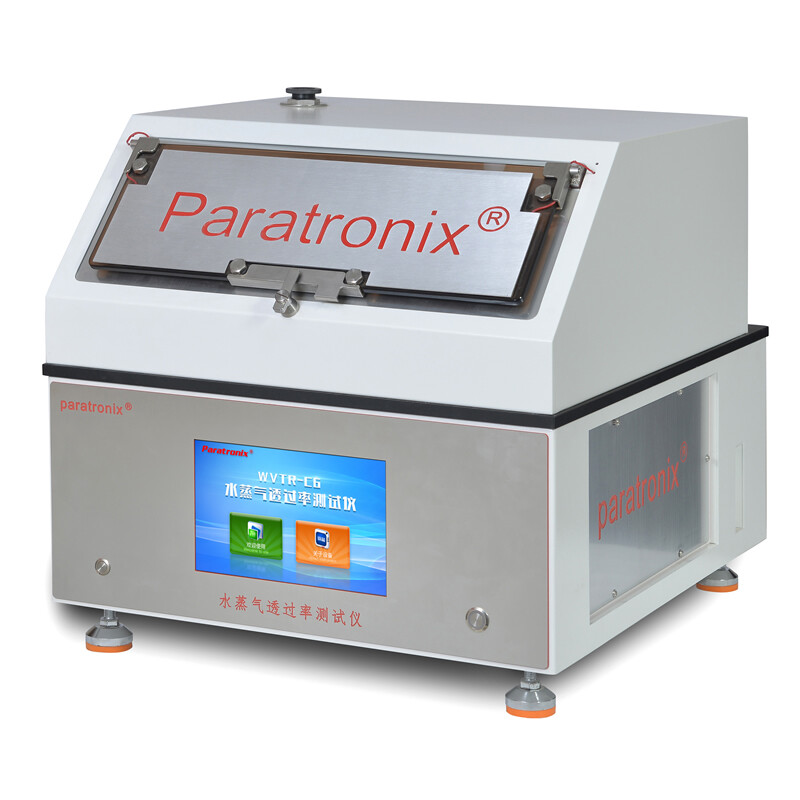
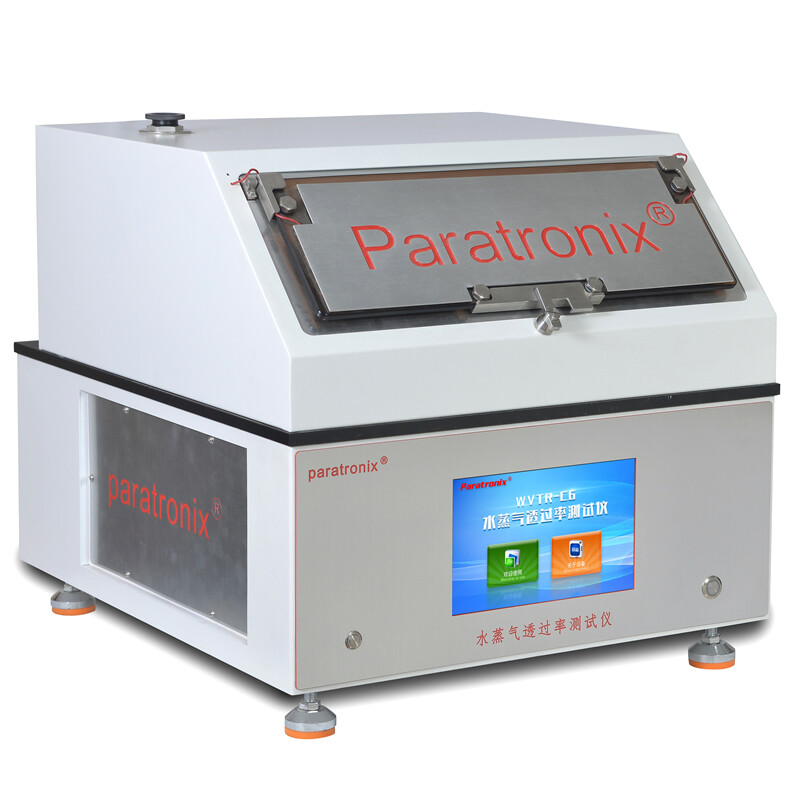
What A WVTR Tester Measures
A WVTR tester for food packaging measures the rate at which water vapor passes through a material under specified conditions. Results are commonly expressed in grams per square meter per day, or g/m²/day. The measurement helps packaging teams compare moisture barriers, investigate material changes, and assess whether a structure can support a product’s intended shelf life. Because temperature and relative humidity affect transmission, a result without its test conditions offers limited value for purchasing or comparison.
Water vapor moves through a packaging material when there is a difference in water vapor partial pressure between its two sides. In many polymer films, molecules first enter the material, diffuse through it, and then leave the opposite surface. Material chemistry, layer structure, thickness, coatings, and environmental conditions all influence the measured rate. A lower WVTR generally indicates a stronger moisture barrier under the stated conditions, but it does not establish overall package integrity.
WVTR testing is relevant to films, laminates, coated papers, and other sheet materials used in pouches, lidding, and wraps. Some methods and equipment can also assess finished packages, although the procedure and reporting unit may differ from those for flat specimens. Moisture-sensitive products include powdered foods, dried snacks, confectionery, and ingredients susceptible to caking or texture changes. The required barrier depends on the food, pack format, distribution environment, and target shelf life.
Test Methods And Industry Standards
Gravimetric testing determines moisture transfer from a change in mass over time. A specimen is sealed to a test dish containing a desiccant or water, and the assembly is exposed to a controlled atmosphere. ASTM E96/E96M describes gravimetric procedures for water vapor transmission of materials. This approach can be useful for material evaluation, but results depend on specimen preparation, sealing, weighing, and environmental control. Buyers should verify whether the method is appropriate for their material and expected transmission range.
Instrumental methods use a sensor to quantify water vapor passing through a specimen separating controlled environments. ASTM F1249 addresses an infrared detection method for plastic film and sheeting, while the ISO 15106 series covers methods for determining water vapor transmission of plastic film and sheeting. Applicable editions, specimen requirements, and test conditions should be agreed upon before purchase. Different methods are not automatically interchangeable; comparison requires compatible conditions, sample preparation, calibration, and reporting practices.
For routine laboratory work, paratronix offers water vapor permeability testers alongside leak testers and other packaging test equipment. A buyer considering its instruments should request the applicable test method, supported standards, measurement range, and control specifications for the proposed configuration. For a food packaging program, pair a material barrier method with a separate seal or leak assessment where relevant. Testing to a named standard supports a defined procedure; it does not by itself demonstrate food contact compliance or guarantee shelf life.
Applications And Decision Makers
Food manufacturers use WVTR data when selecting packaging for products that gain or lose moisture during storage. A dry snack may need protection against humidity to retain crispness, while another food may require a barrier that limits moisture loss. Packaging engineers can compare candidate films under an agreed set of conditions, then combine the results with product stability and distribution information. The most useful specification connects the material’s performance to the actual product and expected storage environment.
Film producers and converters use testing to screen incoming resins or films, monitor laminate and coating consistency, and investigate changes after a process adjustment. Quality teams may compare production lots against a documented specification, while research teams evaluate alternative structures or reduced-material designs. Testing is particularly useful after a supplier changes a layer, adhesive, coating, or film thickness. A change in WVTR can prompt further investigation, but it does not identify the cause on its own.
Procurement managers, laboratory managers, and technical buyers should agree on the decision the test will support before requesting quotations. A laboratory serving multiple customers may need a broader range of conditions and flexible reporting, while a production quality team may prioritize repeatable checks and throughput. Where finished-package leaks or seal defects are also a concern, paratronix’s leak and seal strength testers provide additional categories to discuss. Their suitability depends on the package and test requirements.
How To Select A WVTR Tester
Start with representative materials and their expected WVTR values at the intended temperature and humidity. Ask each supplier for the instrument’s measurement range under those conditions, including the basis for any detection limit and the uncertainty or repeatability information available. A high-barrier laminate can require greater sensitivity and longer stabilization than a more permeable film. Confirm that the specimen area, thickness limits, and fixture design accommodate your samples without excessive handling or unsuitable edge sealing.
Next, examine environmental control and workflow. Request the supported temperature and relative humidity ranges, control tolerances, number of test cells, typical stabilization requirements, and data export options. Confirm whether the instrument accommodates the applicable standard and whether any accessories, gases, utilities, or external humidity sources are required. For multilayer materials, agree on specimen orientation and exposure direction, and report these consistently. Ask for a demonstration or evaluation using your own samples and conditions.
Assess service and verification before comparing quotations. Clarify installation requirements, operator training, calibration procedures, reference materials, preventive maintenance, spare parts, and remote or local support. Request a written configuration and identify which items are included. A useful acceptance plan specifies the method, sample handling, environmental setpoints, reporting format, and agreed performance checks. Do not select a WVTR tester for food packaging solely by its advertised range; reliable operation at your actual test conditions matters more.
Testing Workflow And Quality Control
Define a sampling plan that represents the roll, batch, or packaging structure being assessed. Record material identification, nominal thickness, layer orientation, conditioning history, and any visible defects. Cut specimens to fit the fixture without stretching, creasing, or contaminating the test area. Condition samples as required by the selected method and internal procedure. Use suitable sealing materials and inspect the mounting surface, because a leak around the specimen can distort the apparent transmission rate.
Set the specified temperature and humidity conditions, allow the system and specimen to stabilize, and run the test according to the instrument instructions and applicable method. Include the required number of specimens or repeat measurements in the test plan. Record the test duration, environmental conditions, exposed area, orientation, and result units. Investigate unexpected variation before releasing a result, considering mounting, sample damage, environmental drift, and differences between specimens as possible sources.
Maintain a documented schedule for cleaning, calibration, verification, and replacement of consumables based on the manufacturer’s instructions, method requirements, and actual use. Use suitable reference materials or other agreed checks to monitor performance, and retain records of adjustments and service. Compare results only when conditions and procedures are sufficiently aligned. For shelf-life decisions, combine barrier data with package seal testing, product testing, and distribution information; a film result alone cannot establish finished-pack performance.
Ownership Costs And Future Trends
The purchase price is only one part of total ownership cost. Include installation, training, fixtures, reference materials, consumables, utilities, calibration, maintenance, software, and service in the budget. Also consider operator time, test duration, sample preparation, and downtime. A more sensitive or automated configuration may be worthwhile when it supports the required materials or sample volume, but its value depends on the laboratory’s workload and quality objectives. Obtain itemized quotations to make comparisons meaningful.
Estimate return on investment using costs that can be supported by your own records. Compare current outsourced testing fees, shipping, turnaround time, and internal handling with the expected cost of in-house testing. Add the value of increased testing capacity only when it addresses a defined need, such as faster material qualification or more frequent process checks. Include utilization assumptions and uncertainty, and recognize that reduced delays or rejects should not be treated as guaranteed savings.
Packaging development is increasingly evaluating structures designed for recycling, including changes to layers and coatings that can alter moisture barrier performance. Laboratories may also seek better traceability, digital records, and workflows that support more frequent material comparisons. These developments make consistent methods and documented conditions especially useful. To discuss a suitable setup, provide paratronix with representative samples, target WVTR range, test conditions, applicable standards, expected throughput, and service location, then request a configuration and quotation matched to those requirements.
 Which WVTR Tester Is Suitable for Pharmaceutical Packaging?Which WVTR tester is suitable for pharmaceutical packaging? Compare methods, sensitivity, and package fixtures to find the right system for reliable moisture barrier testing.
 Why Do WVTR Results Differ Between Laboratories?Why do WVTR results differ between laboratories? Discover how humidity, test methods, and sample preparation affect accuracy—and learn how to improve lab agreement.
 How Do Temperature and Humidity Affect WVTR Lab Comparisons?Can a WVTR tester test aluminum foil laminates? Learn how temperature, humidity, and detection limits affect lab comparisons—and choose the right testing setup for reliable results.
 Tester: Precision Moisture Barrier Performance Testing Solution") Infrared Sensor Method Water Vapor Transmission Rate (WVTR) Tester: Precision Moisture Barrier Performance Testing SolutionIn modern material science, packaging manufacturing, pharmaceutical and food industries, the water vapor barrier performance of flexible films, rigid sheets and composite materials is a core indicator that directly determines product shelf life, storage stability and service performance.
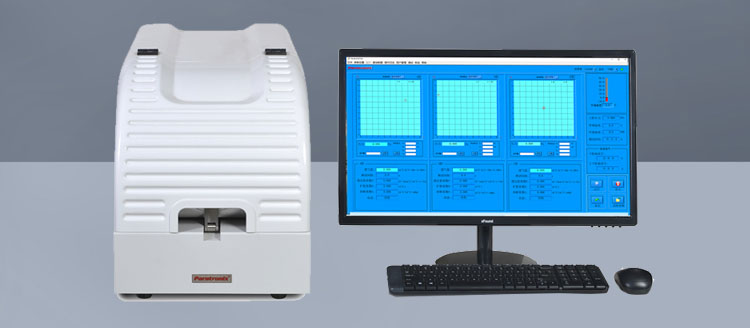
 WVTR-E3 Water Vapor Transmission Rate TesterWVTR-E3 Water Vapor Transmission Rate Tester is designed and manufactured based on the infrared sensor method and is applicable to test the water vapor transmission rate of medium and high barrier materials such as plastic films, composite films, sheets, papers and other various materials.
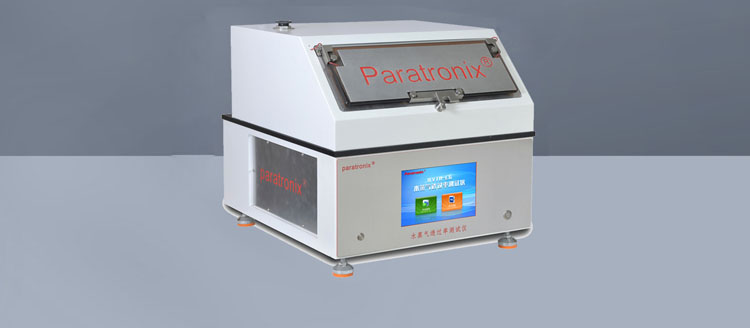
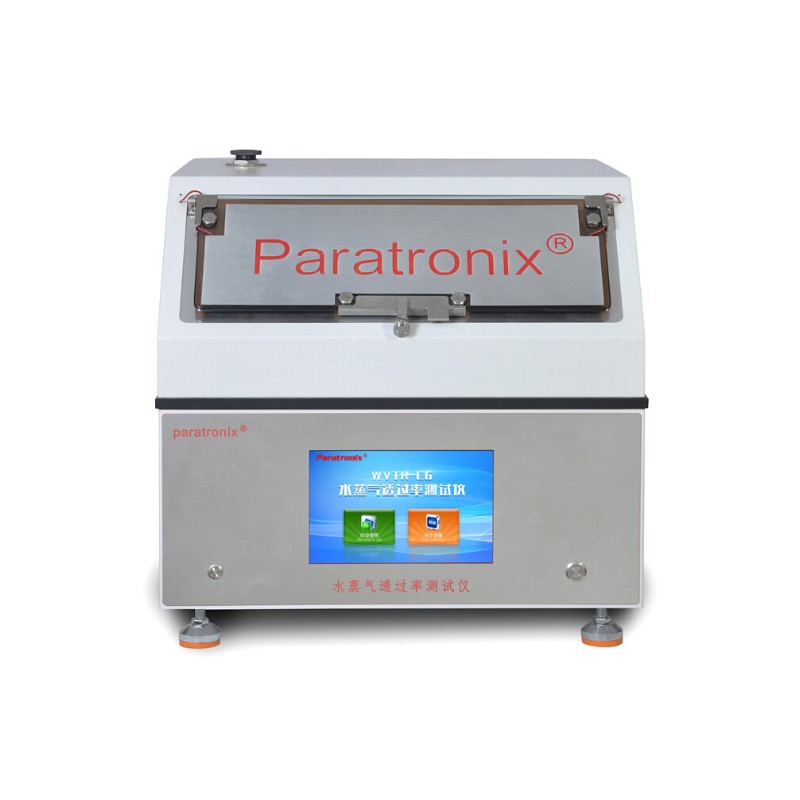
 WVTR-C6 Water Vapor Transmission Rate TesterWVTR-C6 Water Vapor Transmission Rate Tester is designed and manufactured based on the gravimetric method and can be used to test the water vapor transmission rate of plastic films, composite films, sheets, and other materials used in the packaging, medical, and construction industries.
 WVTR-AE3 Water Vapor Transmission Rate TesterWVTR-AE3 Water Vapor Transmission Rate Tester is designed and manufactured based on the electrolytic sensor method and is applicable to test the water vapor transmission rate of medium and high barrier materials such as plastic films, composite films, sheets, papers and other various materials.
Search by Keywords