




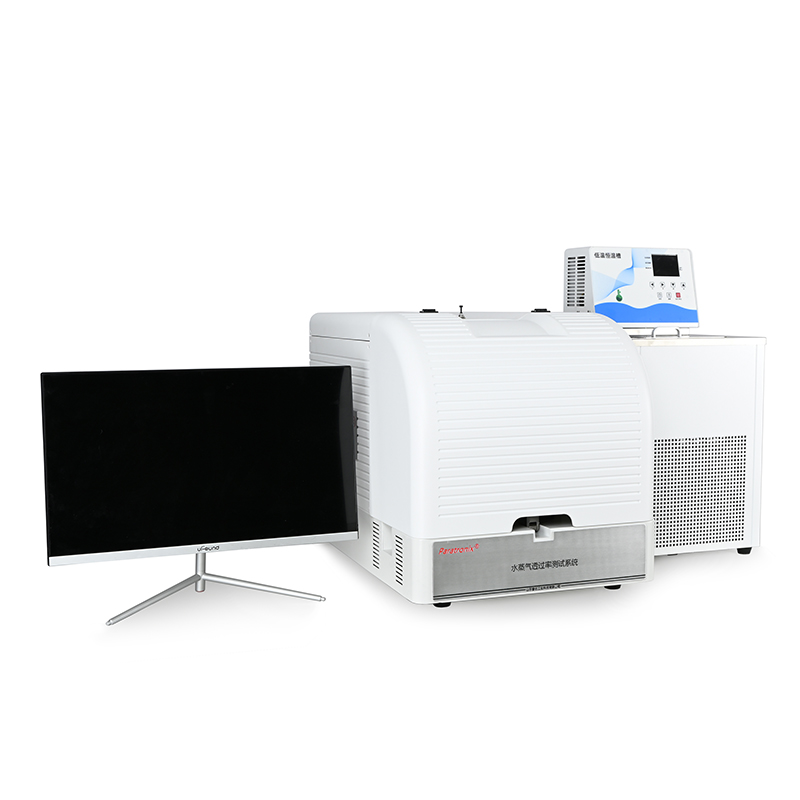
What A Water Vapor Permeability Tester Measures
A Water Vapor Permeability Tester measures the passage of water vapor through a material under controlled conditions. The most common result is the water vapor transmission rate, or WVTR, expressed as mass transmitted per unit area per unit time, often in g/m²/day. Packaging films, paper, coatings, laminates, and other sheet materials can all present different levels of resistance to moisture transfer. A lower WVTR generally indicates a stronger moisture barrier under the stated test conditions.
WVTR describes a particular specimen at a specified temperature and humidity difference. Permeability is a related material property that accounts for thickness and the driving force across the specimen, subject to the assumptions and reporting requirements of the applicable method. The two terms should not be treated as interchangeable. Multilayer structures, uneven coatings, and materials that change behavior with humidity can make simple thickness normalization misleading.
Results help engineers assess whether moisture-sensitive products can be protected during manufacturing, storage, and distribution. They also support incoming material checks and comparisons between film formulations. A flat-sheet WVTR result alone does not establish the integrity or shelf life of a finished package: seals, pinholes, package geometry, and actual distribution conditions also affect performance. Select complementary tests when those factors matter to the purchasing decision.
How Gravimetric And Sensor Methods Work
In a gravimetric cup test, a specimen seals the opening of a container that creates a humidity difference across the material. Depending on the procedure, the cup contains a desiccant or water. The assembly is maintained in a controlled environment and weighed at intervals; its change in mass over time is used to calculate transmission through the exposed area. Accurate weighing, edge sealing, conditioning, and confirmation of an appropriate steady rate are central to reliable results.
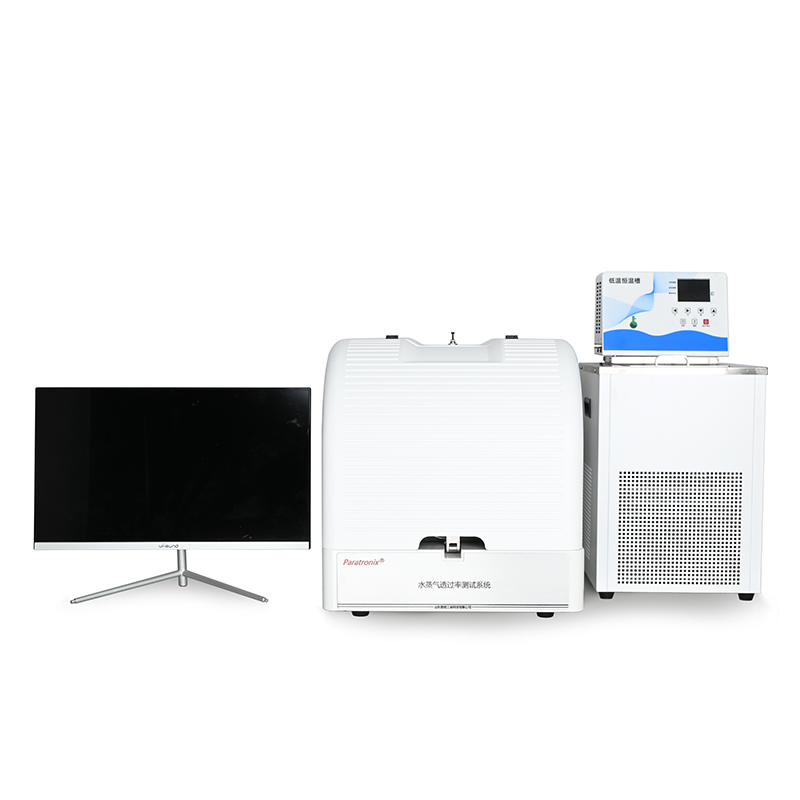
Sensor-based systems typically clamp a specimen between chambers with different moisture conditions. Water vapor passing through the specimen is carried or presented to a detector, which quantifies the transmitted moisture. Infrared, humidity-sensing, and electrolytic detection are among the approaches used in established methods. Each system depends on controlled temperature, humidity, exposed area, sealing, and instrument calibration; its measurement range must suit the barrier level of the sample.
Method choice affects more than instrument speed. A gravimetric setup may be attractive for laboratories that can accommodate repeated weighing and environmental control, while a sensor-based Water Vapor Permeability Tester may offer automated measurement for suitable materials and ranges. Very low transmission rates require particular attention to leaks, background moisture, stabilization, and detection limits. Ask the supplier how the proposed system establishes readiness and identifies results near its measurement limit.
ASTM And ISO Standards For Moisture Transmission
ASTM E96/E96M covers gravimetric water vapor transmission of materials using desiccant and water procedures. ASTM F1249 addresses transmission through plastic film and sheeting using a modulated infrared sensor. ISO 15106-1 describes a humidity detection sensor method for plastic film and sheeting; ISO 15106-2 uses an infrared detection sensor; and ISO 15106-3 uses an electrolytic detection sensor. Confirm the current edition, scope, specimen requirements, and specified conditions before writing a test plan.
These standards are not automatically interchangeable. Their apparatus, moisture gradients, specimen preparation, detection principles, and reporting provisions differ, so results obtained under different conditions should not be compared as if they came from the same procedure. In particular, an infrared instrument should not be described as compliant with ISO 15106-3 solely because it measures WVTR; that part specifies an electrolytic detection method. Verify the exact standard and any customer-specific requirements with the instrument supplier.
For laboratories comparing equipment, paratronix lists the WVTR-E3 and WVTR-C6 Water Vapor Transmission Rate Tester models among its related products. Request the technical documentation for each model to confirm its detection principle, applicable standard editions, operating conditions, and measurement range before selecting it for a stated method. Related guidance on ASTM F1249 versus E96 and infrared versus ISO 15106-3 can help frame the questions for that review.
Applications And Test Planning
Packaging converters and brand owners use WVTR data when specifying films for moisture-sensitive foods, pharmaceuticals, diagnostics, and other products. Materials developers use it to compare resins, coatings, and laminate structures; quality teams use established limits to investigate changes between lots. Contract laboratories may need broader temperature, humidity, and material coverage because they test for multiple customers. The intended decision should determine the method and reporting detail.
Start with the customer specification and the material's expected barrier range. Define the applicable standard and edition, test temperature, humidity conditions on both sides, exposed area, specimen orientation, conditioning, and the number of specimens. Agree on acceptance limits and how results will be rounded or reported. For directional laminates, record which surface faces each environment. If a method permits alternative conditions, state the chosen conditions so that future results remain comparable.
A material qualification program may also require package-level tests. For example, a film can have an acceptable WVTR while a faulty seal creates a separate leakage pathway. paratronix also lists leak and seal strength testers, non-destructive micro-leakage testers, and medical packaging physical performance testers. Evaluate their suitability against the relevant package specification and test method; complementary tests answer different questions and do not replace a defined WVTR measurement.
How To Select And Operate The Right Tester
Match the Water Vapor Permeability Tester to the required method before comparing features. Review its stated measurement range against both expected sample values and acceptance limits, including the need to distinguish a pass from a fail near the limit. Check supported specimen dimensions, temperature and humidity settings, number of test positions, and whether samples with different thicknesses or structures can be mounted securely. Ask for documented performance under conditions relevant to your materials.
Before routine testing, establish a controlled installation environment and follow the manufacturer's instructions for utilities, setup, and conditioning. Train operators to prepare representative specimens, avoid damaging or contaminating surfaces, and seal the test area consistently. Run the checks required by the method and the instrument procedure, including appropriate leak or background checks. Record calibration status, environmental settings, sample orientation, and any deviation from the agreed procedure with each result.
Maintain a schedule for calibration, preventive maintenance, and replacement of consumables based on the manufacturer's instructions, laboratory use, and quality system. Investigate unexpected drift with suitable reference materials or checks where applicable, and retain traceable records. If a result is disputed, first examine specimen handling, seals, conditioning, and environmental settings before attributing the difference to the material. For critical applications, compare repeat specimens and establish an escalation procedure for out-of-specification results.
Cost Of Ownership And Future Trends
The purchase price is only one part of the total cost of a Water Vapor Permeability Tester. Include installation, operator training, calibration, service, spare parts, consumables, utilities, and any required environmental controls. Estimate labor per test and the time samples occupy the instrument, including conditioning and stabilization. For sensor systems, ask about detector maintenance and any carrier gas requirements; for gravimetric work, consider balance capacity and the labor involved in repeated weighing.
Build a practical return-on-investment estimate using your own workload. Compare annual outsourced testing fees, shipping, and turnaround delays with internal equipment, staffing, and upkeep costs. Consider whether faster access to results could reduce production holds or support development decisions, but treat those benefits as assumptions until supported by local data. Request a quotation and service terms for the specified configuration, then assess capacity against realistic sample volumes rather than instrument features alone.
Demand for recyclable packaging structures and more demanding barrier applications is encouraging laboratories to evaluate new material combinations and tighter specifications. Automated data capture and clearer instrument records can support traceability, while reliable comparisons still depend on validated methods and controlled conditions. When discussing WVTR-E3 or WVTR-C6 with paratronix, provide your material type, target standard, expected WVTR range, conditions, and sample volume so the proposed configuration can be assessed against the actual application.
 Can an infrared method water vapor permeability tester replace gravimetric testing for ISO 15106-3 compliance?Infrared method Water Vapor Permeability Tester: Fast, precise, ISO 15106-3 compliant alternative to gravimetric testing—validated for pharma packaging QC.
 Water Vapor Permeability Tester Selection for High-Barrier Packaging FilmsChoose the right Water Vapor Permeability Tester for high-barrier films. Discover how to verify low WVTR accuracy, sealing, and throughput for confident purchasing decisions.
 ASTM F1249 vs. E96: Matching Water Vapor Permeability Testers to MethodsChoose the right Water Vapor Permeability Tester with our ASTM F1249 vs. E96 guide. Compare methods, barrier ranges, and test conditions to make a confident equipment investment.
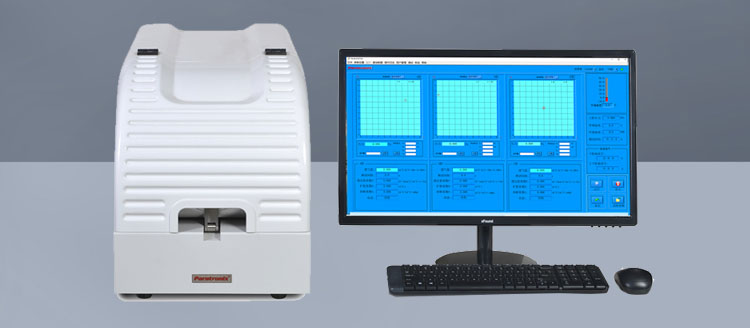
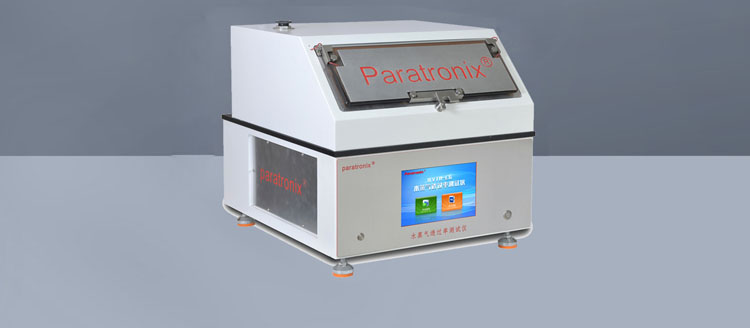
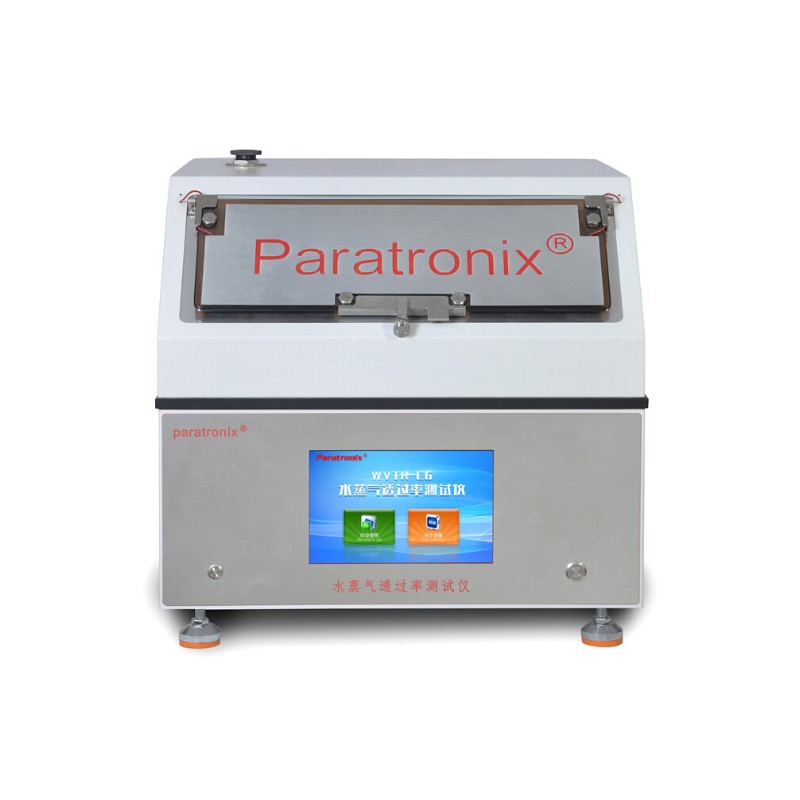
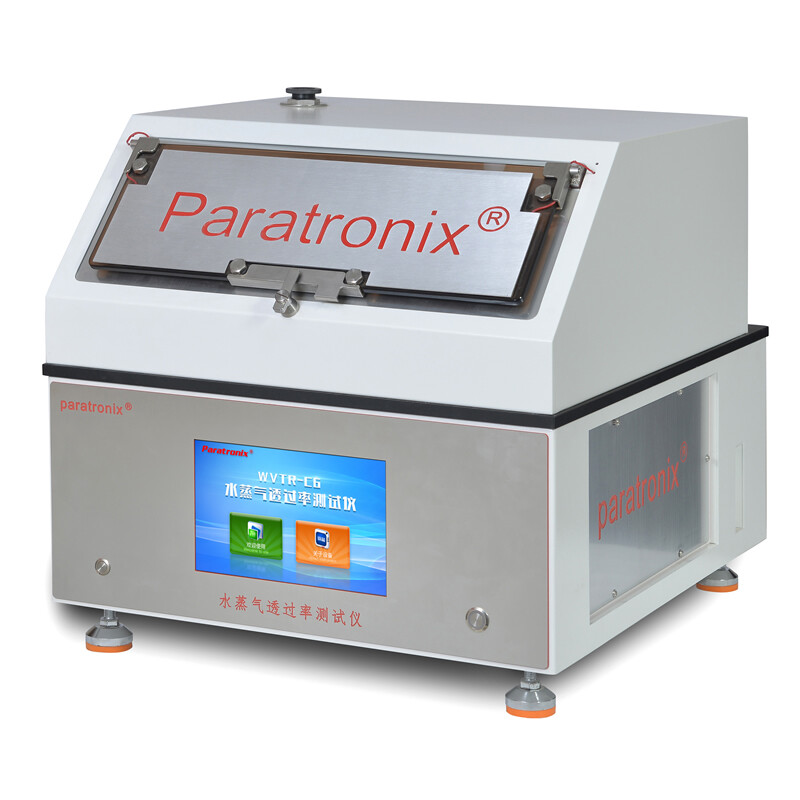
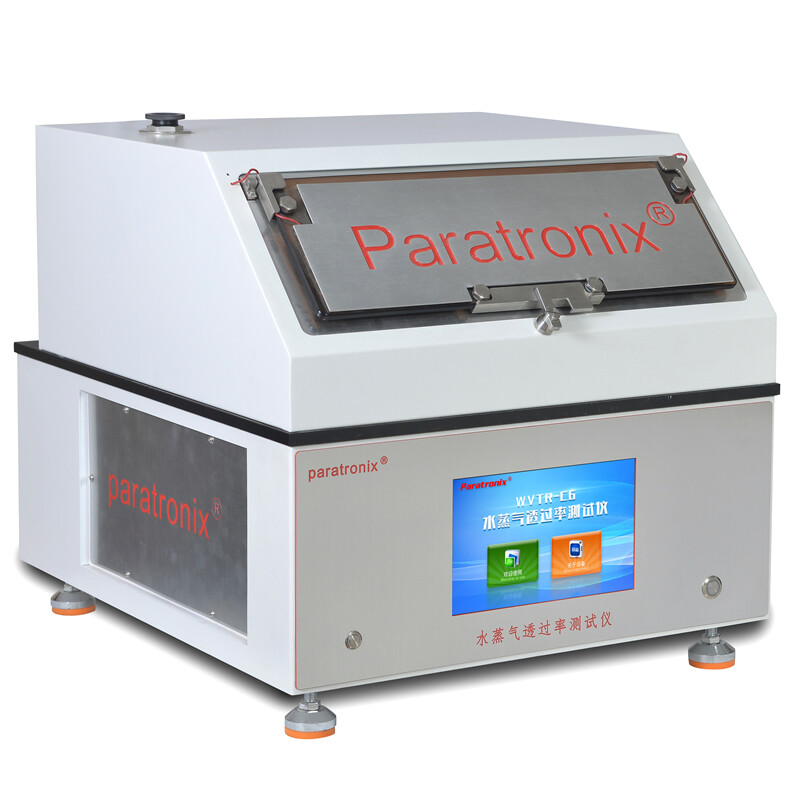
 WVTR-C6 Water Vapor Transmission Rate TesterWVTR-C6 Water Vapor Transmission Rate Tester is designed and manufactured based on the gravimetric method and can be used to test the water vapor transmission rate of plastic films, composite films, sheets, and other materials used in the packaging, medical, and construction industries.
 WVTR-E3 Water Vapor Transmission Rate TesterWVTR-E3 Water Vapor Transmission Rate Tester is designed and manufactured based on the infrared sensor method and is applicable to test the water vapor transmission rate of medium and high barrier materials such as plastic films, composite films, sheets, papers and other various materials.
Search by Keywords