




Recent Posts
 What Does a Torque Tester Measure in Bottle Cap Quality Control?Oct 22, 2026
 ASTM F1249 vs. E96: Matching Water Vapor Permeability Testers to MethodsOct 22, 2026
 Water Vapor Permeability Tester Selection for High-Barrier Packaging FilmsOct 22, 2026
 How humidity affects results from a gas transmission rate testerOct 20, 2026
 What Does a Metallic Medical Bone Screw Tester Actually Measure?Oct 20, 2026
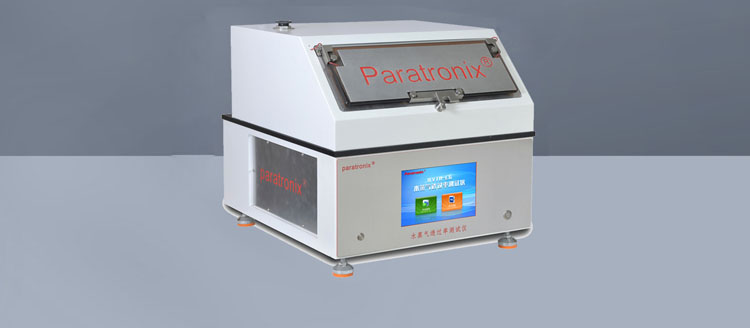
Choosing a Water Vapor Permeability Tester starts with matching the instrument to the test method—not simply comparing sensitivity claims. ASTM F1249 uses a modulated infrared sensor to measure water vapor transmission through plastic films and sheeting, while ASTM E96/E96M uses gravimetric procedures for a broader range of materials. For technical evaluators working with pharmaceutical packaging, plastic films, or high-barrier structures, this distinction affects instrument suitability, test duration, and the meaning of the reported result.
The practical question is not which standard is universally better. It is which method fits your specimen, expected transmission rate, required exposure conditions, and acceptance criteria. A technically impressive instrument can still be the wrong purchase if its measurement principle does not match the method specified by a customer or quality agreement.
Two standards, two ways of measuring moisture transport
ASTM F1249: detecting transmitted vapor with an infrared sensor
ASTM F1249 addresses water vapor transmission through plastic film and sheeting using a modulated infrared sensor. A specimen separates two sides of a test cell. Under controlled conditions, water vapor passes through the material and enters a carrier-gas stream on the receiving side. The instrument measures the transported vapor and calculates the water vapor transmission rate, commonly expressed in g/(m²·day).
The measurement chain includes more than the detector. Humidity generation, temperature control, carrier-gas quality, gas flow, specimen sealing, and calibration all affect the result. A low detector signal is meaningful only when leaks, background moisture, and instrument drift are sufficiently controlled.
For packaging laboratories, this approach is relevant to films and multilayer structures where low moisture transmission must be quantified. However, suitability at a particular barrier level must be demonstrated for the complete instrument configuration—not inferred from the sensor type alone.
ASTM E96/E96M: determining transmission from mass change
ASTM E96/E96M determines water vapor transmission gravimetrically. A specimen is sealed across the opening of a test dish containing a desiccant or water, depending on the procedure. The assembly is exposed to a controlled atmosphere and weighed at intervals. The rate of mass gain or loss, divided by the exposed area, provides the transmission rate after appropriate evaluation of the data.
In a desiccant procedure, moisture generally moves from the surrounding atmosphere toward the lower-humidity cup interior. In a water procedure, moisture generally moves from the cup toward the surrounding atmosphere. These procedures establish different humidity exposures, which can produce different results for moisture-sensitive materials.
The balance is only one part of an E96 setup. Cups, sealants, environmental control, air circulation, weighing practices, and specimen conditioning are all part of the measurement system. Purchasing a precision balance does not, by itself, establish an ASTM E96 capability.
Before comparing instruments, define the result you actually need
The phrase “water vapor permeability” is often used loosely in equipment searches. For technical evaluation, distinguish three quantities:
- Water vapor transmission rate, or WVTR: water vapor passing through a unit area per unit time under specified conditions.
- Water vapor permeance: transmission rate normalized by the water vapor partial-pressure difference across the specimen.
- Water vapor permeability: a thickness-normalized property derived from permeance when the material and transport assumptions support that calculation.
For a reasonably uniform, homogeneous material, the relationship can be written as permeability = WVTR × thickness ÷ vapor-pressure difference. That expression is not a license to treat every packaging laminate as a single homogeneous material. Coatings, adhesives, interfaces, and individual layers can contribute differently to transport.
For multilayer packaging, WVTR at a defined temperature and humidity exposure is often the more directly useful specification. If software reports “permeability,” ask which thickness, pressure difference, and calculation assumptions it uses.
Why results from F1249 and E96 may not agree
Two laboratories can test the same film competently and still report different values if the exposure conditions differ. Water vapor transport is sensitive to temperature and humidity, and some polymers change their transport behavior as they absorb moisture.
Matching a nominal humidity difference is not necessarily enough. A specimen exposed to high humidity on one side and intermediate humidity on the other may behave differently from one exposed to intermediate humidity and a nearly dry receiving side, even if the vapor-pressure differences are similar.
Other differences deserve attention before attributing disagreement to equipment:
- Specimen orientation: asymmetric films and coated materials may respond differently when the humid side is reversed.
- Conditioning and history: previous humidity exposure, storage, and drying can influence equilibration.
- Exposed area and sealing: edge leakage or uncertain test area can become significant relative to the true transmission.
- Air-space and boundary-layer effects: cup geometry and air movement can affect gravimetric measurements; apply corrections where required by the selected procedure.
- Endpoint selection: an apparently stable signal or short linear mass trend may not represent established transport through the specimen.
There is no universal conversion factor between ASTM F1249 and ASTM E96 results. If a laboratory needs to use one method in place of another, establish a material-specific comparison under deliberately aligned conditions, then obtain agreement from the party controlling the specification.
Choosing a Water Vapor Permeability Tester for your barrier range
For high-barrier films, evaluate the measurement floor
When true transmission is very low, background contributions become disproportionately important. Moisture from tubing, residual water in the system, imperfect seals, and handling can compete with the specimen signal.
Ask the supplier to distinguish detection limit, quantification limit, resolution, and validated measurement range. These terms describe different capabilities. A display with many decimal places does not demonstrate that the smallest displayed value can be measured with acceptable uncertainty.
Request evidence obtained under conditions relevant to your application: specimen area, temperature, humidity, cell configuration, and measurement duration. For gravimetric testing, examine whether the expected mass change is large enough relative to balance uncertainty, environmental effects, and handling variability within a practical test period.
For more permeable materials, check the upper range too
A highly sensitive system is not automatically suitable for a high-transmission specimen. Detector capacity, gas-handling capability, and humidity stability may constrain an instrumental method. In cup testing, rapid mass change can alter the cup conditions and increase demands on weighing frequency and procedure control.
The useful operating window therefore needs both a defensible lower limit and a demonstrated upper limit. Evaluators should also confirm specimen thickness limits, usable test area, mounting requirements, and compatibility with flexible or mechanically delicate samples.
Test duration: ask for a completion rule, not a headline number
“Fast testing” is attractive when release decisions are waiting. Yet the time required to establish representative transport depends on the material as well as the apparatus.
In F1249 testing, instrument response time and specimen equilibration time are separate issues. A detector may respond quickly while a thick or moisture-absorbing structure takes much longer to stabilize. In E96 testing, sufficient mass change and a defensible mass-versus-time trend must develop before the rate can be evaluated reliably.
Ask how the system identifies completion, whether an operator can review the underlying trend, and what happens when stability criteria are not met. For multi-cell equipment, clarify whether cells are measured simultaneously or sequentially and how that affects reporting frequency. Cell count alone is not a throughput specification.
What “ASTM compliant” should mean in an equipment evaluation
An instrument can be designed to support a standard without every possible test performed on it complying with that standard. Compliance depends on the applicable edition, apparatus configuration, procedure, operating conditions, calculations, and reporting.
Before approval, build a documented evidence package covering:
- Method alignment: identify the exact standard edition and procedure supported, including relevant limitations and any deviations.
- Environmental performance: review temperature and humidity accuracy, stability, and uniformity at the specimen, not just controller display specifications.
- Calibration and verification: examine calibration procedures, reference materials or standards, traceability where applicable, and routine verification checks. For E96, include balance verification.
- Low-level performance: request blank or background studies, leak-check procedures, repeatability data, and evidence supporting the claimed reporting limit.
- Application suitability: test representative materials across the intended operating range, including challenging structures rather than only convenient reference films.
- Data integrity: confirm access to raw signals or mass readings, calculations, test settings, timestamps, and records of changes where required by the laboratory’s quality system.
For pharmaceutical packaging laboratories, installation, operational, and performance qualification may also be required under internal quality procedures. These activities support controlled use of the equipment; they do not replace method verification or make a packaging material automatically suitable for its intended product.
Translate the method decision into a workable purchase specification
A useful purchasing brief starts with the materials and decisions involved. State whether you are comparing development films, checking incoming packaging, or generating data against a contractual specification. Include expected WVTR ranges, required temperature and humidity conditions, specimen dimensions, sample volume, and reporting requirements.
If the governing specification requires ASTM E96, do not substitute F1249 merely because an infrared system offers greater automation. Conversely, if the task involves low-transmission plastic packaging films and F1249 is accepted, assess whether a gravimetric approach can deliver adequate uncertainty and turnaround before choosing it for simplicity.
For Paratronix Instruments Co., Ltd., whose packaging testing work includes pharmaceutical packaging, plastic packaging materials, and high-barrier materials, these application details provide the basis for a meaningful equipment discussion. Request a method-to-configuration assessment and representative sample evaluation rather than relying on a generic product description.
The strongest selection is not the instrument with the smallest advertised number. It is the testing system that measures your material under the required conditions, exposes enough underlying data for technical review, and produces results your laboratory can defend. Matching the method first makes every later comparison—sensitivity, throughput, software, and cost—more useful.
Leave A Reply
Search by Keywords