




What Water Vapor Transmission Testing Measures
A water vapor transmission rate tester for building membranes measures the passage of water vapor through a material under specified conditions. Results help manufacturers and laboratories assess products such as vapor control layers, roofing underlays, weather-resistive barriers and air barrier membranes. The measurement concerns vapor transport, a different property from resistance to liquid water penetration or airflow.
Water vapor transmission rate, or WVTR, is commonly reported as mass transmitted per unit area and time, such as g/m² per day. A result is meaningful only alongside the test temperature, humidity conditions, specimen details and method. Different vapor pressure differences can produce different transmission rates for the same material, so a single number should not be treated as an unconditional material constant.
Permeance relates the transmission rate to the water vapor pressure difference across the specimen; its units and calculation depend on the reporting convention. Permeability additionally incorporates thickness for a homogeneous material when the assumptions of the method are appropriate. For layered or variable membranes, report the tested assembly and avoid converting results without checking the applicable standard.
How Test Methods And Equipment Work
In a gravimetric cup test, a specimen is sealed over an opening in a test dish. A desiccant or water establishes a humidity condition on one side, while a controlled environment establishes the condition on the other. Periodic weighing tracks mass change as vapor moves through the exposed area. The transmission rate is calculated from the steady mass-change slope and effective area.
Desiccant, or dry-cup, and water, or wet-cup, procedures create different humidity exposures. Hygroscopic and humidity-responsive membranes may behave differently in each condition. Air movement, specimen orientation, edge sealing and the air space above water can affect results. Follow the selected standard and record these details rather than assuming that cup methods are interchangeable.
Equipment ranges from manually weighed cups placed in a conditioning chamber to systems that automate weighing, environmental control or data collection. Sensor-based instruments use a different measurement principle and may be suitable for some materials and specifications. Before substituting one method for another, establish whether the governing product standard accepts it and whether results are comparable for the material.
Standards And Building Applications
ASTM E96/E96M describes water vapor transmission methods for materials, including desiccant and water procedures. ISO 12572 addresses water vapor transmission properties of building materials and products using cup methods. The methods and reporting requirements are not automatically interchangeable. Specify the applicable edition, procedure and environmental conditions in the test request, and consult the full standard for detailed requirements.
Manufacturers use these measurements to monitor production consistency and develop membrane formulations. Independent laboratories need documented procedures and traceable measurements for customer specifications. Architects, building scientists and façade or roofing system designers use declared properties to assess moisture movement in assemblies. Acceptance criteria depend on the application, product specification and destination market; the test method alone does not establish compliance.
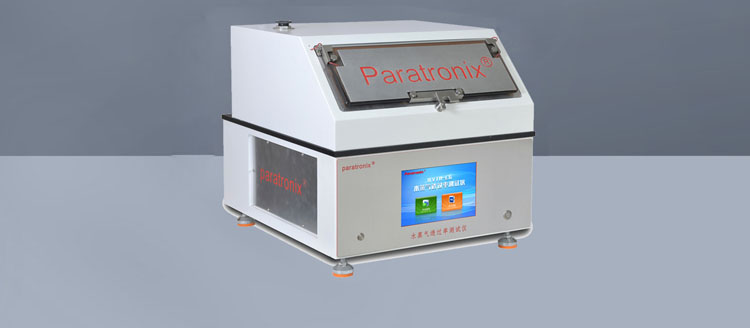
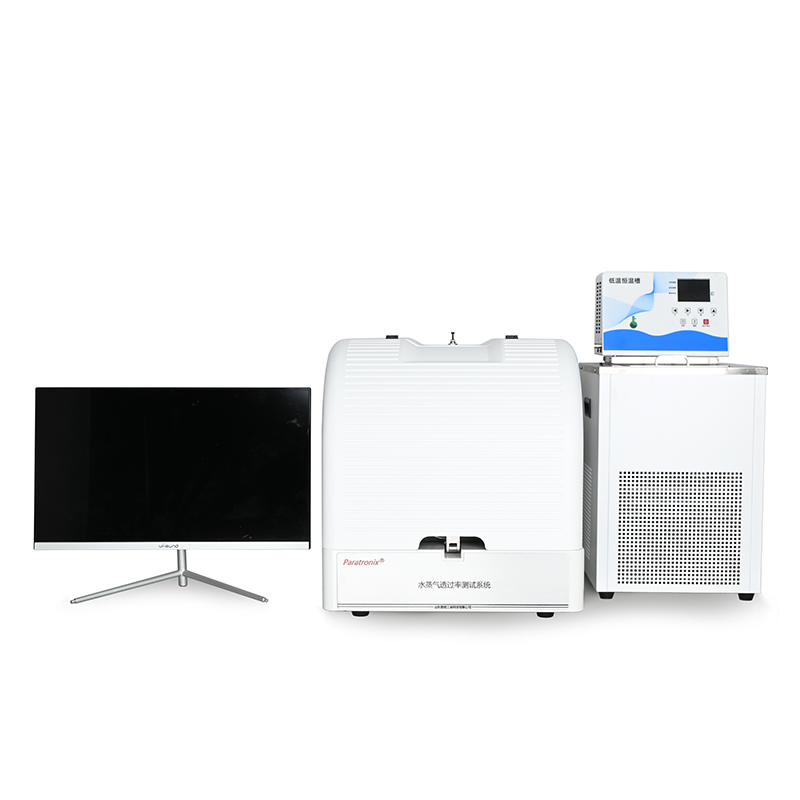
For buyers evaluating a water vapor transmission rate tester for building membranes, paratronix lists water vapor permeability testers among its testing equipment. Its range also includes air permeability and leak testing equipment, which can support separate evaluations where relevant. Ask paratronix to confirm the proposed configuration, applicable methods and specimen compatibility; no specific model or standard compliance is assumed here.
How To Produce Defensible Results
Begin with a sampling plan that represents the product and its intended orientation. Record identification, construction and thickness where relevant, then condition and prepare specimens as the applicable method requires. Use the specified number of specimens and exposed area. Avoid creases, damage or contamination, and document how the material was mounted, especially when its two faces differ.
Seal each specimen to the dish using a compatible method that limits edge leakage without reducing the defined test area. Establish the required temperature, humidity and airflow, then weigh at suitable intervals. Plot mass against time and determine the steady portion according to the standard. Investigate irregular changes, unstable conditions or damaged seals before accepting a result.
Maintain documented balance checks, chamber monitoring and calibration traceability appropriate to the laboratory’s quality system. Reports should identify the method and edition, conditions, specimen orientation, exposed area, individual results and relevant deviations. Include uncertainty when required by the customer or laboratory program. Comparing a control material over time can help reveal drift, although it does not replace calibration.
How To Select A Tester
Start with the standards and products in your test plan. Confirm that the instrument can accommodate the required dish geometry, exposed area, specimen thickness and humidity conditions. Very low transmission materials may require a longer test or greater weighing sensitivity; highly permeable products may need a different operating range. Ask the supplier to explain suitability using your expected materials and test conditions.
Evaluate temperature and humidity control, balance resolution, capacity, stability and the number of specimens that can be tested concurrently. Automation can reduce routine handling and capture measurement history, but it does not remove the need to prepare specimens correctly or review results. Check software access, data export, audit requirements and recovery procedures against your laboratory workflow.
Request a written quotation defining the supplied instrument, dishes, consumables, installation requirements, training and service coverage. Ask how calibration is performed and whether certificates are included. For unfamiliar or multilayer specimens, request a feasibility discussion or evaluation using representative samples, with agreed acceptance criteria and the applicable method documented before purchase.
Ownership Costs And Future Trends
Total ownership cost includes the purchase price, environmental controls, installation, consumables, calibration, maintenance, software and operator time. Space, utilities and downtime also matter. Compare realistic throughput using the duration required for your materials, including conditioning and repeat tests, rather than relying only on the maximum number of specimens the equipment can hold.
An investment assessment can compare annual internal testing costs with external laboratory fees and turnaround times. Include labor, service and quality assurance, and consider whether faster feedback could reduce development delays or identify process variation sooner. Savings depend on sample volume and workflow; request operating assumptions from suppliers and validate them against your own test schedule.
Building-envelope design is driving interest in humidity-responsive membranes, more detailed moisture performance data and improved digital traceability. Automated recording and connected laboratory systems may make recurring tests easier to manage, while results remain dependent on controlled conditions and method selection. Review standards, calibration schedules and equipment capacity periodically as products and customer requirements change.
 How to test building membrane WVTR under ASTM E96/E96MChoose a water vapor transmission rate tester for building membranes and discover how to obtain reliable ASTM E96/E96M results, from cup setup to reporting.
 How is water vapor transmission measured in building membranes?Discover how a water vapor transmission rate tester for building membranes measures WVTR, and learn how to compare test methods and choose the right equipment.
 WVTR-E3 Water Vapor Transmission Rate TesterWVTR-E3 Water Vapor Transmission Rate Tester is designed and manufactured based on the infrared sensor method and is applicable to test the water vapor transmission rate of medium and high barrier materials such as plastic films, composite films, sheets, papers and other various materials.
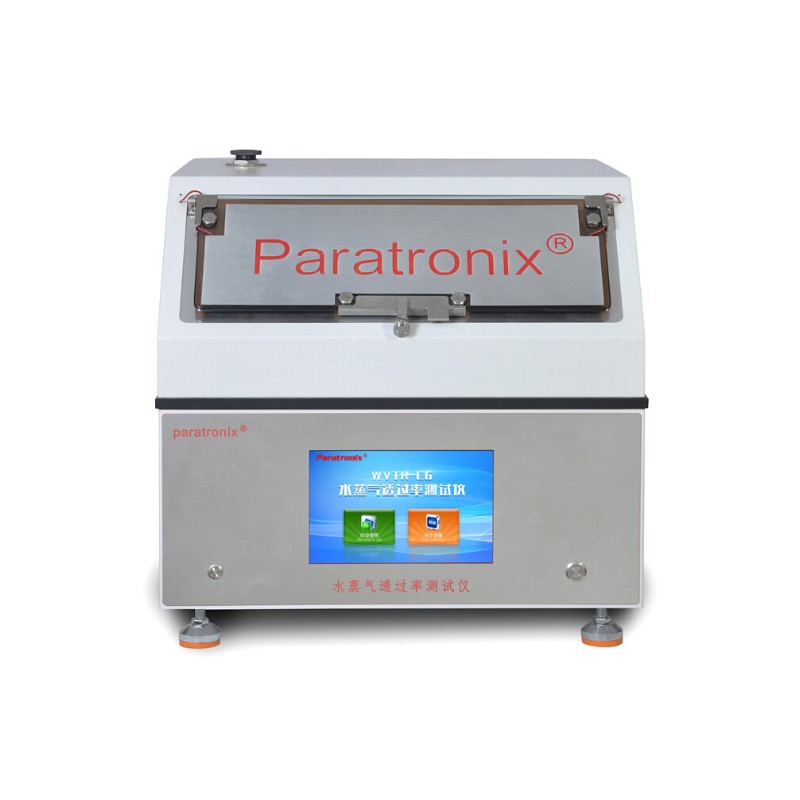
 WVTR-C6 Water Vapor Transmission Rate TesterWVTR-C6 Water Vapor Transmission Rate Tester is designed and manufactured based on the gravimetric method and can be used to test the water vapor transmission rate of plastic films, composite films, sheets, and other materials used in the packaging, medical, and construction industries.
 WVTR-AE3 Water Vapor Transmission Rate TesterWVTR-AE3 Water Vapor Transmission Rate Tester is designed and manufactured based on the electrolytic sensor method and is applicable to test the water vapor transmission rate of medium and high barrier materials such as plastic films, composite films, sheets, papers and other various materials.
Search by Keywords