




Recent Posts
 How is water vapor transmission measured in building membranes?Nov 12, 2026
 How to test building membrane WVTR under ASTM E96/E96MNov 12, 2026
 ASTM D3985 vs ISO 15105-2: Oxygen Transmission Testing for FilmsNov 12, 2026
 What Does an Oxygen Permeability Tester Measure in Barrier Films?Nov 12, 2026
 Choosing an oxygen permeability tester for high-barrier food filmsNov 12, 2026
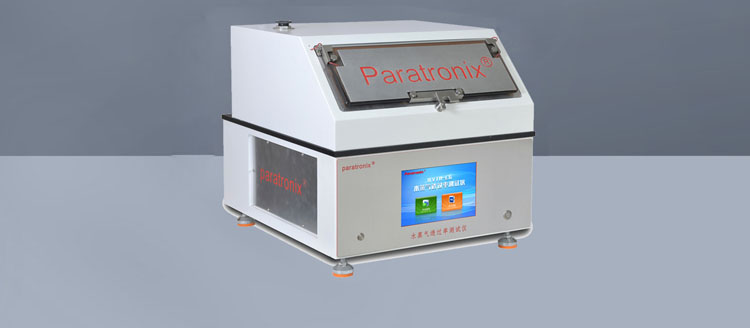
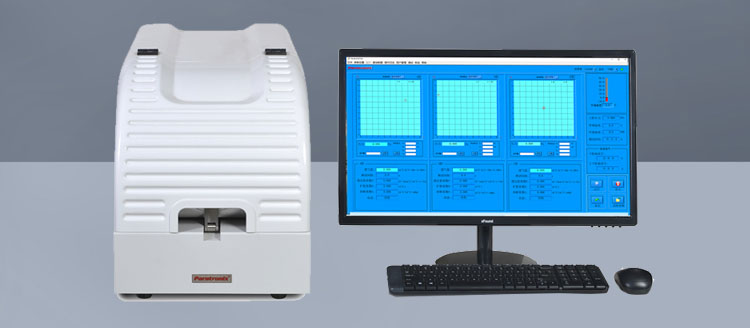
Reliable moisture control starts with knowing how much water vapor can pass through a building membrane. ASTM E96/E96M provides standardized methods for evaluating this performance, helping quality control and safety teams assess material consistency and suitability for intended applications. A water vapor transmission rate tester for building membranes can support these measurements, but a useful result depends just as much on specimen preparation, environmental control, weighing practice and reporting.
For a laboratory releasing a batch of housewrap or checking a vapor retarder, the question is rarely just “What is the number?” It is also whether that number was obtained under the right conditions, whether it can be compared with a specification, and whether the test reflects the membrane’s intended use. This guide follows those decisions from method selection through calculation and interpretation.
What ASTM E96/E96M measures
ASTM E96/E96M describes gravimetric methods for determining water vapor transmission through materials. A specimen is sealed over the opening of a test dish, creating a separation between the environment inside the dish and the controlled atmosphere outside it. The difference in water vapor pressure causes vapor to move through the specimen. By weighing the assembly at intervals, the laboratory determines the rate of mass change attributable to that transfer.
The standard is relevant to a range of sheet materials, including building membranes. Common approaches include the desiccant method, often called the dry-cup method, and the water method, often called the wet-cup method. The selected procedure, conditions and specimen arrangement matter: results obtained under different humidity gradients are not automatically interchangeable.
ASTM standards are revised. Before testing, obtain the edition required by the project specification, product standard or purchasing agreement, and follow its detailed requirements for apparatus, conditioning, procedures and reporting. A test performed using an ASTM method is not, by itself, proof that a product is certified or compliant with a building code.
Choose the method before preparing the cups
Both common cup methods use a controlled humidity difference, but they place the specimen in different moisture environments.
Some membranes respond differently as humidity changes. A result from one method should therefore not be treated as a universal property valid at every relative humidity. If a product specification names a method and condition, use that combination rather than selecting the one that produces the more favorable result.
Also establish which face of the membrane will face the dish interior. This is important for multilayer, coated or directional products. Record the orientation and keep it consistent across replicates; if both orientations are relevant, test and report them separately.
Preparing a water vapor transmission rate tester for building membranes
A cup-based test requires more than a dish and a balance. The laboratory needs a suitable controlled environment, test dishes with a known exposed area, a sealing system, weighing equipment with appropriate sensitivity, and either desiccant or water for the chosen method. Automated weighing or monitoring can reduce handling, but automation does not remove the need to check seals, conditions and data quality.
1. Define the test plan and specimen set
Identify the material, its lot or production date, the sampling location and the relevant product specification. Select specimens that represent the material being evaluated, following the applicable standard and sampling plan. Avoid folds, punctures, unintended creases or handling damage unless the purpose is specifically to investigate damaged material.
Cut specimens large enough to cover the dish opening and provide a secure sealing margin. Measure or verify the exposed test area according to the dish geometry and the procedure. The exposed area is the area available for vapor transfer, not the total area of the cut specimen.
Record the material’s construction and, where relevant, thickness. For uneven, embossed or compressible membranes, describe how thickness was measured rather than implying greater precision than the material allows. Thickness is particularly important if a product specification requires a permeability calculation.
2. Condition and assemble with care
Condition the specimens as required by the applicable edition and specification. Then prepare each dish with the prescribed amount and arrangement of desiccant or water. Maintain the required clearance or air space between the specimen and the dish contents. An unintended change in that space can affect the resistance to vapor transfer and make comparisons less reliable.
Seal the specimen around the dish opening using a method compatible with the material and procedure. The seal should prevent vapor leakage around the edge without covering an undefined portion of the intended test area. Check that the membrane lies without wrinkles or excessive tension and that the seal remains intact throughout the test.
For the water method, avoid spilling water onto the specimen or exterior surfaces unless the selected procedure specifically calls for a different arrangement. For the desiccant method, use suitable desiccant and keep it in the condition required by the standard. A saturated or inadequately maintained desiccant can weaken the intended humidity gradient.
3. Control exposure and record mass
Place the assemblies in the specified atmosphere and allow them to reach the required test condition. Monitor and document temperature and relative humidity, as well as other environmental requirements in the selected procedure. These are not background details: they influence the vapor-pressure difference used to interpret permeance.
Weigh each assembly at the intervals required to establish a reliable mass-change trend. Use a balance suited to the expected change in mass, and minimize disturbance, contamination and time outside the controlled environment. Consistent handling is especially important for high-resistance membranes, where the mass change may be small compared with balance variation.
Plot mass against elapsed time or review the recorded data in an equivalent way. The useful test rate is derived from the appropriate steady, approximately linear portion of the mass-change curve, as specified by the method. An early period of changing slope may reflect equilibration rather than the behavior intended for the calculation. Investigate sudden jumps, reversals or unstable trends before reporting a result.
Calculating WVTR and permeance
Water vapor transmission rate (WVTR) expresses the rate of vapor transfer per unit exposed area under the stated test conditions. In a cup test, it is calculated from the magnitude of the steady mass-change slope:
WVTR = mass change per unit time ÷ exposed specimen area
For example, if the valid steady-state slope is 0.020 g per day and the exposed area is 0.010 m², the WVTR is 2.0 g/(m²·day). This example illustrates the arithmetic only; the test duration, number of measurements and acceptance of the slope must follow the applicable procedure.
Water vapor permeance accounts for the water vapor pressure difference across the specimen:
Permeance = WVTR ÷ vapor-pressure difference
Use consistent units and calculate the pressure difference from the specified conditions using the applicable method. Permeance may be reported in SI units or in perms, depending on the specification. When converting units, identify the type of perm used and verify the conversion; do not compare values with different units or conditions by appearance alone.
WVTR, permeance and permeability are related but are not synonyms. Permeability incorporates thickness and is meaningful only where the material and calculation assumptions are appropriate. For a multilayer building membrane, permeance of the complete assembly is often the more direct reported property. Follow the governing specification rather than multiplying by thickness automatically.
How to recognize a questionable result
When results differ unexpectedly between replicates or batches, resist the temptation to average them immediately. Examine the mass-versus-time data and the physical condition of each assembly. Common sources of uncertainty include:
- Edge leakage: An incomplete seal may allow vapor to bypass the membrane. Inspect the sealing method and investigate any damaged or detached seal.
- Incorrect exposed area: A calculation based on the dish’s outside diameter, rather than the effective opening, can introduce a systematic error.
- Uncontrolled conditions: Changes in temperature or relative humidity can alter the driving force and make the mass trend difficult to interpret.
- Insufficient measurement resolution: A small mass change may be obscured by balance noise, drafts or handling effects, particularly with low-permeance materials.
- Specimen inconsistency: Surface damage, thickness variation, different orientations or mixed production lots can produce real differences that should not be hidden.
- Changing dish conditions: Desiccant condition, water level or unintended condensation can affect the test environment.
Document deviations and determine whether a retest is required under the laboratory’s procedures. A technically defensible report should distinguish a failed or invalid test from a valid result that falls outside a product limit.
What should appear in the test report?
A number without its test conditions gives a quality manager little basis for a release decision. The report should include the information required by the applicable ASTM edition and product specification, with enough detail for another laboratory to understand the result. At a minimum, make the following easy to find:
- Material identification, sampling details, specimen description and orientation.
- ASTM E96/E96M edition, selected method and any specified modifications or deviations.
- Conditioning and test temperature and relative humidity, together with the dish arrangement.
- Number of specimens, exposed area, individual results and the required summary statistics.
- WVTR and, when required, permeance or permeability, clearly labeled with units and calculation basis.
- Relevant observations, including damage, seal problems or unusual mass-change behavior.
For acceptance decisions, compare the reported property with the correct limit in the applicable specification. Check whether that limit refers to WVTR, permeance or another measure, and whether the specified method and conditions match. A low WVTR is not automatically “better” for every building assembly: the appropriate vapor-control strategy depends on the assembly and its intended moisture management.
Selecting equipment for repeatable cup testing
When evaluating a water vapor transmission rate tester for building membranes, start with the materials and specifications your laboratory must test. Confirm that the available dish configuration, environmental control, balance sensitivity and data recording are suitable for the selected ASTM procedure and the expected range of results. Ask how exposed area is defined, how specimens are sealed and how the instrument supports traceable mass and environmental measurements.
Consider routine work as well as the initial installation. Can operators inspect the seal without disturbing the specimen? Can the system retain individual weighing records and show the mass-change trend? Are calibration, maintenance and cleaning practical for the laboratory’s workload? These questions matter when a result must be reviewed weeks after a production decision.
Paratronix Instruments Co., Ltd. develops and supplies packaging testing instruments and testing solutions for materials including high-barrier products. A laboratory evaluating a potential solution should discuss its building membrane samples, target measurement range and required ASTM edition with the supplier, then verify that the proposed configuration supports the chosen test procedure.
A dependable ASTM E96/E96M result is built from a documented chain of decisions: the right method, representative specimens, a secure seal, controlled conditions and a valid mass-change slope. Keeping that chain visible makes the final value more useful—not only for comparison with a limit, but also for understanding when a membrane result deserves further investigation.
Leave A Reply
Search by Keywords