




Recent Posts
 ASTM D3985 vs ISO 15105-2: Oxygen Transmission Testing for FilmsNov 12, 2026
 What Does an Oxygen Permeability Tester Measure in Barrier Films?Nov 12, 2026
 Choosing an oxygen permeability tester for high-barrier food filmsNov 12, 2026
 Does your food packaging oxygen tester meet ASTM D3985?Nov 12, 2026
 Can an oxygen permeability tester measure sealed blister packs?Nov 11, 2026
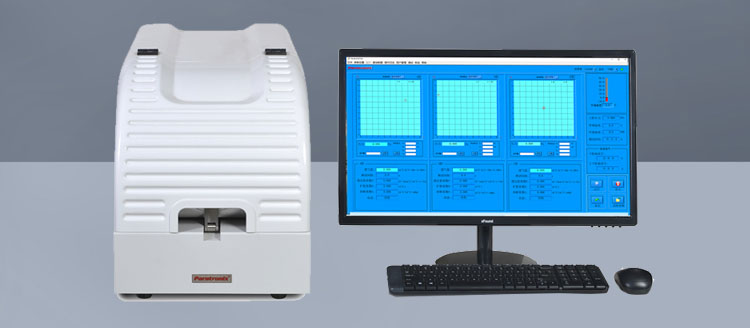
For high-barrier food films, the best oxygen permeability tester is the one that can produce defensible results at the transmission levels and environmental conditions relevant to the packaging decision. A low advertised detection limit is a useful starting point, but it does not establish whether the instrument can distinguish acceptable film from marginal film, handle the intended specimens, or deliver comparable results across laboratories.
Begin with the film specifications and the decisions the results will support. A laboratory screening incoming rolls may need a different balance of throughput and sensitivity from a team comparing new multilayer structures. In both cases, the choice should be based on expected oxygen transmission rate (OTR), test conditions, specimen characteristics, and evidence that the complete method performs reliably near the values of interest.
Start with the result the laboratory needs to trust
Before comparing instruments, assemble the information that defines the application: the films to be tested, their expected OTR or specification limits, the temperature and relative humidity required by the test method, and the specimen dimensions available. Include the full range of materials the laboratory expects to handle. A single high-barrier structure may set the sensitivity requirement, while a less restrictive material may determine the upper end of the useful measurement range.
Next, identify how the result will be used. If the purpose is to accept or reject material against a limit, the instrument and method must give a result sufficiently clear of that limit to support a decision. If two candidate films have similar OTR values, the method must also be capable of distinguishing the difference that matters to the development team. A tester that can report both values is not necessarily capable of separating them with useful confidence.
Ask for measurement performance at the intended test conditions and specimen area, rather than relying on the broadest range in a product summary. Published ranges may depend on the sensor, configuration, test area, gas conditions, or the way the result is expressed. Compare like with like: OTR is generally reported as a volume of oxygen transmitted per unit area and time under stated conditions. Permeability may additionally be normalized for thickness and pressure difference. These quantities should not be treated as interchangeable specifications.
Evaluate the low end as a complete measurement system
High-barrier films transmit little oxygen, so background leakage, residual oxygen and measurement noise can become significant relative to the specimen signal. An instrument may show an exceptionally low numerical detection limit under controlled conditions, yet the practical limit for a particular laboratory can be higher once specimen mounting, seals and routine operation are included.
Request evidence of repeatability near the expected OTR, including results from replicate specimens and an explanation of the test conditions. Where available, review uncertainty or precision information and the procedure used to establish the lower measurement capability. Ask whether the stated lower limit describes the sensor alone or a measurement made with the complete test cell. The distinction matters when a purchase is justified by performance at the bottom of the range.
Also establish how the system checks background transmission and leaks. A blank or other system check can help identify whether the cell, seals or connections contribute appreciably to a low result. Ask how often the check is required, what constitutes an acceptable result and what the operator should do when it fails. A low background on the day of installation has limited value if the laboratory cannot maintain and verify it during routine use.
Calibration and verification deserve the same scrutiny. Determine what reference materials or other means are used, the range over which they support verification, and how the laboratory can demonstrate ongoing performance. A reference material with a substantially higher transmission rate may be useful, but it does not by itself establish performance at the lowest levels the laboratory intends to report.
Allow for test time and equilibration
Low transmission can require extended conditioning and measurement. Before committing to a throughput target, ask how the instrument determines that a result is ready and whether the user can inspect the signal over time. A short reported cycle is attractive only if the sample and system have reached the required conditions and the result is stable enough for its intended use.
Compare the time needed for sample preparation, purging or conditioning, measurement, and any checks between runs. Multiple cells can improve capacity, but their value depends on whether each cell meets the required performance and whether the sensor arrangement allows independent testing under the conditions the laboratory needs.
Match test conditions to the film and the specification
Temperature and humidity can change the measured oxygen transmission of a film. This is especially consequential for structures containing moisture-sensitive barrier layers. Two results for the same nominal material may differ because the specimens were tested at different temperatures or humidity conditions, not because the material changed.
For an oxygen permeability tester for food packaging, check the controllable temperature and relative humidity ranges, their stability at the test cell, and whether the required conditions can be maintained throughout conditioning and measurement. Clarify humidity on each side of the specimen where the method or application calls for it. A humidified gas supply is useful only if the resulting conditions at the specimen are suitable and can be documented.
The gas composition and pressure difference across the film also matter. Ask how the oxygen-rich and carrier-gas sides are controlled and how the method defines the driving force. Conditions should reflect the relevant standard, customer specification or internal comparison method. Where results from different laboratories must agree, both parties should align on those conditions before attributing a discrepancy to the film or the instrument.
Do not assume that a single laboratory condition predicts performance in every food package. A film result helps characterize the material under the stated test conditions. The finished package may also be affected by seals, closures, defects, formed areas and the conditions encountered in distribution and storage. If a decision depends on finished-pack performance, consider whether a separate package test is needed.
Check the standard against the actual configuration
For oxygen transmission testing, technical discussions may refer to methods such as ASTM D3985 or ISO 15105-2. The relevant choice depends on the material, measurement approach and the specification the laboratory must follow. Obtain the applicable edition and review its scope and requirements before treating an instrument as suitable for a particular method.
A statement that a tester is “compatible with” a standard is a starting point for review. Check which sensor, test cell, gas supply, environmental controls and procedures are needed for the intended test. Confirm that the instrument can accommodate the specimen and conditions specified by the method, and that the laboratory can meet requirements for calibration, conditioning and reporting.
If a customer names a method, resolve any differences between the purchase specification and the laboratory’s proposed procedure before ordering. Even when two methods both report OTR, differences in conditions or procedures can limit direct comparison. The test report should retain enough information to interpret the result, including the specimen identification, exposed area, conditions, units and any relevant deviation from the method.
Assess sample handling as carefully as the sensor
A high-barrier film can be difficult to mount without introducing a misleading result. Wrinkles, folds, contamination or damage near the sealing surface can create leakage paths. Thin or flexible specimens may be awkward to clamp consistently; coated or multilayer films may have a defined orientation that the operator must preserve. Confirm that the cell design holds the intended material flat and seals it without damaging the area being measured.
Review the available test area and the sample size required to mount it. A larger exposed area can increase the total transmitted oxygen reaching the detector, but it also changes the specimen requirements and can make handling defects more consequential. A smaller area may suit limited samples, while placing greater demands on low-level measurement. Compare configurations using the actual film format and reporting range, not area in isolation.
Thickness measurement also needs a defined procedure when permeability is reported or when thickness is part of a material comparison. For multilayer and coated structures, a thickness-normalized value can be useful, but it should not obscure what is being measured: the transmission behavior of the complete specimen under the stated conditions. If the purchase decision relies on OTR against a film specification, check that the tester’s reported units and calculations align with that specification.
Use a representative trial to resolve close choices
Once the shortlist meets the required range, conditions and method, evaluate it with representative specimens. Include the most demanding high-barrier film, a material closer to the specification limit if available, and any specimen that is difficult to mount. Agree on the preparation, orientation, conditioning and reporting procedure before comparing results.
During the trial, look beyond whether the instrument produces a number. Examine replicate variation, background checks, time to a stable result and the operator steps needed to obtain it. Where a result is close to an acceptance limit, consider the measurement uncertainty and the laboratory’s decision rule. An instrument may be suitable for ranking materials while leaving too much uncertainty for a strict pass-or-fail decision at that same level.
The final choice should fit the narrowest part of the intended application: the lowest OTR that must be measured reliably, the conditions that must be controlled, and the specimen the laboratory must handle every day. If those requirements are demonstrated together, specifications such as automation and capacity can be judged against the workload they are intended to support.
Leave A Reply
Search by Keywords