




Recent Posts
 ASTM D3985 vs ISO 15105-2: Oxygen Transmission Testing for FilmsNov 12, 2026
 What Does an Oxygen Permeability Tester Measure in Barrier Films?Nov 12, 2026
 Choosing an oxygen permeability tester for high-barrier food filmsNov 12, 2026
 Does your food packaging oxygen tester meet ASTM D3985?Nov 12, 2026
 Can an oxygen permeability tester measure sealed blister packs?Nov 11, 2026
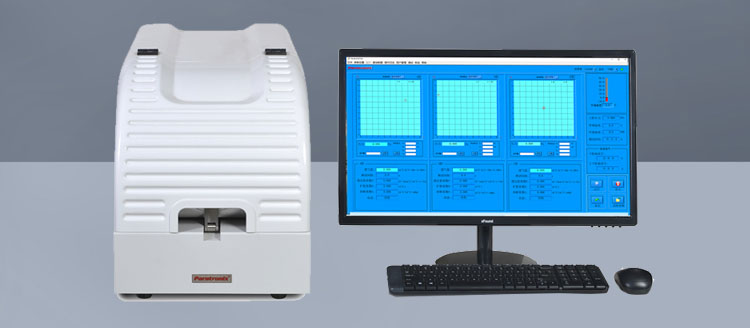
An oxygen permeability tester for food packaging can support ASTM D3985 testing if it uses the specified coulometric method and can control, measure, and document the conditions required for the material being tested. A reference to ASTM D3985 in a brochure is a useful starting point, but it does not establish that every configuration, test, or result produced by the instrument conforms to the method.
For a quality control or safety manager, the practical question has two parts: can the equipment perform the method on the films your business needs to assess, and can your laboratory demonstrate that a particular result was obtained under the applicable standard and its own controlled procedure? The answer depends on the test cell, environmental controls, measurement range, verification practices, and reporting as much as on the sensor itself.
What ASTM D3985 is designed to measure
ASTM D3985 describes a method for determining the steady-state oxygen gas transmission rate of plastic film and sheeting using a coulometric sensor. A specimen separates an oxygen-containing side from a carrier-gas side. Oxygen that passes through the material is carried to the sensor, where it is measured. The result describes oxygen transmission through the exposed area under the specified test conditions.
This makes the method relevant to food packaging films when oxygen barrier performance is part of the material specification. A purchasing team may need to compare incoming barrier film with an agreed limit; a quality team may need to investigate a change in a laminate; a safety manager may need reliable material data to support a broader packaging assessment.
Those uses do not make the film result a complete shelf-life or package-integrity assessment. A film specimen does not necessarily represent the effect of seals, closures, pinholes, forming operations, or other features of a finished package. If the decision concerns oxygen entry into a complete pack, establish whether a separate package test is needed and which method applies.
Start with the method claim, then examine the configuration
A coulometric oxygen sensor is central to ASTM D3985, but the sensor name alone is not enough to establish suitability. Ask the equipment supplier to identify the ASTM D3985 edition referenced in its claim and explain which instrument configuration and accessories are covered. The laboratory should work from the applicable licensed edition of the standard and review its requirements against the equipment documentation and operating procedure.
The distinction matters because the same instrument family may be offered with different test cells, gas arrangements, environmental options, or measurement ranges. A claim for one configuration should not automatically be extended to another. Similarly, a manufacturer’s declaration that equipment is designed for a standard is different from independent evidence of laboratory competence or accreditation for a specific test.
For a proposed or installed instrument, the following questions usually expose the most consequential gaps:
- Specimen and test area: Can the cell accommodate the film or sheeting, thickness, and specimen dimensions used in your specifications? Is the exposed area defined and controlled?
- Gas supply: Can the required test and carrier gases be supplied at the appropriate purity and controlled conditions, with a documented way to maintain those conditions?
- Temperature and humidity: Can the system achieve, control, and document the conditions required by the applicable method and the material specification?
- Measurement range: Is the expected transmission rate within a range where the complete system can provide useful, verified results?
- Verification and reporting: Are there documented procedures for checking system performance, identifying leaks, determining when a result is ready, and recording the test conditions?
Ask for the relevant operating instructions and example report fields, not just a list of compatible standards. The aim is to see how a routine operator would set up the actual material, establish the test conditions, recognize an invalid run, and retain the evidence behind the result.
Match the instrument to the film and the decision limit
A tester can use the correct measurement principle and still be poorly matched to the material. High-barrier films are a particular challenge because a small unwanted oxygen contribution from the system can become significant relative to the oxygen passing through the specimen. Leaks, seals, residual oxygen, gas quality, and instrument background all deserve attention when the expected transmission rate is low.
Compare the supplier’s stated range and performance information with the expected results for the actual film, at the intended temperature and humidity. A broad range on a specification sheet does not by itself show the uncertainty or repeatability achievable near your acceptance limit. Ask how performance is verified in that part of the range and what checks the laboratory can perform routinely.
Also consider the time needed to reach a usable steady-state result. Barrier structures differ in how they respond after installation and conditioning. A short test time may be attractive for production control, but ending a run before the result has stabilized can undermine the comparison with a specification. The procedure should define how equilibrium or steady-state behavior is assessed under the applicable method, and how an operator handles a run that does not reach it within the planned time.
At the other end of the range, confirm that more permeable materials can be measured without exceeding the system’s capability. If the laboratory tests several film types, suitability should be assessed across the intended workload rather than inferred from a single demonstration on a convenient specimen.
Control conditions before comparing results
Oxygen transmission is reported for a set of test conditions. Temperature, relative humidity, oxygen concentration or pressure conditions, specimen conditioning, and exposed area can all affect the result or its interpretation. The product specification and test report need enough detail for another laboratory or supplier to understand what was measured.
Humidity deserves particular attention for structures containing moisture-sensitive barrier layers. Two results obtained on the same nominal film may differ because the specimens were conditioned or tested under different humidity conditions. When comparing supplier data, incoming inspection results, and historical records, first check whether the conditions and method editions align. A numerical difference is difficult to interpret until those details are reconciled.
Conditioning is also a workflow issue. If specimens are taken from different positions on a roll, handled differently, or tested immediately after an event that affects the material, the variation may reflect more than the instrument. A controlled sampling and conditioning procedure helps the laboratory distinguish equipment performance from variation in the film.
Keep units and the basis of the reported value clear. An oxygen transmission rate through a specimen should not be treated interchangeably with a permeability value normalized for thickness. For multilayer packaging structures, thickness normalization may not support the comparison a user expects. The purchasing specification should state the required result and units, and the test report should use the same basis or explain any conversion.
Evidence that a result can be trusted
Conformance is demonstrated through the test process as well as the instrument design. Calibration, maintenance, and performance verification should follow documented procedures appropriate to the equipment and the applicable method. Records should identify what was checked, when, against what reference or acceptance criteria, and what happened when a check failed.
Reference materials or films can help monitor system performance, provided their values and conditions are suitable for the intended use. A check performed far from the transmission rate relevant to a high-barrier specification may offer limited assurance at the decision point. Ask how the laboratory verifies performance near the range that matters and how it evaluates sources of uncertainty.
Leak checks are equally practical. A damaged cell seal, poor specimen seating, or an improperly connected gas line can affect a result even when the sensor is functioning. Operators need clear instructions for recognizing and correcting these faults, including when to reject a run and retest with a fresh specimen.
A defensible report should identify the specimen and method edition, the result and units, relevant test conditions, and any departures from the prescribed procedure. It should also retain the information needed to trace the result to the equipment and records used. If a customer requires an accredited result, check the laboratory’s accreditation scope for the specific method and relevant capabilities; accreditation is a property of the laboratory’s defined activities, not a blanket certification of every result an instrument can produce.
Use the result in the right food-packaging decision
An ASTM D3985 result can support an incoming material specification or a comparison between film structures when the test conditions and acceptance criteria are aligned. It cannot, on its own, establish that a food product will meet its shelf-life target or remain safe. Oxygen sensitivity, package design, sealing quality, headspace, storage conditions, and the product’s own characteristics may all matter to that decision.
For routine release, agree in advance which film construction is tested, where specimens are taken, which conditions apply, and how results near the acceptance limit will be handled. If a supplier and customer use different laboratories, share these details before a disagreement arises. Comparing only the reported numbers can obscure differences in conditioning, test setup, or reporting basis.
The strongest answer to “Does this tester meet ASTM D3985?” is therefore supported by a traceable chain: the applicable standard edition, a suitable instrument configuration, controlled test conditions, verified system performance, and a report that describes the actual test. Review that chain against the films and decisions in your own quality program before relying on the claim.
Leave A Reply
Search by Keywords