




Recent Posts
 ASTM D3985 vs ISO 15105-2: Oxygen Transmission Testing for FilmsNov 12, 2026
 What Does an Oxygen Permeability Tester Measure in Barrier Films?Nov 12, 2026
 Choosing an oxygen permeability tester for high-barrier food filmsNov 12, 2026
 Does your food packaging oxygen tester meet ASTM D3985?Nov 12, 2026
 Can an oxygen permeability tester measure sealed blister packs?Nov 11, 2026
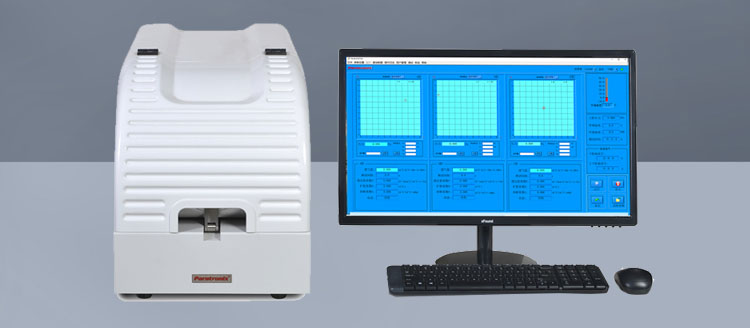
ASTM D3985 and ISO 15105-2 both describe sensor-based methods for measuring oxygen transmission through plastic film and sheeting. Their results are useful for assessing barrier performance, but a shared measurement principle does not make two reported values automatically interchangeable. Temperature, humidity, oxygen partial-pressure difference, specimen preparation, calibration and the endpoint used to establish steady transmission all affect the result.
When comparing methods or selecting an oxygen permeability tester for barrier films, the decisive question is whether the complete test conditions match the intended application and the requirements of the specified standard edition. A standard designation alone does not describe every condition needed to reproduce a measurement.
Where the methods overlap and where they differ
Both methods expose one side of a mounted specimen to an oxygen-containing test gas and measure oxygen passing through the material to the other side. A carrier gas transports the permeated oxygen to a sensor. Once the transmission rate has stabilized under the selected conditions, the instrument calculates an oxygen transmission rate, commonly abbreviated as OTR.
ASTM D3985 is associated with a coulometric sensor method for plastic film and sheeting. ISO 15105-2 covers an equal-pressure method using an oxygen sensor and recognizes different sensor principles within its scope. The applicable edition and the instrument’s documented procedure determine the specific requirements that apply. Sensor capability alone is therefore insufficient evidence that a particular setup performs every part of either method.
The table identifies the measurement approaches, not a substitute for the normative text. Before claiming conformity, verify the edition in force for the work and follow its requirements for apparatus, conditioning, procedure, calculations and reporting. A customer specification or material qualification plan may also prescribe particular conditions within the method.
Equal pressure does not mean zero driving force
Oxygen moves through the specimen because its partial pressure differs across the film. The total gas pressure on both sides can be nearly equal while the oxygen concentration is high on the test-gas side and low on the carrier-gas side. That concentration difference establishes the driving force for permeation.
Pressure balance matters because a substantial total-pressure difference can deform a thin specimen, disturb the seal or introduce flow through defects. It also changes the physical situation being measured. A stable displayed OTR is less persuasive if the film is bowed, the cell leaks or the gas flows are unsuitable for the instrument’s measuring arrangement.
Test-gas composition belongs beside the result. Measurements made with substantially different oxygen concentrations do not have the same partial-pressure gradient, even if temperature and humidity match. Dividing OTR by the gradient can support comparison where the material response is sufficiently proportional, but that assumption should be established for the material and conditions. It should not be applied blindly to multilayer structures or conditions where material properties change.
OTR, permeance and permeability describe different things
OTR is the amount of oxygen transmitted through a stated film area over a stated time under specified conditions. Results are often expressed in cubic centimetres per square metre per day. The reference conditions used for the gas volume must be clear when values from different sources are compared.
Oxygen permeance relates the measured transmission rate to the oxygen partial-pressure difference. Its units include a pressure term. Permeability additionally incorporates specimen thickness and is most straightforward to interpret for a uniform, homogeneous material with known thickness.
For a homogeneous film under suitable conditions, permeability is commonly calculated as OTR multiplied by thickness and divided by the oxygen partial-pressure difference. This calculation assumes that the reported OTR is normalized to area and time and that consistent units are used. A calculation cannot correct an unstable reading, an incorrect exposure area or an edge leak.
Thickness normalization becomes more problematic for laminates and coated films. A thin barrier coating can dominate the resistance to oxygen, while a much thicker support layer contributes most of the measured thickness. Multiplying OTR by the total thickness produces a calculated value, but it does not turn the assembly into a homogeneous material property. For comparing finished multilayer films, OTR under matched conditions is often the clearer performance measure.
Likewise, a low OTR from a thick film does not by itself prove that its constituent material has lower intrinsic permeability than a thinner film. The comparison needs the material structure, thickness and relevant test conditions.
Humidity and temperature can change the ranking
Temperature influences oxygen diffusion through polymers and can also affect gas solubility. A result obtained at one temperature should not be treated as equivalent to a result obtained at another without supporting data. This is particularly relevant when comparing laboratory certificates with a package intended for refrigerated or elevated-temperature storage.
Relative humidity can be just as consequential for moisture-sensitive barrier layers. A dry test may show strong oxygen resistance, while exposure to moisture reduces the barrier of a structure containing a hydrophilic layer. Films with moisture-resistant layers on either side can slow the change, so the humidity history and exposure time matter as well as the nominal setpoint.
Record the humidity on each side of the specimen when the method and equipment permit separate control. A film exposed to humid gas on one face and dry carrier gas on the other experiences a different moisture gradient from a film conditioned equally on both faces. For an asymmetric laminate, reversing the specimen changes which layer faces the humid environment. That distinction can influence the time required to reach a stable result and the measured performance under the specified conditions.
Matching a chamber setpoint alone does not establish that the film has reached moisture equilibrium. Thick, coated or multilayer specimens may respond slowly. A short test can capture a transient state that reflects prior storage rather than the stated exposure condition.
Steady state, background and detection limits
Oxygen does not necessarily pass through a film at a constant rate as soon as the gases are applied. The measured signal can change while the specimen and gas path equilibrate. A meaningful endpoint requires the stability criterion specified by the applicable method or test procedure; a convenient elapsed time is not a substitute for that criterion.
At very low transmission rates, background oxygen becomes a large part of the measured signal. Sources include residual oxygen in the carrier-gas path, leakage at fittings, permeation through seals and contamination introduced when a cell is opened. A blank or other background assessment performed according to the equipment procedure helps establish whether the measured specimen signal is distinguishable from the system contribution.
Suppose two high-barrier films produce readings close to the instrument’s demonstrated lower measuring capability. A small numerical difference between them may reflect background variation or repeatability rather than a reliable difference in film performance. The result should be interpreted with the instrument’s validated range, the applicable uncertainty and any reporting limits required by the procedure.
A test-cell leak can also imitate poor barrier performance. If a result is unexpectedly high, examine the specimen seal, exposed area and film surface before attributing the value to the material. Wrinkles, particles trapped at the gasket, pinholes and damage from cutting can provide paths that are unrelated to oxygen permeation through intact film. Conversely, an apparently low result obtained before equilibrium may overstate barrier performance.
Specimen preparation changes what the result represents
The exposed test area must be known and properly sealed. An incorrect area enters the OTR calculation directly, while a damaged sealing surface can allow oxygen to bypass the intended specimen area. Specimens should be representative of the material under evaluation, with their conditioning history and any visible defects recorded.
Film orientation matters for asymmetric structures, especially when the two faces receive different humidity or gas exposures. Identify which face is toward the oxygen-containing gas and retain that orientation across comparative tests. If the film has a coating, printing or a surface treatment relevant to its final application, record whether that feature is present in the exposed area.
Local variation also deserves attention. A single small specimen can miss coating defects, gauge variation or differences across a production web. Replicates taken from defined positions provide more useful evidence about consistency than repeated measurements from one unusually uniform area. The applicable standard and material specification govern the number and treatment of specimens for a formal result.
Comparing results from the two standards
A comparison is strongest when both tests use specimens from the same material lot, prepared and conditioned in the same way. Align temperature, relative humidity on each side, test-gas composition, oxygen partial-pressure difference, exposed area conventions and specimen orientation. Document the sensor principle, calibration approach, background treatment and stability criterion for each measurement.
Even with aligned conditions, agreement must be demonstrated rather than assumed. Differences in gas handling, sensor response, seals and endpoint determination can affect results near a method’s practical limits. Replicate measurements and an appropriate reference material help distinguish a consistent method offset from ordinary measurement variation. The reference material should be suitable for the OTR range and test conditions being assessed.
If two reports disagree, first establish whether they actually describe comparable quantities. An OTR value and a permeability value have different units and meanings; a dry result and a humid result describe different exposures. If those details match, investigate conditioning, stabilization and system background before concluding that either method is unsuitable.
A technically useful report identifies the standard and edition, specimen description and thickness, test conditions, result and units, and relevant deviations. Where a result is close to the reporting limit or the specimen has an asymmetric structure, include the information needed to interpret that limitation alongside the value.
Leave A Reply
Search by Keywords