




Recent Posts
 Choosing a Gas Permeability Tester: Range, Resolution, and Film TypesNov 28, 2026
 What Does a Gas Transmission Rate Tester Measure in Barrier Films?Nov 28, 2026
 ASTM D1434 vs. D3985: Choosing a Gas Transmission Test for Barrier FilmsNov 28, 2026
 What does an adhesive tack tester measure in medical dressings?Nov 28, 2026
 What Does a Horizontal Release Liner Tester Measure in a Peel Test?Nov 28, 2026
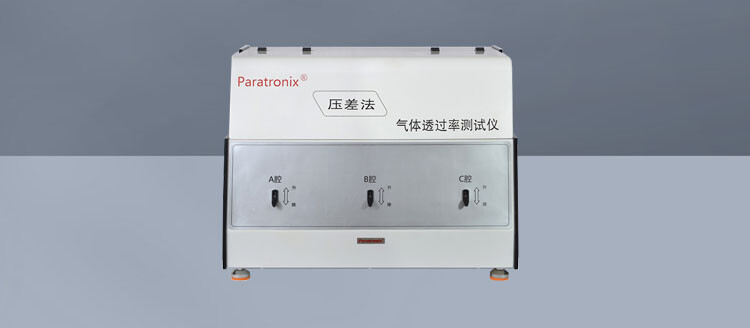

Choosing a gas transmission rate tester for barrier films starts with a precise question: which gas must be measured, and under what conditions? ASTM D1434 addresses gas permeability of plastic film and sheeting using a pressure-based method. ASTM D3985 addresses oxygen gas transmission through plastic film and sheeting using a coulometric sensor. Their results can both inform barrier evaluations, but the measurement principles and reported quantities are not automatically interchangeable.
For technical evaluators, the decision affects more than instrument selection. It determines how a specimen is exposed, what the detector actually responds to, and whether a result can be compared with a customer specification or another laboratory’s data. The authoritative requirements are in the applicable editions of the standards; the comparison below is a selection aid, not a substitute for those documents. [Sources: ASTM D1434, https://www.astm.org/d1434.html; ASTM D3985, https://www.astm.org/d3985.html]
What each method measures
ASTM D1434: gas permeation measured by pressure change
ASTM D1434 describes a differential-pressure approach. A film specimen separates a high-pressure side containing the test gas from a low-pressure side. Gas permeates through the film, and the method uses changes associated with the low-pressure side to determine permeation behavior. The standard describes both a manometric procedure and a volumetric procedure. [Source: ASTM D1434, https://www.astm.org/d1434.html]
Its practical appeal is that it is not inherently limited to oxygen. Depending on the apparatus, materials, safety controls, and the applicable procedure, a laboratory may evaluate films against different gases. That flexibility should not be confused with universal gas compatibility: seals, pressure components, gas handling, and instrument calibration must all be appropriate for the selected gas.
ASTM D3985: oxygen transmission measured by a sensor
ASTM D3985 is specific to oxygen transmission. Oxygen on one side of the specimen permeates through the film and is transported to a coulometric sensor by a carrier-gas stream. The sensor response provides the basis for determining the oxygen gas transmission rate, often referred to as OTR. [Source: ASTM D3985, https://www.astm.org/d3985.html]
This is a useful fit when oxygen ingress is the central performance question—for example, when comparing candidate structures against an oxygen-barrier specification. A coulometric oxygen sensor does not make the instrument a general-purpose detector for nitrogen, carbon dioxide, or other gases. For those applications, assess a suitable method and detector separately.
Gas transmission rate tester comparison: the decision points
Neither standard is a blanket certification of a film or an instrument. A report can state that a test was performed according to a specified standard and edition, subject to the actual procedure followed. Accreditation, where required, is a separate question: verify that the laboratory’s scope covers the method, material, and relevant measurement range. ISO/IEC 17025 is the general standard for testing and calibration laboratory competence. [Source: ISO, https://www.iso.org/standard/66912.html]
Start with the specification, not the instrument brochure
The appropriate method is often determined before a laboratory sees the sample. A customer drawing, material specification, regulatory submission, or internal qualification plan may name a standard, edition, conditioning regime, and reporting unit. If it does, establish those requirements before comparing testers.
- Identify the gas and purpose. Decide whether the result will be used for oxygen-barrier release testing, material development, supplier comparison, or another defined decision. For a non-oxygen gas, confirm that the proposed apparatus and procedure are suitable for that gas.
- Define the expected transmission range. Ask the supplier for the instrument’s validated working range and uncertainty under the relevant test conditions—not just its smallest displayed increment. A measurement near the detection limit may require longer testing or a different configuration.
- Match exposure conditions. Record temperature, pressure or partial-pressure conditions, humidity where applicable, and the identity of the test and carrier gases. Confirm that the equipment can control and document the conditions required by the specification.
- Check the specimen and format. Film and sheeting are not the same as a finished pouch, bottle, or sealed package. Verify specimen dimensions, test area, thickness measurement, and whether the material can be mounted without leaks or damage.
- Agree on the report before testing. Specify the result, units, number of specimens, conditioning, acceptance criteria, and treatment of deviations. A result without its conditions is difficult to compare or defend.
For a technical evaluation, request a demonstration using a representative film where possible. Review the raw measurement trend, leak-check procedure, stabilization criteria, and final report—not only the number on the screen.
Do not compare OTR and permeability without checking the basis
Transmission rate describes the amount of gas passing through a defined area over time under stated conditions. Permeability is a material-related quantity derived by accounting for factors including specimen thickness and the driving pressure difference, within the assumptions of the applicable method. The exact definitions and calculations must follow the standard and reporting convention used. [Source: ASTM D1434, https://www.astm.org/d1434.html]
That distinction matters when comparing films of different thicknesses. A thicker specimen may show a lower transmission rate, but dividing or multiplying by thickness does not automatically make every multilayer structure equivalent. Coatings, layers, defects, and processing history can influence performance; a simple thickness-normalized value should not replace a measurement on the actual structure being qualified.
Also check the pressure basis and units. Before comparing two reports, establish whether each value is a transmission rate or a permeability value, what area and time units are used, and how gas volume is referenced. Do not convert one result into another by applying a thickness factor alone.
When results from the two methods disagree
A discrepancy is not, by itself, proof that one instrument is wrong. The methods use different measurement principles, and the tests may also differ in gas exposure, pressure, temperature, humidity, specimen preparation, or stabilization. Their outputs are not automatically equivalent simply because both concern oxygen barrier performance.
Investigate the comparison in this order: confirm the specimen identity and test conditions; check units and calculations; review mounting and leak checks; then examine calibration, blanks, repeatability, and whether each result lies within the instrument’s validated range. If a customer requires a particular method, resolve discrepancies through an agreed correlation study rather than substituting the other method unilaterally.
Specimen handling can decide the quality of the result
For very low-transmission films, a small mounting leak or a damaged test area can be significant relative to the gas passing through the specimen. A careful evaluation therefore extends beyond the sensor or pressure transducer to the entire test cell and workflow.
- Inspect the test area. Avoid creases, pinholes, scratches, and contaminated sealing surfaces unless the purpose is specifically to evaluate such defects.
- Control conditioning and orientation. Record the specimen’s conditioning history and which face is exposed to the test gas. This is especially important for asymmetric coated or multilayer films.
- Use a defensible stabilization rule. A reading taken before the permeation response has stabilized may not represent the intended steady-state result. Follow the applicable standard and documented laboratory procedure.
- Separate leakage from permeation. Use the prescribed leak checks and suitable control materials or reference materials where available. An unusually high result should trigger a check of the cell and seal before the film is rejected.
- Measure enough specimens. Film variation and specimen preparation can affect repeatability. Set the number of determinations according to the applicable method and the decision the data must support.
Questions to ask a gas transmission tester supplier
A technically useful quotation should connect the proposed configuration to your test requirement. Ask for written answers to the following, along with supporting documentation:
- Method and edition: Which parts of ASTM D1434 or D3985 can the proposed configuration perform, and are any accessories or procedural limitations relevant?
- Performance at the target level: What measurement range, repeatability, and uncertainty can be supported for the intended gas, film, and conditions?
- Environmental control: How are temperature and, if needed, humidity controlled and verified? Are the required options included?
- Calibration and verification: What calibration procedures, reference materials, leak checks, maintenance, and consumables are needed?
- Data integrity: Does the software retain test conditions, measurement history, calculations, operator information, and deviations in a form your quality system can review?
- Gas safety: What gas supply, ventilation, pressure regulation, and material-compatibility provisions are required for the intended installation?
Paratronix Instruments provides packaging-testing instruments and testing solutions. When discussing a requirement with any supplier, share the governing specification and representative sample details rather than asking only for a tester “for high-barrier film.” The resulting technical discussion should make clear what the proposed configuration can and cannot support.
Frequently asked questions
Can ASTM D1434 replace ASTM D3985 for an oxygen specification?
Not automatically. If the specification names ASTM D3985, obtain the customer’s agreement before using another method. A documented comparison may support an alternative for a particular material and purpose, but it does not make the two methods universally interchangeable.
Is the lowest advertised detection limit the best basis for choosing a tester?
No. Consider the validated range and uncertainty at your expected result, as well as leak control, conditioning, test duration, calibration, and repeatability. A low displayed number is not meaningful if the complete measurement system cannot support it reliably.
Does a passing film result prove that the finished package has the same barrier?
No. A film test characterizes the tested specimen under stated conditions. Finished-package performance can also be affected by seals, closures, folds, damage, and package geometry. If the decision concerns the completed pack, determine whether an appropriate package-level test is also required.
Leave A Reply
Search by Keywords