




Recent Posts
 Choosing a Gas Permeability Tester: Range, Resolution, and Film TypesNov 28, 2026
 What Does a Gas Transmission Rate Tester Measure in Barrier Films?Nov 28, 2026
 ASTM D1434 vs. D3985: Choosing a Gas Transmission Test for Barrier FilmsNov 28, 2026
 What does an adhesive tack tester measure in medical dressings?Nov 28, 2026
 What Does a Horizontal Release Liner Tester Measure in a Peel Test?Nov 28, 2026
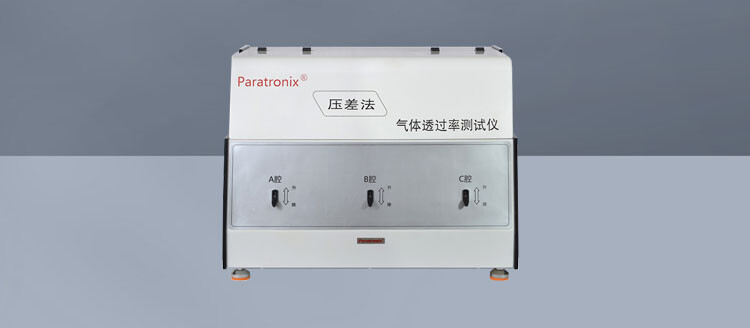

Choose a gas permeability tester by starting with the gases, film structures, and transmission rates you need to measure—not with the widest advertised range. A suitable instrument should measure the expected rate under the required temperature and humidity conditions, distinguish meaningful differences at that rate, and accept the actual sample format. It must also use a test method that meets the specification or agreement governing the results.
For technical evaluators, the critical distinction is between a number that can be displayed and a result that can be trusted. A tester may show several decimal places yet lack the detection capability, repeatability, or environmental control needed for a high-barrier film. Conversely, an instrument optimized for extremely low transmission may be unnecessary if the laboratory only compares conventional films with substantially higher rates.
Define the measurement before comparing instruments
A gas transmission rate tester for barrier films measures the passage of a specified gas through a sample under defined conditions. Results are commonly reported as a gas transmission rate per unit area and time, but the exact units and reference conditions depend on the method. Oxygen transmission rate and water vapor transmission rate, for example, are different measurements and should not be treated as interchangeable.
Before requesting specifications, build a requirement list for each material or product family:
- Test gas: Identify whether the application requires oxygen, another specified gas, or more than one gas. If moisture barrier is also important, specify water vapor testing separately.
- Expected rate: Record the anticipated low and high values, their units, and the test conditions behind them. Include any acceptance limit the laboratory must verify.
- Sample: Identify whether it is a flat film, laminate, coated sheet, or finished package, along with its thickness and available dimensions.
- Conditions: Specify the temperature, relative humidity, pressure or partial-pressure conditions, and conditioning requirements relevant to the application.
- Method: List the standard, customer procedure, or internal method and the edition that will govern reporting.
- Decision: State whether the result will be used for screening, supplier comparison, development, or acceptance against a limit.
This information gives suppliers a common basis for responding. Without it, two instruments may appear comparable even though their ranges apply to different gases, conditions, or sample types.
Match the measurement range to the expected rate
The stated measurement range is the first screening threshold. The expected transmission rates should fall within the instrument’s validated operating range for the intended gas, method, and conditions. Check both ends: a laboratory handling high-barrier films needs adequate low-end capability, while one testing more permeable films must also avoid exceeding the upper end.
Do not compare range figures until their units and test conditions are aligned. A supplier may state a range using a particular exposed area, temperature, pressure difference, or gas. Another may state a sensor capability rather than the range achievable for a complete film test. Ask which figures apply to the full instrument and test cell, and whether any changes of cell, sensor, or configuration are needed to cover the proposed materials.
Being inside the published range is necessary, but it is not always sufficient. If an acceptance limit sits close to the lower end of the range, ask for evidence that the system can distinguish results around that limit under the intended conditions. A nominal range endpoint alone does not establish how much confidence the laboratory can place in a pass-or-fail decision.
Low-rate testing requires attention to background and leaks
At very low transmission rates, gas entering through seals, fittings, or other unintended paths can become significant relative to the signal passing through the film. Background readings, cell cleanliness, sealing quality, and leak checks therefore matter as much as the range printed in a brochure.
Ask how the instrument establishes background, how leaks are identified, and what the operator should do when the measured signal is close to that background. Also ask what evidence supports the stated lower measurement capability: the conditions, sample area, test gas, and procedure should be relevant to the intended application.
High-rate samples can create a different constraint
For more permeable materials, verify that the expected signal remains within the instrument’s usable upper range and that the measurement procedure can reach and record an appropriate result. If the system needs a different exposed area, test configuration, or measurement setting, determine whether that change is compatible with the applicable method. A configuration that extends range but changes the required procedure may not be suitable for a specified acceptance test.
Separate display resolution from useful discrimination
Resolution is the smallest increment the instrument reports or displays. It is not, by itself, proof of accuracy, repeatability, detection capability, or fitness for a decision. A display that changes by a small increment can still reflect noise, drift, background effects, or variation in sample preparation.
Evaluate resolution alongside the following information:
- Repeatability: How closely do repeated measurements agree under the stated conditions, and is that variation small enough for the differences the laboratory needs to detect?
- Detection or quantification capability: How does the supplier define it, and under what test conditions was it established?
- Measurement uncertainty: What sources of uncertainty are considered, and are they relevant near the intended acceptance limit?
- Drift and stability: How are changes over the duration of a test controlled or checked?
- Verification: What reference materials, checks, or other procedures are available to confirm performance in use?
Consider an illustrative comparison in which two films have expected rates close to a customer’s maximum limit. An instrument may display a difference between them, but if normal measurement variation is of similar size, that display alone does not establish a reliable ranking or acceptance decision. Request repeatability and verification information near the relevant rate, rather than relying only on the number of displayed digits.
Compare film types on the basis of the actual specimen
Film descriptions such as “plastic,” “laminate,” or “high barrier” are useful starting points, but they do not define a tester’s suitability. Composition, coatings, layer structure, thickness, and handling can all affect the specimen and the result. The instrument must accommodate the material without damaging it or creating a leak path around it.
For multilayer or coated samples, document the orientation used in the test and follow the specified method. Also agree on where specimens are cut, how they are conditioned, and whether visible defects are included or excluded. Those choices can affect comparability even when the same instrument is used.
Thickness requires particular care. Transmission rate describes the result for the specimen under the stated conditions; a thickness-normalized permeability value is a different reporting quantity. Do not compare the two as though they were the same, or assume a simple thickness conversion is appropriate for every multilayer or coated structure. Establish the required reporting basis before comparing supplier data.
Verify gas, humidity, and temperature capabilities
Instrument suitability is gas-specific. A system designed around one detection principle or sensor should not be assumed to measure every gas. Confirm the gases supported, required gas supply quality, pressure controls, and any changeover or calibration requirements. If several gases are needed, ask whether they can be tested with the same configuration and what limitations apply to each.
Humidity can be equally important for materials whose barrier behavior changes with moisture exposure. Determine whether humidity must be controlled on one or both sides of the sample, what setpoints and tolerances the method requires, and whether the supplier’s stated capability applies throughout the intended temperature range. A tester with a humidity option is not automatically suitable for every specified humidity condition.
Temperature affects both the material and the measurement. Compare the required setpoint and allowable variation with the conditions maintained at the test cell, not merely an ambient operating range for the instrument. If conditioning and measurement occur in different environments, define how specimens are transferred and how the method addresses equilibration.
These conditions also determine whether historical results are comparable. A rate measured for one gas at one temperature and humidity should not be treated as directly equivalent to a rate obtained under different conditions without a justified basis.
Use the standard to define the method, not just the label
Relevant film-testing standards include ASTM D3985 for oxygen gas transmission through plastic film and sheeting using a coulometric sensor, ASTM D1434 for gas permeability characteristics using a differential-pressure method, and ISO 15105-2 for oxygen gas transmission rate by an equal-pressure method. These methods do not describe identical measurements or equipment configurations. Confirm the current edition and applicability for the material, gas, and reporting requirement before specifying compliance.
A statement that an instrument is “designed according to” or “compatible with” a standard is a starting point, not complete evidence that a laboratory can produce a conforming result. Ask the supplier to identify the applicable configuration and any limitations, including test cell, sensor, environmental control, sample preparation, calibration, and reporting. The laboratory must also follow the selected procedure and maintain the necessary records.
If customers or internal specifications prescribe a method, resolve any proposed alternative before purchase. Different methods may produce useful data for their intended purposes, but equivalence for a particular material and decision should not be assumed.
Assess throughput without sacrificing the required endpoint
Test duration affects the number of samples a laboratory can process, but the relevant figure is not simply the shortest cycle shown in a demonstration. High-barrier specimens may require time for conditioning and for the measurement to reach the endpoint defined by the method. Sample preparation, leak checks, purging, and reporting also consume operator or instrument time.
Ask how the instrument determines that a test is complete and whether the operator can review the underlying signal or stability data. A fixed short test may be useful for a validated screening procedure, but it should not replace a required endpoint without justification. For multiple test cells, confirm whether each cell can maintain the necessary conditions and whether the stated capacity assumes simultaneous tests of comparable samples.
Estimate throughput using the laboratory’s actual sample mix: include high- and low-rate materials, required replicates, conditioning, and routine verification. This provides a more useful comparison than multiplying the number of cells by an unqualified cycle time.
Request evidence and define acceptance before purchase
Once unsuitable configurations have been screened out, use the same representative samples and test requirements to evaluate the remaining options. Where practical, request a demonstration or trial that includes a sample near the critical low-rate or acceptance-limit region, as well as other materials the laboratory expects to handle. Treat trial results as evidence for the tested samples and conditions—not as proof of performance for every film.
- Request a configuration-specific specification. It should identify the gas, method, range, units, environmental controls, sample area, and accessories included.
- Review performance evidence. Ask for the definitions and conditions behind range, repeatability, detection capability, and any stated uncertainty.
- Check operating requirements. Confirm utilities, gas supply, consumables, maintenance, calibration or verification procedures, and operator training needs.
- Review data and records. Confirm that reports capture specimen identification, test conditions, method, units, results, and any deviations required by the laboratory’s quality system.
- Agree on acceptance criteria. Define the checks to be performed at installation, the reference or representative specimens to be used, and how results will be judged.
The preferred instrument is the one that can support the required decision across the relevant sample and operating conditions, with performance that can be verified in the laboratory. A wider range, finer display, or greater cell count is valuable only when it remains usable under the method and conditions governing those decisions.
Leave A Reply
Search by Keywords