




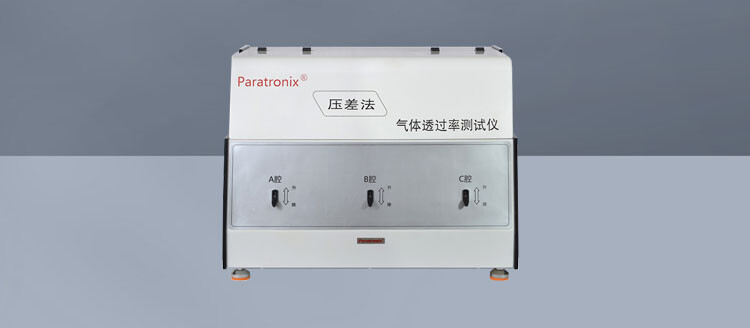
What A Gas Transmission Rate Tester Measures
A Gas Transmission Rate Tester measures the passage of a specified gas through a material under controlled conditions. Typical specimens include plastic films, sheets, laminates, and other barrier structures that can be mounted and sealed in a test cell. Laboratories use the results to compare materials, investigate changes in production, and support packaging specifications. The measurement describes molecular transport through the specimen; it does not, by itself, establish the integrity of a finished package or its seals.
Gas transmission rate, permeance, and permeability coefficient describe related but different properties. Transmission rate expresses gas flow normalized by exposed area under stated conditions. Permeance additionally accounts for the gas partial pressure difference across the specimen. A permeability coefficient also incorporates specimen thickness and is most meaningful when the material structure supports that interpretation. For multilayer films, reporting an apparent coefficient without explaining the construction can obscure the contribution of individual layers and lead to misleading comparisons.
A useful result therefore includes more than a number. Identify the gas, temperature, humidity conditions where applicable, exposed area, specimen thickness, pressure conditions, and reporting units. Where gas volume is reported, state its reference temperature and pressure. Oxygen, carbon dioxide, and nitrogen results are not interchangeable because transport depends on interactions between each gas and the material. These details allow purchasing teams and laboratory managers to compare supplier data against a defined specification.
ASTM D1434 And ISO 15105 Standards Explained
ASTM D1434 addresses the gas permeability characteristics of plastic film and sheeting. It describes manometric and volumetric measurement approaches for determining gas transmission behavior. A procurement specification should identify the applicable edition, selected procedure, gas, and test conditions rather than simply requesting an ASTM instrument. Conformity depends on how the laboratory prepares specimens, operates the apparatus, calculates results, and documents the test. A model name or a general standards claim cannot establish those requirements independently.
ISO 15105 separates gas transmission testing into two parts. ISO 15105-1 covers differential pressure methods, while ISO 15105-2 covers an equal pressure method. Differential pressure systems establish a pressure difference across the specimen and measure transmitted gas using the prescribed arrangement. Equal pressure systems maintain approximately equal total pressures on both sides while a gas partial pressure difference drives transmission. The selected part therefore matters: citing ISO 15105 without its part number leaves the measurement method insufficiently defined.
ASTM D1434 and ISO 15105-1 share relevant measurement concepts, but laboratories should not assume that their procedures or results are automatically interchangeable. Review the current standards for apparatus, conditioning, calculations, and reporting before establishing equivalence. When evaluating the paratronix GTR-V1 Gas Transmission Rate Tester, request a documented comparison between the required clauses and the proposed configuration. Its suitability for a particular method, gas, or operating range should be confirmed through technical documentation and an agreed acceptance test.
Measurement Principles And Main Instrument Types
In a common differential pressure arrangement, a sealed specimen separates a high pressure chamber from a low pressure chamber. After preparation and evacuation according to the method, test gas enters the upstream side. Gas passing through the specimen produces a measurable downstream response, such as a pressure increase in a known volume. Calculations use that response together with exposed area, temperature, pressure conditions, and other method parameters. Leakage and outgassing must be controlled because both can imitate specimen transmission.
In an equal pressure arrangement, the specimen separates the test gas from a receiving stream, commonly a carrier gas. The total pressures are approximately balanced, but different gas compositions create the driving force for permeation. A suitable detector measures gas reaching the receiving side. Detector selection determines which gases and concentrations the instrument can measure reliably. A system configured for oxygen should not be assumed to measure carbon dioxide, nitrogen, or mixed gases without additional, documented capability.
Choose between instrument types using the required standard, expected transmission range, specimen behavior, and gas requirements. A substantial pressure difference may deform a flexible specimen, making support design important. Very low transmission materials demand careful control of background signals and sealing. Highly permeable materials can challenge other operating limits. Air permeability equipment, water vapor testers, and package leak testers answer different questions; their results cannot substitute directly for gas transmission measurements through a defined specimen area.
Applications And Complementary Packaging Tests
Film manufacturers, converters, packaging developers, and independent laboratories use gas barrier measurements during material development and supplier qualification. Food packaging teams may evaluate oxygen ingress or carbon dioxide retention, depending on the product and packaging system. Pharmaceutical and medical packaging teams may assess barrier materials as part of a broader development program. In each application, material testing informs decisions, but a transmission result alone does not establish shelf life, product compatibility, sterility maintenance, or regulatory acceptance.
Testing is especially useful when changing resin grades, barrier layer thickness, coating formulations, adhesive systems, or converting conditions. Compare specimens under matched conditions and record their manufacturing history. For a multilayer structure, orientation and conditioning may affect interpretation. When studying aging or distribution exposure, define the treatment before testing and include suitable controls. This approach helps distinguish a material change from variation caused by preparation, environmental conditions, or the measurement system itself.
The paratronix portfolio includes water vapor permeability, leak, seal strength, friction coefficient, torque, and medical packaging physical performance testing equipment. These complementary categories support investigation of different packaging failure mechanisms. For example, gas transmission testing can assess the film while a suitable leak test investigates package integrity. Consider the GTR-V1 alongside those capabilities when defining a laboratory workflow, and confirm each instrument's scope separately. Coordinated testing can help teams connect material properties with converting and package performance.
Selection Criteria For B2B Procurement
Begin an equipment specification with representative materials and the decisions their results must support. Define required gases, expected transmission rates, temperature range, humidity requirements, specimen dimensions, and applicable standards. Ask suppliers to distinguish measurement range, resolution, repeatability, and uncertainty; these terms describe different aspects of performance. A Gas Transmission Rate Tester should demonstrate useful performance around the actual acceptance limit, where measurement quality matters most, rather than relying on an impressive maximum range or display resolution.
Evaluate chamber sealing, specimen support, temperature uniformity, pressure measurement, and background stability. Where humidity control is required, confirm which side is controlled and how conditions are measured. Review gas compatibility across wetted components and the specified requirements for gas purity and utilities. For multiple cells, ask whether chambers operate independently and how a leaking specimen affects other measurements. Throughput estimates should include conditioning, evacuation, stabilization, cleaning, and repeat tests as well as the recorded measurement period.
Before purchase, agree on an acceptance protocol using representative specimens and suitable reference materials where available. Require records of conditions, calibration status, calculations, and repeated measurements. Commercial due diligence should also cover installation, training, consumables, service access, and documentation. The supplied paratronix business identification is Unified Social Credit Code 91370105689842696E, which purchasers can check through appropriate business records. Business registration identifies the supplier; technical capability and standards conformity require separate evidence relevant to the proposed instrument.
Reliable Operation And Quality Control
Reliable testing begins with representative sampling and documented specimen preparation. Avoid creases, contamination, and unintended damage, and inspect for visible defects before mounting. Measure thickness where required using an appropriate procedure, particularly when calculating permeability coefficients. Condition specimens according to the selected method or agreed specification, and record which surface faces the test gas when orientation matters. Follow the instrument's sealing instructions carefully: edge leakage can overwhelm the genuine permeation signal of a high barrier film.
Before interpreting a test, check system integrity and the suitability of background measurements. Verify relevant sensors and evaluate performance with appropriate reference checks. Establish steady state using the selected method's requirements and a documented laboratory procedure rather than accepting an arbitrary elapsed time. High barrier specimens may require extended stabilization, while some materials show changing transport behavior under exposure. Retaining the measurement curve helps reviewers identify drift, unstable regions, or an analysis interval that does not support the reported result.
Set maintenance and verification intervals from manufacturer guidance, usage, contamination risk, and observed performance. Typical activities include inspecting seals, checking vacuum system performance, and verifying pressure or temperature measurement. Use control charts or equivalent records to detect gradual changes. Reports should identify the standard and edition, method, conditions, specimen details, deviations, and result units. Record replicate results and relevant uncertainty information so that technical teams can assess whether an apparent difference between materials is meaningful.
Ownership Costs And Future Testing Trends
Total ownership cost includes the instrument, required accessories, installation, gas supply, utilities, consumables, calibration, maintenance, and operator time. Laboratory capacity also depends on how long each specimen occupies a chamber and how frequently tests need repeating. Compare quotations using the same operating assumptions and expected sample mix. For low volume laboratories, qualified external testing may remain economical; for frequent development work, internal testing can improve scheduling and shorten the interval between a material change and its evaluation.
Assess investment returns through measurable workflow improvements, such as reduced outsourcing expenditure, faster qualification, or earlier identification of unsuitable materials. Use conservative assumptions and avoid treating every material rejection as a guaranteed saving. Before requesting a paratronix GTR-V1 proposal, prepare specimen descriptions, target standards, gas requirements, expected ranges, and annual testing volume. Ask for the recommended configuration, acceptance criteria, service provisions, and operating costs so that the proposal can be evaluated against a practical laboratory requirement.
Future demand is shaped by recyclable packaging, thinner structures, coatings, and increased use of recycled content. These changes can introduce variability that makes consistent sampling and traceable test conditions more valuable. Automation, improved environmental control, and accessible measurement records can strengthen laboratory workflows when their performance is verified. As materials and standards evolve, review methods and specifications together. Selecting a Gas Transmission Rate Tester with documented capabilities and dependable support provides a sound basis for that continuing work.
 Does your gas transmission rate tester meet ASTM D1434 requirements?Does your Gas Transmission Rate Tester meet ASTM D1434 requirements? Discover key checks for method conformity, calibration, and reliable barrier data before approving your equipment.
 Should you choose a differential-pressure gas transmission rate tester?Choosing a Gas Transmission Rate Tester? Explore differential-pressure testing, compare sensitivity and standards, and learn how to select the right system for your packaging lab.
 Which gases can a gas transmission rate tester actually measure?Which gases can a Gas Transmission Rate Tester measure? Explore oxygen, CO2, nitrogen, and specialty gas capabilities to choose the right configuration for reliable packaging tests.
 How humidity affects results from a gas transmission rate testerGas Transmission Rate Tester results can shift with humidity. Learn how to control moisture, avoid testing errors, and choose reliable equipment for packaging barrier analysis.
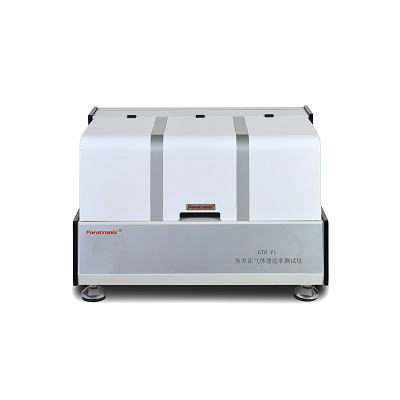
 GTR-V1 Gas Transmission Rate TesterGTR-V1 Gas Transmission Rate Tester (GTR Tester) is professionally applicable to determining the gas (O2, CO2, N2) transmission rate of plastic films, composite films, high barrier materials, sheeting, metal foils, rubber, tires, and permeable membranes with differential pressure method.
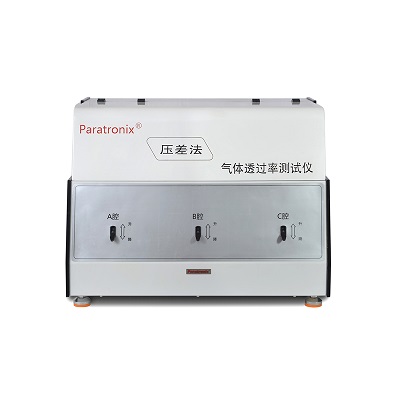
 GTR-V3 Gas Transmission Rate TesterGTR-V3 Gas Transmission Rate Tester (GTR Tester) is professionally applicable to determining the gas (O2, CO2, N2) transmission rate of plastic films, composite films, high barrier materials, sheeting, metal foils, rubber, tires, and permeable membranes with differential pressure method.
Search by Keywords