




Recent Posts
 Which gases can a gas transmission rate tester actually measure?Oct 14, 2026
 Should you choose a differential-pressure gas transmission rate tester?Oct 14, 2026
 Does your gas transmission rate tester meet ASTM D1434 requirements?Oct 14, 2026
 Horizontal vs. Vertical Peel Testers: Which Fits Your Specimens and Fixtures?Oct 14, 2026
 What Does a Horizontal Tensile Stripping Tester Measure in Peel Testing?Oct 14, 2026
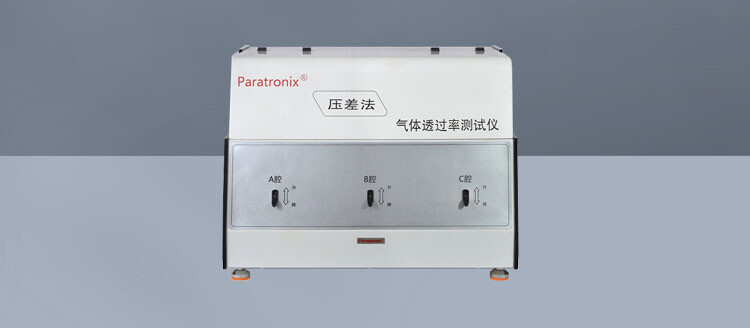
Should you choose a differential-pressure Gas Transmission Rate Tester for your packaging laboratory? For technical evaluators, the answer depends on material permeability, target gases, required sensitivity, and applicable standards—not simply the instrument’s published range. A system that works well for routine plastic films may need a much more demanding evaluation before it can support high-barrier pharmaceutical packaging.
The practical question is whether the instrument can distinguish permeation through your material from everything else that causes a pressure change. Temperature drift, residual moisture, seal leakage, and specimen outgassing can all influence the result. Understanding those effects is the difference between purchasing a tester that produces numbers and selecting one that supports defensible barrier decisions.
Start with the decision your laboratory needs to make
Before comparing instruments, define what the test result must tell you. Are you screening new film formulations, verifying incoming materials, qualifying a laminate, or investigating a packaging failure? These tasks may require different levels of sensitivity, throughput, and method documentation.
For example, ranking several relatively permeable films is not the same challenge as confirming that a high-barrier laminate remains below a tight acceptance limit. In the second case, the system’s background signal and measurement uncertainty may matter more than its maximum testing range.
Build your initial requirements around five questions:
- Which gases must be measured: oxygen, nitrogen, carbon dioxide, or others?
- What transmission-rate range is expected under the intended test conditions?
- Are the specimens flat films and sheets, or finished packages and components?
- Which temperatures, humidity conditions, and pressure differences must be represented?
- Which standards or customer specifications govern acceptance?
If those answers are unclear, ask prospective suppliers to help define a feasibility study rather than immediately recommend a model. A short trial using representative materials can reveal more than a lengthy comparison of brochure specifications.
What a differential-pressure Gas Transmission Rate Tester actually measures
In a typical differential-pressure arrangement, a film or sheet separates two chambers. The downstream chamber is evacuated, and the upstream side is exposed to the test gas at a controlled pressure. Gas permeates through the specimen, causing the downstream pressure to rise. The instrument uses that pressure-rise rate, together with parameters such as effective test area, chamber volume, and temperature, to calculate gas transmission.
The driving force is a difference in gas partial pressure across the material. With a pure test gas on the upstream side and a sufficiently low downstream pressure, that driving force is comparatively straightforward to define. As downstream pressure increases, however, the pressure difference changes; the method and calculation must account for the relevant measurement conditions.
This arrangement is attractive because pressure measurement is not inherently specific to one gas. Subject to instrument compatibility, gas purity, calibration, and validated operating procedures, the same measurement principle can support testing with different gases.
Do not confuse transmission rate with permeability. Gas transmission rate describes gas passage through a specimen per unit area and time under stated conditions. Permeance additionally relates that flow to the partial-pressure difference. A permeability coefficient incorporates thickness, but its interpretation requires care for multilayer structures, coatings, and materials that do not behave as uniform layers.
For purchasing and reporting, insist on clearly defined units and reference conditions. Two values cannot be compared reliably merely because both are labeled “GTR.”
Where the method fits—and where another approach may fit better
A differential-pressure system deserves serious consideration when your laboratory evaluates flat films or sheets, needs access to multiple test gases, and can work with the pressure conditions required by the method. It can be useful in material development, where understanding changes in gas transport is part of the research rather than simply checking one oxygen-barrier specification.
It is not automatically the best choice for every packaging laboratory.
Equal-pressure methods maintain approximately equal total pressure on both sides while creating a gas partial-pressure difference through different gas compositions. Their detectors may be gas-specific. Neither principle is universally superior: the better choice is the one that matches the required measurand, material behavior, and acceptance method.
For high-barrier materials, scrutinize the background before the range
The most difficult purchasing discussion often begins with a reassuring claim: the instrument measures extremely low transmission rates. That statement has limited value unless the supplier explains how those rates were established and under what conditions.
At low gas flow, a small leak or residual outgassing can become a significant part of the observed downstream pressure rise. A precise pressure sensor cannot, by itself, determine whether the gas came through the specimen or entered through a seal.
Leak control is part of the measurement
Ask how the system checks cell seals, valves, connections, and other potential leak paths. Request background testing with an appropriate impermeable blank, as well as repeated mounting trials. The blank result should be evaluated under conditions relevant to your samples, not only during an ideal factory demonstration.
Background subtraction also needs scrutiny. Determine how the background is measured, whether it remains stable over long tests, and how its uncertainty affects the reported result. A corrected value close to the background level may be much less reliable than its displayed decimal places suggest.
Evacuation and temperature stability need real evidence
Evacuation removes gas from the downstream chamber, but it does not guarantee that the specimen and cell have stopped releasing moisture or adsorbed gases. Ask how the software identifies adequate preparation and separates transient behavior from the region used for calculation.
Temperature matters twice: it affects pressure in the measurement volume and gas transport through the material. Request evidence of actual cell-temperature stability during extended measurements. A broad temperature setting range is not a substitute for stable conditions at the specimen.
Check whether the specimen will behave differently under pressure
A pressure difference can deflect a thin film, stress a coating, or change the behavior of a weak laminate. These effects may compromise a comparison with service conditions, particularly when the package normally experiences little total-pressure difference.
Ask how the cell supports the specimen and whether that support affects gas access or the exposed area. Materials that wrinkle, creep, delaminate, or contain small defects deserve a physical inspection after testing, not just a review of the numerical output.
Humidity is another important boundary condition. Some polymers show substantial changes in barrier behavior with moisture exposure. Preconditioning a film at a specified relative humidity does not necessarily maintain that humidity throughout a test involving evacuation and dry gas.
If moisture-sensitive materials are central to your work, require a clear explanation of humidity control at the specimen. Where the intended conditions cannot be reproduced, identify the limitation explicitly rather than treating the result as representative of the package’s storage environment.
Standards alignment is more than a line on a specification sheet
Relevant references may include ISO 15105-1 for differential-pressure determination of gas transmission through plastic films and sheeting, and ASTM D1434 for gas permeability characteristics of plastic film and sheeting. Equal-pressure methods are addressed in ISO 15105-2, while ASTM D3985 is commonly associated with oxygen transmission measurement using a coulometric sensor.
These references are not interchangeable endorsements. Confirm the current applicable edition, the required procedure, specimen limitations, conditioning, calculation, and reporting requirements. A supplier’s statement that an instrument “supports” a standard should be followed by a practical explanation of how it does so.
For pharmaceutical packaging, also separate material characterization from package qualification. Film transmission data can inform selection, but seals, formed areas, closures, and defects may dominate the finished package’s barrier performance. Depending on the application, additional package-level barrier, integrity, or stability studies may be necessary.
Make the supplier demonstration answer your hardest questions
A meaningful demonstration should include your materials, your conditions, and your reporting needs. Choose a small sample set that spans the intended workload: a routine film, a low-transmission structure, and a specimen with challenging handling or conditioning requirements.
Ask the supplier to show the full pressure-versus-time trace, not only the final transmission value. The trace can reveal stabilization time, drift, changes in slope, and the basis for selecting the calculation interval.
Your evaluation should cover:
- Repeatability: Repeat tests with independently mounted specimens, rather than recalculating one measurement several times.
- Useful sensitivity: Assess performance near your decision limit, including background variability and uncertainty.
- Steady-state criteria: Understand how the instrument identifies a suitable measurement region and flags unstable results.
- Real cycle time: Include conditioning, mounting, evacuation, stabilization, measurement, and cleaning.
- Traceability: Review pressure, temperature, volume, and area verification, along with suitable reference-material checks where available.
- Data handling: Verify raw-data export, calculation settings, operator records, and access controls appropriate to your laboratory.
For a multichannel instrument, establish which controls and utilities are shared. Ask whether channels can operate independently and whether a leak or interrupted test in one channel affects the others. Nominal channel count is not the same as dependable daily capacity.
Acceptance criteria should be agreed before purchase. “Results look reasonable” is too subjective when the equipment will support supplier disputes, development decisions, or regulated documentation.
Choose a testing solution, not just a measurement principle
Paratronix Instruments Co., Ltd. manufactures packaging testing instruments for pharmaceutical packaging, plastic packaging materials, and high-barrier applications. When discussing a solution with Paratronix, provide representative specimens, expected transmission ranges, required gases, and the standards your laboratory must follow.
Use that discussion to establish method suitability and the scope of support needed. Ask about sample preparation, training, maintenance, installation requirements, and demonstration testing. Any required humidity capability, specialized fixture, or data-management function should be confirmed for the proposed configuration rather than assumed from the manufacturer’s broader product portfolio.
The purchase decision should also consider the people who will run the equipment. A technically capable system can still become a laboratory bottleneck if mounting is difficult, troubleshooting is unclear, or long tests require frequent operator intervention.
The decision: choose it when the evidence matches your task
A differential-pressure Gas Transmission Rate Tester is a strong candidate when you need flexible gas testing on suitable films or sheets and can validate the method under your actual operating conditions. Its value depends on controlled pressure measurement, stable temperature, effective leak management, and transparent calculations—not the headline range alone.
Consider an alternative or complementary method when your work requires a specific oxygen-detection standard, demanding humidity control, minimal mechanical loading, or finished-package assessment.
Before committing, ask one decisive question: Can this configuration reliably distinguish acceptable material from unacceptable material at our required conditions? If representative testing, uncertainty assessment, and documented procedures support that answer, you have a sound basis for selection. If they do not, more impressive specifications will not resolve the underlying risk.
Leave A Reply
Search by Keywords