




Recent Posts
 Horizontal vs. Vertical Peel Testers: Which Fits Your Specimens and Fixtures?Oct 14, 2026
 What Does a Horizontal Tensile Stripping Tester Measure in Peel Testing?Oct 14, 2026
 Bone Screw Insertion Testing vs. Pullout Testing: What Each RevealsOct 13, 2026
 ASTM F543 Torsion Testing: Fixture and Data Requirements for Bone ScrewsOct 13, 2026
 Choosing an Auto Tensile Tester: Load Cell Range for Thin FilmsOct 13, 2026
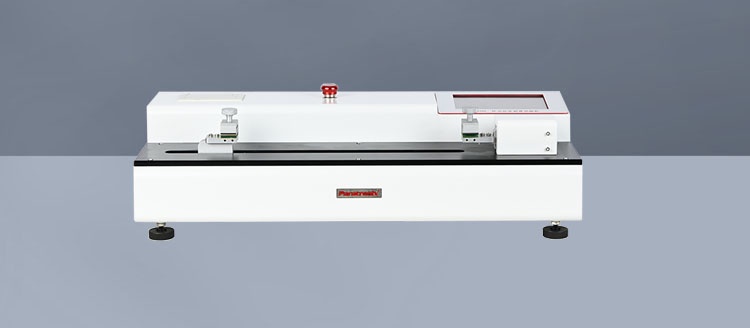
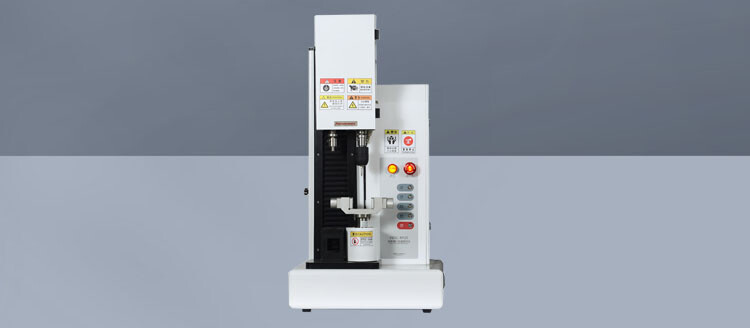

A Horizontal Tensile Stripping Tester measures the pulling force required to separate bonded layers as a specimen is peeled under controlled conditions. For packaging materials, that force helps describe how strongly a laminate holds together or how readily a peelable seal opens. The instrument records force during separation; the test method determines how those readings become a reported peel strength.
The result needs context. Peel angle, pulling speed, specimen width, conditioning, and the way the material separates all affect the measurement. A higher reading can indicate stronger resistance to separation, but it can also reflect film stretching, bending, or tearing. To judge whether a packaging bond is suitable, readers need to understand both the force curve and what happened to the specimen.
What the tester measures directly
The primary measurement comes from a force sensor, or load cell, in the pulling system. As the grips move apart or a fixture guides the peel, the sensor records the tensile force transmitted through the specimen. Depending on the instrument and software, force may be displayed against elapsed time or crosshead displacement.
“Horizontal” describes the orientation of the testing arrangement. It does not, by itself, define the peel angle or the procedure. The specimen layout, grip positions, and any guiding fixture establish the geometry. A horizontal machine therefore still needs a setup appropriate to the material and the intended test.
The recorded force can be used to calculate several results:
- Initial peak force: the highest force associated with starting separation, where the method calls for evaluating that stage.
- Average peel force: the mean force over a defined portion of the peel, often used to describe sustained separation.
- Maximum force: the highest reading within the specified evaluation region.
- Force variation: changes along the specimen that may help identify uneven bonding or inconsistent separation.
These values answer different questions. A package may require considerable force to begin opening, then peel smoothly at a lower force. Another specimen may start easily but show repeated force spikes. Reporting only the maximum value can conceal that difference, while averaging the entire test can mix the starting event, stable peeling, and final release into a single number.
Crosshead displacement also requires care. It measures movement of the machine’s pulling mechanism. If the film stretches, the grips slip, or the fixture moves, that displacement does not directly equal the distance the bond has peeled. For many routine comparisons, controlled crosshead motion is sufficient, but it should not automatically be interpreted as measured movement of the separation front.
How pulling force becomes peel strength
Peel force is commonly expressed in newtons. When the result is normalized by specimen width, it becomes a force-per-width value, such as N/mm. Some reporting conventions state the force for a specified strip width instead. The units and width basis must accompany the result so that another reader can interpret it correctly.
For example, an average force of 3 N measured on a 15 mm-wide specimen corresponds to 0.2 N/mm. This is an illustration of the calculation, not a recommended acceptance limit. Whether that result is suitable depends on the package, material structure, test procedure, and performance requirement.
Width normalization makes comparisons more useful, but it does not remove every difference between tests. Specimen edges, material orientation, and changes in failure behavior can affect the result. Two strips with different widths should not be treated as fully interchangeable simply because their forces have been divided by width.
Peel strength is a result tied to a test method. It describes resistance to separation under stated conditions. It is not a universal adhesion constant that remains unchanged across every angle, speed, or material construction.
The measured force includes the mechanical work required to bend and sometimes stretch the peeling layers, as well as the resistance associated with separation. A stiff laminate and a flexible film can produce different readings even when the underlying bonding systems are similar. Converting a routine peel-force result into an interfacial fracture energy requires additional assumptions and analysis.
The test conditions that change the answer
Peel angle and specimen arrangement
Peel angle changes how the applied force acts at the separation front. A 90-degree arrangement, a 180-degree arrangement, and a T-peel arrangement impose different geometries. Their results should not be compared as though they were measurements of the same property under identical conditions.
In a T-peel arrangement, two flexible layers are pulled apart with their separated arms forming a roughly T-shaped configuration. Other arrangements peel one layer away from a supported surface or fold it back over itself. The appropriate geometry depends on the specimen and the selected procedure, including whether both layers are flexible enough to bend as required.
Alignment matters within each arrangement. If a specimen twists, pulls sideways, or changes angle during the test, the recorded force may become less representative of the intended peel condition. The horizontal layout alone does not prevent these effects; suitable grips, fixtures, and careful specimen positioning remain necessary.
Test speed and material response
Adhesives, seal layers, and polymer films can respond differently when separation occurs at different rates. Changing the pulling speed may change the measured force or the failure mode. A comparison between batches, suppliers, or processing conditions is therefore meaningful only when speed is controlled and reported.
The specified machine speed may also differ from the speed at which the bond actually separates. Film extension and fixture geometry can affect that relationship. This becomes especially relevant when comparing constructions with very different stiffness or stretch behavior.
Preparation, conditioning, and measurement range
Specimens need consistent width, clean edges, and a prepared starting section that allows gripping without damaging the region being evaluated. For laminates, separating the layers to create gripping tabs can introduce local damage. For heat seals, strip position and orientation determine which part of the seal is sampled.
Temperature, humidity, and time after manufacture can also affect the result. Adhesive curing, polymer behavior, and exposure to storage conditions may change resistance to peeling. Comparisons should use a defined conditioning procedure, with relevant differences recorded rather than left implicit.
The instrument must be capable of resolving the expected forces. A load cell selected only for high maximum capacity may be poorly suited to a weak peelable seal if its performance at low loads is inadequate. Grip design matters just as much: slipping can distort the curve, while excessive clamping pressure can damage thin films before useful separation begins.
Why the force curve needs the specimen beside it
A numerical result cannot explain the full separation process. The tested surfaces help establish what the instrument actually measured. Separation may occur at an interface, within an adhesive or seal layer, through a coating, or by tearing one of the substrates. These outcomes carry different implications for packaging performance.
If a film tears before the intended interface peels, the recorded force describes a tear-limited event. The test has not established a steady peel strength for that interface. Likewise, a change from interfacial separation to cohesive failure can make a simple comparison of average forces misleading.
A smooth force plateau suggests relatively consistent resistance over the evaluated section. A fluctuating curve may indicate intermittent separation, local bond differences, or changes in material deformation. However, fluctuations can also come from grip slip, alignment problems, or the mechanics of the test setup. The curve alone cannot identify the cause.
For that reason, useful interpretation combines the recorded trace with examination of the peeled surfaces and observations of the test. Adhesive transfer, film whitening, stretching, coating removal, and tearing can help explain changes in force. Where failure modes vary across specimens, the report should retain that distinction rather than compress every outcome into one average.
The evaluation region also needs a consistent rule. Starting transients and the final release can differ substantially from sustained peeling. Excluding them may be appropriate for a specified average, but the exclusion should follow the method. Selecting only the smoothest section of each trace can hide the inconsistency the test was intended to detect.
What the result tells packaging teams—and what remains unresolved
For laminated plastic films and high-barrier structures, peel testing helps assess resistance to separation at a selected interface. It can support comparisons between bonding conditions, material combinations, or samples exposed to different conditioning regimes. Repeated measurements under the same procedure can reveal whether the bond response is consistent across the sampled material.
The interpretation depends on the intended function. A structural laminate may need to resist delamination through converting, filling, distribution, and use. An intentionally peelable closure needs an opening force compatible with its users and opening design. Increasing force is therefore not automatically an improvement: excessive resistance can make a peelable package difficult to open or cause the material to tear.
Pharmaceutical packaging illustrates why the distinction matters. A peel measurement can characterize a bonded layer or peelable seal, but it does not independently establish package integrity, barrier performance, or protection of the contents. Those questions require tests suited to the relevant failure mechanism. A package can show substantial peel resistance while still having a localized defect outside the sampled strip.
Similarly, peeling a narrow specimen does not fully reproduce opening an entire package. Package shape, tabs, corners, opening direction, and the user’s grip influence the opening experience. Strip testing provides a controlled comparison; evaluation of the finished package connects that comparison to actual use.
There is no single acceptable peel-strength value for every packaging application. A useful specification connects the test result to the required function and states the geometry, speed, specimen width, conditioning, calculation region, and relevant failure mode. Without those details, a requirement such as “minimum peel strength” leaves too much room for incompatible measurements.
For someone evaluating a Horizontal Tensile Stripping Tester, the practical starting point is a representative specimen and a defined separation question. Establish which interface should peel, which geometry is appropriate, and whether the decision depends on starting force, sustained force, consistency, or failure behavior. Then assess whether the machine’s force measurement, grips, travel, fixtures, and data reporting support that procedure.
A useful test report allows the reader to connect the number to the physical event: this specimen, prepared and conditioned in this way, separated under these conditions and failed in this manner. That connection is what makes a peel result usable for material comparison, process adjustment, or a packaging acceptance decision.
Leave A Reply
Search by Keywords