





Horizontal vs. Vertical Peel Testers: Which Fits Your Specimens and Fixtures?
Choose a peel tester by matching its fixtures, working space, and motion to your specimens. Machine orientation alone does not determine suitability or measurement quality.
For pharmaceutical packaging, plastic films, and high-barrier laminates, specimen flexibility, peel angle, gripping stability, and available travel usually matter more than the direction of loading.
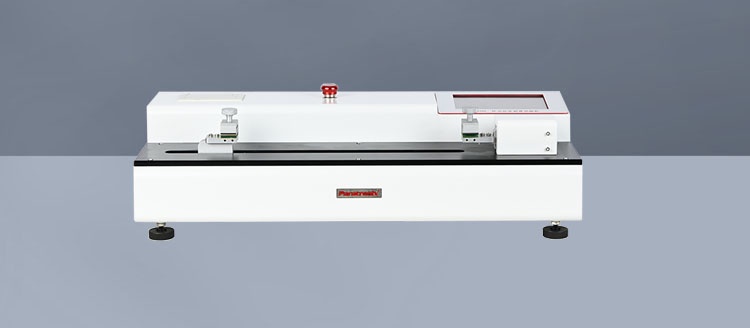
A Horizontal Tensile Stripping Tester can suit supported specimens and certain fixture arrangements. A vertical system can suit other geometries, particularly tests requiring suspended grips.
The practical question is which complete configuration reproduces your test method consistently, accommodates your packaging samples, and produces defensible results across operators and material batches.
Start With the Test Geometry, Not the Machine Orientation
Horizontal and vertical describe the orientation of the machine’s loading axis. They do not independently define peel angle, specimen support, or the measured failure mechanism.
A horizontal machine does not automatically provide a 180-degree peel test, and a vertical machine does not automatically provide a 90-degree peel test either.
Those geometries depend on how the specimen is secured, where the pulling arm travels, and whether a fixture maintains the intended relationship during separation.
Before comparing equipment, identify what you need to separate: a package seal, an adhesive bond to a rigid surface, or layers within a flexible laminate.
Then document the required angle, specimen dimensions, pulling speed, conditioning, and result calculation. These requirements become your selection criteria rather than optional accessories added later.
If two configurations reproduce the same method correctly, either may be suitable. Differences in loading convenience and specimen control then become the deciding factors.
Which Specimens Benefit From a Horizontal Layout?
A horizontal layout can be useful when a specimen or substrate needs support along a bed, especially when its size makes suspended mounting awkward.
For a rigid panel carrying an adhesive film, a suitable horizontal fixture can keep the substrate supported while directing the flexible peeling arm toward the grip.
Wide packaging sheets or bulky assemblies may also be easier to position on a horizontal support, provided the frame offers sufficient clearance around the fixture.
However, contact between a flexible specimen and the bed can introduce friction. Support surfaces must not add uncontrolled resistance to the measured peeling force.
A long, unsupported film tail may sag, drag, or fold during testing. Evaluate its full movement rather than judging suitability from the initial mounting position.
Choose a Horizontal Tensile Stripping Tester when its fixture arrangement controls these effects and offers a practical advantage for your actual specimen sizes and handling routines.
When Does a Vertical Tester Make More Sense?
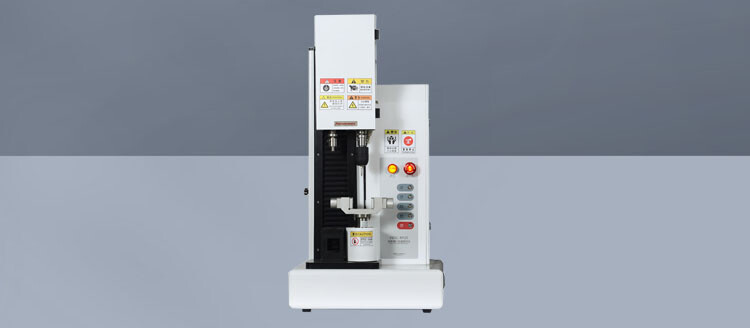
A vertical system can provide convenient access to upper and lower grips for flexible specimens, including configurations where separated arms are held in opposing grips.
For narrow package strips, this arrangement may simplify loading and visual alignment. Suitability still depends on the specified method and the way unsupported material behaves.
Vertical layouts can reduce bench footprint, although tall frames require overhead clearance. Operators also need comfortable access to grips throughout their normal loading position.
Gravity may influence hanging specimen arms or heavy fixtures, particularly when peel forces are low. Consider these contributions when establishing the force measurement baseline.
A rigid substrate can also be tested vertically with an appropriate fixture. The important questions concern secure mounting, substrate stability, and controlled peel geometry.
Favor a vertical configuration when it accommodates your required fixtures and travel while allowing operators to mount representative specimens without twisting, excessive bending, or awkward reach.
Can the Fixture Maintain Your Required Peel Angle?
Peel angle can materially affect measured force because it changes the mechanics of separation. An uncontrolled angle can undermine comparisons between materials, batches, or laboratories.
For a 90-degree peel test, a suitable moving platform or equivalent mechanism may be necessary to maintain the angle as the separation front advances.
For a 180-degree peel arrangement, the peeled arm folds back relative to the bonded surface. Clearance and guidance must accommodate that path without interference.
For T-peel testing, two flexible adherends form opposing arms. Their bending behavior, alignment, and mounting symmetry influence how consistently the joint is loaded during separation.
Package seal strength testing may use supported or unsupported specimen techniques. These arrangements are method choices and should not be treated as interchangeable mounting conveniences.
Ask the supplier to demonstrate the fixture throughout a complete test. A correct starting angle provides little assurance if the geometry changes during the measured interval.
Also inspect whether adapters introduce play, fixture rotation, or off-axis loading. Small mounting weaknesses can become significant when testing flexible materials at low forces.
Will the Grips Hold Your Materials Without Changing the Failure?
Thin films, coated foils, and multilayer laminates require grips that hold securely without creating damage that becomes the dominant failure during the test itself.
Grip pressure, jaw texture, contact area, and specimen insertion depth all matter. Excessive pressure may crush a laminate, while insufficient pressure allows gradual slippage.
A slipping specimen can produce misleading force traces and displacement readings. A specimen that breaks at the jaw may never reveal the intended bond strength.
Check whether your narrowest and widest strips fit the available jaws. Grip compatibility should cover actual production samples, including fragile or unusually smooth surfaces.
Pneumatic grips can improve pressure consistency when properly configured, but they do not automatically eliminate slipping or damage. Demonstrations should include your most difficult materials.
Inspect alignment after clamping both ends. A specimen that twists or pulls diagonally may experience uneven loading, even when the machine’s force sensor performs correctly.
Check Usable Travel and Clearance With the Fixture Installed
Published crosshead travel is not necessarily the travel available for your test. Fixtures, adapters, initial grip separation, and safe stopping distances consume part of it.
Peel-front movement and crosshead displacement are not universally identical. Their relationship depends on specimen geometry, fixture motion, and the deformation of the peeled arms.
Ask the supplier to calculate required travel using your method and specimen length. Avoid estimating machine capacity from the intended peeled distance alone during selection.
Long specimens may need enough movement for initiation, a stable measurement interval, and completion. Highly extensible films can consume additional travel through stretching during testing.
Working width and depth also matter. A machine may offer sufficient travel while leaving inadequate room for a broad panel or a moving support stage.
Confirm clearance at both ends of the test. Include grip movement, fixture translation, loose specimen tails, and operator access when assessing the complete working envelope.
Evaluate Force Measurement Where Your Specimens Actually Operate
Maximum machine capacity rarely answers the most important measurement question: whether the selected load cell performs adequately across the forces your packaging specimens normally produce.
For low-force seals or delicate adhesive layers, examine the specified measurement range and accuracy conditions. Display resolution alone does not establish useful measurement performance.
Ask how calibration covers the intended operating range, whether different load cells are available, and how the system handles fixture weight and baseline zeroing.
Acquisition rate and data processing also influence the recorded curve. Your configuration should capture relevant force changes at the selected test speed without misleading smoothing.
Compare results using the same sampling settings and analysis rules. Otherwise, apparent differences between horizontal and vertical systems may reflect software choices rather than mechanics.
For meaningful equipment evaluation, include weak, typical, and strong specimens. One convenient sample cannot establish performance across the materials your laboratory intends to assess.
Match Standards and Reporting to the Actual Application
Use the current applicable standard, customer specification, or validated internal method to define the test. A generic claim of standards compliance is insufficient for selection.
ASTM F88/F88M addresses seal strength of flexible barrier materials. Its specimen holding techniques matter when evaluating package seals and comparing results between testing arrangements.
ASTM D3330/D3330M covers peel adhesion of pressure-sensitive tape through specified procedures. Select the relevant procedure before deciding which fixtures and machine configuration you need.
ASTM D903 addresses peel or stripping strength of adhesive bonds. ISO 8510-1 and ISO 8510-2 address 90-degree and 180-degree peel testing, respectively, for specified assemblies.
These references do not make every configuration suitable for every packaging product. Confirm scope, specimen preparation, speed, geometry, and calculation requirements for your application.
For pharmaceutical packaging, seal strength results support package evaluation but do not independently establish package integrity. Leakage and barrier performance may require separate test methods.
Require a Demonstration Using Your Own Specimens
The most useful purchasing evidence is a documented trial with representative specimens and the proposed fixtures. Standard demonstration strips rarely expose your most important handling problems.
Prepare specimens consistently, following the intended method’s conditioning and dimensional requirements. When comparing machines, distribute comparable specimens between systems to reduce material-related bias during evaluation.
Include difficult samples: weak seals, highly extensible films, stiff laminates, slippery surfaces, and large substrates. Choose examples that reflect credible laboratory demands and failure modes.
Observe loading time, alignment, grip behavior, angle control, and specimen movement. Record whether operators must intervene during a test or repeatedly adjust the mounting arrangement.
Review complete force curves alongside specimen photographs or failure notes. Distinguish interfacial separation, cohesive failure, film tearing, and grip-related damage when interpreting the measured force.
Use an appropriate number of repeats for your evaluation objective. Define acceptance criteria in advance so equipment selection does not depend on one favorable trace.
If results disagree, investigate geometry, specimen preparation, conditioning, and analysis settings before attributing the difference to orientation. Comparable measurements require comparable test conditions and calculations.
Compare the Complete Configuration and Ownership Cost
Purchase price should be assessed alongside the fixtures, grips, load cells, software functions, and calibration services needed to run your actual test program reliably.
A lower-cost frame may require additional fixtures or repeated manual adjustments. Those requirements can increase setup time and make results more dependent on operator technique.
Assess fixture changeover time if your laboratory handles several packaging formats. Repeatable mounting references and clear setup instructions can reduce errors between methods and operators.
For regulated workflows, identify required access controls, data retention, export formats, and review records. Confirm these capabilities directly rather than assuming all test software provides them.
Paratronix Instruments Co., Ltd. manufactures packaging testing instruments for pharmaceutical packaging, plastic packaging materials, and high-barrier materials. Buyers can discuss requirements across these application areas.
When evaluating a proposed Paratronix configuration, request fixture drawings, applicable measurement specifications, and sample testing evidence. Confirm suitability against your documented method before finalizing equipment selection.
Make the Decision Around Your Specimens and Evidence
Choose a horizontal system when its support arrangement, access, and fixture motion suit your specimens. Choose a vertical system when its gripping arrangement better serves them.
A Horizontal Tensile Stripping Tester is a strong candidate when it demonstrates controlled geometry, stable gripping, adequate travel, and suitable measurement performance with your actual materials.
Before purchasing, require evidence for five essentials: method compatibility, fixture stability, usable working space, force measurement performance, and repeatable results across the intended specimen range.
The best choice is the complete configuration that makes your packaging tests reliable and practical. Orientation becomes useful only when it supports those measurable requirements.