




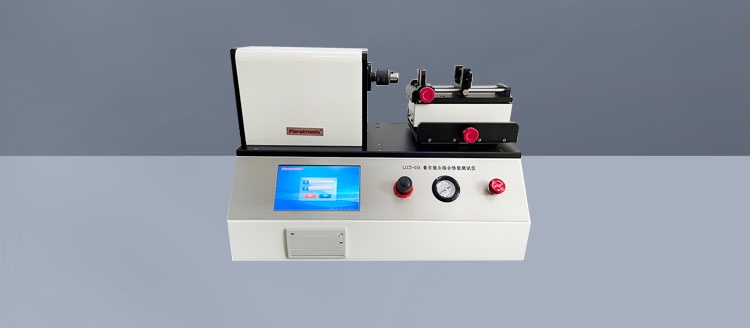
What Is A Luer Connector Tester For Medical Devices?
A luer connector tester for medical devices is laboratory equipment used to evaluate the performance of small-bore connectors intended for intravascular or hypodermic applications. Depending on its configuration, it can apply controlled pressure, vacuum, axial force, or torque and record the resulting response. Testing helps assess whether mating connectors maintain their intended connection during assembly, use, and disconnection.
Luer slip connections rely primarily on mating tapered surfaces, while luer lock connections add a locking feature to resist unintended separation. Their performance depends on the complete mating system: geometry, material, surface condition, assembly technique, and the reference connector all matter. A tester provides a repeatable way to challenge these interactions under specified conditions rather than relying solely on visual inspection or hand assembly.
ISO 80369-7 addresses connectors for intravascular or hypodermic applications, while ISO 80369-20 provides common test methods referenced by the applicable connector standards. The required tests, acceptance criteria, reference connectors, and any deviations must be checked against the editions and amendments applicable to the device. Purchasing equipment alone does not establish product conformity; the complete test method and its execution must also be appropriate.
How Connector Testing Works
A typical test begins by identifying the specimen, selecting the specified reference connector, and conditioning the sample where the method requires it. The operator then assembles the connection using the prescribed force, torque, or other procedure. Fixtures hold the components in alignment while the instrument applies the relevant challenge. Controlled assembly is important because inconsistent engagement can obscure whether a result reflects the connector or the operator.
Leakage evaluations challenge a connection under specified pressure or vacuum conditions. Depending on the applicable method, the laboratory may observe liquid leakage or assess air leakage using a defined measurement procedure. Mechanical evaluations can include resistance to separation, stress cracking, overriding, or unscrewing, as applicable to the connector and standard. Each method has its own setup and acceptance criteria; one successful test cannot substitute for the others.
Sensors measure variables such as pressure, force, displacement, and torque, while a controller regulates the test sequence. Results are meaningful only when the measurement range and uncertainty are suitable for the limits being assessed. Calibration, fixture alignment, leak-tight test circuits, and documented reference connector condition all influence confidence in the data. Laboratories should define how readings, observations, and test interruptions are recorded before testing begins.
Main Types Of Luer Connector Test Equipment
Pressure and vacuum leakage systems are used when the primary question is whether an assembled connection maintains the required seal. Buyers should examine the controllable pressure range, stability, dwell-time control, measurement resolution, and compatibility with the required test medium. The instrument and its tubing, fittings, and fixtures must be assessed as a system because background leakage can affect the result.
Force and torque systems address mechanical behavior, including separation and connection or disconnection characteristics where required by the method. A suitable setup needs controlled loading, appropriate grips, and a way to prevent unintended rotation or side loading. Torque capability should be evaluated at the actual values used in the procedure, not merely by the maximum capacity stated on a specification sheet.
Multipurpose platforms can combine several functions through interchangeable fixtures, sensors, or modules. They may reduce the number of separate workstations, but a buyer should confirm which methods are supported in the proposed configuration and how changeovers are controlled. Dedicated instruments can be useful when a laboratory has high throughput for one test or needs independent stations to avoid scheduling conflicts.
Who Uses The Equipment And Where It Fits
Medical device manufacturers, component suppliers, contract laboratories, and development teams use connector testing to investigate designs and support quality decisions. Typical applications involve syringes, administration sets, catheters, and other devices with relevant luer connections. The appropriate test plan depends on the connector design, intended use, risk assessment, and applicable requirements; not every device requires the same sequence of evaluations.
During development, testing can reveal changes in performance after a material, tooling, or geometry adjustment. During production, a justified sampling plan can help monitor process consistency. Investigations may also be needed after a supplier change, a packaging or sterilization change, or a complaint involving connection performance. Teams should assess whether such changes affect the connector and determine the necessary verification rather than applying a fixed schedule to every product.
For laboratories evaluating a broader range of medical device characteristics, paratronix lists torque testers, leak testers, multipurpose testers, and medical packaging physical performance equipment. These product categories can be relevant to a combined connector and packaging test strategy. Buyers should request confirmation of the specific fixtures, measurement ranges, and ISO 80369-7 test methods supported by any proposed configuration.
How To Select A Luer Connector Tester
Start with a requirements matrix listing each connector type, test method, specimen condition, measurement range, and acceptance criterion. Identify whether the laboratory needs leakage, axial force, torque, or a combination of capabilities. Include the number of samples and expected testing frequency. This matrix turns a broad request for a luer connector tester for medical devices into a practical specification that suppliers can quote consistently.
Ask suppliers to document sensor ranges, accuracy or uncertainty, control resolution, test speed, pressure stability, and calibration arrangements for the proposed setup. Confirm that fixtures accommodate the device without damaging it or introducing side loads. Check the availability and identification of suitable reference connectors, replacement seals, and consumables. A demonstration using representative samples can expose handling or compatibility issues before purchase.
Evaluate software and reporting against the laboratory's own procedures. Useful capabilities may include controlled test settings, specimen identification, time-stamped results, data export, and access management. Determine whether electronic records require additional controls under the organization's quality system. Also review installation requirements, operator training, service response, and the evidence provided for equipment qualification before accepting a quotation.
Quality Control, Maintenance, And Test Records
Before routine use, verify that the installed instrument, fixtures, software, and utilities meet the purchase specification and laboratory procedures. Establish documented methods for setup, sample handling, assembly, and result review. Where relevant, perform checks with suitable reference artifacts or known conditions. Qualification should reflect the actual tests and configurations in use; changing a fixture or sensor may require additional assessment.
Maintain a calibration schedule based on manufacturer guidance, usage, measurement risk, and the laboratory's quality system. Inspect seals, tubing, grips, and reference connectors for wear or damage, and define when they must be replaced. Routine checks for system leakage and alignment can help identify problems between calibrations. When equipment is found out of tolerance, assess the potential effect on previously reported results.
A useful test record identifies the specimen and batch, applicable standard and edition, method, reference connector, assembly conditions, instrument configuration, and operator. Record measured values, observations, acceptance decisions, and authorized deviations. Retain raw data where the procedure requires it. Clear traceability helps a laboratory investigate an unexpected failure and allows another qualified reviewer to understand how the conclusion was reached.
Ownership Cost, Future Trends, And Purchasing Decisions
Total ownership cost includes the instrument, application-specific fixtures, reference connectors, installation, training, qualification, and any required utilities. Over the equipment's life, budget for calibration, preventive maintenance, replacement parts, software support, consumables, and downtime. Compare quotations on the same test scope: a lower initial price may exclude a fixture or service needed to perform a required method.
Estimate potential return by comparing the full cost of in-house testing with external laboratory fees, shipping, scheduling delays, and internal labor. Account for expected sample volume and whether the equipment will serve development, quality control, or both. In-house capability may shorten investigation cycles, while outsourcing can be practical for infrequent or specialized tests. Validate any savings assumptions against actual workflows and supplier quotations.
Laboratories are increasingly evaluating automated sequences, digital records, and flexible fixtures to improve consistency and accommodate changing product portfolios. These features still require method validation and appropriate oversight. To develop a purchasing specification with paratronix, provide your connector type, applicable standard editions, required test methods, expected sample volume, and reporting needs. Request a documented configuration and service quotation matched to those requirements.
 ISO 80369-7 Luer Lock Overriding Tests: What Your Equipment Must SupportLuer Taper resistance to slip wire Tester selection for ISO 80369-7: discover essential torque controls, secure fixtures, and traceable results to choose with confidence.
 What Does a Luer Taper Resistance-to-Overriding Tester Actually Measure?Luer Taper resistance to slip wire Tester: learn how torque testing assesses locking integrity, reveals override, and helps you choose the right setup for reliable connector evaluation.
 Luer Easy Assembly Testing Under ISO 80369-7: Key RequirementsDiscover how a Luer Taper easy assembly Tester supports ISO 80369-7 testing, traceable results, and confident equipment selection for medical device QC.
 What Does a Luer Taper Easy Assembly Tester Measure?Discover what a Luer Taper easy assembly Tester measures, from force and torque to connector fit, and how the results support reliable quality control.
Search by Keywords