




Recent Posts
 What does a falling dart impact tester measure in plastic film?Nov 11, 2026
 ASTM D1709 method A vs. method B for falling dart testingNov 11, 2026
 Does ASTM D3985 apply to oxygen transmission testing of solar backsheets?Nov 10, 2026
 What does an oxygen permeability tester measure in solar backsheets?Nov 10, 2026
 How does an ASTM D3985 oxygen permeability tester work?Nov 09, 2026

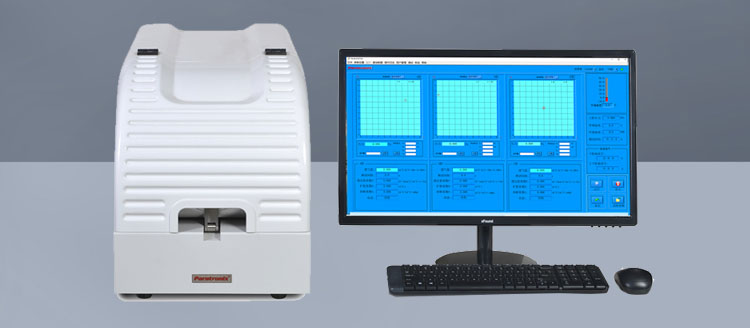
ASTM D1709 Method A and Method B measure film impact resistance under different falling-dart conditions. Method A uses a smaller dart head and a lower drop height; Method B uses a larger head and a higher drop height. A result obtained by one method should not be treated as directly interchangeable with a result obtained by the other.
The choice is governed first by the applicable material specification or agreement. Where no method is prescribed, the expected impact-failure mass, the permitted operating range, and the intended comparison determine which setup is appropriate. Both methods estimate the mass of a dart that causes failure in 50% of specimens under the specified conditions; neither is a direct prediction of package survival in distribution.
The differences that matter
The dimensions and ranges above describe the principal differences in ASTM D1709. The applicable edition of the standard should be consulted for tolerances, apparatus details, specimen requirements, calculations, and reporting provisions. A customer specification may also identify a particular edition or impose additional requirements.
The overlapping mass ranges do not make the methods equivalent. At the same falling mass, Method B starts from a greater height and uses a broader striking surface. The film therefore experiences a different impact condition. The 50% failure mass is an endpoint of that specific test setup, not a material constant that can be transferred between setups using a simple conversion factor.
What the result actually represents
In a falling-dart test, a specimen is held across an opening and struck by a freely falling dart. Testing at selected masses establishes how failure changes as the dart mass changes. The result is expressed as the mass at which 50% of specimens would be expected to fail under the test conditions.
This is a statistical endpoint, not the mass that breaks every specimen or the maximum load a package can withstand. At or near the reported mass, some specimens can fail and others can pass. That behavior is inherent in the measurement and should not automatically be interpreted as an equipment malfunction or an inconsistent material.
Nor does the result describe all forms of impact damage. The dart has a defined head geometry, and the film is clamped in a defined manner. A sharp edge, a filled pouch dropping onto a corner, or repeated abrasion in a shipping container can impose different stresses. A film with a higher D1709 result under the same method is more resistant to failure in that test, but the result alone does not establish which finished package will perform better in every handling scenario.
It is also important to keep mass and energy distinct. The drop height influences the energy available before impact, but the reported D1709 endpoint is normally an impact-failure mass. Converting that mass into an estimated energy does not remove the effects of head size, deformation, friction, or other test conditions. It therefore does not create a valid universal conversion between Method A and Method B results.
Choosing the method without undermining comparability
When a drawing, purchase specification, test plan, or customer requirement names Method A or Method B, use that method. Selecting a different method because the instrument is already set up for it changes the test condition and can invalidate a comparison with the agreed acceptance limit.
If no method is specified, start with the anticipated failure mass and the method’s applicable range. Method A covers the lower end of the listed ranges and is a practical starting point when relatively low failure masses are expected. Method B has a higher minimum range and a different, higher-energy configuration. The choice must still be confirmed against the material, equipment, and the edition of the standard in use.
A result outside the applicable range should not be treated as a valid in-range measurement merely because the apparatus can physically accommodate the required weights. If preliminary trials indicate that the endpoint is outside the selected method’s range, review the standard and the governing specification before changing method or reporting the outcome. Depending on the circumstances, the appropriate action may be to report a limit rather than an unsupported exact value.
Changing methods during a qualification or production-control program also breaks the continuity of the data. Suppose an existing release limit was established from Method A results and a later test is run using Method B. Even if both reports show grams, the new number cannot simply be checked against the old limit. A method change calls for an agreed transition, including new acceptance criteria or a documented evaluation of how decisions will be made under the new setup. A material-specific comparison may inform that evaluation, but it is not a general conversion.
Staircase testing and the 50% failure endpoint
ASTM D1709 describes approaches for determining the failure endpoint, including the staircase procedure. In a staircase sequence, the mass for the next specimen is adjusted according to whether the preceding specimen failed or did not fail. The sequence concentrates observations around the transition between passing and failing behavior.
The mass increment matters. If it is too large relative to the spread of failure behavior, the estimate can be coarse; an unnecessarily small increment can make it harder to complete an efficient sequence. The standard’s instructions govern the procedure and calculation. A laboratory should document the increment and sequence rather than report only the final value.
Starting mass also affects the efficiency of the test. An estimate based on relevant prior data or preliminary trials can bring the sequence toward the failure region sooner. Starting far above or below that region can consume specimens before the test begins to characterize the transition. Preliminary observations should be identified as such and should not be mixed into the formal calculation unless the selected procedure permits it.
The definition of failure must be applied consistently. An operator should inspect the struck specimen according to the standard’s criteria and the applicable procedure, rather than deciding that any visible mark is automatically a failure. A dent, whitening, stretching, and a through-break do not necessarily represent the same outcome. Where damage is difficult to classify, the method of inspection and the decision should be recorded so that borderline results can be reviewed.
Why setup and specimen control affect the answer
The dart and height distinguish the two methods, but they are not the only variables that influence the outcome. The result depends on how the specimen is prepared, conditioned, clamped, struck, and classified. These details matter especially when a result is close to a release limit.
Specimen condition. Wrinkles, folds, surface contamination, and damage introduced during cutting or handling can alter the response at impact. Film thickness and structure also matter. If a roll varies across its width or along its length, the sampling plan determines which variation is represented in the result. Comparing lots is more meaningful when specimens are taken using a consistent, documented approach.
Conditioning and environment. Temperature, humidity, and conditioning time can affect the behavior of polymer films. Use the conditioning and test conditions required by the applicable standard or specification, and record departures. Two numerical results should not be interpreted as evidence of a formulation change until relevant environmental and specimen differences have been considered.
Clamping. The specimen must be held as required without unintended slipping or damage at the clamp. A loose specimen can move differently during impact; excessive or uneven clamping can introduce a different constraint or damage the material. Clean, properly maintained contact surfaces and a repeatable clamping procedure reduce an avoidable source of variation.
Dart assembly and release. Confirm the correct head, total falling mass, drop height, and release arrangement for the chosen method. The falling mass includes the relevant components of the dart assembly, not just the added weights. A damaged striking surface, incorrect assembly, or release that interferes with free fall can change the test condition. Verification and maintenance records are therefore part of the evidence supporting a result.
Specimen orientation and construction. Films may respond differently depending on their structure and processing history. For multilayer or asymmetric material, record which surface faced the dart when the specification requires it or when that orientation is important to the comparison. Maintain the same orientation across a test series unless the purpose is to evaluate the effect of changing it.
Using a falling dart impact tester correctly
A Falling Dart Impact Tester can support either method only if its configuration meets the requirements for that method. The presence of a compatible-looking dart is not enough: the head dimensions, drop height, specimen holder, release mechanism, available masses, and other apparatus details must match the selected procedure and edition.
Before a test series, verify the installed head and height against the method identified on the work instruction. Check that the specimen holder is clean and secure, the dart can fall without obstruction, and the mass identification is reliable. Where the instrument supports both methods, clear configuration identification helps prevent a Method B height or head from being used under a Method A label.
Impact testing also requires practical controls around the moving dart. Keep hands clear of the fall path, secure the test specimen before release, and follow the equipment manufacturer’s instructions for guarding and resetting. Any guard or accessory used for safety must not interfere with the fall or otherwise alter the specified test conditions.
Making reports useful for release decisions
A report that states only “dart impact: 500 g” leaves too much unresolved. At minimum, the reader needs the standard and edition, Method A or B, the reported endpoint and units, and enough specimen identification to connect the result to the material tested. The report should also contain the additional information required by the applicable edition and procedure, including relevant conditioning, test conditions, and deviations.
For internal review, retain the underlying observations: specimen outcomes, masses used, calculation or instrument output, and any unusual events. These records help distinguish a genuine material shift from a configuration error or a calculation problem. They also make it possible to investigate a result that sits close to a specification limit without relying on the final rounded number alone.
When two laboratories disagree, compare the test conditions before attributing the difference to material quality. Confirm that both used the same method and standard edition, then check sampling, specimen orientation, conditioning, apparatus setup, failure classification, and calculation. If the samples came from different positions in a roll or from different production lots, that distinction belongs in the investigation as well.
A specification limit is meaningful only alongside its test method and conditions. Keeping those details attached to the reported mass preserves the value of ASTM D1709 as a repeatable quality-control measurement, while avoiding the mistaken conclusion that Method A and Method B produce interchangeable measures of package safety.
Leave A Reply
Search by Keywords