




Recent Posts
 How does an ASTM D3985 oxygen permeability tester work?Nov 09, 2026
 What does ASTM F1927 require for oxygen sensor calibration?Nov 09, 2026
 How does an ASTM F1927 oxygen permeability tester work?Nov 09, 2026
 Can an ISO 15105-2 oxygen tester measure coated films?Nov 07, 2026
 How to choose an ASTM F1307 tester for low oxygen transmission ratesNov 07, 2026
How does an ASTM D3985 oxygen permeability tester work?
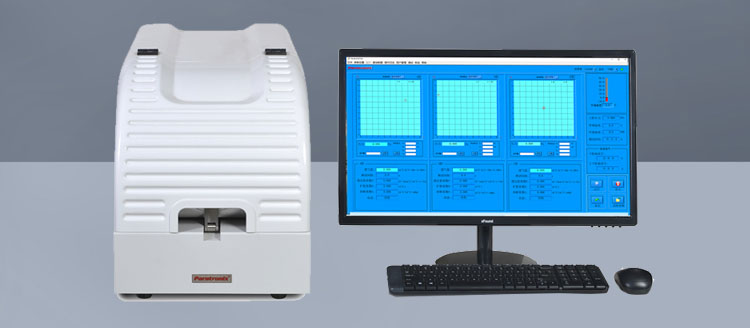
How can manufacturers determine whether a packaging material provides an effective barrier against oxygen? An ASTM D3985 oxygen permeability tester measures the oxygen transmission rate of plastic films and sheeting using a coulometric sensor. By separating oxygen-rich and carrier-gas chambers with a test specimen, the instrument detects oxygen that permeates through the material under controlled conditions. Understanding this process helps researchers and quality teams evaluate barrier performance and select suitable materials for sensitive products.
The result is more useful than a simple description such as “high barrier.” It gives a measurable rate under stated conditions. But that qualification matters: oxygen transmission changes with the material, temperature, humidity and test conditions. A number without those details can be easy to misinterpret.
The measurement principle: oxygen crossing a film
ASTM D3985 describes a coulometric-sensor method for measuring oxygen gas transmission through plastic film and sheeting. In a typical test cell, the specimen is sealed between two chambers. Oxygen or an oxygen-containing test gas is present on one side, while an oxygen-free carrier gas flows on the other.
The difference in oxygen partial pressure across the specimen provides the driving force for permeation. Oxygen molecules dissolve into the material, diffuse through it and emerge on the carrier-gas side. The carrier gas then transports them to the coulometric sensor.
At the sensor, oxygen participates in an electrochemical reaction that generates an electrical signal. The signal is related to the amount of oxygen reaching the detector, allowing the instrument to calculate the transmission rate through the exposed specimen area. The tester does not have to identify visible holes or track individual molecules; it measures the oxygen arriving downstream.
A useful distinction is that transmission through a continuous film is not the same thing as leakage through a defective seal. Both can admit oxygen into a package, but they are different mechanisms and may require different tests.
What happens during a test?
The procedure starts before the specimen enters the cell. A sample needs to be representative of the material being assessed, free from unintended damage and prepared according to the applicable procedure. Wrinkles, contamination or scratches can distort the result, particularly when the material has a very low oxygen transmission rate.
The operator mounts the film in the test cell and seals it around a defined exposed area. The carrier-gas side is purged to remove residual oxygen, and the instrument establishes the specified temperature and other test conditions. The oxygen-containing test gas is then applied to the opposite side of the specimen.
The sensor response generally changes with time. Oxygen already present in the system must be cleared, and permeation through the material must develop toward a stable rate. Depending on the material and conditions, this stabilization can be a significant part of the test. Ending a measurement solely because a convenient amount of time has passed risks reporting a transient value rather than a meaningful steady-state result.
Once the specified acceptance criteria are met, the instrument reports an oxygen transmission rate, often abbreviated as OTR. Laboratories should follow the relevant edition of ASTM D3985 and the instrument procedure for specimen preparation, conditioning, calibration, measurement and reporting. The standard edition and any agreed deviations should be clear when results are shared.
Reading an OTR result without overinterpreting it
OTR describes the volume of oxygen passing through a specified area of material over a specified time under stated test conditions. It is commonly expressed in units such as cm³/(m²·day). A lower OTR indicates less oxygen transmission through the tested material under those conditions.
That does not automatically mean one package will give a longer shelf life than another. A package has seals, a particular surface area, headspace and a product with its own oxygen sensitivity. Residual oxygen inside the package and oxygen entering through closures or seals can matter alongside transmission through the film.
For a useful comparison, look beyond the headline number:
- Temperature: Permeation depends on temperature. Results obtained at different temperatures should not be treated as directly equivalent.
- Humidity: Moisture can affect some barrier materials substantially. Check the humidity on the relevant sides of the specimen and whether the tester can control and report it for the intended method.
- Oxygen partial pressure: The test-gas composition and pressure difference influence the driving force for permeation.
- Thickness and structure: Compare the actual tested samples, including layer construction where known. A thinner film and a thicker film of the same nominal material may not have the same OTR.
- Reporting conditions: Confirm the units, exposed area, conditioning, test method and whether the result represents an individual specimen or a summary of replicates.
Thickness-normalized permeability values can be useful when comparing suitable homogeneous materials, but they should not be applied mechanically to every multilayer structure. In a laminate, the composition and integrity of a thin barrier layer may matter more than the total thickness alone.
Why stable conditions matter so much for high-barrier materials
A sensor may be sensitive enough to detect very small oxygen quantities, but the instrument still has to distinguish oxygen passing through the specimen from oxygen entering elsewhere. For a high-barrier film, even a small leak around a seal or a residual background signal can represent a meaningful share of the reading.
This is why a low detection limit on a specification sheet is only part of the story. Gas purity, cell sealing, background checks, temperature stability and maintenance all affect whether a laboratory can make a credible measurement near the lower end of its intended range. The relevant question is not just “How low can the sensor read?” but “Can the complete system measure this sample reliably under our test conditions?”
A blank or other system check, as specified by the applicable procedure and instrument instructions, can help identify background contributions. A leak check is also valuable when a result seems unexpectedly high or fails to stabilize. Repeating the measurement with a new specimen can help distinguish a sample issue from a mounting or system issue, although repeated agreement alone does not prove the absence of systematic error.
Film testing is not the same as testing a finished package
A flat-film test is well suited to material development, incoming material comparison and monitoring changes in a film structure. It isolates a defined area of material and makes it easier to investigate whether a formulation or process change has affected oxygen transmission.
A finished pouch, tray or container introduces additional variables. Sealing conditions, closure design, forming stresses and local defects may all influence oxygen ingress. A film result can inform a package assessment, but it cannot by itself verify the barrier performance of the assembled pack.
For example, if two film samples have similar OTR values but finished pouches behave differently, the next investigation might focus on seal integrity or package construction rather than assuming the material test was wrong. Conversely, a sound seal does not compensate for a film whose oxygen transmission is unsuitable for the product and intended storage period.
Whole-package oxygen transmission and package integrity tests may use different standards, fixtures and measurement approaches. ASTM D3985 should not be presented as a blanket method for every finished-package geometry. The appropriate method depends on what must be measured and on the sample itself.
Comparing instruments and test methods
Coulometric detection is one way to measure oxygen transmission. Other instruments may use different sensing principles or follow different test methods. Results can be comparable in some circumstances, but agreement should not be assumed simply because both reports say “OTR.” Differences in gas conditions, humidity control, specimen preparation, calculation and reporting can affect the comparison.
When reviewing an ASTM D3985 oxygen permeability tester, begin with the expected samples rather than the longest feature list. A laboratory screening ordinary plastic films may have different requirements from a team measuring very high-barrier multilayer materials. In both cases, the instrument’s stated measurement range should cover the anticipated OTR at the actual exposed area and test conditions—not just under an unspecified demonstration condition.
It is also worth checking how temperature and humidity are controlled, what gases and supplies are required, how calibration and background checks are performed, and what records the software retains. For routine quality work, practical questions about seals, sensors, spare parts and operator training can be as consequential as sensitivity. For development work, flexibility in conditions and clear access to the measurement history may be more valuable.
Paratronix Instruments Co., Ltd. develops and supplies packaging testing instruments for applications including plastic packaging, pharmaceutical packaging and high-barrier materials. In an instrument discussion, the most productive starting point is a sample description: material structure, expected barrier level, required test conditions and whether the objective is material comparison or finished-package assessment.
When a result does not look right
An unexpectedly high OTR is not always evidence that the film formulation has failed. Check the specimen for damage and creases, confirm that it was mounted correctly, and review the cell seal and gas connections. Then examine the background, test conditions and calibration status. A damaged barrier layer in an otherwise intact-looking laminate is another possibility, so sampling location and handling deserve attention.
An unusually low or unstable result deserves scrutiny too. The sample may not have reached the required measurement state, the wrong test conditions may have been selected, or the result may be approaching the practical measurement capability of the system. The instrument’s time-dependent signal and diagnostic checks are more informative than the final number alone.
Before using a result to accept a material or compare suppliers, agree on the test conditions, specimen selection and reporting format. If the decision concerns product protection rather than film quality alone, use the film measurement as one input and determine whether package-level testing is also needed.
Leave A Reply
Search by Keywords