




Recent Posts
 How to choose an ASTM F1307 tester for low oxygen transmission ratesNov 07, 2026
 What does an ASTM F1307 oxygen permeability tester measure?Nov 07, 2026
 How does a bottle bottom thickness tester measure the base?Nov 07, 2026
 What Does a Bottle Wall Thickness Tester Measure in PET Packaging?Nov 07, 2026
 Can an ISO 15105-2 oxygen tester measure high-barrier films?Nov 06, 2026
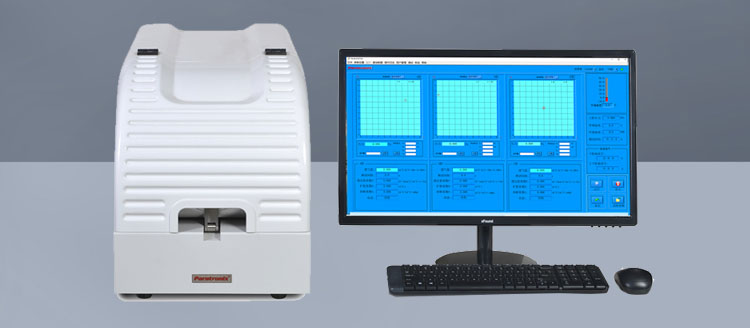

Selecting an ASTM F1307 oxygen permeability tester for low oxygen transmission rates requires more than comparing detection limits. Measurement sensitivity, test conditions, specimen preparation, calibration, and repeatability also determine whether results are useful.
For technical evaluators, the strongest choice is an instrument that can measure representative finished packages at the expected transmission rate, under relevant conditions, with documented uncertainty and repeatable results.
Start With the Package and the Decision You Need to Make
ASTM F1307 addresses oxygen transmission through dry packages using a coulometric sensor. It is particularly relevant when the finished package, including its seals and closures, is the object of evaluation.
That distinction matters because a low-transmission film does not guarantee an equally effective package. Oxygen can enter through seals, closure interfaces, folds, or other features introduced during manufacturing.
Before comparing instruments, define whether the laboratory needs to screen suppliers, compare package designs, investigate production changes, or assess packages against an internal acceptance limit.
Each purpose places different demands on measurement performance. Ranking two similar high-barrier packages, for example, may require better repeatability than distinguishing a clearly defective package from an acceptable one.
List representative package formats, dimensions, materials, closure designs, and expected oxygen transmission rates. Include the lowest rate that must be measured and the differences between samples that must be distinguished.
Also identify the reporting unit required by the specification. A package result expressed as volume of oxygen per package per day is not interchangeable with a film result normalized by area.
How Low Does the Tester Need to Measure?
The most important specification is the instrument's demonstrated performance at the oxygen transmission rate relevant to your packages, not simply the smallest number in a brochure.
Ask suppliers to distinguish the sensor detection limit, the instrument's stated measurement range, and the lowest rate at which complete packages can be measured reliably.
These values may be established under different conditions. A sensor-level limit does not necessarily account for fixture leakage, background oxygen, package mounting, or variation between replicate specimens.
Request evidence at a rate below your intended acceptance limit. The measurement margin should be large enough that uncertainty does not dominate the pass-or-fail decision.
For example, if a package limit is 0.005 cm³/package/day, an instrument that only claims measurement down to 0.005 cm³/package/day provides little decision margin.
A lower claimed range may help, but confirm it with repeatability, blank measurements, and uncertainty data using a comparable package and the same reporting conditions.
Do not apply a universal safety factor without examining the method and decision rule. The necessary margin depends on measurement uncertainty, manufacturing variability, and the consequences of a wrong result.
Can the System Separate Package Transmission From Background Leakage?
At very low transmission rates, small oxygen contributions from tubing, connections, fixtures, or seals can be significant relative to the package signal.
Ask how the instrument measures system background and how often operators should verify it. Request the blank procedure, typical blank values, and criteria for investigating an elevated background.
Clarify whether the reported result includes a background correction. If it does, ask how that correction is determined and how its variability contributes to measurement uncertainty.
Fixture design deserves particular attention. A mounting approach that is suitable for one container may leak or distort another, especially when closures, flexible walls, or irregular geometries are involved.
Evaluate whether the test connection preserves the package features you need to assess. Modifying a closure or sealing over a critical area can change the measurement question.
During a demonstration, ask the supplier to show both a system blank and replicate results for your package. A low blank alone does not establish good package-level performance.
Do the Test Conditions Match the Intended Application?
Oxygen transmission depends on test conditions as well as package construction. Temperature, humidity, oxygen concentration, and pressure conditions can all affect results or their interpretation.
Specify the conditions required by your internal method, customer agreement, or applicable standard before requesting quotations. Confirm the relevant edition and any contractual requirements with your quality team.
Check the controlled temperature range, stability, and location of the temperature sensor. For sensitive comparisons, ask whether the stated stability applies around the package or only inside the chamber.
Humidity requires equally careful discussion. Some barrier materials respond strongly to moisture, while a finished package may have different conditions on its inside and outside surfaces.
Ask which humidity conditions the system can control or maintain on each side of the package, and whether those conditions are monitored throughout the test.
Confirm the oxygen challenge concentration and carrier-gas requirements for the intended procedure. Also ask how pressure differences are controlled so they do not distort or damage flexible specimens.
Results obtained under different conditions should not be compared without justification. Require reports to record the actual settings and any deviations, rather than only the instrument's nominal capabilities.
Will the Package Fit Without Compromising the Test?
A chamber's advertised maximum dimensions are only a starting point. Consider package shape, available space for connections, and whether the specimen can be mounted in its normal configuration.
For bottles, trays, pouches, and other formats, review the fixture drawings and request a demonstration with actual samples. Include the largest, smallest, and most difficult formats.
Check whether the instrument measures one package at a time or supports multiple independent specimens. Confirm that parallel positions have equivalent control, calibration, and background performance.
Ask how the package is prepared, connected, purged, and checked for leaks. Preparation must be consistent between operators and should not create unintended transmission paths.
Where a port or adapter is required, establish how it is attached and validated. Any contribution from the connection should be understood at the intended measurement level.
For sealed packages, ask how the procedure distinguishes package transmission from defects introduced during preparation. Document specimen handling, conditioning, and rejection criteria in the laboratory method.
What Calibration and Verification Evidence Should You Request?
A credible supplier should explain how the coulometric sensor is calibrated, what reference materials or standards are used, and how traceability is documented.
Request the calibration procedure, recommended intervals, acceptance criteria, and records provided after calibration. Determine whether calibration covers the range relevant to your low-transmission packages.
Calibration and verification are related but different. Calibration establishes the instrument's response; routine checks help demonstrate that performance remains acceptable between calibration events.
Ask how the laboratory can verify low-end performance using appropriate reference artifacts, known inputs, or other documented checks. Confirm whether any required accessories are included.
Reference films can be useful for instrument checks where the system and procedure support them, but they do not automatically validate every package fixture or mounting configuration.
Request an uncertainty budget or a clear explanation of the major contributors. These can include calibration, background correction, environmental control, flow measurement, and specimen preparation.
For acceptance testing, agree on a decision rule before routine use. It should state how measurement uncertainty is considered when a result is close to the specification limit.
How Much Repeatability Is Enough for Your Samples?
Repeatability indicates how closely results agree under specified conditions. For low oxygen transmission rates, absolute variation may be more informative than percentage variation alone.
Ask suppliers to report the number of replicates, mean result, standard deviation, test conditions, and package type behind any repeatability claim.
Also distinguish repeated measurements of the same mounted specimen from measurements of independently prepared packages. The latter includes preparation and package-to-package variation relevant to routine work.
Suppose two designs average 0.010 and 0.012 cm³/package/day. If routine variation is comparable to that difference, the apparent ranking may not support a reliable engineering decision.
Evaluate the difference you need to detect against repeatability data from representative samples. A suitable study design may require multiple packages, operators, days, or instruments.
When comparing laboratories, document specimen selection and test conditions first. Differences in preparation or environmental exposure can be mistaken for instrument disagreement.
How Long Will Low-Rate Testing Take?
Low-transmission packages can require substantial conditioning, purging, and measurement time. A short sensor response specification does not necessarily represent the time to a defensible package result.
Ask the supplier to separate preparation time, conditioning time, purge time, stabilization time, measurement time, and report generation in its throughput estimate.
Confirm how the system determines that a result is ready. A fixed test duration may be convenient, but it should be justified for the package and target rate.
For high-barrier specimens, review the measured signal over time and the stability criteria used to end the test. Ask how the software flags drift or unstable readings.
Estimate capacity using actual package mix and operator availability. Include blanks, verification checks, repeat tests, and maintenance when calculating the number of samples per week.
Multiple stations may improve throughput, but only if each station meets the required sensitivity and environmental conditions. Request station-specific performance data rather than assuming all channels are equivalent.
Which Software and Service Features Matter in Routine Use?
For technical evaluations, the software should make it easy to review raw or time-series data, test conditions, calculation settings, and final results.
Check whether reports identify the specimen, operator, instrument, calibration status, test method, units, and any deviations. Exportable data can support independent review and long-term comparisons.
Where the laboratory operates under quality-system or regulatory controls, assess user permissions, audit trails, data retention, and validation support against your organization's actual requirements.
Do not assume that a software feature alone establishes compliance. Confirm the documented configuration, procedures, and responsibilities needed for your intended use.
Service capability also affects measurement confidence. Ask about installation qualification, operator training, preventive maintenance, sensor replacement, spare parts, and response times in your region.
Compare total ownership cost over the expected service life, including gases, consumables, fixtures, calibration, software support, and the labor needed for preparation and verification.
How to Compare Suppliers Using Your Own Packages
A written evaluation protocol makes competing instruments easier to compare. Give each supplier the same package formats, target conditions, expected rate range, and reporting requirements.
Request a practical demonstration covering a blank, routine verification, sample mounting, and independently prepared replicate packages. Include a package near your lowest expected transmission rate.
Ask for the complete test record, not just the final number. Review stabilization behavior, test duration, background values, calculations, environmental conditions, and any excluded results.
Discuss unexpected results before drawing conclusions. A difference may come from the packages, preparation, test conditions, or instrument performance, and each possibility needs evidence.
Use an agreed scorecard covering low-end capability, uncertainty, repeatability, package compatibility, throughput, data integrity, service, and total cost. Weight each criterion according to laboratory priorities.
Manufacturers such as Paratronix Instruments, which supplies packaging testing instruments, can be asked to assess the proposed application and provide model-specific evidence against this protocol.
Before purchasing, confirm acceptance criteria in writing. Include the package and conditions used for installation verification, required documentation, training scope, and the process for resolving performance discrepancies.
Final Assessment
The right ASTM F1307 oxygen permeability tester is one that demonstrates reliable package-level results at your target rate, under the conditions your laboratory actually needs.
Prioritize documented low-end performance, controlled background, representative repeatability, appropriate fixtures, and traceable verification. Then compare throughput, data handling, service, and ownership cost.
A structured trial with your own packages turns published specifications into practical evidence and gives your team a stronger basis for selecting an instrument.
Leave A Reply
Search by Keywords