




Recent Posts
 Can an ISO 15105-2 oxygen tester measure high-barrier films?Nov 06, 2026
 How to check an oxygen tester against ISO 15105-2 requirementsNov 06, 2026
 How to prepare film samples for ISO 15105-2 oxygen testingNov 06, 2026
 Choosing an ISO 15105-2 oxygen tester by measurement rangeNov 06, 2026
 How does an ISO 15105-2 oxygen permeability tester work?Nov 06, 2026
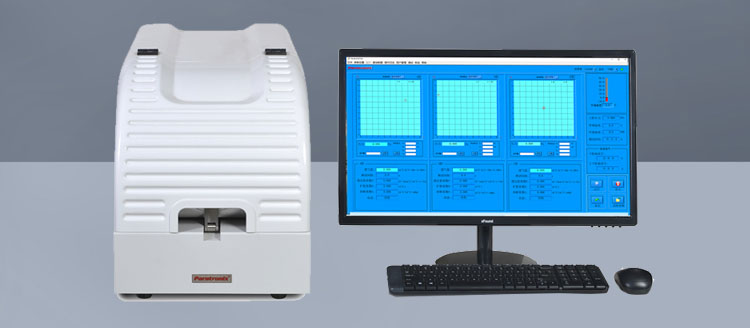
Yes, an ISO 15105-2 oxygen permeability tester can measure some high-barrier films, but compliance with the standard alone does not establish that a particular instrument is sensitive enough. The expected oxygen transmission rate (OTR), test conditions, effective specimen area and required decision limit all matter.
For a purchasing decision, the practical question is not simply whether the tester produces an OTR reading. It is whether the complete test system can distinguish an acceptable film from an unacceptable one, with enough confidence, under the conditions specified for the material.
What ISO 15105-2 tells you and what it does not
ISO 15105-2 describes an equal-pressure method for determining the gas transmission rate of plastic films and sheeting. In an oxygen test, the specimen separates a test-gas side from a carrier-gas side. Oxygen passing through the film is transported to a detector, which measures the transmitted gas. The result is expressed as a transmission rate for the exposed area under stated conditions.
The method is relevant to oxygen-barrier evaluation, including multilayer packaging materials, but the standard designation does not give every instrument the same performance. Detector sensitivity, background oxygen, leakage, chamber design and environmental control vary between systems. A tester may be suitable for moderately resistant films yet struggle to produce a useful result for a much tighter barrier.
The standard also does not define a universal pass or fail limit for a particular package. That limit comes from the material specification, product requirements or an agreed test method. A result is meaningful only when its test conditions and units accompany it.
Start with the decision limit, not the lowest advertised number
Before comparing instruments, identify the OTR range you expect to encounter and the specification limit you need to enforce. Include both the best-performing film and the material closest to the acceptance boundary. The instrument needs to provide reliable information across that working range, not merely display a value below the limit.
For example, a system might indicate that a sample is below its reporting limit. That can support acceptance only if the reporting limit, together with the measurement uncertainty and the site’s decision rule, is suitable for the specification. If the reporting limit is too close to the maximum permitted OTR, the result may not give enough confidence to separate conforming and nonconforming material.
Detection limit, reporting limit and measurement range are not interchangeable. A detector may register a small signal without measuring it with the precision required for routine release decisions. Ask the supplier how the claimed lower range was established and what repeatability, background and uncertainty apply near the limit you intend to use.
Check the units carefully as well. OTR is commonly reported as a volume of oxygen transmitted per unit area and time, but reports may use different area, time or pressure conventions. A comparison is only valid after the units, oxygen partial-pressure difference, temperature and humidity have been aligned.
Why high-barrier measurements are more demanding
As film barrier performance improves, less oxygen reaches the detector. At that point, oxygen from a small leak or residual gas in the system can become significant compared with the sample signal. A stable reading is not automatically the film’s true transmission rate; it can also reflect a stable background.
Several parts of the test system deserve attention:
- Sealing and chamber integrity: The specimen must be clamped without creating a path around its edge or damaging the test area. A seal problem can make a good film appear to have a high OTR.
- Carrier gas and gas handling: Oxygen in the carrier gas, fittings or lines can contribute to the measured signal. Gas quality and the condition of the flow path matter most when the film transmits very little oxygen.
- Background and blank checks: A blank or other appropriate system check helps establish the contribution from the equipment. Its interpretation depends on the procedure and the type of barrier used for the check.
- Conditioning and equilibration: The sample and test system need enough time to reach the specified conditions and an appropriate steady state. Ending the test too early can produce a result that does not represent steady-state transmission.
- Detector performance: Sensitivity must be supported by stability, calibration and suitable performance at low signals. A fine display resolution does not prove low-level accuracy.
These factors are connected. A more sensitive detector cannot compensate for a leaking cell, and a well-sealed system cannot make an unsuitable detector accurate. When evaluating a tester, ask for evidence of the complete system’s performance rather than a detector specification in isolation.
Test conditions can change the purchasing decision
Oxygen transmission depends on the material and the test environment. Temperature affects how oxygen moves through a film, while humidity can change the barrier of moisture-sensitive layers. A result obtained under dry conditions may therefore not represent the same material under humid conditions.
Define the required temperature, relative humidity on each side of the specimen, test gas and carrier gas before comparing instruments. If humidity control is needed, examine how it is generated and monitored, and whether the claimed low-OTR performance applies under those conditions. A range quoted for dry testing should not automatically be treated as the usable range for a humid test.
Also establish the oxygen concentration and pressure conditions required by the method or specification. The driving force for transmission is related to the difference in oxygen partial pressure across the film, not simply the total pressure. Results from different oxygen concentrations or pressure conditions should not be compared as though they were identical.
For routine quality control, consistency can be as important as sensitivity. A laboratory may need to compare incoming film lots, investigate a supplier change or check material after storage. In each case, the value of the trend depends on keeping the method, specimen preparation and environmental conditions consistent.
Film thickness, test area and the numbers on the report
For a uniform material, thickness influences the measured transmission rate. Multilayer packaging films are more complicated: layer composition, thickness distribution, coatings and defects can all affect the result. Record the construction and thickness measurement approach alongside the OTR, particularly when comparing batches or suppliers.
Do not confuse oxygen transmission rate with oxygen permeability. OTR describes transmission through the tested specimen under stated conditions. A permeability value also accounts for thickness and the oxygen partial-pressure difference, subject to the assumptions and reporting conventions of the method. For complex multilayer films, converting between the two does not remove uncertainty about construction or make unlike samples directly equivalent.
The exposed test area is another part of the measurement. A larger area can increase the amount of oxygen reaching the detector for a given OTR, potentially improving the signal. It does not automatically guarantee a lower reliable reporting limit: sealing, leakage and background across the complete cell still matter. Use the area and configuration for which the supplier states performance, and apply the correct area when calculating the result.
When a film result is not enough
A flat film test answers a material question: how much oxygen passes through the exposed specimen under the defined conditions. It does not, by itself, establish the oxygen ingress of a finished package.
Seals, closures, folds, pinholes and formed areas can become important pathways. Converting a film into a pouch, tray or other package can also change the material locally. Where the safety or shelf-life decision concerns the complete package, a film OTR result may need to be combined with appropriate package integrity or package-level testing.
This distinction matters when assigning acceptance criteria. A film can meet its material specification while a finished package fails because of a seal defect. Conversely, a package-level result does not necessarily identify which component caused an elevated ingress. The two approaches answer related but different questions.
How to compare instruments for a real specification
Prepare a short test brief before requesting quotations or demonstrations. It should state the film construction, approximate thickness, expected OTR range, acceptance limit, required environmental conditions and sample format. Include any applicable internal method or customer requirement. This gives suppliers a common basis for their responses.
Then ask each supplier to address the following points:
- Working range: What is the demonstrated reporting range for the complete system under the requested test conditions? How does it relate to the specification limit?
- Low-level performance: What repeatability, background or uncertainty information is available near the intended decision point? How are blank and leak checks performed?
- Sample suitability: Can the cell accommodate the film format and seal the material without damaging it? Are special fixtures needed for the construction?
- Environmental control: Can the required temperature and humidity be maintained on the appropriate sides of the specimen throughout the test?
- Throughput: How long does a representative high-barrier sample take to reach the reporting endpoint, including preparation, purging and conditioning? A fast detector response alone does not establish total test time.
- Routine operation: What gases, reference materials, calibration, maintenance and operator checks are needed to keep results dependable?
- Data and traceability: Does the report retain the conditions, sample identification, calculation basis and test history needed for review and lot release?
Where possible, use representative samples in an evaluation and agree in advance on the test conditions, endpoint and reporting format. Include material near the acceptance limit, not only a sample expected to be very easy or very difficult to measure. Replicate specimens can help reveal variation from both the material and the test process; they should not be treated as proof of instrument accuracy on their own.
Comparing results between laboratories
Different results do not immediately mean that one instrument is faulty. Laboratories may use different specimen locations, conditioning periods, humidity settings, test gases, exposed areas or endpoints. One may report a value below its reporting limit while another reports a numerical estimate near its lower range.
Before disputing a result, compare the complete methods and reports. Check whether both laboratories tested equivalent material from the same batch and whether sample handling could have introduced creases or damage. Review calibration and system checks as well as the calculation and units. If the result drives release or rejection, agree on a decision rule that accounts for the method’s uncertainty and reporting limit.
For organizations evaluating equipment, Paratronix Instruments supplies packaging testing instruments and testing solutions for applications that include high-barrier materials. The appropriate next step is to match the proposed configuration to the film, test conditions and acceptance limit, then assess the system’s performance at the level where the quality decision will be made.
Leave A Reply
Search by Keywords