




Recent Posts
 Can an ISO 15105-2 oxygen tester measure high-barrier films?Nov 06, 2026
 How to check an oxygen tester against ISO 15105-2 requirementsNov 06, 2026
 How to prepare film samples for ISO 15105-2 oxygen testingNov 06, 2026
 Choosing an ISO 15105-2 oxygen tester by measurement rangeNov 06, 2026
 How does an ISO 15105-2 oxygen permeability tester work?Nov 06, 2026
Choosing an ISO 15105-2 Oxygen Tester by Measurement Range
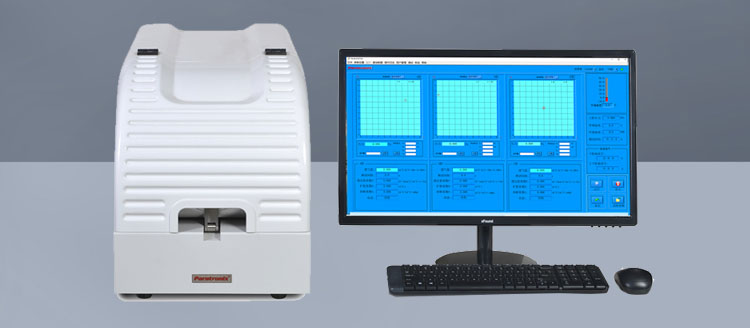
Selecting an ISO 15105-2 oxygen permeability tester requires more than comparing detection limits. The instrument’s measurement range must match the expected oxygen transmission rate of the material, from conventional plastic films to high-barrier pharmaceutical packaging. For technical evaluators, this means considering both the test method and the conditions under which performance is specified. This guide explains how to assess measurement range, identify application-specific requirements, and choose a tester suited to reliable permeability evaluation.
Start with the material, not the lowest number
A low detection limit can be useful when evaluating an exceptionally effective oxygen barrier. It is not, by itself, evidence that a tester will produce reliable results for every film in a laboratory’s workload. A system optimized for very low transmission may require long conditioning periods or careful background control. At the other end of the range, a highly permeable sample may exceed the useful capacity of a particular sensor or test configuration.
Begin by collecting the expected oxygen transmission rates, or OTRs, for the materials that will actually be tested. Supplier data sheets, previous laboratory results and product specifications can provide starting points. Record the associated temperature, relative humidity, pressure conditions, specimen construction and test method alongside each value. A number without those conditions is a weak basis for equipment selection.
Separate routine samples from occasional development projects. A laboratory testing a narrow family of flexible laminates has a different range requirement from one that expects to compare ordinary polymer films with coated high-barrier structures. If the expected values span a wide interval, ask whether one configuration covers that interval at the required precision, or whether different test configurations or complementary equipment would be more practical.
What the standard tells you—and what the specification must add
ISO 15105-2 describes an equal-pressure method for determining gas transmission through plastic film and sheeting. It covers oxygen measurement using an appropriate sensor, but a reference to the standard does not establish that every instrument configuration is suitable for every material or reporting requirement. Confirm the applicable edition and the exact procedure required by your laboratory, customer or specification owner.
When evaluating a claimed ISO 15105-2 oxygen permeability tester, ask the manufacturer to identify the measurement principle, sensor type and test arrangement. Then check whether the stated range applies to oxygen specifically, to the sample form being purchased, and to the intended temperature and humidity conditions. A range quoted under one set of conditions should not automatically be treated as a guarantee under another.
Also distinguish a method claim from evidence of performance. The relevant question is not simply whether the instrument can run a standard-based test, but whether the complete system can measure your samples at the levels and conditions needed for a defensible decision. Request a test report or demonstration using representative material whenever the decision depends on performance near a range limit.
Read the measurement range as a set of conditions
Instrument literature may list a detection limit, measurement range, resolution and repeatability close together. These terms answer different questions. Detection limit concerns the smallest signal that can be distinguished from background under defined conditions. Resolution is the smallest displayed or reported increment. Neither alone tells you how much confidence to place in a result close to the lower limit.
Repeatability, calibration uncertainty and blank behavior are more informative when comparing systems for high-barrier work. Ask whether repeatability is stated as an absolute value, a percentage of the reading or by another convention. A percentage alone can be misleading at very low transmission rates; an absolute figure without its test conditions can be equally difficult to interpret.
The upper end deserves scrutiny too. If an expected result is close to the stated maximum, determine how the instrument behaves as the sensor approaches its operating limit. Does the software flag an out-of-range result? Can the test configuration be changed, and if so, how does that affect the reported range and uncertainty? A wide advertised range is only useful if the relevant part of it is supported by the configuration and procedure you intend to use.
For routine decisions, leave room between expected results and the limits of the validated working range. There is no universal safety margin: the necessary allowance depends on material variability, measurement uncertainty and the acceptance limit being applied. A tester that can merely detect a borderline sample may not be adequate for deciding whether that sample passes.
Compare units before comparing instruments
OTR is commonly expressed as a volume of oxygen transmitted per unit area per unit time, with test conditions specified. Some published values also include a pressure term, while others report permeability normalized for thickness and pressure difference. These are related quantities, but they are not interchangeable labels.
Thickness normalization requires particular care with multilayer films, coatings and laminates. A simple conversion can obscure the contribution of individual layers, and nominal total thickness does not necessarily describe the effective barrier layer. Compare measured transmission rates for the actual structures whenever possible rather than relying on a normalized figure to predict laminate behavior.
Test area also matters. The sensor responds to the oxygen reaching it, while OTR is reported relative to the exposed specimen area. For the same material and conditions, changing the exposed area changes the total oxygen passing through the specimen and can affect the practical range of a configuration. Ask for range claims tied to the relevant test cell area, not just a generic sensor specification.
High-barrier packaging exposes the limits of the whole system
For high-barrier films used in pharmaceutical packaging, the measurable oxygen signal may be small enough that leakage, residual oxygen and environmental contamination become significant relative to the sample result. The question shifts from “Can the sensor display a low number?” to “Can the test assembly demonstrate a stable, acceptably low background?”
Examine the sealing arrangement, blank-test procedure, gas purity requirements and methods used to check for leaks. Ask how frequently seals require inspection or replacement and whether the operator can identify a poor specimen seal before accepting a result. A sensitive detector cannot correct for oxygen entering through an unintended path.
Equilibration is another practical constraint. Barrier materials can take time to reach a stable transmission rate after mounting or a change in conditions. The time needed depends on the material, test conditions and system. Ask how the software determines stability, whether the criterion can be reviewed, and what happens if a test is stopped before equilibrium. An attractive throughput figure is of little value if it assumes a shorter test than your materials require.
Humidity control deserves attention for moisture-sensitive structures. Confirm which side or sides of the specimen can be conditioned, how humidity is measured or controlled, and whether the stated instrument range still applies at the required settings. A result obtained under a convenient laboratory condition should not be substituted for a specified condition without assessing the effect on the material and the decision.
Build a comparison around real sample groups
A useful evaluation does not need a long scoring matrix. It needs a few representative materials and clear pass-or-fail questions. For each sample group, document the expected OTR, the lowest and highest plausible results, test conditions, specimen dimensions and the decision the result will support. Include materials near an acceptance limit, not only samples expected to be comfortably within specification.
For conventional plastic packaging films, the priority may be avoiding an upper-range limitation while maintaining sufficient precision to distinguish routine variation. For high-barrier laminates, background control and uncertainty near the lower end may dominate. A development laboratory handling both should check whether the proposed cell, sensor and operating procedure cover both groups without compromising either use.
If different suppliers provide demonstrations, give them the same sample information and ask for comparable conditions. Review individual results, not just an average. Note conditioning, test duration, the number of specimens, blank results and any excluded runs. Differences between instruments may reflect sample variability or procedure as well as hardware, so an unexplained numerical comparison is not enough.
Check what happens after installation
Measurement range is maintained through calibration, consumables, operating practice and service. Before specifying a system, ask how calibration is performed across the intended range, what reference materials or procedures are used, and what documentation is supplied. If traceability or an accredited calibration is required by your quality system, confirm its availability and scope rather than assuming it is included.
Clarify the supply and maintenance requirements for sensors, seals, gases and any humidity-control components. Check installation needs, training, software data export and the expected support response for your location. A system with suitable laboratory specifications may still be a poor fit if its consumables or service arrangements do not support the planned workload.
Finally, distinguish film testing from finished-package testing. A flat specimen result characterizes the tested material under defined conditions; it does not automatically account for package seals, closures, defects or the geometry of a finished pack. If the intended decision concerns package integrity or overall package performance, establish whether a separate test is needed.
Paratronix Instruments Co., Ltd. develops and supplies packaging testing instruments for applications including plastic films, high-barrier materials and pharmaceutical packaging. When discussing a measurement solution, the most useful starting point is a concise sample brief: expected OTR range, material construction, required conditions, relevant standard edition and the decision the result must support. Those details make it possible to evaluate a proposed configuration against the work it will actually perform, rather than against a single number in a brochure.
Leave A Reply
Search by Keywords