




Recent Posts
 Can an ISO 15105-2 oxygen tester measure high-barrier films?Nov 06, 2026
 How to check an oxygen tester against ISO 15105-2 requirementsNov 06, 2026
 How to prepare film samples for ISO 15105-2 oxygen testingNov 06, 2026
 Choosing an ISO 15105-2 oxygen tester by measurement rangeNov 06, 2026
 How does an ISO 15105-2 oxygen permeability tester work?Nov 06, 2026
How Does an ISO 15105-2 Oxygen Permeability Tester Work?
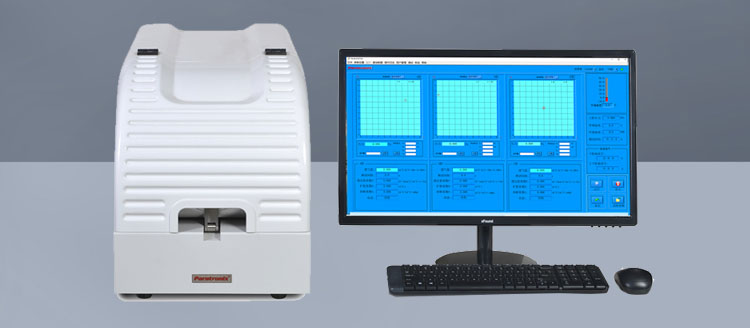
An ISO 15105-2 oxygen permeability tester helps manufacturers evaluate how effectively plastic films and other packaging materials resist oxygen transmission. Using an equal-pressure testing method, it measures the amount of oxygen passing through a material under controlled conditions. Understanding how this test works can help researchers and quality teams assess barrier performance, compare materials, and make informed decisions for pharmaceutical, food, and other oxygen-sensitive packaging applications.
The basic idea is straightforward: expose one side of a film to oxygen, keep the other side low in oxygen, and measure how much arrives there. The practical difficulty is that very little oxygen may pass through a good barrier film. Temperature, humidity, sealing, instrument sensitivity, and the time allowed for the reading to stabilize can all affect the result.
The principle: a concentration difference across the film
The specimen is clamped between two sides of a test cell. One side is exposed to a test gas containing oxygen; the other is swept by an oxygen-poor carrier gas that transports any permeated oxygen to a detector. The instrument converts the detector response into an oxygen transmission rate, or OTR, for the exposed test area.
“Equal pressure” does not mean there is no driving force. It means the total gas pressures on the two sides are kept approximately equal. The oxygen partial pressures are different, so oxygen can still move through the material from the higher-oxygen side to the lower-oxygen side. Keeping the pressure difference low also helps avoid forcing gas through small defects or distorting the specimen.
For many films, oxygen dissolves into the polymer on the high-concentration side, diffuses through it, and emerges on the other side. That behavior depends on the material’s chemistry and structure. In a multilayer laminate, the measured result reflects the complete construction, including its barrier layer, rather than the properties of one layer in isolation.
ISO 15105-2 describes an equal-pressure method for determining gas transmission through plastic film and sheeting. Oxygen is a common test gas, but readers should not assume that every equal-pressure instrument or every sensor arrangement automatically satisfies every requirement of the standard. The applicable edition, test configuration, and instrument capabilities need to be checked together.
What happens during a test?
A representative test begins with specimen selection and conditioning. The film needs to be representative of the material being assessed, with enough undamaged area to cover the test cell. Wrinkles, pinholes, contamination, or damage introduced during cutting can produce a result that says more about the specimen preparation than the barrier material.
The operator mounts the specimen so that it separates the two gas paths and seals around the defined test area. The instrument then establishes the selected temperature and gas conditions. Depending on the equipment and procedure, gases may also be conditioned to a specified relative humidity. The side of the film exposed to oxygen should be recorded, particularly for asymmetric constructions or tests intended to represent a specific packaging orientation.
The oxygen-rich gas contacts one surface while carrier gas flows across the opposite surface. Oxygen that passes through the film is carried to a sensor. Different instruments use different detection technologies, so calibration, carrier-gas requirements, and sensitivity should be evaluated against the actual instrument and the test method being used.
The reading is observed over time rather than taken immediately after the cell is closed. At the start, residual oxygen in the system and gas already present in the specimen can influence the signal. The operator waits for the behavior required by the applicable procedure before reporting a result. Thick or high-barrier materials can take longer to approach a stable transmission rate; a short test is not necessarily a completed test.
Finally, the instrument calculates OTR from the measured oxygen flow and exposed area, accounting for the relevant test conditions and instrument calibration. A useful report identifies the specimen, test area, temperature, humidity conditions, oxygen exposure, result units, and any departures from the chosen procedure. It should also make clear whether the value is for an individual specimen or a summary of replicate tests.
How to read an oxygen transmission result
OTR is commonly reported as the volume of oxygen transmitted per unit area per unit time, such as cm³/(m²·day), under stated conditions. A lower OTR generally indicates a better oxygen barrier for the particular specimen and conditions tested. It does not, by itself, establish that a package will protect every oxygen-sensitive product for a desired shelf life.
Comparisons become unreliable when the conditions differ. A film tested in dry conditions should not be compared casually with another tested at elevated humidity, especially when a moisture-sensitive barrier layer is involved. Temperature matters too: changing it can change the rate at which oxygen moves through the material.
Thickness is another common source of confusion. OTR describes transmission through the specimen as tested; permeability is a related material property that also accounts for thickness and the oxygen partial-pressure difference. Thickness normalization can help when comparing suitable uniform materials, but it should not be applied indiscriminately to a multilayer film. Adding thickness to a non-barrier layer is not equivalent to adding the same thickness to the functional barrier layer.
When comparing two supplier data sheets, check the units, test conditions, film thickness, and whether each value represents OTR or a normalized permeability figure. If any of those details are missing, the numbers may be useful as a starting point, but they are not yet a sound basis for ranking materials.
Why high-barrier films are harder to measure
For a high-barrier laminate, the oxygen reaching the detector may be close to the system’s background signal. A small leak at the cell seal, oxygen remaining in a gas line, or an unsuitable carrier-gas supply can then become a substantial part of the measured value. In that situation, simply reporting more decimal places does not make the measurement more accurate.
A sensible check is to establish whether the instrument’s validated measurement range covers the expected OTR under the chosen conditions. The laboratory should also understand its blank or background behavior, calibration procedure, and leak-check practices. These details matter just as much as the headline detection specification.
At the other end of the range, a relatively permeable film may produce a signal that exceeds the suitable range of a particular setup. The test configuration and sensor must fit the material. One instrument setting should not be assumed to work equally well for a conventional plastic film and an exceptionally high-barrier structure.
Unexpected variability between replicates deserves investigation rather than immediate averaging. Check for specimen damage, inconsistent sealing, changes in film thickness, and differences in conditioning. If one result is discarded, the reason and the laboratory’s acceptance rules should be documented.
Film barrier is not the same as finished-package integrity
A flat-film test isolates a defined area of material. A finished pouch or pharmaceutical package has seals, folds, possible stress points, and a geometry that the flat specimen does not represent. Oxygen can enter through pathways that are not captured by measuring permeation through an intact sheet alone.
Consider a team comparing two laminates for an oxygen-sensitive food. The film with the lower OTR may be attractive, but the decision also depends on whether the laminate can be converted and sealed reliably. If handling creates cracks in a brittle barrier layer, the performance of the finished package may differ from the flat-film result. The appropriate follow-up could include seal assessment, package integrity testing, and product-specific storage studies.
The same distinction matters for pharmaceutical packaging. A material transmission result contributes to the technical assessment, but it is not a substitute for evaluating the full container-closure system and the requirements applicable to the product. The test conditions should reflect the intended use where practical, and any compliance claim should be checked against the relevant standards and project documentation.
Choosing a test setup that answers the question
Before selecting equipment or comparing results, define what needs to be learned. For incoming quality control, repeatability under a fixed internal specification may be the priority. For material development, the ability to compare temperature or humidity conditions may be more useful. For a very low-transmission film, background control and a suitable measurement range deserve particular attention.
Ask how the instrument controls and records temperature and humidity, how it verifies cell sealing, which gases and calibration materials it requires, and how it identifies a valid endpoint. Also check whether the test cell accommodates the specimen format and whether the report contains enough detail to reproduce the comparison. These questions are more useful than choosing on sensor type alone.
Paratronix Instruments Co., Ltd. develops and supplies packaging testing instruments for applications including plastic films, high-barrier materials, and pharmaceutical packaging. When discussing an oxygen permeability testing solution, it is worth providing the expected material type, approximate transmission range if known, target conditions, and the standard edition the laboratory intends to follow. That information helps determine whether a proposed configuration can answer the actual testing question.
An OTR value is most useful when it can be traced back to a well-defined specimen and a controlled test. Before using one number to approve a material change, confirm that the comparison uses equivalent conditions—and that the finished package will be assessed where seals, handling, or product sensitivity could change the outcome.
Leave A Reply
Search by Keywords