




Recent Posts
 How to choose an ASTM F1307 tester for low oxygen transmission ratesNov 07, 2026
 What does an ASTM F1307 oxygen permeability tester measure?Nov 07, 2026
 How does a bottle bottom thickness tester measure the base?Nov 07, 2026
 What Does a Bottle Wall Thickness Tester Measure in PET Packaging?Nov 07, 2026
 Can an ISO 15105-2 oxygen tester measure high-barrier films?Nov 06, 2026
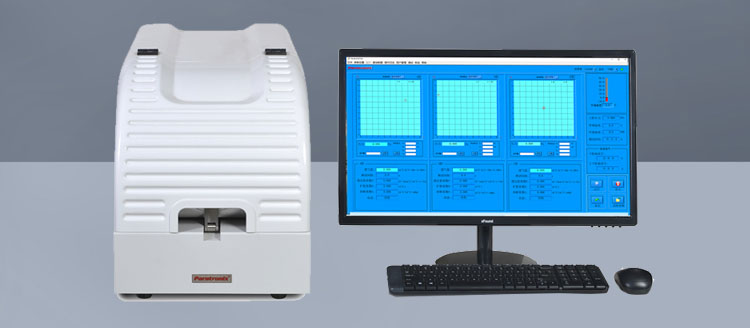

An ASTM F1307 oxygen permeability tester measures the rate at which oxygen enters a dry, empty package under specified test conditions. The result is a package oxygen transmission rate: an amount of oxygen passing into the package per unit of time. It describes the performance of the tested package as an assembly, rather than the barrier property of a film sample alone.
Oxygen can reach the interior through the package material, seals, closures, or other pathways available in the test configuration. The reported rate represents their combined contribution; a single result does not identify which part of the package allowed oxygen through. ASTM F1307 uses a coulometric sensor to determine the oxygen transmitted into a package, and its result must be interpreted alongside the test atmosphere, temperature, package preparation, and other reported conditions.
The measured quantity: oxygen transmission through a package
Oxygen transmission is the movement of oxygen from a region with a higher oxygen partial pressure to one with a lower oxygen partial pressure. In a package test, the exterior is exposed to an oxygen-containing atmosphere while the interior is maintained at a low oxygen level by a carrier gas. Oxygen entering the package is carried to a sensor, which produces a signal related to the amount detected.
The result is commonly expressed as a volume of oxygen per package per day, such as cm3/package/day, with the reporting basis stated in the test report. This is a rate, not the oxygen concentration inside a filled package and not a direct measurement of the oxygen already present when a package is sealed.
For example, a low transmission rate indicates that little oxygen entered the tested empty package during the measurement period under the stated conditions. It does not establish that a product sealed inside the package will have a particular shelf life. Initial headspace oxygen, oxygen dissolved in the product, product sensitivity, storage conditions, and changes in package performance over time can all influence the oxygen exposure of the contents.
What the sensor sees
The coulometric sensor responds to oxygen delivered to it in the gas stream. During a test, oxygen that has crossed the package boundary is transported from the package interior to the sensor. Once the measured signal has reached an appropriate steady condition, the instrument determines an oxygen transmission rate for the specimen.
The sensor does not label the path taken by each oxygen molecule. Oxygen permeating through a plastic wall and oxygen entering through a small defect both contribute to the detected signal. Consequently, an elevated result calls for investigation; it is not, by itself, proof of a defective seal.
Likewise, a low result is not a universal declaration that a package is leak-free. The ability to detect a particular defect depends on the method, the instrument’s measurement range, the test conditions, and the nature of the pathway. A separate package integrity or leak test may be needed when the question is whether a specific seal or closure contains a defect.
Package transmission versus film transmission
A film oxygen transmission test examines a section of material under controlled conditions. Its result is often normalized to exposed area and time. A finished-package test examines a formed and assembled article, so its result is commonly reported per package and time. These values answer different questions.
A package made from a high-barrier film can still show a higher-than-expected package transmission rate. Forming can change wall thickness, particularly in areas that are stretched. A seal can introduce a different transmission path, and a closure or fitment can add interfaces that do not exist in a flat film specimen. The measured package also includes the combined exposed surface area of its components.
The reverse comparison requires care as well. Two packages made from the same material can have different transmission rates because their sizes, shapes, wall distributions, or seals differ. A smaller package does not necessarily provide better barrier material; it may simply expose less material area.
Dividing a package result by an estimated surface area can be useful for an internal comparison when the geometry and construction support that calculation. It does not automatically make the result equivalent to a flat-film measurement. Seals, edges, and closures do not necessarily transmit oxygen in proportion to the area of the main wall.
What happens during a test
The specimen is an empty, dry package prepared for connection to the test system. Its interior is flushed or supplied with an oxygen-depleted carrier gas, while the exterior is exposed to the specified oxygen-containing atmosphere. The arrangement creates a difference in oxygen partial pressure across the package boundary, allowing oxygen transmission to be measured.
Connections must allow the carrier gas to move through the package and toward the sensor without introducing significant leakage. The way ports, fittings, or adapters are attached matters: an imperfect connection can add oxygen to the measurement, while adhesive or a fixture that covers part of the specimen can alter the exposed area. The preparation method should therefore be recorded and kept consistent when comparing specimens.
Before a result is reported, the system and specimen require conditioning. Residual oxygen inside the package, oxygen absorbed in materials, and oxygen trapped around connections can contribute to an early signal. A reading taken before the measurement has stabilized can reflect this transient oxygen as well as ongoing transmission.
Highly resistant packages can require particular care because a small background contribution from tubing, fittings, or the test setup becomes significant relative to the specimen signal. A blank or background assessment, where applicable to the equipment and procedure, helps distinguish system contribution from the package result. Results close to the instrument’s detection capability should be interpreted with that limitation in mind.
Conditions that change the result
Oxygen concentration and pressure difference
The driving force for oxygen transmission is the difference in oxygen partial pressure across the package. Changing the external oxygen concentration or the pressure conditions changes that driving force. Rates measured with different exterior atmospheres should not be treated as interchangeable without accounting for the test conditions and the behavior of the package.
This distinction is especially important when comparing a laboratory result with storage in air or with a package containing a modified atmosphere. The oxygen concentration outside the package during testing and the initial composition inside a commercial pack may differ from the conditions represented by the measurement.
Temperature and humidity
Temperature affects the movement of oxygen through polymer materials. A rate measured at one temperature should not be assumed to apply unchanged at another. Even when the material is nominally the same, temperature can influence different layers and components to different degrees.
Humidity also matters for moisture-sensitive barrier structures. A multilayer material containing an oxygen-barrier layer can perform differently when exposed to dry conditions than when exposed to higher humidity. ASTM F1307 addresses dry packages, so its result should be read in that context; it should not automatically be used as the oxygen transmission rate for a package exposed to a humid product or a humid storage environment.
Package construction and preparation
Package geometry determines the amount and distribution of material available for oxygen transport. A formed tray, for instance, can have thinner regions near corners or sidewalls than in the original sheet. A pouch introduces sealed edges; a bottle with a closure adds a cap and sealing interface. Each construction presents a different combination of potential paths.
Preparation can also affect comparison. Packages produced with different seal settings, formed to different depths, or fitted with different closures should be identified separately in the records. If test ports are added, their location and attachment method should be consistent enough that differences in preparation are not mistaken for differences in package performance.
Reading an unexpectedly high or variable rate
A high result has several possible explanations. The material may have a higher oxygen transmission rate than expected under the test conditions, or the formed package may have thinner sections than the original material. Oxygen may also enter through a seal, closure, pinhole, or test connection. An elevated system background or insufficient stabilization can create a misleading result.
The pattern across specimens provides useful context. Similar rates across several packages can point toward a consistent feature of the construction or material, although they do not isolate the cause. One unusually high result among otherwise similar specimens raises different questions, including specimen damage, a local seal defect, or a problem with its connection to the test apparatus.
Further testing should be chosen to answer the suspected question. A flat-material test can help characterize the wall material; seal inspection or an appropriate integrity test can investigate localized defects. Repeating a package measurement after reviewing the setup can help establish whether the original result is reproducible. None of these observations alone identifies every oxygen pathway.
What belongs beside the reported number
A package oxygen transmission rate is most useful when the report makes the measurement conditions traceable. The package description should identify its format and relevant construction, including the material structure where known, the closure or seal configuration, and any features that distinguish the specimen from another version.
The reported rate should be accompanied by its units and time basis, the test temperature, the exterior atmosphere, the relevant humidity conditions, and the number of specimens tested. Conditioning, specimen preparation, and any modifications made to connect the package to the instrument also affect interpretation. Where a result is below the instrument’s reporting limit, that limit should be stated instead of presenting the result as an exact zero.
When comparing two results, matching units is only the starting point. A rate per package measured on a dry, empty container under one atmosphere cannot be directly equated with a rate obtained from a different package size or exposure condition. The most meaningful comparison holds the package construction and test conditions constant while changing the feature being investigated.
The ASTM F1307 result is therefore a controlled measure of oxygen entry into the tested package, not a complete prediction of filled-product performance. Its value lies in showing how a particular package construction behaves under documented conditions and in providing a basis for investigating differences between comparable specimens.
Leave A Reply
Search by Keywords