




Recent Posts
 Can an ISO 15105-2 oxygen tester measure coated films?Nov 07, 2026
 How to choose an ASTM F1307 tester for low oxygen transmission ratesNov 07, 2026
 What does an ASTM F1307 oxygen permeability tester measure?Nov 07, 2026
 How does a bottle bottom thickness tester measure the base?Nov 07, 2026
 What Does a Bottle Wall Thickness Tester Measure in PET Packaging?Nov 07, 2026
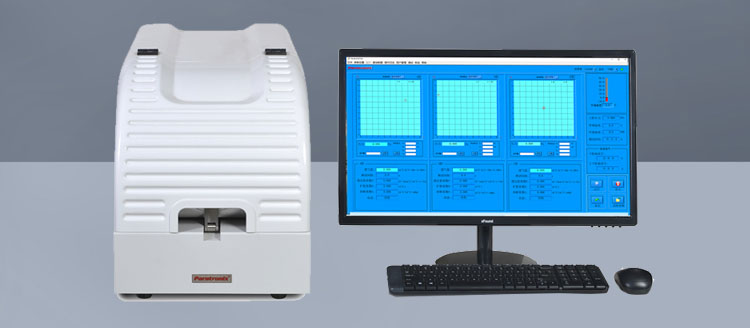

Yes. An ISO 15105-2 oxygen permeability tester can measure many coated films, provided the complete film can be mounted without damage and its oxygen transmission rate falls within the instrument’s validated measuring range. A coating does not disqualify a film from testing. The more important questions are whether the specimen remains intact, whether the test conditions reflect the intended comparison, and whether leakage or instrument background could distort a low result.
The result describes oxygen transmission through the tested film structure under specified conditions. It does not, by itself, establish the performance of the coating alone or guarantee the barrier performance of a finished package. Those distinctions matter when oxygen transmission data support material release, supplier comparisons, or packaging risk assessments.
What the test measures in a coated film
ISO 15105-2 describes an equal-pressure method for determining gas transmission through plastic film and sheeting using a gas-specific sensor. In an oxygen test, a specimen separates two sides of a test cell. Oxygen is supplied on one side, while the gas reaching the other side is measured by a suitable sensor. The oxygen transmission rate, or OTR, is calculated for the exposed specimen area under the stated test conditions.
For a coated film, oxygen passes through the assembled structure: the substrate, the coating and any other layers present. A thin coating can have a substantial effect on the result, but the instrument measures the combined barrier response rather than identifying which layer caused it.
This is useful for comparing coated and uncoated versions of the same substrate, assessing production consistency, or checking whether a supplied film meets an agreed specification. To attribute a difference specifically to the coating, however, the comparison must control other variables, including substrate grade and thickness, conditioning, test atmosphere, handling and specimen location.
Use the applicable edition of ISO 15105-2 and the laboratory’s controlled procedure to establish the precise requirements for conditioning, apparatus, calculation and reporting. A claim that an instrument can perform an ISO 15105-2 test is not the same as demonstrating that a particular coated film has been tested in accordance with the standard.
Film structures that need particular attention
Coated polymer films can include organic barrier coatings, inorganic oxide coatings, metallized layers and multilayer structures with a coated surface. Their suitability for an oxygen transmission test depends less on the coating label than on how the entire specimen behaves in the cell.
A flexible film with a continuous coating and sufficient uncoated margins for sealing may be straightforward to test. A brittle coating, a highly curled specimen or a film with a rough surface can be more difficult. If clamping cracks the coating in the exposed area, the measured rate may reflect damage introduced during preparation rather than the film as supplied.
Very high-barrier structures present a different challenge. Their true oxygen transmission can be close to the instrument’s background or detection limit. In that situation, a small leak at the specimen seal or residual oxygen in the system can contribute a significant share of the measured signal. A numerical result is not necessarily a reliable result merely because the instrument displays one.
Some coated materials are also sensitive to moisture or handling. A film that performs well under dry conditions may behave differently at higher relative humidity, depending on the coating chemistry and the rest of the structure. Testing at an unspecified or uncontrolled humidity can therefore hide a meaningful difference between materials.
Keep the specimen representative
Sampling is especially important when a coating is not perfectly uniform across a roll. A single specimen represents only the area tested. If the purpose is lot release or assessment of coating consistency, select specimen locations and the number of replicates through a documented sampling plan. Include locations relevant to the manufacturing or converting process, such as across the web and along the roll, when those differences are part of the quality question.
Handle specimens in a way that avoids creasing, abrasion and contamination. Cutting should not introduce defects into the exposed test area. Finger contact, scratches from tools or particles trapped under the sealing surface can change either the barrier being measured or the integrity of the cell seal.
Record which side is coated and its orientation in the cell. For an ideal, stable film at steady state, reversing the specimen does not necessarily change the intrinsic transmission rate under otherwise equivalent boundary conditions. Real coated structures can nevertheless be affected by moisture exposure, surface damage, asymmetric conditioning or differences in how each side seals. Consistent orientation makes comparisons easier to interpret; where direction matters to the application, test both orientations under controlled conditions.
If the film must be supported because it is thin or fragile, confirm that the support and its sealing arrangement do not introduce an additional barrier or leakage path. Any deviation from the established method should be documented and assessed before the result is used for acceptance.
Control temperature, humidity and gas conditions
OTR is not a single, unconditional property of a film. Temperature changes gas transport through polymers, while humidity can affect moisture-sensitive layers and coatings. Results obtained under different conditions should not be treated as directly interchangeable without an established basis for comparison.
Define the test temperature and relative humidity on the relevant sides of the specimen, as well as the oxygen concentration or partial-pressure conditions used. Also document conditioning time and the criteria for reaching a stable result. A laboratory comparing two suppliers should use the same defined conditions for both materials unless the purpose is specifically to evaluate their response to different environments.
Relative humidity deserves particular attention with hydrophilic barrier coatings. A dry-film result may be suitable for monitoring process consistency, yet it may not represent exposure in a humid storage environment. Conversely, a humidified test is useful only if the instrument can control and verify humidity at the intended location and the specimen has been conditioned appropriately.
The equal-pressure method minimizes the total pressure difference across the specimen while maintaining an oxygen concentration difference. Improper pressure control can stress a thin film, disturb the seal or affect the measurement. The operating procedure should address pressure balance and gas-flow settings for the instrument and specimen.
Distinguish film transmission from leaks and background
For a high-barrier coated film, the main measurement risk may be oxygen entering through a route other than the exposed film area. Possible sources include an imperfect gasket seal, damaged sealing surfaces, loose fittings and residual oxygen in the system. A coating that extends into the clamped area can also influence sealing if its surface is uneven or easily damaged.
Before using the result for a release decision, the laboratory should have an established approach to checking system integrity and background. That can include instrument leak checks, blank or impermeable-barrier checks where applicable, and verification using an appropriate reference material. The checks should be relevant to the range being measured; a system that performs adequately for a moderate-barrier film may not be adequate for a much lower OTR.
Allow enough time for the instrument and specimen to reach the stability required by the method and procedure. A short test can produce a value dominated by transient conditions rather than the intended transmission measurement. On the other hand, extended testing does not correct a leaking seal or a sensor operating outside its validated range.
When a result is close to the system’s practical lower limit, report it with the applicable detection or quantification limitation and measurement uncertainty rather than presenting excessive decimal places. A value below a reporting limit should not be interpreted as zero oxygen transmission.
How to investigate an unexpected result
An unusually high OTR can indicate a genuine coating defect, but it can also arise from specimen damage or leakage around the edge. Inspect the specimen and sealing area, review the system checks, and repeat the test with a fresh specimen selected according to the sampling procedure. If a leak is found, the affected result should be handled under the laboratory’s invalid-result procedure rather than treated automatically as evidence that the film failed.
If repeated, valid measurements vary substantially, consider whether the variation is spatial or procedural. Comparing specimens from different roll positions can help identify nonuniformity; comparing replicate preparations from the same area can help assess handling and measurement variability. Document the location and orientation of each specimen so that the source of variation is not obscured by averaging.
An unexpectedly low result also warrants review. Check that the sensor, calibration or verification status, test area, gas settings and calculation are appropriate. Confirm that no unintended layer, liner or support has been included in the measured structure. A low value is not automatically proof that a coating is intact or that the finished package will provide adequate protection.
Choose equipment for the required decision, not only the standard
When evaluating an oxygen permeability tester for coated films, compare the expected OTR range with the instrument’s validated range under the intended test conditions. Ask how the lower end of that range is established, what background and leak checks are available, and how measurement uncertainty is expressed. The relevant question is whether the system can distinguish acceptable material from material near the specification limit with sufficient confidence.
Also examine the practical fit between the cell and the specimen. The exposed area, sealing geometry, film thickness capability and clamping method need to suit the material without damaging the coating. Temperature and humidity controls should cover the conditions used in the material specification, with a way to verify them. For routine work, the time needed to stabilize low-transmission specimens and the availability of calibration and maintenance support affect whether the method remains workable.
Before setting an acceptance limit, agree on the test method and conditions with the material supplier or receiving laboratory. A specification should identify the film structure, sampling approach, units, temperature, humidity, gas conditions and decision rule, including how results near the limit are handled. Otherwise, two valid measurements can appear contradictory simply because they were obtained under different conditions.
For pharmaceutical or other oxygen-sensitive packaging, film OTR is one input to a broader packaging assessment. Seals, forming damage, closures and storage conditions can affect oxygen ingress in the finished system. Where the risk assessment requires evidence at package level, a flat-film test should be supplemented by an appropriate finished-package evaluation rather than used as a substitute.
Leave A Reply
Search by Keywords