




Recent Posts
 Does ASTM D3985 apply to oxygen transmission testing of solar backsheets?Nov 10, 2026
 What does an oxygen permeability tester measure in solar backsheets?Nov 10, 2026
 How does an ASTM D3985 oxygen permeability tester work?Nov 09, 2026
 What does ASTM F1927 require for oxygen sensor calibration?Nov 09, 2026
 How does an ASTM F1927 oxygen permeability tester work?Nov 09, 2026
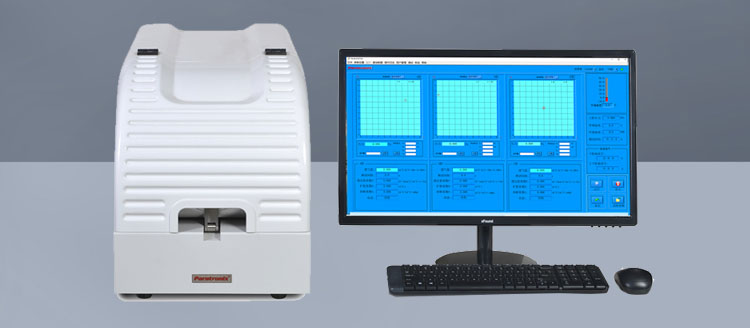
Solar backsheets protect photovoltaic modules from environmental exposure, but how can manufacturers assess their resistance to oxygen? An oxygen permeability tester measures oxygen transmission through a material under specified conditions.
The result helps researchers compare barrier performance, investigate material structures, and monitor production consistency. Its value depends on understanding the test conditions and what the measurement can—and cannot—predict.
What does an oxygen permeability tester measure?
An oxygen permeability tester for solar backsheet materials measures how much oxygen passes through a defined area of a sample over time, under a controlled difference in oxygen pressure.
The most commonly reported result is the oxygen transmission rate, or OTR. A lower OTR generally indicates that less oxygen passes through the tested material under the stated conditions.
For example, if two backsheets are tested under the same conditions, the one with the lower OTR generally provides a stronger oxygen barrier in that comparison.
An OTR result describes the tested specimen, not necessarily an entire photovoltaic module. Edges, junction boxes, seals, and other components can create additional pathways for oxygen.
The instrument typically separates a specimen between an oxygen-rich side and a carrier-gas or low-oxygen side. A sensor detects oxygen reaching the downstream side after passing through the material.
The measured rate is then related to the exposed test area and reported using the units and reference conditions specified by the method or laboratory.
How is oxygen transmission rate expressed?
OTR is commonly reported in cubic centimeters of oxygen per square meter per day, written as cm³/(m²·day), at specified temperature, humidity, and pressure conditions.
Other unit conventions may appear in test reports. Oxygen volume can depend on the reference temperature and pressure used, so results should be converted carefully before comparison.
A complete report should identify the test method, specimen structure, exposed area, test temperature, relative humidity, oxygen partial-pressure difference, and the reference conditions used for gas volume.
For illustration, an OTR of 2 cm³/(m²·day) represents a lower measured transmission rate than 10 cm³/(m²·day), provided the results use equivalent conditions and reporting conventions.
Those numbers are examples, not acceptance limits for solar backsheets. A suitable target depends on the module design, materials, intended service environment, and relevant customer requirements.
When comparing supplier data sheets, ask whether each result refers to the complete backsheet laminate or to an individual film. These measurements answer different material questions.
Is oxygen transmission rate the same as oxygen permeability?
The terms are related but should not be treated as interchangeable. OTR describes transmission through a particular specimen under the stated test conditions.
Permeance expresses transmission relative to the oxygen partial-pressure difference across the specimen. It can help compare results when the driving pressure differs, within the method’s applicable assumptions.
Permeability is a material property commonly calculated from permeance and thickness for a homogeneous material, assuming suitable conditions and approximately steady-state behavior.
A solar backsheet is often a multilayer laminate rather than a homogeneous film. Calculating a single permeability coefficient from its total thickness can obscure differences between layers.
For multilayer comparisons, reporting the measured OTR or permeance of the complete construction is often more useful than presenting a calculated coefficient without explaining its limitations.
Ask the laboratory which quantity it reports and how it was calculated. Confirm the units before using a result in specifications, models, or supplier comparisons.
Why does oxygen barrier performance matter for solar backsheets?
Backsheets form part of a module’s protective construction. Oxygen can contribute to oxidation reactions in susceptible materials when other conditions, including heat and light exposure, are present.
Measuring oxygen transmission can therefore help researchers investigate one potential pathway associated with material aging. It can also reveal changes after a formulation or construction is modified.
However, oxygen resistance is only one part of backsheet performance. Moisture ingress, ultraviolet exposure, electrical insulation, adhesion, mechanical durability, and thermal aging may also be important.
Some backsheets are deliberately designed around a combination of properties rather than the lowest possible OTR. A stronger oxygen barrier may involve tradeoffs in cost, flexibility, or processing.
Oxygen transport through the backsheet also does not establish how much oxygen reaches every sensitive layer inside a finished module. The full construction affects that outcome.
Use OTR as a comparative material measurement and an input to broader assessment. Avoid treating it as a direct prediction of module lifetime or field failure.
Which test conditions have the greatest effect on the result?
Temperature: Gas transmission often increases as temperature rises because gas movement through polymers changes. Compare results measured at the same temperature whenever possible.
Relative humidity: Moisture can change the barrier behavior of some materials and may affect different layers in different ways. Record humidity conditions on both sides when applicable.
Oxygen partial-pressure difference: The driving force across the specimen affects transmission. Test gas composition and pressure conditions must be stated to make comparisons meaningful.
Sample thickness: For a uniform film, increasing thickness generally reduces transmission. For laminates, the thickness and placement of individual layers also matter.
Sample condition: Creases, pinholes, contamination, handling damage, and poor mounting can affect a measurement. Sampling should reflect the production material and avoid unintended damage.
Equilibration: Some materials take longer to reach a stable transmission rate. Ending a test too early can produce a result that does not represent steady-state behavior.
Exposure history: Heat, humidity, ultraviolet radiation, or mechanical stress may change a backsheet’s structure. Identify whether a specimen was tested before or after conditioning.
Test conditions should match the comparison’s purpose. A standard laboratory condition supports repeatability, while a separate aging study can investigate how barrier performance changes after exposure.
How is a solar backsheet sample tested?
The exact procedure depends on the instrument and selected method, but a typical test begins by identifying the material, its construction, and the intended comparison.
Operators prepare representative specimens, check for visible damage, and measure thickness where required. They document which side faces the oxygen source, particularly for asymmetric laminates.
The specimen is mounted between test chambers using the instrument’s specified sealing arrangement. A reliable seal helps prevent edge leakage from being mistaken for transmission through the material.
The operator sets the required temperature, humidity, gas flow, and pressure conditions. Instrument checks and calibration should follow the applicable method and manufacturer’s instructions.
Oxygen is introduced on one side, while the downstream side is monitored using the instrument’s detection system. The test continues until the method’s endpoint criteria are met.
The final report records the measured rate, conditions, specimen details, and any deviations. Multiple specimens can help reveal variability within a roll or between production batches.
For quality control, a laboratory may establish a routine sampling plan and investigate results outside agreed limits. Acceptance criteria should come from the relevant product specification.
Which standards are relevant to oxygen transmission testing?
ASTM D3985 describes an instrumental method for determining oxygen gas transmission rate through plastic film and sheeting using a coulometric sensor under specified conditions.
ASTM F1927 addresses oxygen transmission through barrier materials using a coulometric detector with controlled relative humidity. Its applicability depends on the material and test requirements.
ISO 15105-2 covers an equal-pressure method for determining gas transmission rate through plastic film and sheeting using specified detection techniques, including methods suitable for oxygen.
These standards are useful starting points, but they are not automatically interchangeable. Their equipment requirements, conditions, procedures, and reporting conventions must be checked against the intended application.
Before commissioning a test, confirm the current edition, specimen suitability, required humidity conditions, and whether the laboratory can meet the desired measurement range and reporting needs.
An oxygen transmission test also does not replace applicable photovoltaic module or backsheet qualification tests. A material specification may require several different measurements and exposure sequences.
How should you compare oxygen permeability test results?
Start by comparing like with like: the same reported quantity, units, temperature, humidity, oxygen pressure difference, and gas-volume reference conditions.
Next, examine the specimen description. A result for a single polymer film should not be compared directly with a finished laminate as evidence of equivalent backsheet performance.
Check whether samples came from the same production stage and received the same conditioning. Fresh material and aged material can legitimately produce different results.
Look beyond the average when replicate data are available. A large spread may indicate material variation, specimen defects, sealing issues, or measurements near the instrument’s practical limit.
Results reported as below a detection or quantification limit should not be treated as exact values. Ask the laboratory how that limit was established for the test setup.
If two results differ only slightly, consider measurement uncertainty and repeatability before concluding that one material performs better. The reported difference may not be meaningful.
Finally, evaluate oxygen barrier data alongside other required properties. The best backsheet for an application is the one that meets the complete specification consistently.
What should you consider when choosing a tester?
Begin with the expected OTR range of the materials. The instrument must be sensitive enough for high-barrier specimens without placing routine results at its measurement limit.
Check whether the equipment supports the intended standard, temperature range, humidity settings, and oxygen conditions. Ask how those conditions are controlled, verified, and reported.
Consider sample size, film thickness, and laminate handling. The chamber and sealing system should accommodate representative backsheet specimens without damaging or distorting them.
For production environments, assess test duration, the number of available chambers, operator workload, and data export. These factors affect how many samples can be evaluated.
For research, flexible settings and clear access to test data can support comparisons across formulations and aging conditions. Confirm whether the required measurements are within specifications.
Ask suppliers about calibration, reference materials, maintenance, consumables, training, and service support. Request a demonstration using representative samples when the measurement requirements are demanding.
Paratronix Instruments develops packaging testing instruments and testing solutions for polymer and high-barrier materials. Its team can discuss whether a particular configuration suits a proposed backsheet test.
What can you conclude from an oxygen permeability test?
An oxygen permeability tester measures oxygen transmission through a defined specimen under controlled conditions. The resulting OTR helps compare materials and track changes in barrier performance.
Its strongest use is a well-controlled comparison: equivalent samples, documented conditions, appropriate measurement range, and results interpreted alongside variability and other material requirements.
For solar backsheets, combine oxygen transmission data with moisture, electrical, mechanical, and aging assessments. This gives a more useful basis for material selection and quality decisions.
Leave A Reply
Search by Keywords