




Recent Posts
 Does ASTM D3985 apply to oxygen transmission testing of solar backsheets?Nov 10, 2026
 What does an oxygen permeability tester measure in solar backsheets?Nov 10, 2026
 How does an ASTM D3985 oxygen permeability tester work?Nov 09, 2026
 What does ASTM F1927 require for oxygen sensor calibration?Nov 09, 2026
 How does an ASTM F1927 oxygen permeability tester work?Nov 09, 2026
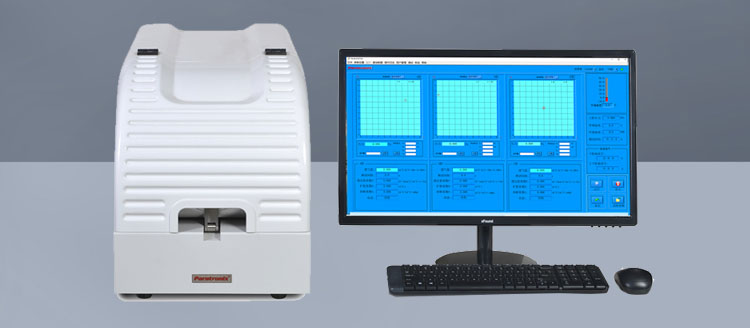
Does ASTM D3985 apply to oxygen transmission testing of solar backsheets? Yes, potentially—but not automatically. The method covers the measurement of oxygen gas transmission through suitable plastic films and sheeting using a coulometric sensor. A solar backsheet or one of its layers may be suitable for this type of test if the specimen, measurement range, and test conditions meet the requirements of the applicable edition of the standard.
For quality control and safety professionals, the more important question is what the result can prove. An oxygen transmission rate can help characterize a material’s barrier behavior or reveal changes between production lots. It does not, on its own, establish photovoltaic module safety, predict outdoor lifetime, or replace the qualification tests specified for a finished module.
Where ASTM D3985 fits in solar backsheet testing
Solar backsheets are commonly multilayer constructions designed to protect the rear of a photovoltaic module. Depending on the design, they may incorporate polymer films, coatings, adhesives, and other functional layers. Their role extends well beyond limiting oxygen movement: electrical insulation, resistance to weathering, mechanical integrity, and moisture-related performance are also important considerations.
ASTM D3985 is relevant when the material under evaluation can be tested as a film or sheet and oxygen transmission is a property of interest. Examples include:
- A complete polymer-based backsheet laminate sampled before module assembly.
- An individual film layer being considered for a backsheet construction.
- Production samples compared against an established internal oxygen barrier specification.
- Backsheet specimens tested before and after a defined conditioning or aging treatment.
In each case, applicability depends on the current standard’s scope and procedures, as well as the characteristics of the specimen. A coated or laminated backsheet should not be assumed to be suitable merely because it contains plastic. Thickness, stiffness, surface texture, construction, and the ability to seal the sample without leakage all affect whether a meaningful measurement can be obtained.
The test generally measures transmission through the exposed area of a specimen. It is not a direct measurement of oxygen entry through module edges, junction-box interfaces, cracks, or other features of an assembled photovoltaic module.
What does the method measure?
In a coulometric oxygen transmission test, the specimen separates a chamber exposed to oxygen-containing gas from a carrier-gas side. Oxygen that permeates through the material is transported to a coulometric sensor. The sensor response is used to determine the oxygen transmission rate, often abbreviated as OTR.
OTR is commonly reported as a volume of oxygen transmitted per unit area and time, such as cm³/(m²·day), under stated conditions. A lower OTR indicates less oxygen transmission through the tested specimen under those conditions. It does not necessarily mean that the backsheet is better in every respect, or even that two materials will perform in the same order after long-term environmental exposure.
OTR and permeability are related but not interchangeable. OTR describes transmission through the specimen as tested. Permeability is a material property expressed using transmission, thickness, and the relevant driving force, subject to assumptions about the material and test conditions. Calculating a single permeability value for a multilayer laminate can be misleading: different layers contribute differently, and a simple thickness normalization does not turn the laminate into a homogeneous material.
When reviewing a report, check the units and the reference conditions used for the gas volume. Two numerical results should not be compared until their units, temperature, humidity, pressure conditions, and specimen descriptions are understood.
Test conditions can change the answer
A quality team may receive two OTR values for what appears to be the same backsheet and find that they differ substantially. The discrepancy is not necessarily an instrument fault. It may reflect a real difference in conditioning, exposure, or the way the samples were prepared.
Do not assume that a humidity condition available on an instrument is automatically covered by every edition or procedure of ASTM D3985. Confirm the standard’s requirements and any documented deviations. If a customer specification calls for a particular humidity or aging protocol, agree in advance whether the report will describe the test as conforming to the standard, based on it, or modified from it.
Steady-state behavior is another important consideration. Barrier laminates can take time to reach a stable transmission condition. Ending a test too early may produce a result that is not representative of the intended measurement. The laboratory should follow the applicable standard and a documented endpoint procedure rather than select a stopping time solely for convenience.
Oxygen barrier performance is not the same as moisture protection
It is tempting to treat oxygen transmission as a general measure of backsheet protection. That shortcut can lead to the wrong purchasing or safety decision.
Oxygen transmission rate and water vapor transmission rate measure different substances. A material with a low OTR should not be assumed to have a low water vapor transmission rate, and an oxygen permeability tester should not be treated as a substitute for equipment designed to measure water vapor transmission. If moisture protection is important to the application, select an appropriate water vapor test method and specify its conditions separately.
Likewise, a satisfactory laboratory OTR does not demonstrate electrical insulation, resistance to ultraviolet exposure, adhesion, or mechanical durability. Those properties require their own evaluations. Solar module qualification and safety assessments may involve standards such as IEC 61215 and IEC 61730, depending on the product and market. ASTM D3985 is a material test method; an OTR result alone is not certification to those module standards.
Choosing an oxygen permeability tester for solar backsheet work
The right instrument is not simply the one with the widest advertised measurement range. It is the one that can produce reliable, documented results for the actual construction being tested. Before selecting an oxygen permeability tester for solar backsheet evaluation, discuss representative samples and the intended specification with the equipment supplier or testing laboratory.
Start with the expected transmission range
Backsheet constructions vary. A relatively permeable film and a high-barrier laminate may place very different demands on a sensor and test setup. Ask whether the instrument’s validated measurement range covers the expected OTR under the intended conditions, including an appropriate margin near the decision limit.
Also ask how the laboratory handles results near the lower reporting limit. A result reported as below a limit is not the same as a measured value of zero. For acceptance testing, the reporting limit should be low enough to support a clear pass-or-fail decision against the agreed specification.
Check specimen handling and sealing
Solar backsheet samples may be thicker, stiffer, or less flexible than ordinary packaging films. They may also have rough surfaces, coatings, or laminate edges that complicate sealing. Discuss the required specimen dimensions, exposed test area, clamping arrangement, and leak-check procedure before committing to a method.
A poor seal can allow oxygen to bypass the material, making the apparent transmission rate higher than the true through-film transmission. Damaged specimens and wrinkles can create similar uncertainty. If sample preparation requires special treatment or a nonstandard fixture, document it and assess its effect on the result.
Match control and documentation to the decision
If the test is intended for supplier qualification, routine production release, or an investigation into an aging-related change, the reporting requirements may differ. Consider whether the system and laboratory workflow can document:
- Temperature and humidity conditions relevant to the test.
- Specimen identification, orientation, thickness, and exposed area.
- Calibration or verification activities and applicable reference materials.
- Test duration, endpoint criteria, individual results, and any deviations.
- The standard designation and edition used for the work.
ASTM D3985 is a test method, not an instrument certification. A manufacturer’s statement that an instrument supports the method should be assessed alongside evidence that the complete test setup, operating procedure, and laboratory practices are appropriate for the material and the selected edition.
Building a useful quality-control specification
A test result is most valuable when everyone knows what decision it supports. For incoming inspection, that may be a comparison with a supplier’s agreed OTR limit. For product development, it may be a comparison between candidate laminates. For an aging study, it may be the change from an unexposed baseline.
Define the specimen first: complete laminate or individual layer, nominal construction, sampling location, and orientation. Then specify the test conditions, conditioning, number of specimens, reporting units, and acceptance rule. If results will be compared across laboratories, include the same details in the purchase or test agreement and consider a comparison using representative material.
For an aging study, retain unaged controls from the same material lot where practical. Record the exposure treatment and examine whether visible cracking, delamination, or other damage is present before testing. A post-aging OTR change can be useful evidence of altered barrier behavior, but it does not by itself identify the failure mechanism or establish service life.
When a result falls outside a limit, avoid making an immediate safety conclusion from one number. Check the specimen identity, seal integrity, instrument verification, conditioning, and repeatability. Then investigate the material or production process in the context of the full backsheet and module requirements.
Getting a method decision you can defend
ASTM D3985 can be an appropriate choice for measuring oxygen transmission through a suitable solar backsheet material. Its value lies in a clearly defined material, a controlled test, and a result interpreted within its limits—not in treating the number as a universal measure of photovoltaic protection.
Paratronix Instruments Co., Ltd. develops and supplies packaging testing instruments and testing solutions for materials including plastic films and high-barrier materials. For a backsheet application, a practical discussion should begin with the sample construction, expected OTR range, required test conditions, and reporting needs. Confirming those details before selecting equipment or commissioning a test makes it easier to obtain results that quality and safety teams can use with confidence.
Leave A Reply
Search by Keywords